

- Tropical primary forest loss fell sharply in 2025, down 36% from 2024, but the decline may reflect fewer fires rather than sustained progress.
- Despite the drop, the world still lost an area of tropical primary forest larger than Switzerland last year, leaving countries far off track from their 2030 goal of ending deforestation.
- Smaller forest-rich countries are losing remaining forests fastest, while major forest nations like Brazil show gains linked to stronger enforcement.
- Climate-driven fires, weak governance and commodity pressures continue to drive forest loss, making recent gains fragile and uncertain.
JAKARTA — Tropical primary forest loss fell sharply in 2025, dropping 36% from the record highs of the previous year, according to new data from a long-running satellite monitoring project.
Non-fire forest loss also declined by 23%, reaching its lowest level in a decade, according to the data from the University of Maryland’s Global Land Analysis and Discovery (GLAD) laboratory and visualized on the World Resources Institute’s (WRI) Global Forest Watch platform.
The drop suggests that policy and enforcement can make be effective in protecting tropical primary forests, which are critical for biodiversity, water provision, carbon storage, food and medicine, cultural identity and more.
But researchers say the headline figures mask a more complex reality and may say more about fewer fires than real progress, as forests across the tropics continue to move in the same direction: toward less forest and, in many places, faster rates of loss.
“A drop of this scale in a single year is encouraging — it shows what decisive government action can achieve,” said Elizabeth Goldman, co-director of Global Forest Watch.
Even so, total loss remains high.
The tropics lost 4.3 million hectares (10.6 million acres) of primary forest in 2025 — an area larger than Switzerland, and still 46% higher than a decade ago. That’s the equivalent of about 11 football fields’ worth of forests being razed every minute.
At current rates, the world remains far off track from the 2030 goal of halting and reversing forest loss, a pledge made by more than 140 countries under the Glasgow Leaders’ Declaration. Loss levels are about 70% higher than what’s needed to meet that target.
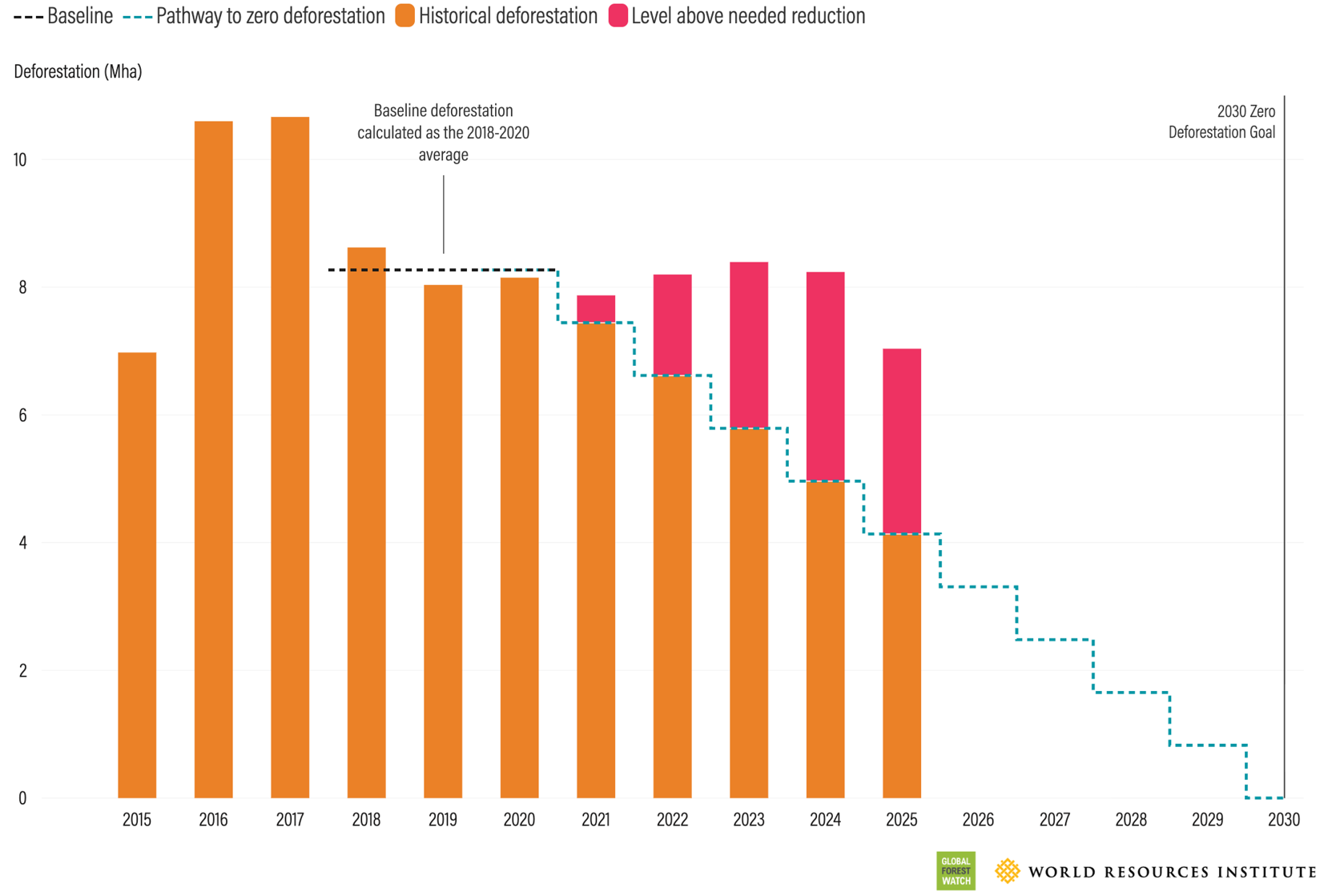
Fire continues to play a major role. Losses linked to fire remained the third-highest on record, underscoring what researchers describe as a growing climate-driven risk.
“A good year is a good year, but you need good years consistently if you’re going to conserve tropical rainforests,” said Matthew Hansen, a professor at the University of Maryland and director of the GLAD lab.
Countries ‘holding the last line’
Behind the global totals, a different pattern is emerging.
Some countries are not the biggest contributors to forest loss in absolute terms, but they are losing their remaining forests at some of the fastest rates.
These include Côte d’Ivoire, Honduras, Guatemala, Laos, Madagascar, Cambodia, Paraguay and Nicaragua.
Together, they still retain a significant share of their primary forests. But data show they are losing them at an average rate of about 1.3% per year. In some cases, the pace is far higher: Madagascar and Nicaragua are losing more than 2.5% of their remaining primary forests annually.
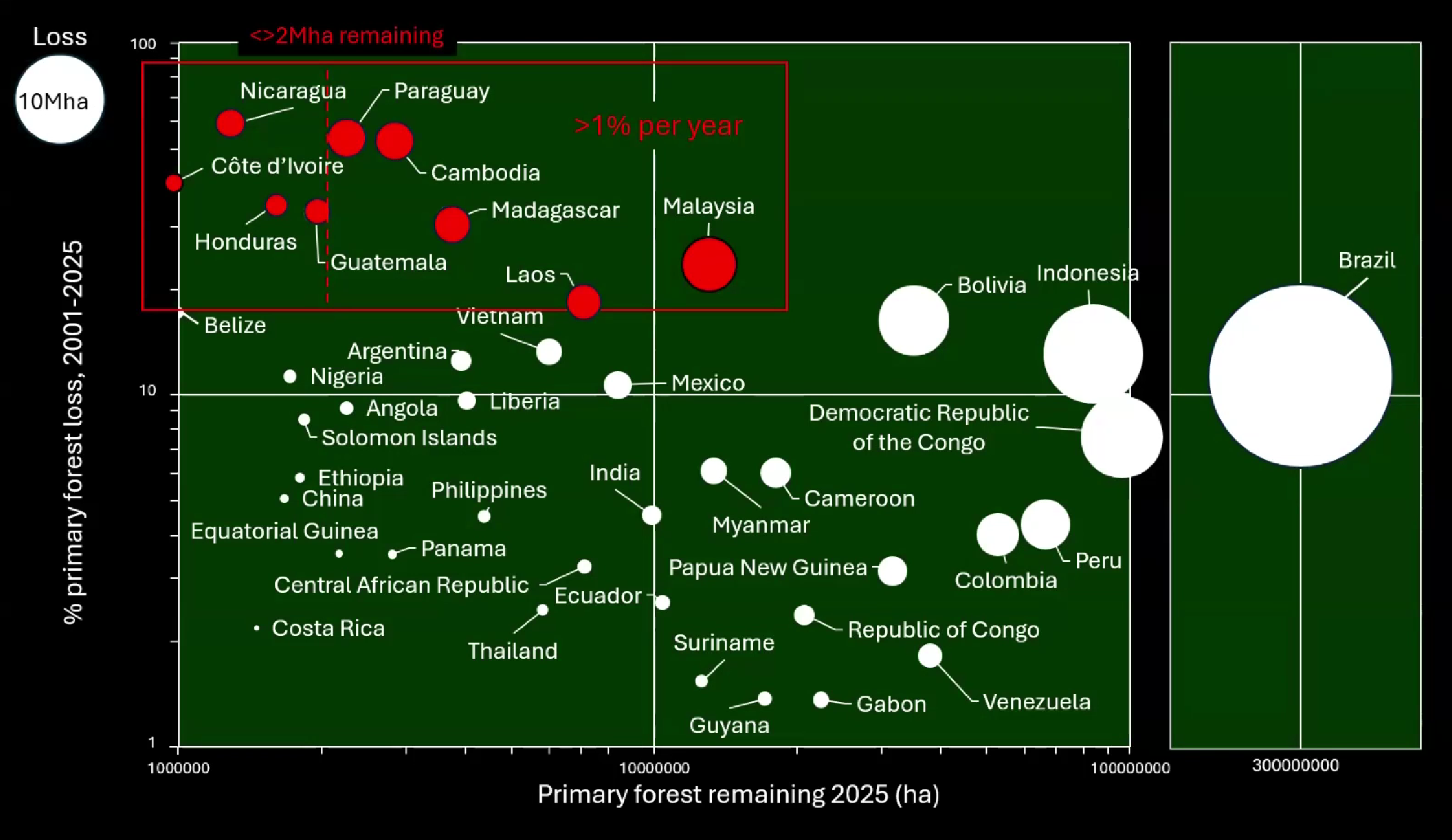
At those rates, large portions of what remain could be depleted within decades.
A closer look at the data helps explain why researchers describe these countries as “holding the last line.” In many cases, remaining forests are increasingly fragmented and vulnerable, with loss increasingly driven by the steady erosion of what is left rather than expansion into intact frontiers.
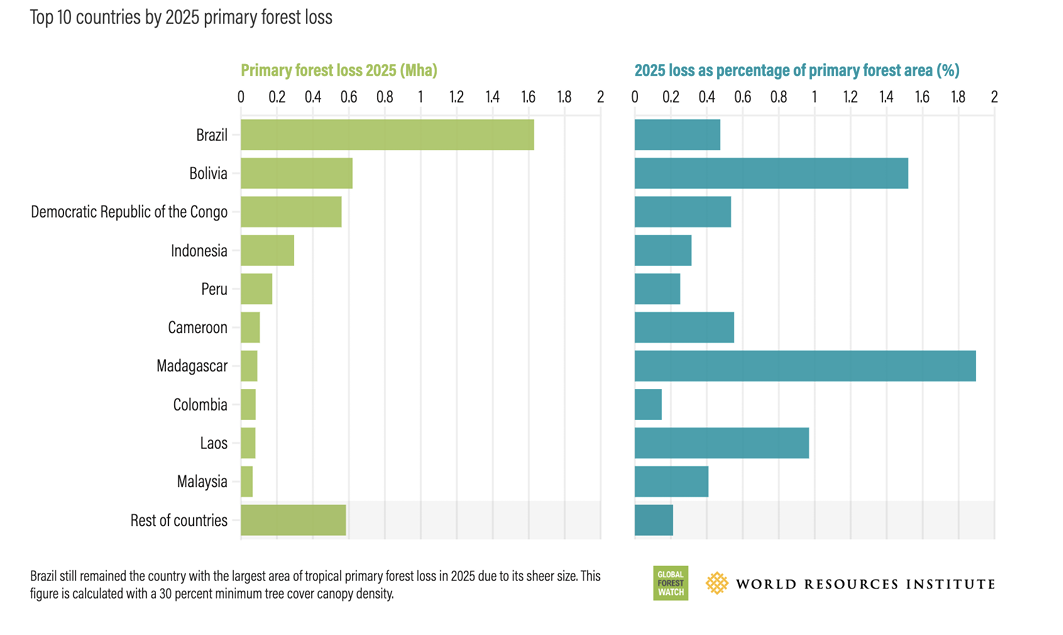
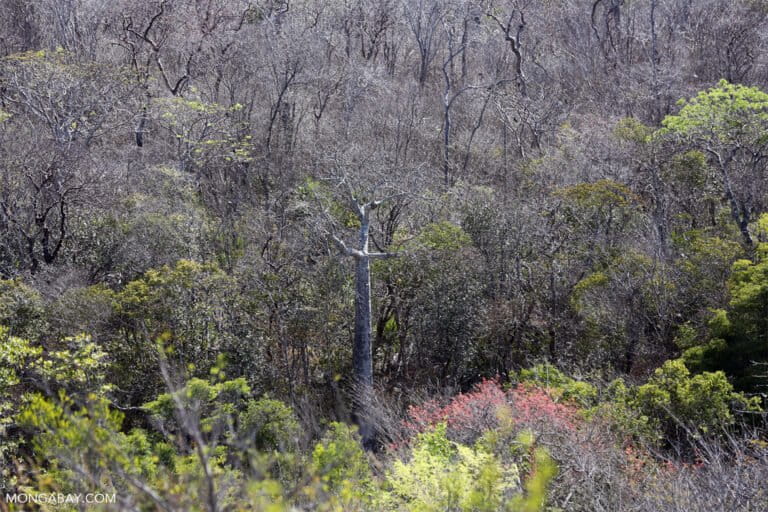
In 2025, Madagascar recorded the highest proportional loss of primary forest, with nearly 2% of its remaining forests cleared in a single year.
“We know that forest fragments, even those inside national parks, are more likely to be cleared [in these countries],” Hansen said. “So this is like emergency-level interdiction to save these forests.”
High-loss countries
A different dynamic is at play in countries with large forest areas.
Brazil, the Democratic Republic of the Congo and Indonesia are the top three countries for total remaining tropical forest cover. In 2025, Brazil recorded its lowest rate of non-fire primary forest loss on record. At 1.63 million hectares (4.03 million acres) of primary forest loss, the figure is down 41% from 2024. It lost about 0.5% of its primary forests — proportionally lower than many smaller countries.
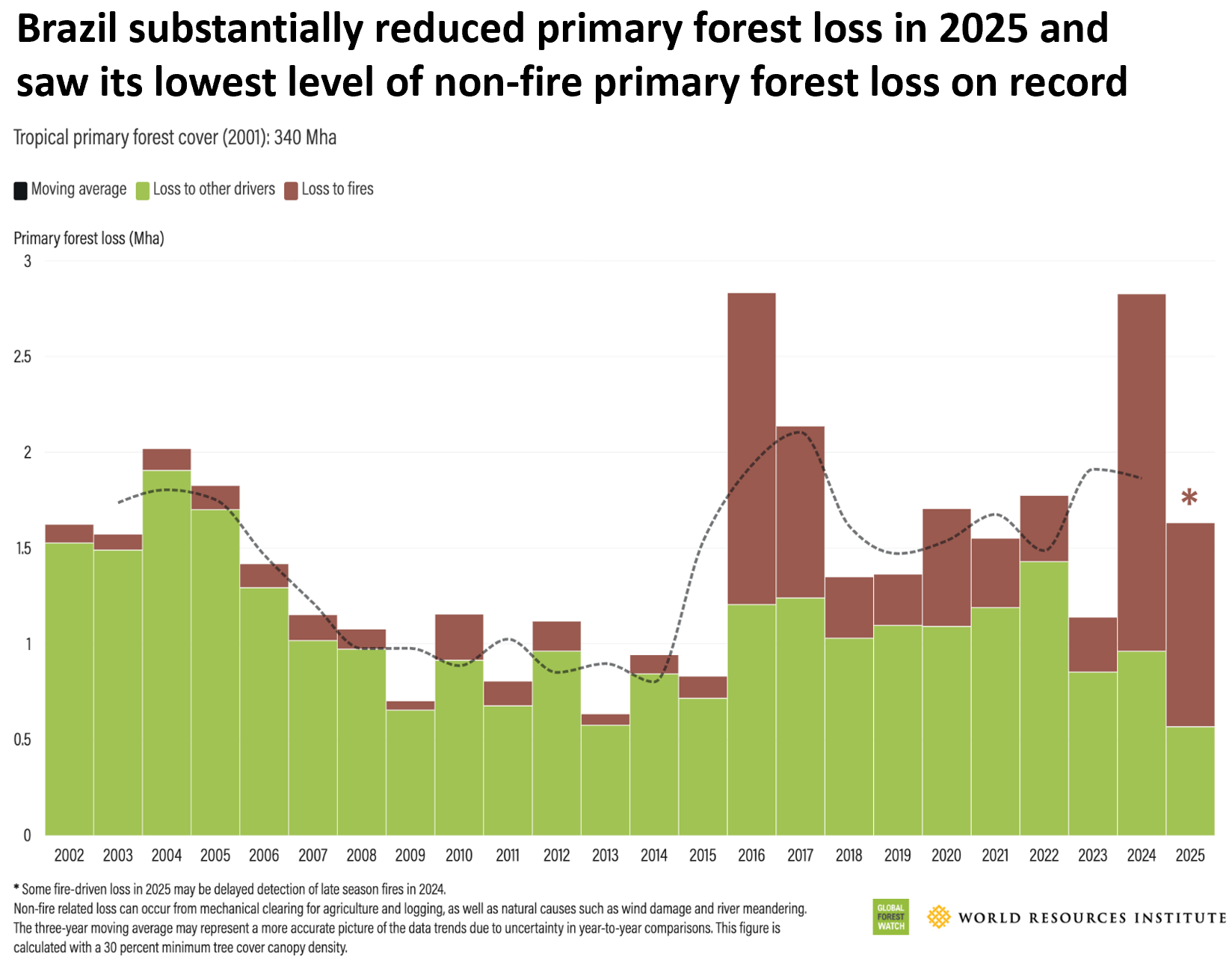
The decline aligns with official data from Brazil’s PRODES monitoring system and reflects stronger environmental enforcement since President Luiz Inácio Lula da Silva returned to office in 2023. The government has relaunched and expanded its antideforestation framework, PPCDAm, and increased enforcement, with environmental violation notices up 81% and fines up 63% compared to the previous administration.
“Brazil’s progress shows what’s possible when forest protection is treated as a national priority,” said Mirela Sandrini, executive director of WRI Brasil.
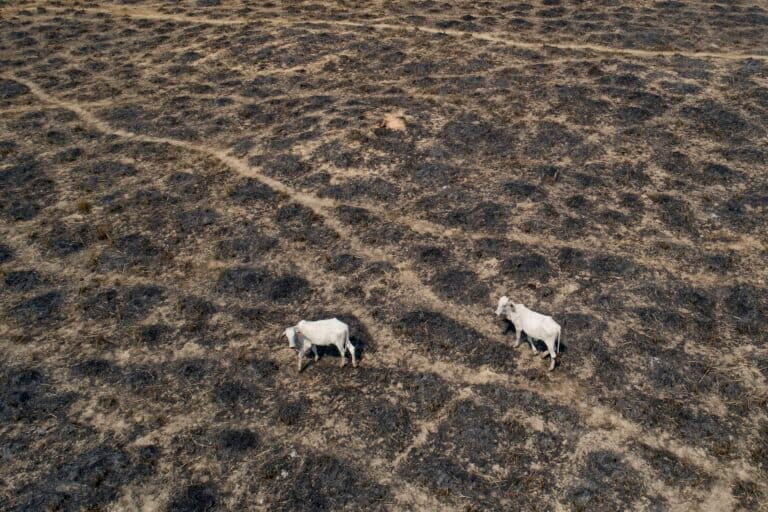
But the gains are not guaranteed. Sandrini noted that Brazil’s landscape is becoming more flammable, and that enforcement alone will not be enough.
Protecting progress will require stronger community-based prevention and economic incentives to keep forests standing, including initiatives such as the Tropical Forests Forever Facility (TFFF), she said.
Nature-based finance
Launched by Brazil at the COP30 climate talks in Belém last year, TFFF aims to channel billions of dollars to countries that conserve forests relative to a baseline.
“It is important to note that TFFF is one of the few initiatives that explicitly incorporates fire into its financial design, including a specific discount for forests degraded by fire,” Sandrini said. “This is highly innovative, and it is one of the initiatives to watch over the next one to three years.”
Such mechanisms may be particularly relevant for countries with high forest cover and relatively low deforestation, such as the Republic of Congo or Gabon.
“In these cases, mechanisms like the TFFF may be more relevant, since they focus on compensating countries for keeping forests intact,” Hansen said.
Sandrini also pointed to payments for ecosystem services as another promising approach.
Bolivia’s rise
Bolivia, historically not among the top deforesters, has emerged as one of the fastest-rising sources of tropical forest loss.
In 2025, it recorded the second-highest level of tropical primary forest loss globally, with 620,630 hectares (1.53 million acres) cleared — surpassing the DRC despite having far less forest area.
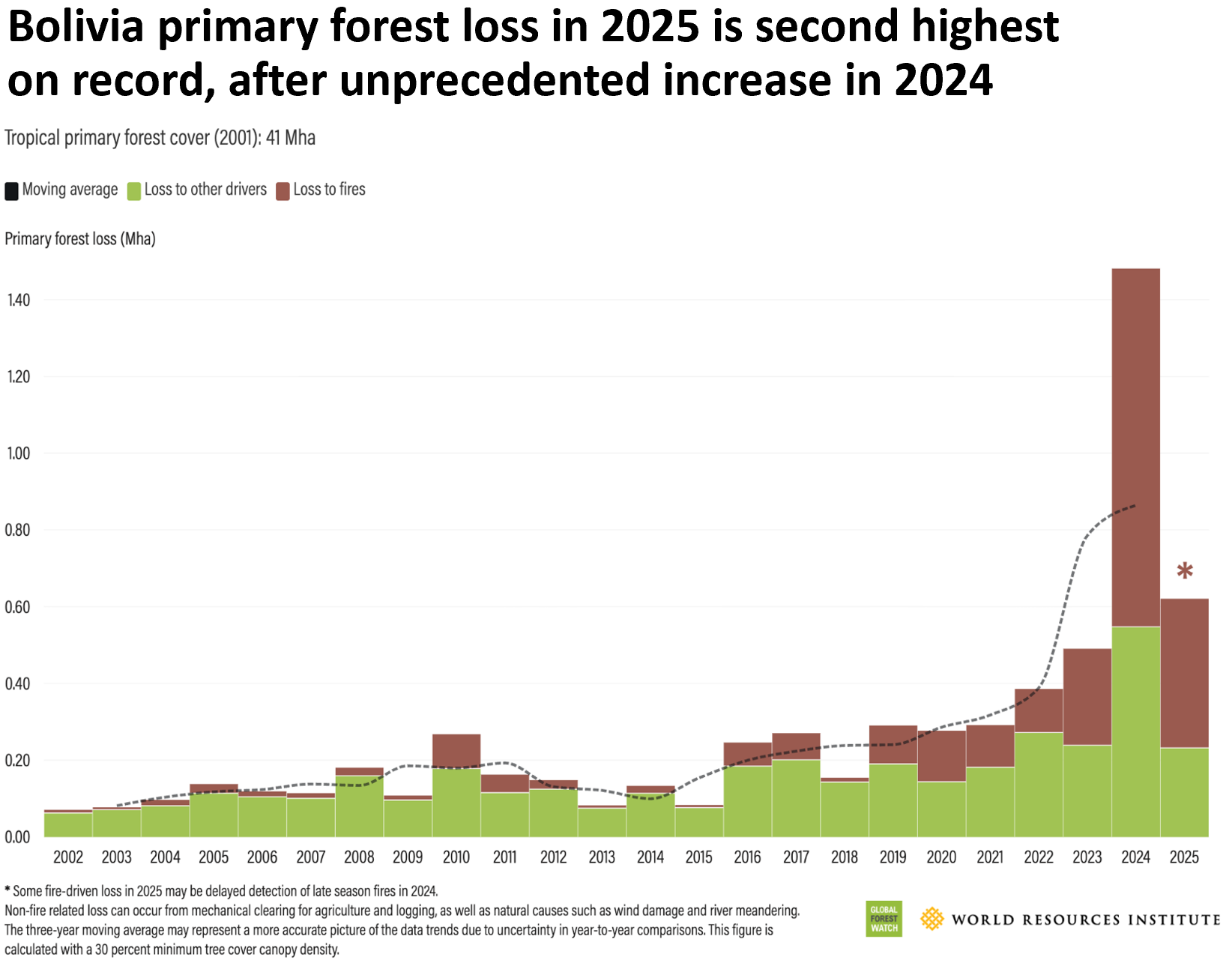
The increase was driven by expanding cattle ranching and crop production, alongside increasingly severe fire seasons. Much of the loss is linked to fires, often set by humans.
“With a population of around 11 million, it is experiencing anomalously high loss and conversion, as well as fire dynamics,” Hansen said. “This reflects weak governance and, until recently, a lack of awareness within the country about the scale of change.”
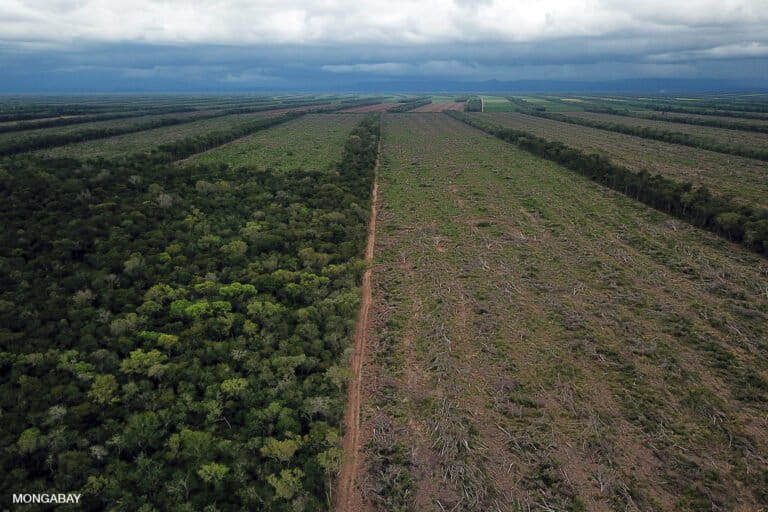
Democratic Republic of Congo
The DRC, home to the world’s second-largest expanse of tropical rainforest, ranked third.
Primary forest loss declined by 5% in 2025, but non-fire loss reached its highest level on record. Small-scale shifting cultivation accounted for 86% of the country’s forest loss, alongside widespread wood harvesting for fuel.
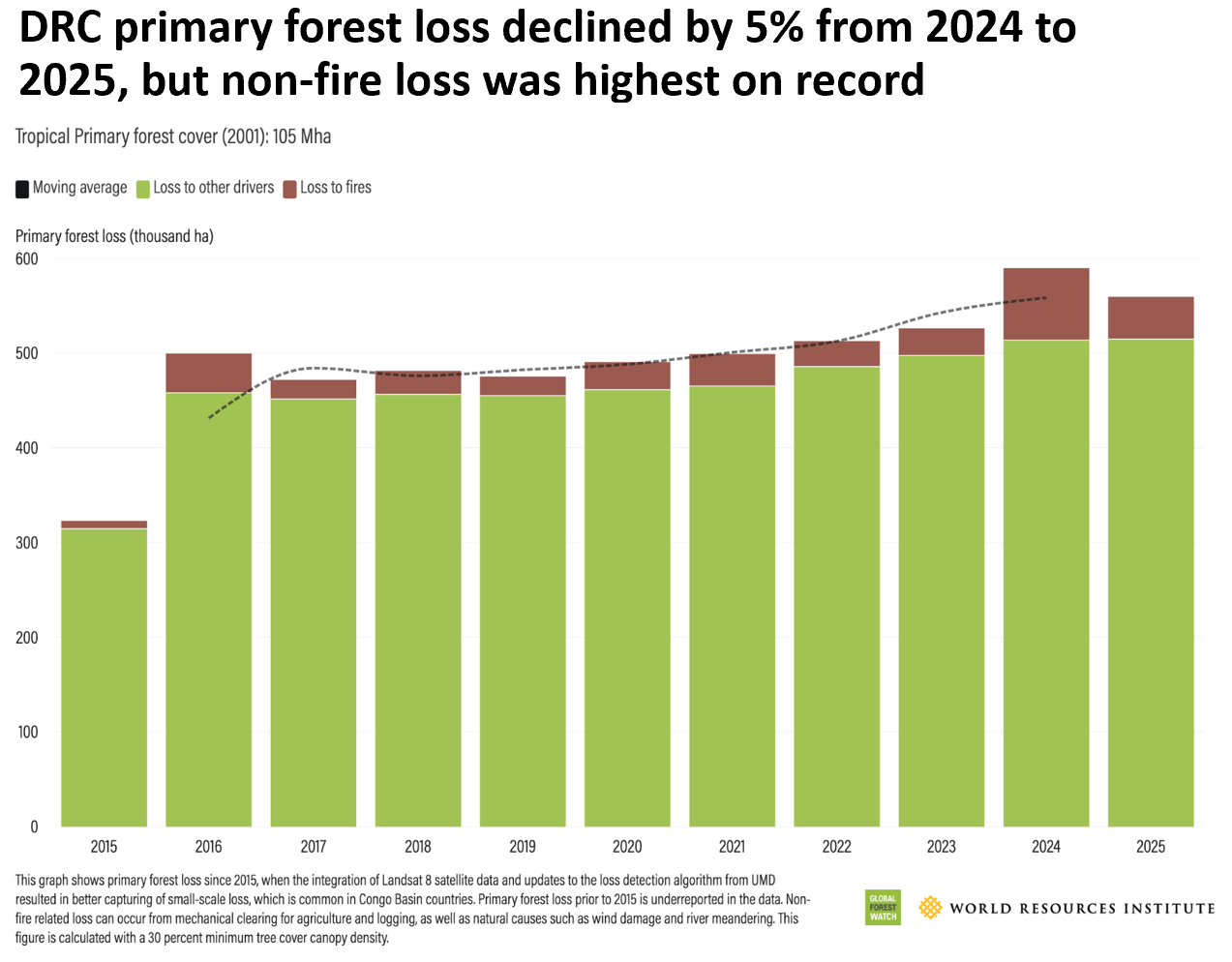
Despite the high total loss, the rate relative to remaining forest was lower than in many countries, at around 0.5%.
Teodyl Nkuintchua, Congo Basin strategy and engagement lead at WRI Africa, said a worrying trend is that forest loss is increasing even in community-managed areas.
“We have invested a great deal of attention and time in establishing these community forest concessions, but not enough in helping Indigenous peoples and local communities improve their practices,” he said. “There has not been sufficient effort to put in place systems that reconcile forest protection with development objectives.”
Ensuring that community forest management provides viable livelihoods will be critical, he added.
“So it is not just about creating community forest concessions,” Nkuintchua said. “It is also about taking the additional step of ensuring that they function as viable economic and development options for the people who depend on them.”
Indonesia
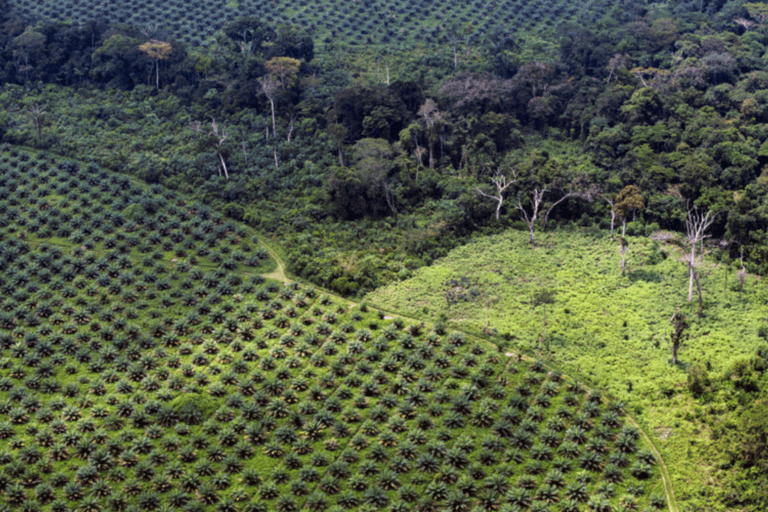
Indonesia ranked fourth, with 296,000 hectares (730,000 acres) of primary forest loss in 2025 — a 14% increase from the previous year, though still well below levels seen in the mid-2010s.
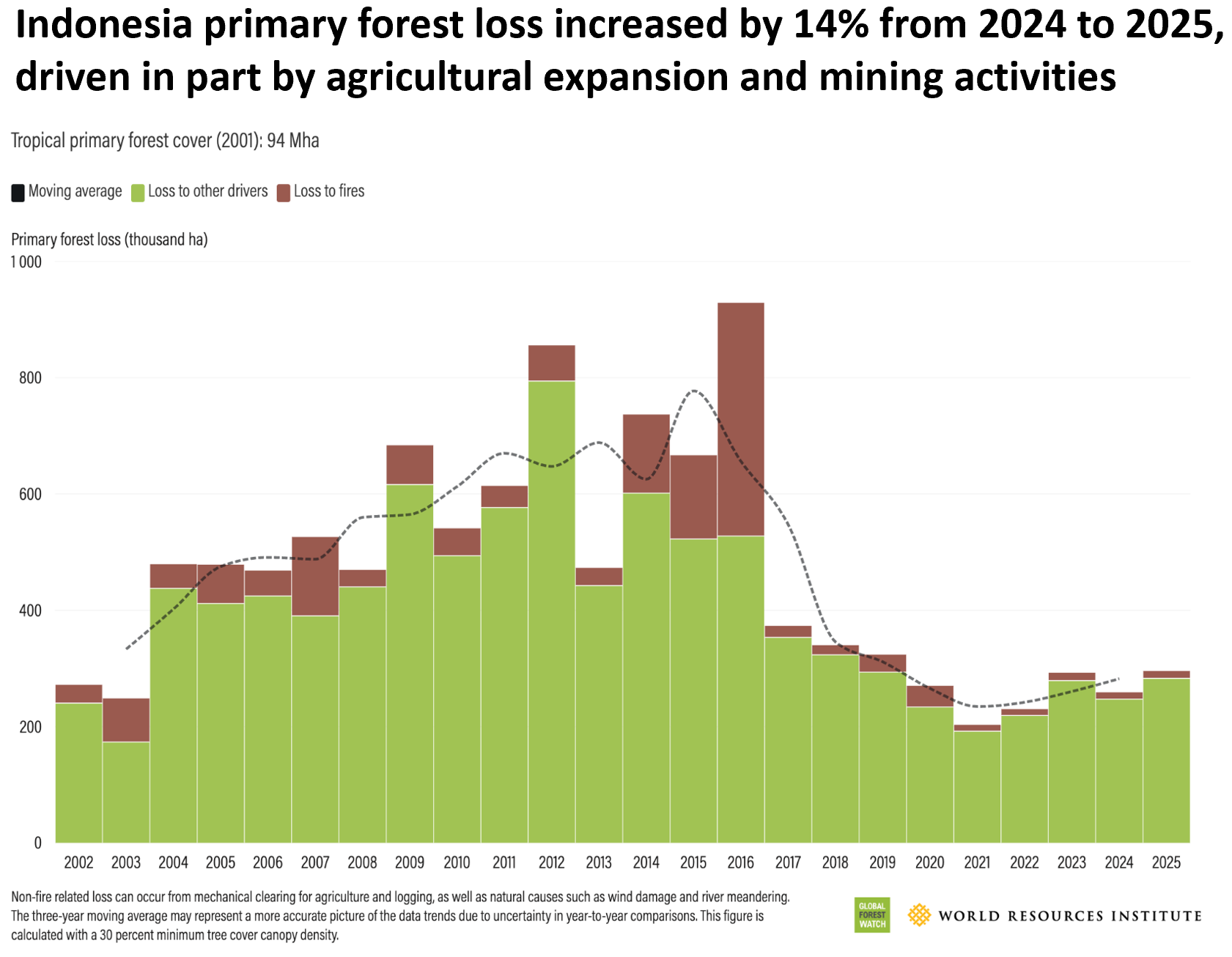
WRI attributed the longer-term decline to government policies, including a permanent moratorium on new permits in primary forests and peatlands, strengthened fire prevention, and the FOLU Net Sink 2030 target. Private-sector commitments and expanding recognition of Indigenous land rights have also played a role.
However, pressures remain.
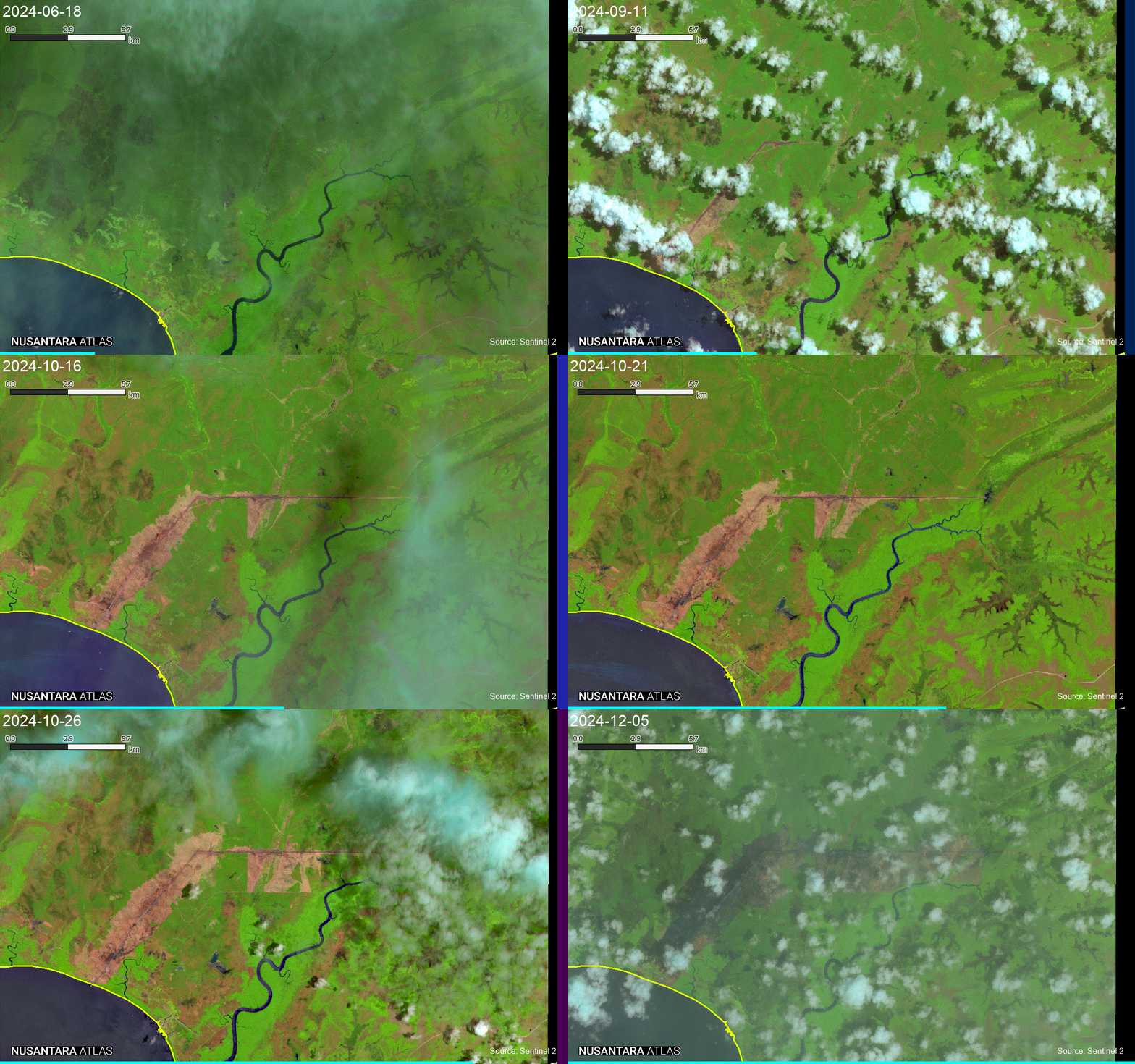
Forest clearing linked to the government’s food estate program in South Papua accounted for about 10,000 hectares (25,000 acres) of primary forest loss last year, said Arief Wijaya, managing director of WRI Indonesia. Much of the expansion has taken place on degraded land or wetlands, but infrastructure development could open new areas.
“The construction of road infrastructure — about 135 kilometers [84 miles] extending into the interior of Papua — could pose a significant threat,” Arief said.
He urged the government to prioritize the estimated 10 million hectares (25 million acres) of degraded land that could support agricultural expansion without further forest loss.
Mining, particularly for nickel, has also contributed to deforestation in parts of the country.
Separate analysis by Indonesian NGO Auriga Nusantara found a much higher figure — 433,751 hectares (1.07 million acres) of forest loss in 2025. Goldman attributed the difference to methodology, noting that Auriga includes secondary and regenerating forests, while WRI focuses on primary forests. When adjusted for comparable scope, WRI estimated 410,000 hectares (1.01 million acres) of total forest loss.
“The two systems broadly tell a consistent story,” Goldman said.
A fragile decline
Researchers caution that the 2025 decline may reflect a lull after an extreme fire year rather than a lasting shift.
The forces driving forest loss — including markets, governance and climate — are becoming more volatile and harder to manage and control.
Climate-driven fires are playing an increasingly central role. Hotter, drier conditions are making forests more flammable, while fires release large amounts of carbon, reinforcing global warming.
Globally, 25.5 million hectares (63.1 million acres) of tree cover were lost in 2025, with 42% driven by fire — an area larger than the United Kingdom.
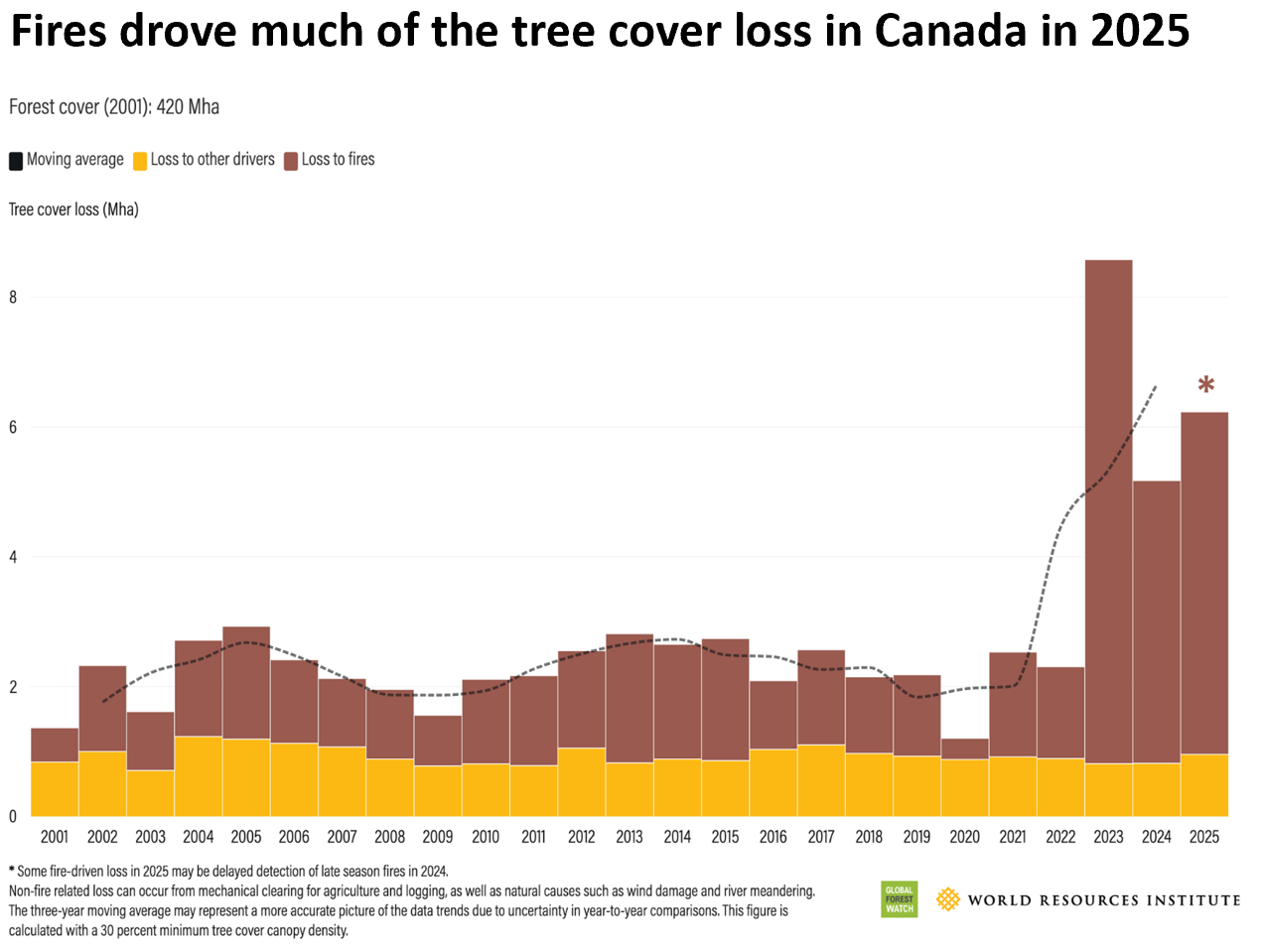
Canada alone lost 5.3 million hectares (13 million acres) to wildfires, its second-worst year on record, with additional fires across Southern Europe.
“Climate change and land clearing have shortened the fuse on global forest fires,” Hansen said. “They are turning seasonal disturbances into a near-permanent state of emergency.”
With a potential El Niño developing in 2026, risks may rise again.
“One thing we do see is that temperature anomalies in the first three months of the year — especially in the Northern Hemisphere — are very high,” Hansen said. “That raises the question of whether this will translate into increased fire activity.”
Rod Taylor, WRI’s global director of forests, said forests are becoming less resilient under these conditions.
“In the past, natural forests were generally resilient — they could take care of themselves under normal climate conditions,” he said. “But with increasingly intense fires and droughts, we now have to actively think about how to make forests more resilient.”
The progress seen in some countries is real, he added, but remains fragile.
“These are inspiring examples of what can be done to curb deforestation,” Taylor said. “But also a reminder of how much the fate of our forests hinges on political will and the resilience that can be built now in the face of a changing climate.”
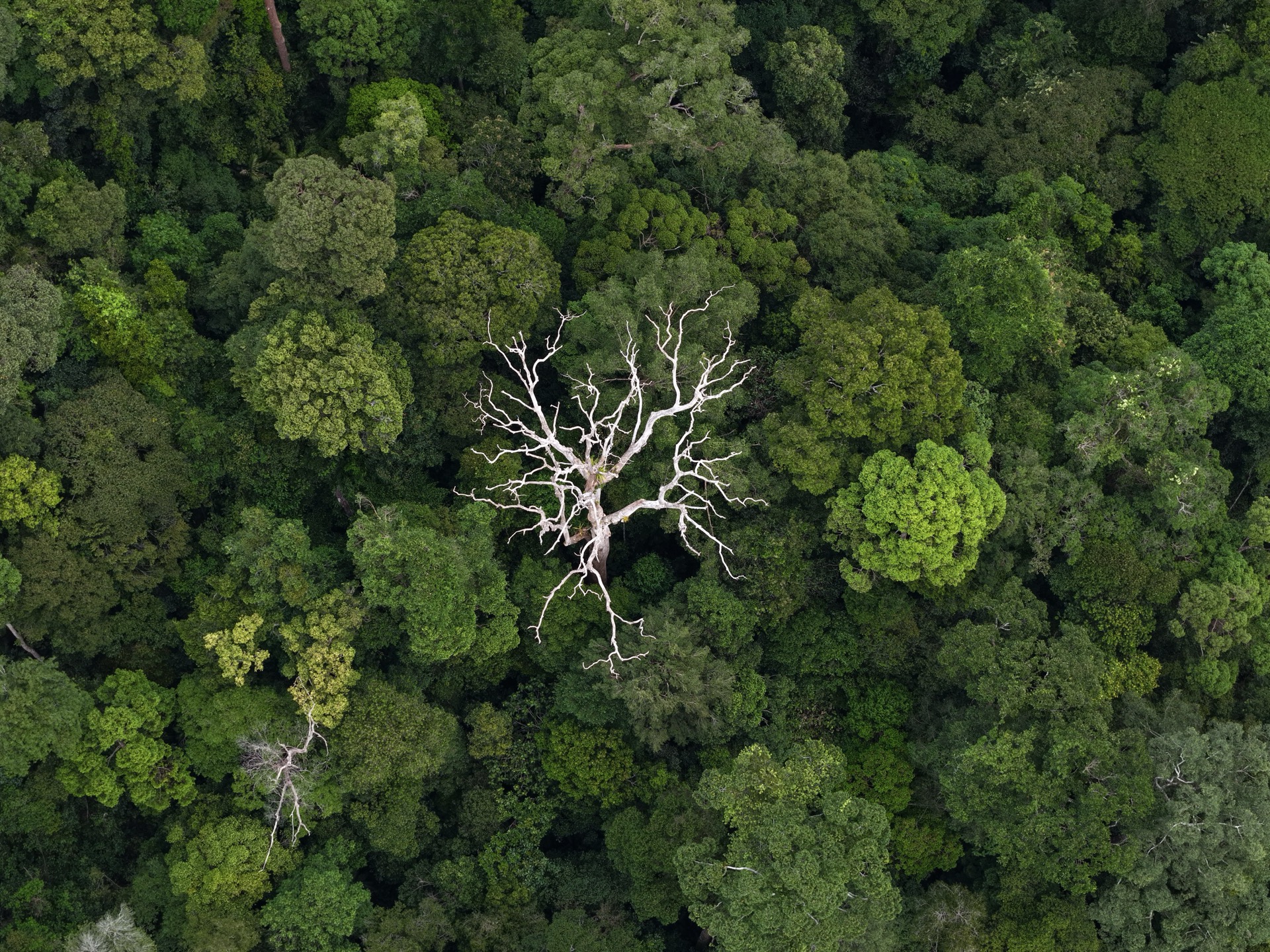
Banner image: Dead rainforest tree in Borneo. Photo by Rhett Ayers Butler.
FEEDBACK: Use this form to send a message to the author of this post. If you want to post a public comment, you can do that at the bottom of the page.
