

- After more than two years of delays, Ghana’s parliament has ratified a deal with a subsidiary of Australian miner Atlantic Lithium to develop the country’s first lithium mine.
- The company received permission to develop a mining concession in Ewoyaa in 2023, and under Ghanaian laws restrictions were put in place on agricultural and other economic activities in that area.
- But delays in parliamentary ratification as a result of renegotiating the deal have meant that around 1,500 farmers are still awaiting compensation for loss of access to their land and livelihoods.
- Advocates warn the project could now be fast-tracked at the expense of community rights, citing Ghana’s past experience with industrial mining and the environmental, social and governance challenges associated with lithium mining in other parts of the world.
EWOYAA, Ghana — In March, the Ghanaian parliament approved what could become the West African nation’s first lithium mine. Atlantic Lithium’s Ewoyaa project sets the stage for Ghana to become a key supplier in the critical minerals supply chain, but some experts say the rights of communities impacted by the project are at risk.
Ghana’s Ministry of Lands and Natural Resources granted the mining lease to Barari DV Ghana, a subsidiary of Australia’s Atlantic Lithium, in October 2023, following the discovery of lithium deposits in and around the village of Ewoyaa in Ghana’s Central region. The lease, situated about 100 kilometers (60 miles) southwest of the capital, Accra, provides the company with exclusive rights to mine lithium for an initial period of 15 years.
In Ghana, like many countries across the world, mineral rights rest with the state, and deals granting foreign companies access to these resources must be ratified by parliament.
The Ewoyaa mine is expected to produce an estimated 3.6 million metric tons of spodumene concentrate, a mineral rich in lithium, over 12 years. The lithium will then be exported to the U.S. and further refined for use in electric vehicle batteries. At least 50% of the spodumene concentrate has already been committed to North American producer Elevra Lithium, which supplies Tesla. According to Ghanaian NGO Friends of the Nation (FON), only 1% of the project’s gross revenues are earmarked for local development initiatives.
Lives in limbo
Despite securing key operational permits, the Ewoyaa lithium project faced repeated delays, due to a combination of factors including a sharp decline in global lithium prices. This led to a renegotiation of the terms of the deal between Barari DV Ghana and the Ghanaian government, a process that stretched over two years.
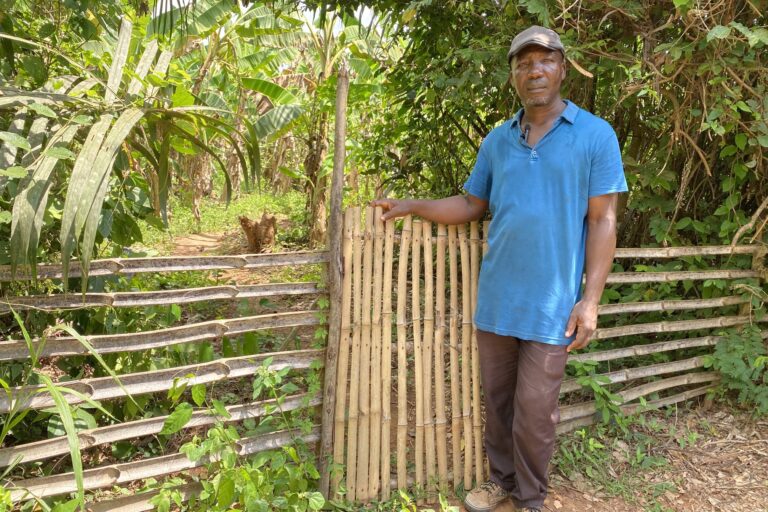
While business commentators focused on the uncertainty of the regulatory environment and delays in investment decisions, in Krampakrom village, one of 12 communities impacted by the mine, Samuel Nkrumah waited, his dream of building a small home on his plot of land in limbo.
According to FON, which has been working with affected communities to ensure fair compensation, 36-year-old Nkrumah is among 1,500 farmers who are directly affected by mining concession and who have been waiting more than two years for compensation for loss of access to land and diminished livelihood prospects.
In November 2023, according to Nkrumah, representatives from Atlantic Lithium told him his community was going to be resettled to make way for the lithium mine.
Farmers living in the mining concession were ordered to stop farming cash crops like cacao, cashew or pineapple, and to stop building on their lands after a moratorium was declared on Dec. 4, 2023. Under Ghanaian law, the moratorium is designed to prevent further construction that could generate new land claims or inflate compensation demands, pending ratification of the deal.
“They just said stop. They didn’t give us anything,” Nkrumah recalls. The directive to stop building on the land came out of the blue for Nkrumah, but the process of getting compensation continues to drag on.
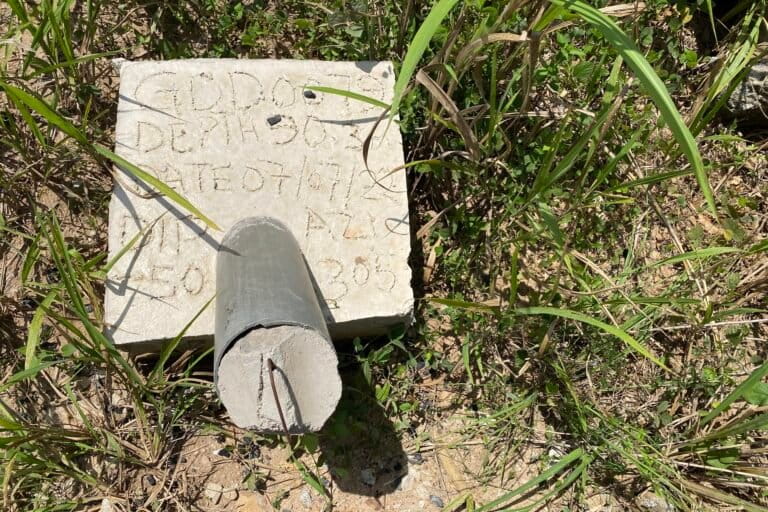
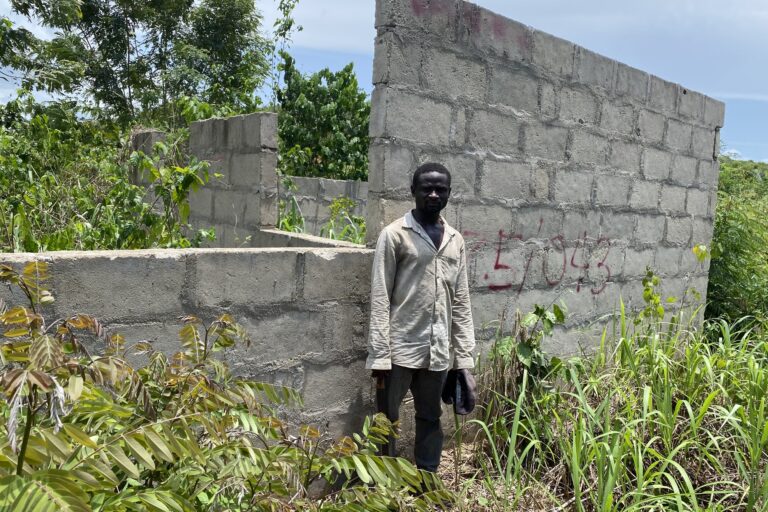
He points to the red spray paint they used to tag his incomplete house — coded numbers visible on every building in his village, which he soon learnt meant they were earmarked for demolition.
Fates tethered to global markets
Meanwhile, as part of renegotiating the terms of the deal, Atlantic Lithium asked the Ghanaian government to lower the initially agreed royalty rate of 10%. Parliament duly reduced the royalty to 5%, but subsequently backtracked following heavy public criticism. A revised lease incorporating a sliding-scale royalty of 5-12% tied to lithium prices was resubmitted in December 2025 before it was finally approved on March 19 this year.
Atlantic Lithium CEO Keith Muller called the ratification a “watershed” moment for Ghana, and said the country “has now taken a major step towards a new lithium future.”
But some activists say this “new lithium future” could leave farming communities like Nkrumah’s short-changed. “I think it is good news that the ratification has been done so that it paves way for the project to begin,” says Solomon Kusi Ampofo, program coordinator at FON. “But there is also the threat of fast-tracking things, because the company will want to also cover the lost time. We are urging caution and that the communities’ rights are respected.”
Land in the affected communities is predominantly held under customary tenure systems, with ownership largely held by male heads of families and individuals.
“Fair, adequate, and timely compensation” were listed as key mitigation measures in the company’s draft environmental impact assessment — but even after the ratification, farmers have yet to see any compensation.
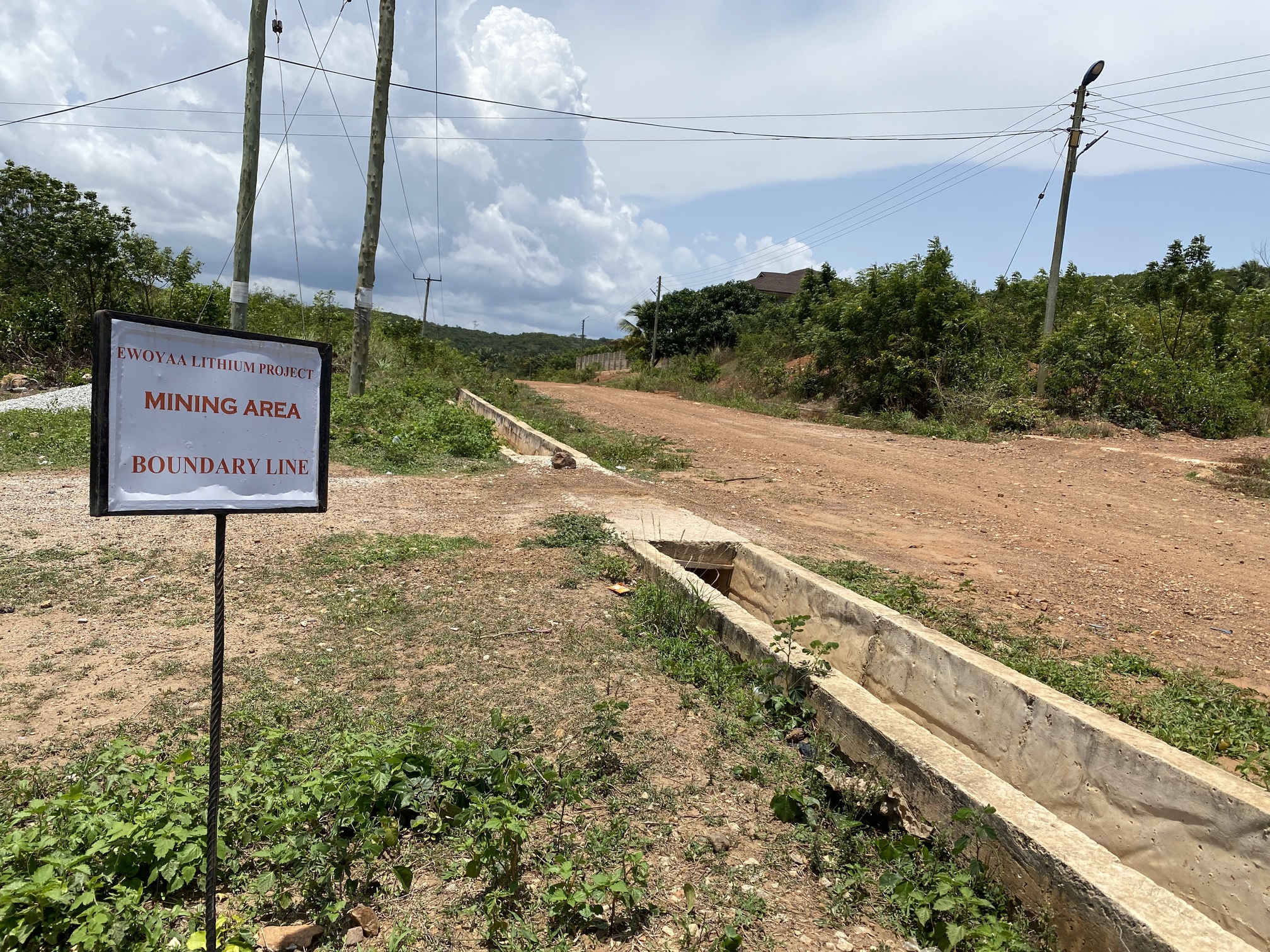
“It’s very terrible. It’s getting to three years [without compensation] and we don’t know what to do,” says James Kwegyir Ampah, a 56-year-old elder of the village of Krofu, neighboring Krampakrom. His village hasn’t been earmarked for resettlement, but he had plans for expanding his crops until he was told by village elders that part of his family’s land fell within the concession’s boundary designated by small white signs mounted on rusty poles in the dirt. Gesturing to the affected land, which his family has been farming for generations, he says: “I was supposed to weed this year. I have to go and buy [new] land and then work on it.”
In February, more than 1,000 people, mostly farmers, held a press conference in Ewoyaa and threatened to demonstrate against Atlantic Lithium over the delays in the payment of compensation promised back in 2023.
Since the ratification was finalized on March 20, a spokesperson for Atlantic Lithium told Mongabay that they are working to establish a compensation payment plan for affected communities. However, they didn’t give a concrete timeline for this.
Promises and perils
Ghana is no stranger to the toll that mining takes on communities and the environment. Industrial mining is the leading cause of forest loss in Ghana, which is one of the top gold suppliers in the world. The country also holds significant reserves of lithium. In other parts of the world, lithium mining has been associated with significant environmental, social and governance challenges.
The draft environmental impact assessment for the Ewoyaa project, seen by Mongabay, specifically mentions “adverse effects” from “water pollution” and says that “significant land clearing will lead to soil erosion and loss of habitat,” including for critically endangered species like the hooded vulture (Necrosyrtes monachus). The assessment also notes that at least 30 culturally sensitive sites, including sacred groves, shrines and cemeteries, could be impacted by the mine.
In a written response to Mongabay, Atlantic Lithium’s spokesperson said “protecting local water sources and the surrounding environment is of the utmost importance” and that it will “minimize” the project’s footprint.
Atlantic Lithium also has licenses or has applied for permission to explore and mine on more than 500 square kilometers (about 200 square miles) of land in Ghana, as well as 771 km2 (298 mi2) in Côte d’Ivoire. Muller, the company CEO, said the Ewoyaa project could create more than 900 direct and up to 2,500 indirect jobs. He added the company has already made some investments, including in the Ewoyaa community water desalination project, restoration of storm-damaged school facilities in the affected villages of Krofu and Afrangua, and support for traditional festivals.
“If I am to look at my land being taken away from me … I would have said, that is not good, but because [mining activity] here will also [increase], I think it will help [the community],” says Ampah, the farmer. “So, I do support [the mine].”
But it’s these “very short-term promises of work, developments and roads” that have “clouded [ community leaders’] whole judgment,” says Yaw Asamoah, a lecturer at the University of Education, Winneba, who studies the impacts of mining projects on communities.
“The first time they heard the lithium had been discovered, the town jubilated,” he says. “But the disapproval will come a year or two after [the mine becomes operational], especially when the people are not getting the jobs that they were promised … the same old story in other mining communities will be repeated here.”
Asamoah adds he’s also worried about the impacts of fumes, dust and noise from open-pit mining machinery, as well as the risks of contamination of underground water systems from toxic mining waste, or tailings.
A just energy future?
The government has framed the revised agreement as a better deal for the country because it means Ghana will earn more when lithium prices rise, while still keeping the project profitable when prices are low.
But according to Steven Manteaw, co-chair of the Ghana Extractive Industries Transparency Initiative, the government could have introduced a windfall tax for the wider mining sector to ensure the state could capture a fair share of profits during periods of boom. But gold prices were depressed at the time and the companies pushed back on the windfall tax, so the government dropped it, according to Manteaw.
“With the benefit of hindsight, I will say that if we had adopted that windfall tax, there would have been no need for a sliding scale today,” he says. He adds that various revisions to and inconsistencies in the country’s mining fiscal regime, from fixed rates to sliding scales, since the 1980s have put the government in a weaker negotiating position to capture the benefits from mining.
“These frequent changes to your fiscal regime do not attract investments. For me, a major lesson that I think we need to take into account is to provide investors with fiscal certainty,” Manteaw says.
Meanwhile, the U.S.-Israeli war in Iran, and the associated oil shock, threatens to push up fuel, transport and food costs, which Manteaw says reinforces the need to move away from fossil fuels. Yet he points out the contradictions of a “green energy transition” that has brought environmental damage in its wake.
“To transition, we need to clear forest to make way for extraction of green minerals, which compounds an already bad climate situation,” he says. “Very soon there will be a lot of pressure on land for agriculture, which also brings into question food sovereignty, food security.”
Manteaw says there are opportunities for communities to retain greater value through lithium byproducts, including clay, limestone and silica, which can be used to locally manufacture things like ceramics, tiles and solar panels. But he adds that “nobody in the country is thinking about these opportunities and how we align the country’s industrialization program to take advantage of them.” Still, Manteaw says he believes the Ewoyaa mine could be an opportunity to move away from “business as usual” if proper measures are put in place.
“We’ve mined gold and other minerals in this country for over a century … but the energy transition is going to lead to intensification of mining, and that will require that we strengthen our environmental management frameworks,” he says, adding that Ghana needs to be stricter on compliance to ensure that the country minimizes the toll of extraction of these critical minerals on the environment and local communities.
But for Asamoah, the University of Education lecturer, there are bigger questions to consider. “I wish a time comes where, if we discover minerals in Ghana, we say ‘let it be’ until we are able to come up with a very solid, innovative way of mining it to our benefit,” he says.
“From the studies I have done,” he adds, “Ghana is yet to benefit from mineral exploration, be it oil, be it gold, be it diamonds. And at the end of the day, it is the local communities who suffer.”
Banner Image: A sign marking the boundary of the Atlantic Lithium mine entering Ewoyaa village. Image by Maxine Betteridge-Moes for Mongabay.
FEEDBACK: Use this form to send a message to the author of this post. If you want to post a public comment, you can do that at the bottom of the page.
