

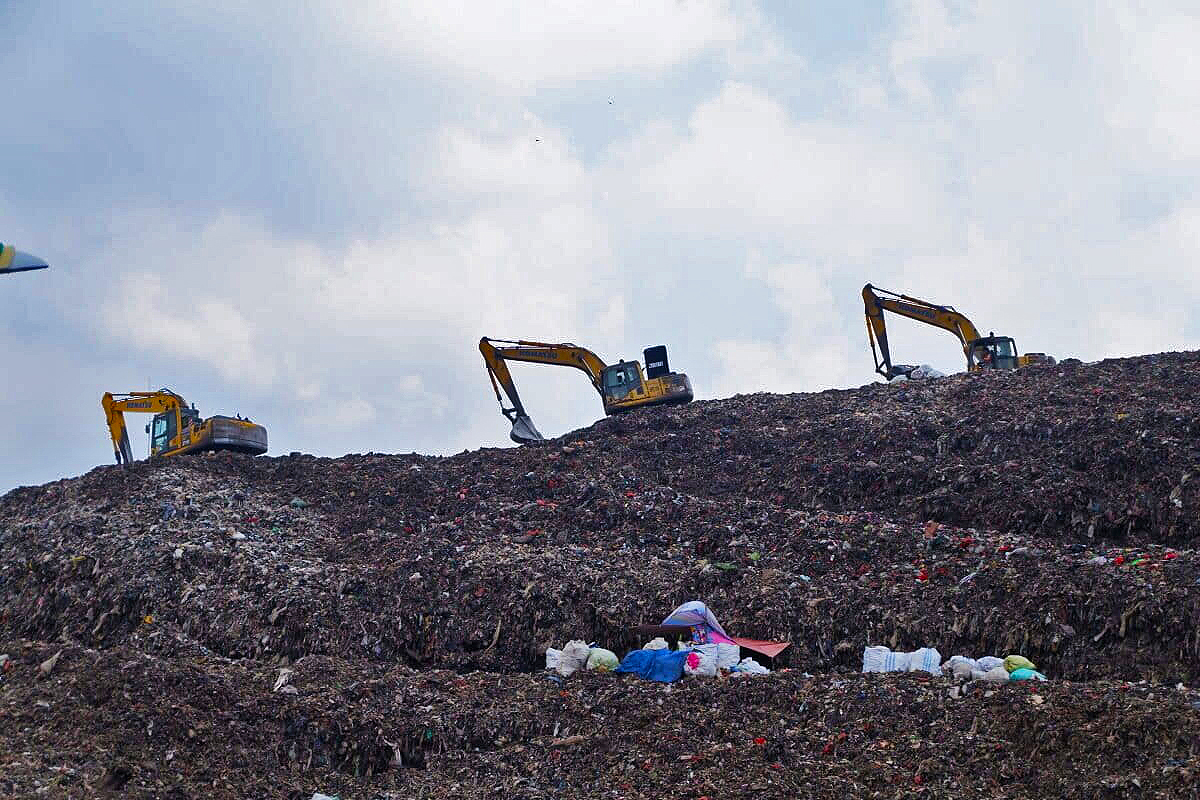
- On March 8, seven sanitation workers were killed at Southeast Asia’s largest landfill, the Bantargebang dump site east of Jakarta, Indonesia’s capital city.
- The country’s environment minister at the time, Hanif Faisol Nurofiq, told Mongabay that criminal charges against a former environment agency lead for the capital could be followed by charges against other civil servants.
- The criminal investigations into the former environment Jakarta and also in Bali were announced two months after President Prabowo Subianto announced a “war on waste” amid revived plans to build incinerators capable of turning millions of tons of household waste into electricity.
JAKARTA — Indonesian authorities are pursuing a criminal investigation into two senior public health managers over the most recent tragedy and alleged mismanagement at two of the country’s largest landfill sites.
The investigations were announced two months after President Prabowo Subianto publicly declared a “war on waste,” and just weeks after a fatal avalanche of garbage at Southeast Asia’s largest dump.
On March 8, seven sanitation and support workers were killed after being buried under a landslide of solid waste following structural failure at the Bantargebang site east of Jakarta, Indonesia’s capital city. A further six people were injured.
Bantargebang, the country’s largest landfill, spans an area the size of 200 football fields and reaches more than 50 meters (167 feet) high at its peak, taller than the Statue of Liberty.
Indonesia’s environment minister at the time said Asep Kuswanto, the former head of the Jakarta Environmental Agency, responsible for operating Bantargebang, had been charged on April 20 under the country’s 2008 environment law.
“We conducted an environmental audit, which found that required standards had not been met,” Hanif Faisol Nurofiq told Mongabay Indonesia on April 21. (On April 27, Hanif was removed from his post in a cabinet reshuffle.)
If convicted, Asep could face up to five years’ imprisonment and a fine of up to 15 billion rupiah (around $870,000).
Hanif added that environmental investigators would continue to investigate the Bantargebang tragedy, and did not rule out charging other individuals linked to the deaths.
Criminal prosecution of an environmental agency lead would represent a significant escalation in how Indonesian law enforcement responds to issues of environmental health.
On March 16, the environment ministry’s enforcement division charged I Made Teja, former head of the Bali Environment Agency, in a case linked to conditions at the Suwung landfill, located on the outskirts of the provincial capital, Denpasar.
The focus of that investigation is leeching of pollution from the Suwung landfill into nearby waterways and the ocean, according to Wayan Koster, the Bali governor.
War on waste
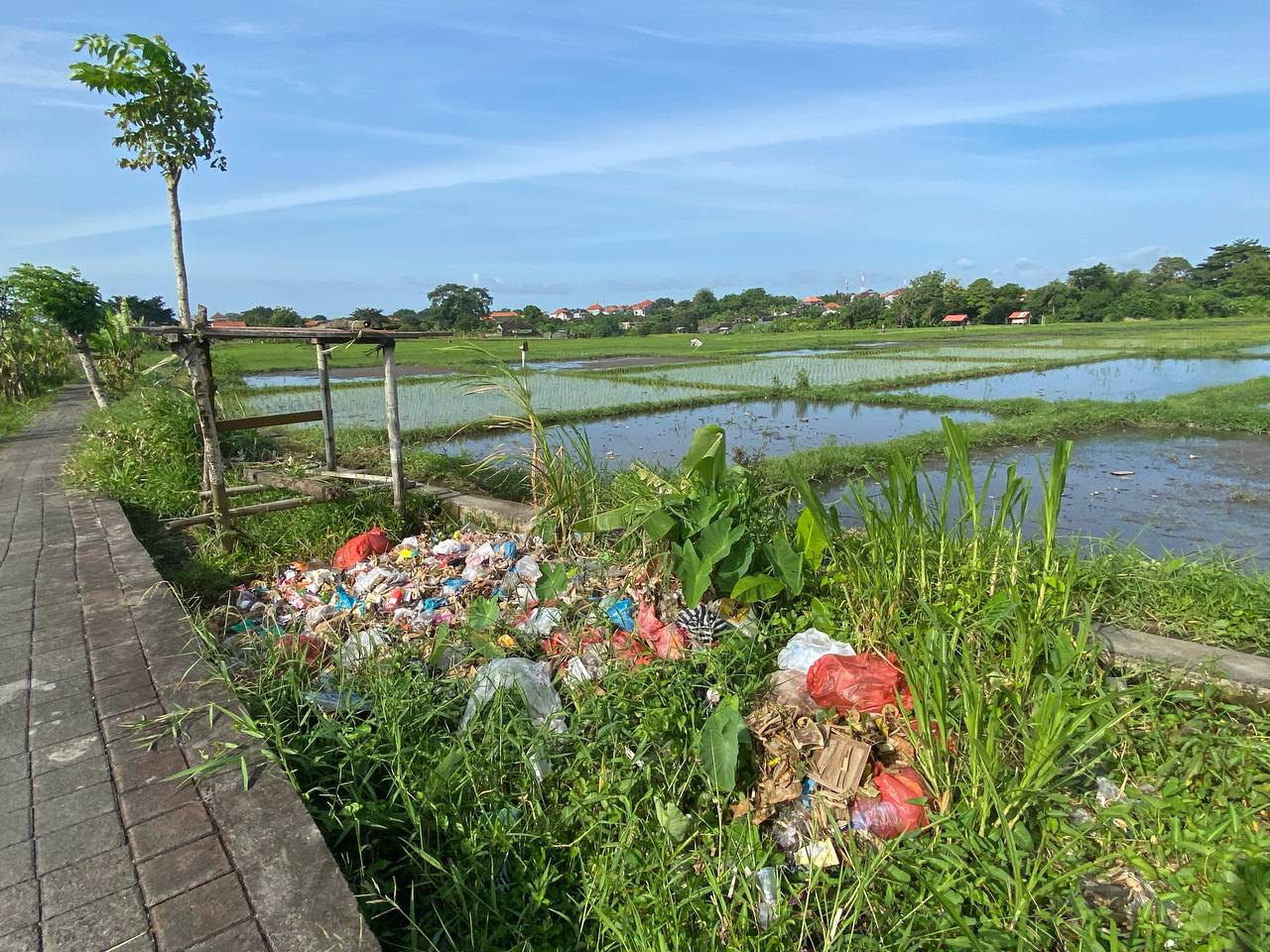
President Subianto declared a “war on waste” in a speech in February while spotlighting conditions more broadly on the island of Bali, where growth in holidaymakers and remote workers has coincided with a mounting waste crisis over the last decade.
“Sorry, governor and district leaders from Bali, but look, this is the reality of Bali in December 2025,” the president said in front of images showing shorelines obscured by litter. “This is the beach in Bali — why would tourists want to go there when they see all this garbage?”
According to the United Nations Environment Programme, Indonesia generates about 3.2 million metric tons of plastic waste every year, making the world’s fourth-most-populous country its second-biggest contributor of plastic waste, after China.
Prabowo has set 2029 as the deadline to resolve Indonesia’s waste problem.
“There will be no town, no street, no part of Indonesia, from Sabang to Merauke, that smells of garbage anymore,” Prabowo said, referring to the country’s westernmost and easternmost points.
To meet this ambitious timeline, the government is reviving plans to burn collected waste in new power-generation projects, in addition to investing in new disposal infrastructure and technology.
Last year, the World Bank announced its $350 million Local Service Delivery Improvement Project, which is designed to make waste management a mandatory service provided by local governments, along with required standards.
Earlier this month, Indonesia’s state fund established a new holding company, PT Daya Energi Bersih Nusantara (Denera), to build and operate 33 waste-to-energy plants across the archipelago at an estimated cost of 91 trillion rupiah ($5.3 billion), around 70% of which is expected to be financed through debt.
Governments in Indonesia have often set highly ambitious project timelines, and experts say waste-to-energy plants will likely require sustained political backing over several years. That reflects risks ranging from uncertain revenues and local pollution concerns, to doubts over reliable feedstock supply.
Waste collection is the purview of more than 500 district and city governments across Indonesia, but Prabowo has signaled power could be redeemed by Jakarta if performance doesn’t improve.
“If necessary, for the benefit of the people, the central government will take charge,” the president said in a Feb. 2 speech just outside Jakarta, adding that military and police could take the lead in managing waste disposal.
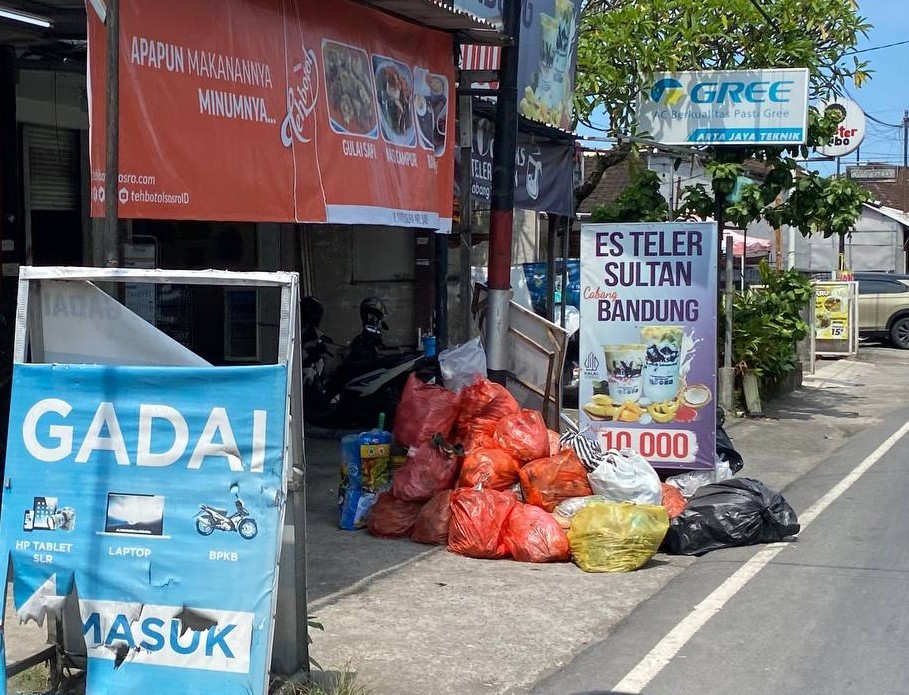
Implementing radical change on ambitious timelines without workable alternatives in place can create acute challenges. Since April 1, shortly after Bali’s former environment chief was charged, the provincial government has banned organic waste from the Suwung landfill in Denpasar. Anecdotal reports suggest the move has led to waste piling up on streets and a resumption of households burning waste in many areas, a significant source of local air pollution.
Further investigation
Civil society organizations say that the deaths of seven people working for such low incomes in extremely dangerous conditions in Bantargebang demands accountability and change.
Bagong Suyoto, chair of the National Waste Coalition, a civil society organization, called for strong criminal penalties for anyone found culpable of negligence over the Bantargebang tragedy.
The environment ministry imposed an administrative sanction in December 2024 for noncompliance, then issued formal warnings over standards at Bantargebang, before ordering a mandatory environmental audit. The case was then transferred to the police and prosecutors.
“A review was carried out of a number of parties, including local government officials and the Bantargebang management, supported by expert testimony in the fields of environmental pollution, state administrative law and criminal law,” said Rizal Irawan, the environment ministry’s deputy for law enforcement.
A week before Asep was charged, he was replaced as the Jakarta Environment Agency head by the Jakarta governor, Pramono Anung.
Muhammad Aminullah, at the Jakarta chapter of the Indonesia Forum for the Environment (Walhi), the country’s largest environmental pressure group, said the government must launch a thorough review of what led up to the latest workplace deaths at Southeast Asia’s largest landfill.
“The government must evaluate what was the negligence, where were the failings, and how to resolve them going forward,” Muhammad said.
A spokesperson for the Jakarta Environment Agency did not respond to requests for comment by the time this story was first published. Asep Kuswanto did not respond to requests to comment. I Made Teja could not be reached for comment.
Banner image: Excavators clear a pile of trash at the Bantargebang landfill following a landslide in March. Image by Achmad Rizki Muazam/Mongabay Indonesia.
This story was first published here and here in Indonesian on April 14 and 24, 2026.
Pilot projects aim to break Indonesia’s habit of burning household waste
