

- Scientists have discovered what may be one of the world’s largest cold-water coral reef systems, located about 1,000 meters (3,300 feet) deep in Argentina’s territorial waters, with much of it remaining unmapped.
- The reef, dominated by the rare coral species Bathelia candida, hosts a surprisingly rich ecosystem, including dozens of deep-sea species new to science.
- Researchers found signs of human impact, including fishing debris and possible trawling damage, and worry the reef area might also be targeted for oil and gas exploration.
- The researchers are testing restoration techniques, including the installation of 3D-printed “artificial corals,” which they hope will encourage the rapid growth of new corals.
Biologist Erik Cordes has spent much of his career studying cold-water reefs — coral systems typically found in chilly, dark waters far below the ocean’s surface. But his latest project took him by surprise when he and a group of colleagues discovered what might be one of the world’s largest deep-sea, cold-water reefs.
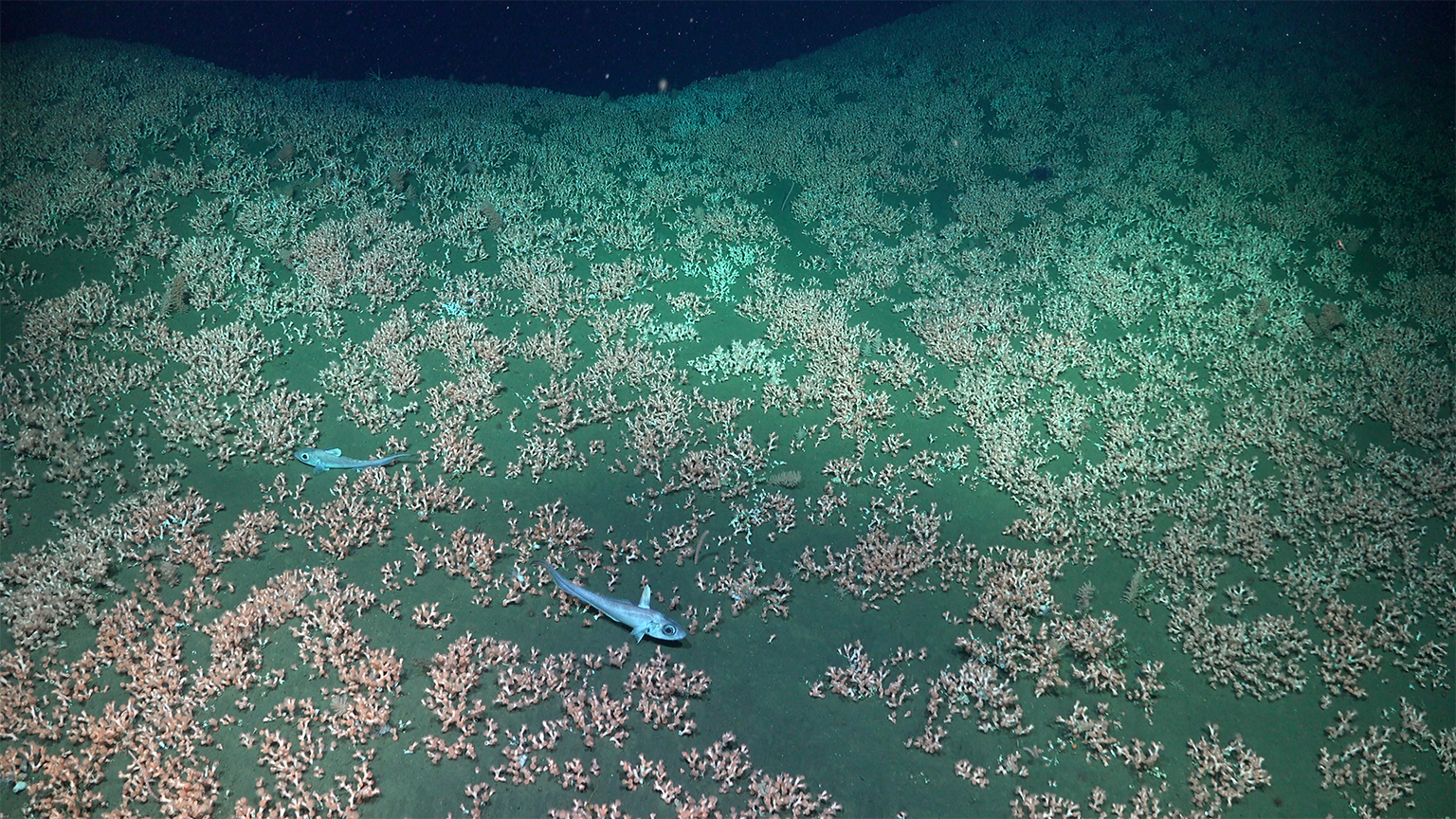
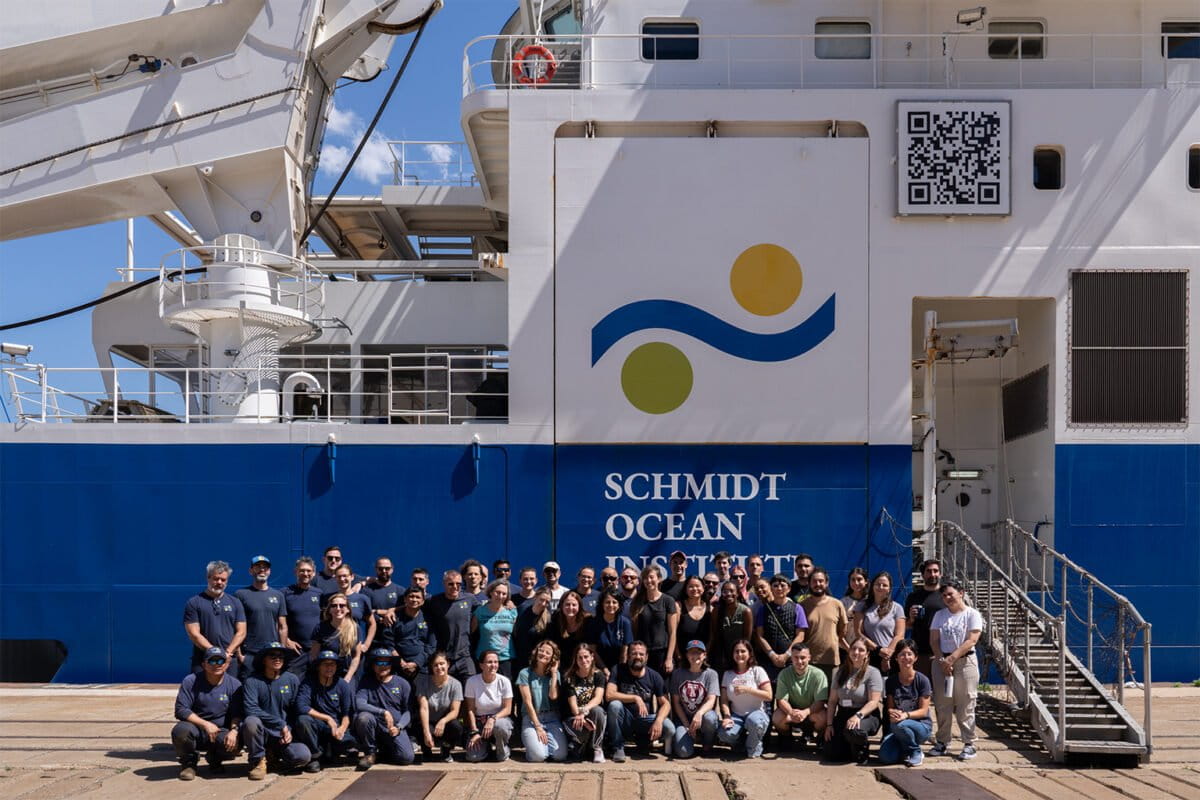
Over the course of two expeditions aboard the research ship R/V Falkor (too) — first in July 2025, and then in December 2025–January 2026 — Cordes and a team of scientists explored a previously undocumented cold-water coral reef system along a 900-kilometer (560-mile) stretch of Argentina’s territorial waters, about 1,000 meters (3,300 feet) below the surface. Globally, cold-water reefs can be found in depths as shallow as 50 m (164 ft) and as deep as 4,000 m (13,100 ft).
Just one of the coral mounds — underwater hills made up of coral skeletons topped by living coral that take thousands or even millions of years to form — stretched out over an area of 0.4 square kilometers (0.15 square miles), nearly the size of Vatican City. The expeditions, mounted by the U.S.-based Schmidt Ocean Institute, identified many more of these mounds across the 900 km that it mapped, leading the researchers to believe the corals could be part of one of the most extensive cold-water reefs in the world.
“It still amazes me when we can discover something this size still on our planet,” Cordes, a professor of biology at Temple University in the U.S., told Mongabay. “It goes to show you how much more mapping there is to be done.”
He added that further mapping efforts are necessary to confirm whether the cold-water coral off the coast of Argentina is continuous or a series of smaller areas.
‘One of the most vibrant and lush environments’
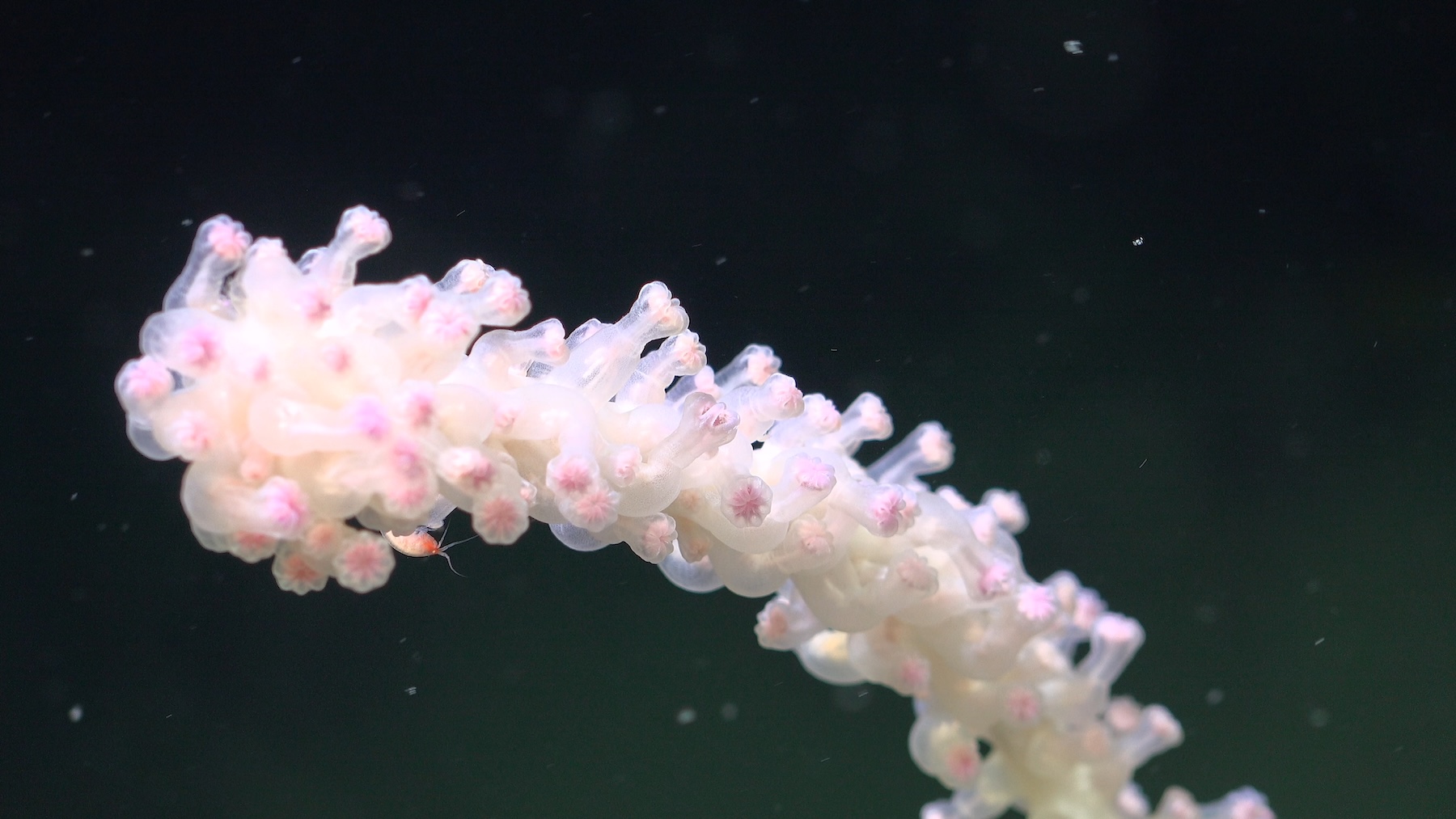
Beyond its remarkable size, the scientists found the reef is composed of the rare coral species Bathelia candida, a stony coral with soft tissue that appears pink, orange or white. Most cold-water coral reefs in the Atlantic are typically dominated by Lophelia pertusa, Cordes said.
Santiago Herrera, a deep-sea biologist at Lehigh University in the U.S., led the environmental DNA sampling during the July expedition to obtain an overall view of biodiversity in the ecosystem. Herrera said he was surprised by the abundance of life on the reef. Besides the corals themselves, the team documented squat lobsters, glass squid, brittle stars, and an array of other species living in the reef system. Herrera said the research team also identified around 40 new deep-sea species, which they have yet to reveal.
“I would say that it is one of the most vibrant and lush environments in the deep sea that I’ve ever seen,” Herrera told Mongabay. “When we go down into the deep we know that food becomes increasingly scarce, and so that means that life becomes increasingly scarce. So it’s a big surprise when you suddenly find large amounts of animals all together, clearly interacting in a very vibrant and dynamic ecosystem.”
On the other hand, Herrera noted that the area is part of a productive fishing grounds. “So perhaps it’s not so surprising that the seafloor in these regions is teeming with life,” he said.
The reef showed signs of impact from fishing activity, with lines and trash tangled up with some of the corals, and even some wrecked coral that may have been damaged by a trawler, according to the researchers.
The areas where the reefs were located might also be targeted for oil and gas exploration in the future, according to Herrera, which could disturb the reef,.
“Although these places are so lush with life, it doesn’t mean that they’re pristine or that they’re untouched by activity,” Herrera said.
‘Jump-starting’ coral restoration
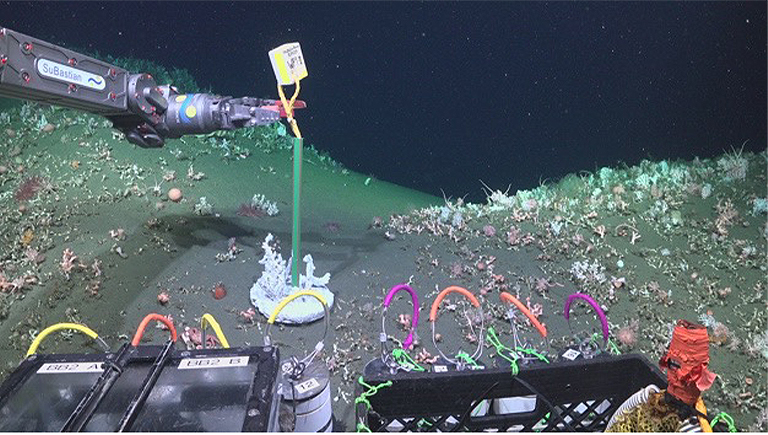
Beyond mapping and exploring the reef, Cordes and Morgan Will, a biology Ph.D. candidate at Temple University, are working on a project to develop and test techniques to restore parts of the reef damaged by fishing activities and other stressors.
Will told Mongabay that the team has been pulling knowledge from shallow reef restoration, and then “trying to put some of those concepts into focus in the deep sea.”
For instance, they’re working to install substrate — a technique also used in shallow coral restoration — which would provide a surface for the cold-water coral larvae to attach themselves to and grow, potentially helping to propagate the reef.
Cordes said they are also “jump-starting” coral growth by creating “artificial corals” — a process that involves collecting samples from the reef, scanning and digitizing them, and producing 3D-printed replicas made from cement and “coral sand,” a commercial material composed of crushed coral skeletons.
While the team is hopeful that life will colonize the structures, it acknowledges the potential limitations.
“We know some species that live on the corals have a very, very tight, specific symbiotic relationship, where one kind of brittle star will only live on one kind of coral, and you never find them anywhere else,” Cordes said. “If it’s something like that, then we don’t really expect to be able to bring those back. But fish will come back to any kind of three-dimensional structure.”
Next year, the team will also experiment with fragmenting corals and transplanting them onto the substrate. Cordes said he’s already involved in a similar effort in the Gulf of Mexico, where he leads a coral restoration project aimed at helping reefs recover after the Deepwater Horizon oil spill disaster.

‘They are hugely important’
Will said that restoring — and, crucially, preventing further damage to — these newly discovered coral reef systems off Argentina will be vital to the health of the deep ocean and the broader marine ecosystem.
“Letting the communities go away would be a huge detriment to the deep ocean for a lot of reasons,” Will said. “What we do know about the corals is that they are hugely important in the nutrient cycling of the ocean, moving all of the carbon and the nitrogen around, providing a lot of oxygen.”
Nutrient-rich waters rise in a process called upwelling, which fuels phytoplankton blooms and supports commercial fisheries. “All of our most productive fisheries around the world are in areas where there’s upwelling,” Cordes said.
Besides playing a role in nutrient cycling, cold-water reefs also create critical habitat for fish, Cordes said.
“Some of the species that we’ve always fished for … come up into the estuaries after they hatch as larvae, and then they slowly move offshore as they get bigger and bigger, and go into deeper and deeper waters,” he said. “Swordfish are at 1,000 meters on coral reefs in the deep sea, and people don’t know that.”
Cordes emphasized the need to continue mapping and studying these cold-water coral reef systems, so scientists have the information they need when offshore industrial projects are proposed. He noted that Argentina and other countries in the Global South have not had the same capacity to explore the deep ocean as wealthier nations in the Northern Hemisphere have, but that the Schmidt Ocean Institute is helping to close that gap with a research cruise planned for February, which will venture into other unexplored areas along the Argentinian margin and revisit some sites where the coral substrate was installed.
“Industrial activity, be it fisheries or oil and gas or mining in the deep ocean — all of those things are going to have an impact in the deep sea,” Cordes said. “If those are happening on a coral reef that takes thousands of years to come back, that is a much bigger impact than if it’s on the muddy seafloor that might recover in 10 years.
“So if we understand where these things are, and we understand how they work and how fragile or resilient they are,” he added, “then we can help to plan those kinds of activities more efficiently and without the impacts that might harm an ecosystem that we rely on.”
Banner image: A deep-sea coral off the coast of Argentina. Image by Schmidt Ocean Institute (CC BY-NC-SA 4.0).
Elizabeth Claire Alberts is a senior staff writer for Mongabay and was a 2024-2025 fellow with the Pulitzer Center’s Ocean Reporting Network. Find her on Blueskyand LinkedIn.
Citation:
Boolukos, C. M., Lim, A., O’Riordan, R. M., & Wheeler, A. J. (2019). Cold-water corals in decline — A temporal (4 year) species abundance and biodiversity appraisal of complete photomosaiced cold-water coral reef on the Irish Margin. Deep Sea Research Part I: Oceanographic Research Papers, 146, 44-54. doi:10.1016/j.dsr.2019.03.004
