

- Singapore’s fragmented forests are home to a small population of Raffles’ banded langurs, one of the world’s most threatened primates.
- Citizen scientists are helping conservationists protect the arboreal species across the island’s densely urbanized landscape.
- By collecting long-term and consistent data in known strongholds, volunteers have identified langur food plants and movement corridors, boosting efforts to enrich and reconnect their habitats.
- The citizen science program has also built public awareness of the elusive species, one of only three primates left in Singapore, an outcome experts hope will rouse wider support for biodiversity protection amid intense development pressure.
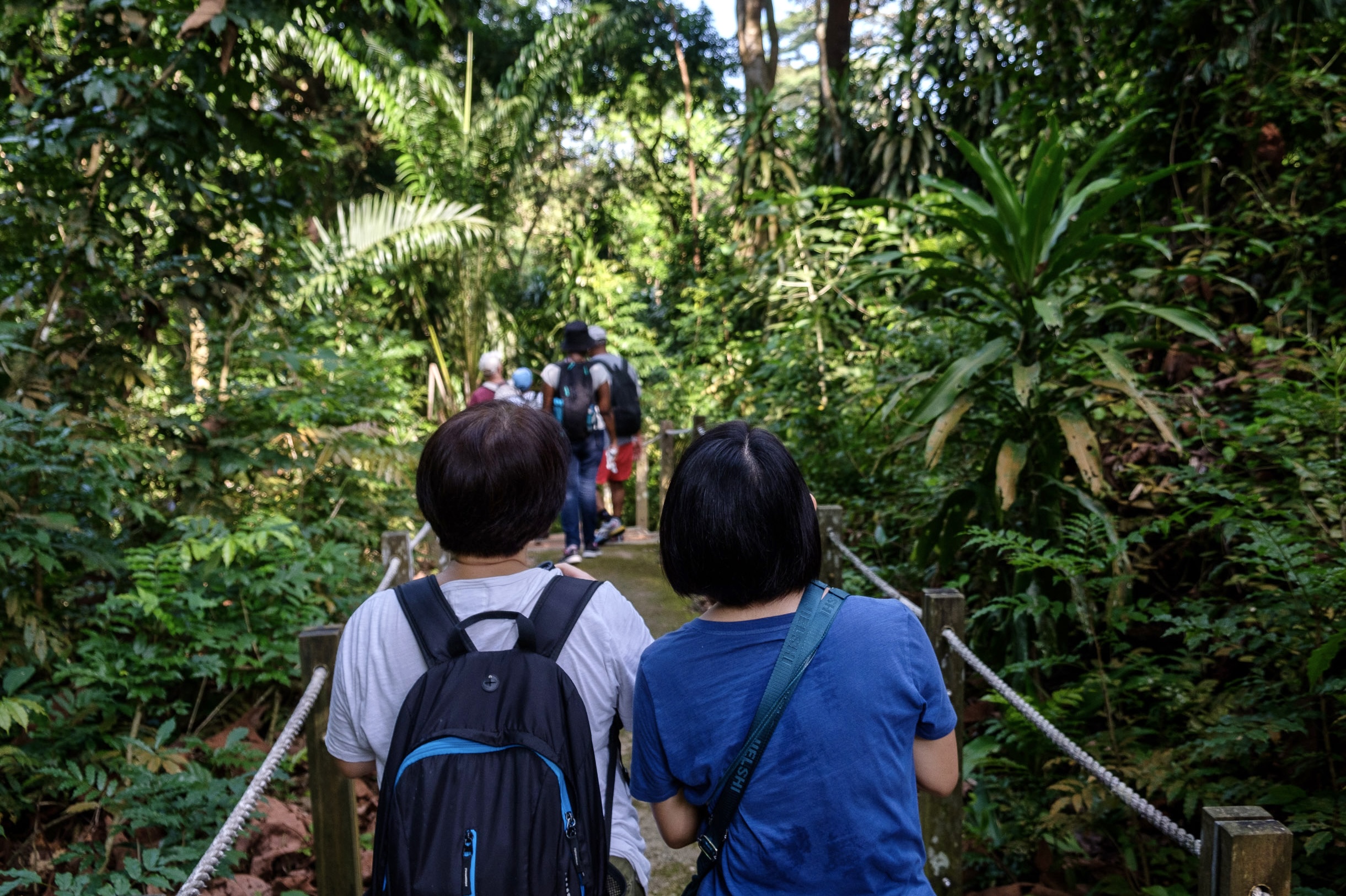
ANG MO KIO, Singapore — On the edge of a bustling Singapore suburb, Lay Hoon steps into the shade of a forest reserve she’s visited monthly for eight years to search for one of the world’s most threatened primates. Scanning the dense canopy for signs of movement, she listens intently. “Before we see the langurs, we usually hear them,” she says.
The foliage rustles above, but it turns out to be a plantain squirrel (Callosciurus notatus), one of a surprising number of small mammals found here at the Lower Peirce Reservoir Park, a 10-hectare (25-acre) patch of maturing secondary forest to the northeast of Singapore’s Central Catchment Nature Reserve.
Hoon is looking for the Raffles’ banded langur (Presbytis femoralis), a leaf-eating monkey confined to pockets of fragmented forest in Singapore and the southern tip of Peninsular Malaysia. Listed as critically endangered on the IUCN Red List, its total global population is estimated to be only 200-250 mature individuals, fewer than 80 of them in Singapore.
The extent of habitat loss in Singapore over the past two centuries cannot be overstated. Today, less than 1% of the primary forest that once stretched across much of the main island remains , and of the island’s roughly 20% secondary forest cover, only about 4.3% is considered high-quality mature forest. With their habitats devastated, many groups of terrestrial vertebrates plunged into decline. Yet even after rapid urbanization since the 1960s, small groups of langurs have clung on in isolated forest fragments.
However, as treetop specialists, langurs depend on continuous canopy cover to travel to find mates and forage for the variety of fruits, leaves and flowers that constitute their diet. Roads, powerlines and built-up areas represent insurmountable barriers to their dispersal. Without help, conservationists fear these small subpopulations could succumb to inbreeding and eventual extinction.
To ensure the long-term survival of the primates in both Singapore and Malaysia, a species action plan was developed in 2016 by the Raffles’ Banded Langur Working Group, a collaborative effort involving Singapore’s National Parks Board (NParks), the Jane Goodall Institute (Singapore), Mandai Nature, the National University of Singapore and regional partners.
Part of that plan was to launch a citizen science program in Singapore to encourage locals to participate in the species’ conservation, raise awareness about its plight and gather long-term, consistent data on the species in known strongholds.
Hoon is one of more than 100 volunteer surveyors who carry out weekend surveys at the reserve throughout the year as part of the initiative. By recording data on group sizes, demographics and behavior, volunteers have helped scientists map how langurs move through and use the urban landscape in and around the reserve, information that’s proving vital for informing conservation actions.
“We don’t see the langurs that often, so it’s really a magical moment when we can see them,” Hoon says, noting that even with no sightings, she enjoys the time spent in nature. “Walking through the forest is therapeutic,” she says.
As we walk deeper into the reserve, the hum of the nearby eight-lane Seletar Expressway gradually fades, replaced by a chorus of birdsong, cicadas and other insects.
Population growth depends on habitat availability
Despite their perilously low numbers, Singapore’s population of Raffles’ banded langurs are on an upward trajectory. The population has doubled to today’s 80 from only 40 individuals in 2011, says Andie Ang, a researcher at Mandai Nature who has been studying the langurs for almost two decades.
When she began studying the species in 2008, very little was known about it, Ang says. Sightings were so scarce that experts thought it might already be extinct in Singapore, and public knowledge about langurs was virtually nonexistent.
“A major threat to the species is actually the lack of awareness,” Ang says. “People don’t really know about them. And if you don’t know about them, you can’t really start to conserve them.”
Ang, who deputy chairs the IUCN primate specialist group, was involved in a 2023 study that estimated Singapore’s small langur population has the capacity to more than double again to 244 individuals by 2071 if efforts to maintain, protect and reconnect their habitats continue.
Achieving such a population recovery would be a boon in terms of minimizing genetic problems associated with small populations. However, it will depend on securing sufficient and connected forest habitats for the langurs to expand into, Ang says. “Habitat availability is the major constraint.”
With so many competing demands on land in Singapore, finding opportunities to expand safe habitat corridors and protected forests will always be a major conservation challenge, Ang says, yet suitable forest areas do exist.
“We do have habitats left that can support langurs, but they’re not connected,” she says. “So, we need to look into either enhancing natural connectivity or artificial connectivity,” such as installing rope bridges between forest fragments. More can also be done to secure unprotected forests near existing reserves, she adds.
Based on current knowledge of leaf monkeys in the Presbytis genus, the Singapore Raffles’ banded langurs are the only population showing significant growth, says Vincent Nijman, a primatologist at EcoVerde Global Consulting in the U.K., who specializes in the study of Southeast Asian primates.
Learnings from Singapore could therefore help guide similar efforts to recover dwindling populations across the rest of the species’ range in Peninsular Malaysia. “Ideally what we want is all the good things that are happening in Singapore [to] have a positive effect on the populations in Malaysia,” Nijman says. This would entail collaboration between scientists, authorities and citizen scientists from both countries, he says, to manage scattered transboundary groups as a single metapopulation.
Volunteer data boost conservation action
Having received foundational training in langur ecology and survey skills, Hoon and her fellow citizen science volunteers have collected valuable baseline information that’s helping conservationists manage the elusive monkeys across Singapore’s fragmented forests.
Five separate groups of langurs inhabit the Central Catchment Nature Reserve area where citizen science surveys occur, according to a 2021 study that analyzed several years of the volunteer data. Given that the numbers observed in these groups account for roughly half the population in Singapore, specialists are eager to boost habitat availability in this stronghold.
One method that’s being trialed is enrichment planting. NParks, local conservation groups and the citizen science program participants have planted several safe natural corridors around the reserve with trees and shrubs eaten by the langurs, several of which were identified by volunteer surveyors, including figs, mangroves and trees and shrubs with edible leaves.
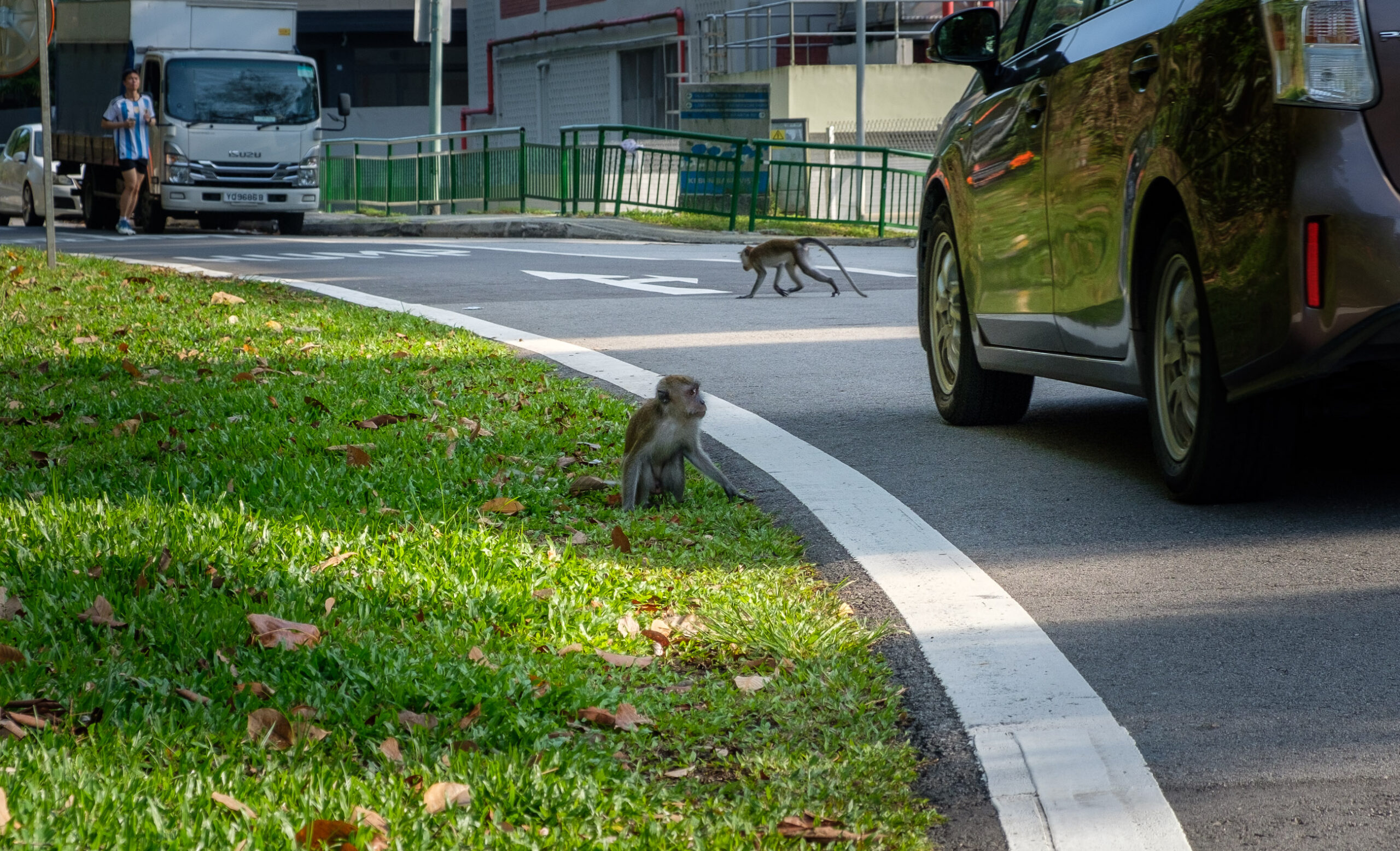
Enriching pockets of habitat between forest fragments like this provides food for the langurs and multiple other arboreal species, such as squirrels, civets and Singapore’s two other primates, the Sunda slow loris (Nycticebus coucang) and the long-tailed macaque (Macaca fascicularis), Ang says. It also increases the likelihood that langurs will move more freely and can therefore mate with individuals they were previously separated from, increasing their genetic diversity.
Ang says involving the citizen science participants in planting events is crucial for boosting morale, especially given the fact volunteers don’t spot them every time they visit the site. “Volunteers can see how their data is being applied. … They’re actually planting the food plants of the langur. It comes full circle.”
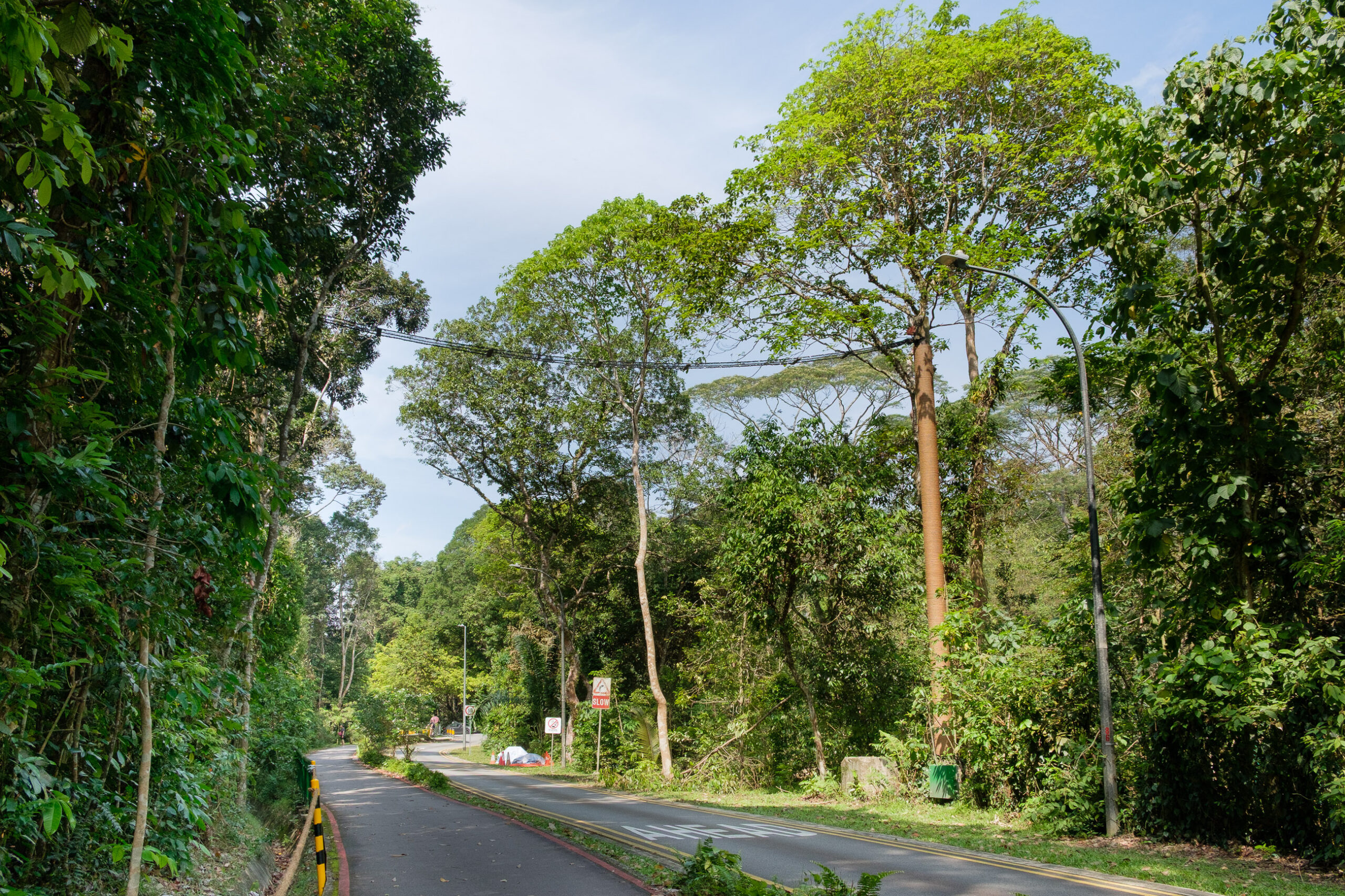
Volunteer observations of key hotspots where langurs risk coming down to the ground to cross roads between forest fragments has also enabled conservationists and local authorities to install rope bridges to minimize the risk of fatalities. Several langur road traffic fatalities have been recorded in Singapore. Lay Hoon notes that with the population so small, any more losses would be catastrophic. “We already have so few langurs, so we need to help them,” she says.
Hoon points out two such structures along a 3-kilometer (1.9-mile) stretch of road between the Lower Peirce Reservoir Park and nearby Thomson Nature Park. At 10 meters (33 feet) high, the bridges are made of steel-reinforced nylon ropes interwoven to create thin walkways over the carriageway. We also pass by several warning signs and traffic calming measures alerting drivers to the potential presence of wildlife.
Ang says the langurs were initially wary of the rope bridge, in stark contrast to the local troupe of macaques. “The long-tailed macaques were really curious,” she says. “They jumped on it, played with it, they mate on the bridge, they sleep on the bridge, they do everything on the bridge. Whereas for the langurs, it took them a couple of months before the first crossing attempt.”
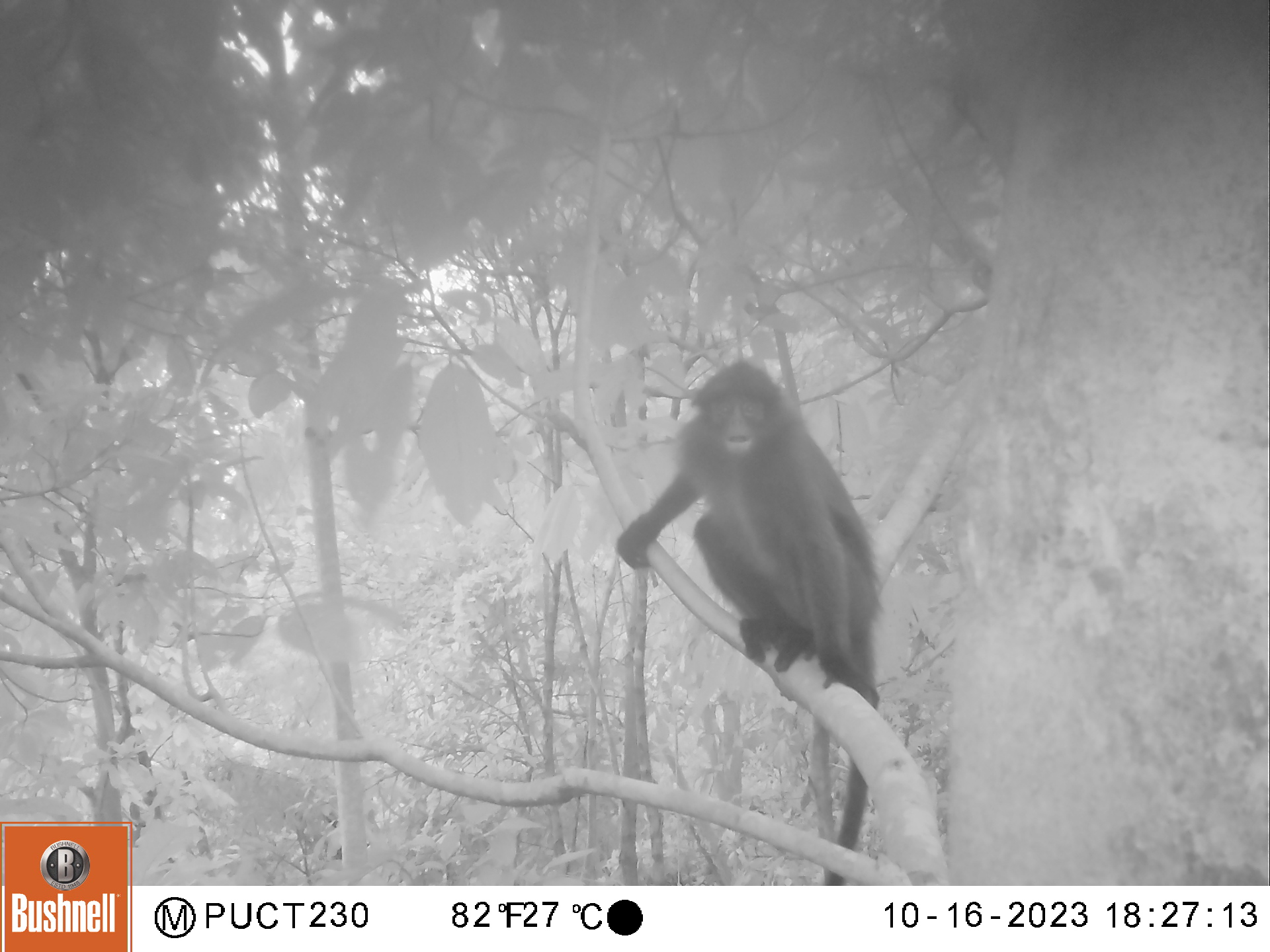
Observations by volunteers and camera trap studies subsequently confirmed the langurs cross the rope bridges with ease, with hundreds of documented transits indicating the bridge’s role in boosting local treetop connectivity.
From volunteers to advocates
With roughly 900 volunteers trained to date, the citizen science program has also built strong public awareness of the elusive langurs, both directly and through word-of-mouth as volunteers share with their friends, families and colleagues. As Ang puts it, it’s “an organic opportunity to engage with people.”
Ang says she hopes the awareness translates into broader support for nature conservation across the fast-developing city. Public advocacy will likely play a crucial role in protecting new habitat beyond the langurs’ current strongholds, she says, without which their population cannot continue to grow.
As an example, Ang points to Tagore Forest as a “key site [to] enhance connectivity and ensure increased habitat for the langurs,” but it is slated for future housing development. The 30-hectare (74-acre) forest, which is adjacent to the volunteer survey area, was highlighted as the island’s best example of unprotected old-growth rainforest in a 2024 conservation plan co-authored by a group of 40 environmental experts.
If development plans ever become concrete, public pressure could help protect the forest, even given Singapore’s restrictions on public demonstrations. “More and more, we are seeing this active citizenry where people feel that they do have a voice, and that their voice can actually make an impact,” Ang says.
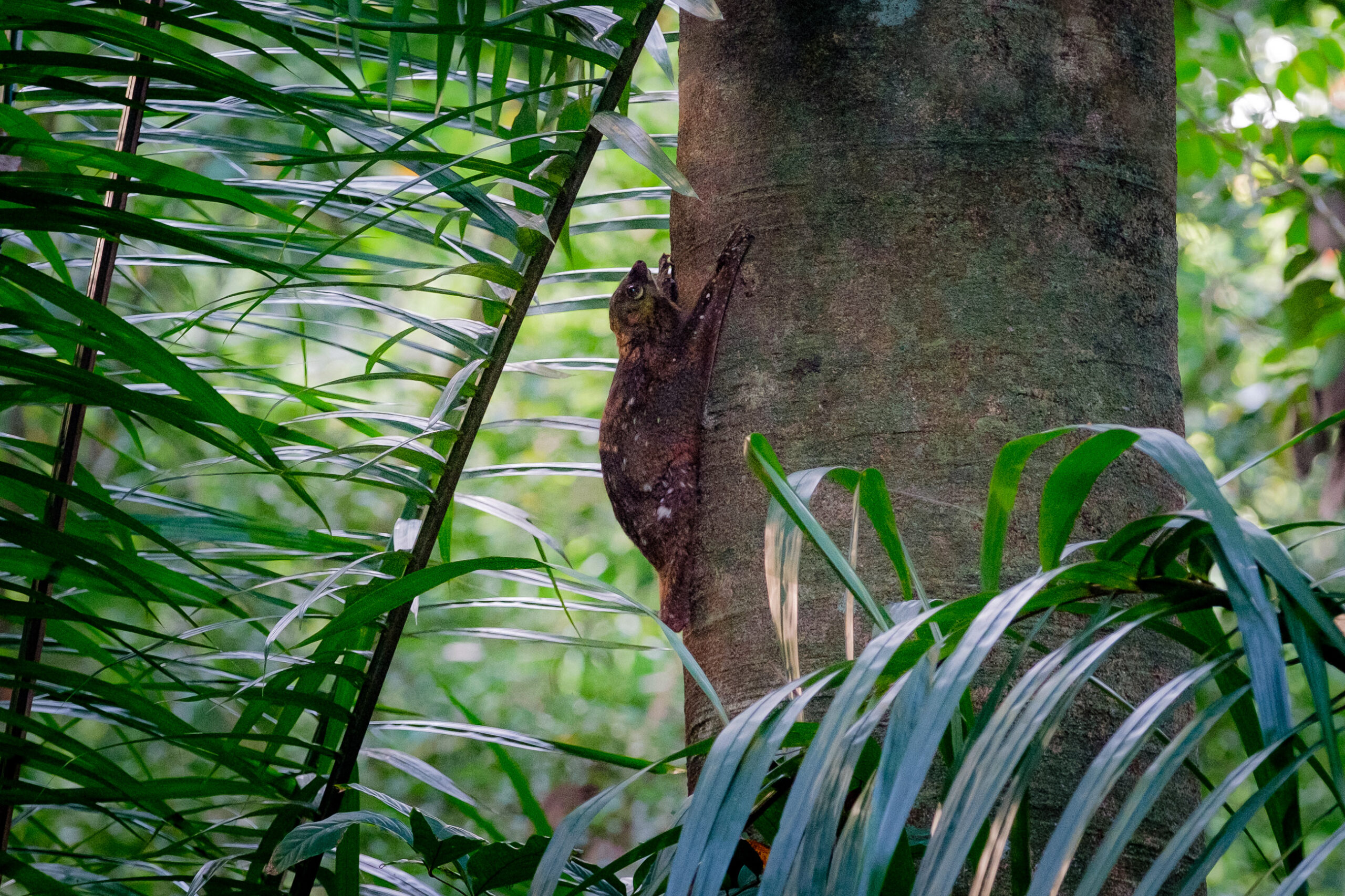
Within the Lower Peirce Reservoir Park, at least, there seems to be a clear appreciation among the forest users that protecting the langurs’ home equates to benefits for all. As we conduct Hoon’s three-hour survey, multiple joggers and groups of walkers are eager to share their wildlife sightings. They variously tip us off to the whereabouts of Sunda colugos (Galeopterus variegatus), lesser mouse deer (Tragulus kanchil) and their most recent sightings of the langurs.
We haven’t spotted any langurs during today’s survey, but that doesn’t weaken Hoon’s resolve. “I often wonder if the next generation will have a chance to see them,” she says. “So, I feel good contributing to the data on them.”
Banner image: A Raffles banded langur. Image courtesy of Andie Ang.
Carolyn Cowan is a staff writer for Mongabay.
Citations:
Chisholm, R. A., Kristensen, N. P., Rheindt, F. E., Chong, K. Y., Ascher, J. S., P. Lim, K. K., … Keita Sin, Y. C. (2023). Two centuries of biodiversity discovery and loss in Singapore. Ecology. Retrieved from https://doi.org/10.1073/pnas.2309034120
Woolloff, A., Svensson, M. S., Jabbar, S., Ang, A., & Nijman, V. (2023). Population viability analysis of the population of Raffles’ banded langurs Presbytis femoralis in Singapore. Raffles Bulletin of Zoology. Retrieved from https://lkcnhm.nus.edu.sg/wp-content/uploads/sites/10/2023/09/RBZ-2023-0041.pdf
Ang, A., Jabbar, S., D’Rozario, V., & Lakshminarayanan, J. (2021). Citizen Science Program for Critically Endangered Primates: A Case Study from Singapore. Primate Conservation. Retrieved from https://static1.1.sqspcdn.com/static/f/1200343/28485746/1638300722537/PC35_Ang_et_al_Citizen_science.pdf
Ow, S., Chan, S., Toh, Y. H., Chan, S. H., Lakshminarayanan, J., Jabbar, S., … Loo, A. (2022). Bridging the gap: Assessing the effectiveness of rope bridges for wildlife in Singapore. Folia Primatologica, 93(3-6), 287-298. doi:10.1163/14219980-20211110
Tay, L. S., Choo, R., Khoo, M. D., Kong, E., Chan, Y. X., Neo, W. H., … Er, K. B. (2024). A suite of wildlife crossing structures facilitates mammal movement across tropical forest fragments in a city. Ecosphere, 15(12). doi:10.1002/ecs2.70114
See related story:
Action plan aims to save Asia’s leaf-eating monkeys amid ‘alarming’ declines
FEEDBACK: Use this form to send a message to the author of this post. If you want to post a public comment, you can do that at the bottom of the page.
