

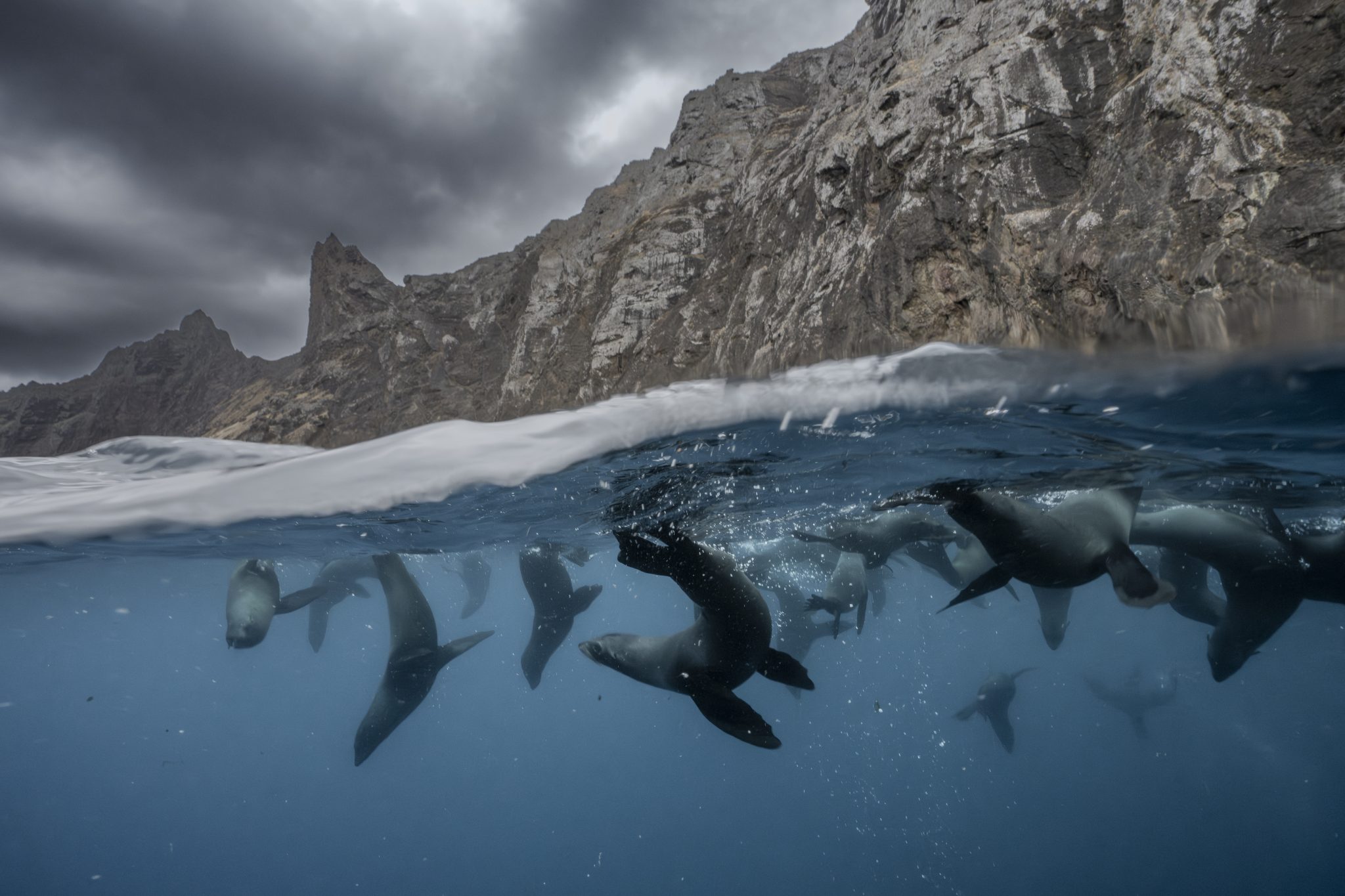
The expansion of two vast Pacific marine parks near Chile have been suspended for six weeks, leaving protections for around 337,000 square kilometers (130,000 square miles) of ocean in limbo.
Former President Gabriel Boric signed a decree creating marine parks Juan Fernández II and Nazca-Desventuradas II on March 10, his last day in office. Together the parks would protect roughly 10% of the nation’s exclusive economic zone. However, the subsequent president José Antonio Kast, suspended the decree on his first day in office as part of a broader review of environmental measures.
The suspension has created unease among local communities and conservation groups.
“We are concerned, obviously, with how long this is taking,” Max Bello, an ocean policy expert at the Blue Marine Foundation, a global conservation nonprofit, told Mongabay in an audio message. “We know that there are pressures, particularly from fishing interests, specifically the highly illegal and unsustainable semi-industrial swordfish fisheries … who have not agreed with the expansion.”
The decree grants the highest levels of marine protection, permitting only scientific research and tourism, Bello told Mongabay. It prohibits all extractive activities, including any type of fishing. Artisanal fishing is permitted in the multiple-use coastal marine area directly surrounding the Juan Fernández archipelago.
Bello said there are concerns that the protections for Juan Fernández II and Nazca-Desventuradas II could be weakened. “That would be truly dangerous, regrettable and concerning.”
Chile’s Environment Ministry told the Blue Marine Foundation that the suspension is part of a routine review and that advancing the measure remains a priority. The ministry did not respond to Mongabay’s request for comment.
The new parks would join two existing parks in the South Pacific Ocean and together cover around 562,000 km2 (217,000 mi2), about one-third the size of Mexico.
The region is home to rare species including the Juan Fernández fur seal (Arctocephalus philippii), Juan Fernández rock lobster (Jasus frontalis) and an endemic octopus (Octopus crusoe). None are threatened with extinction following decades of community conservation efforts.
“We live in a biological treasure and want to protect and preserve it for future generations,” Julio Chamorro Solís, president of the Organización Comunitaria Funcional Mar de Juan Fernández, told Mongabay in an audio message. “We are the only municipality … perhaps in the country, that depends 100% on artisanal fishing.”
The area has one of the highest rates of endemic species in the world, higher than that of the Galápagos Islands or Hawai’i. An estimated 87% of fish in Juan Fernández and 72% in the Nazca-Desventuradas islands are endemic.
In January 2026, the high seas treaty set a framework for protecting 30% of the world’s waters and land by 2030. About 10% of the world’s oceans are currently protected.
If the new marine parks move forward, Chile will join Palau as the only countries to substantially protect more than half of their exclusive economic zones.
Banner image: Juan Fernández fur seals. Image courtesy of Blue Marine Foundation.
