

Singapore’s Resorts World Sentosa will stop sourcing wild dolphins for its aquarium and is suspending its captive-breeding program, according to insiders, reports Mongabay contributor Robin Hicks.
Anbarasi Boopal, former co-chief executive of Singapore animal welfare charity Animal Concerns Research and Education Society (ACRES), said this was a positive step. However, she called for transparency about the facility’s long-term plans for the animals already in captivity.
While the Resorts World Sentosa (RWS) declined to comment on the dolphin sourcing and breeding program , Mongabay learned it is assembling a panel of experts to determine the future of the Indo-Pacific bottlenose dolphins (Tursiops aduncus) currently held at its Oceanarium — “more than 20,” staff at the facility told Mongabay. The youngest is a 7-year-old male named Kenzo.
RWS obtained 27 dolphins from the Solomon Islands in 2008 and 2009. At least four died during transit or from infections. The resort opened its exhibit to the public in 2013 amid widespread criticism from animal welfare groups. The RWS says its dolphins receive high-quality care and that the facility provides educational and conservation value.
“At the Marine Mammal Habitat, the health and well-being of our dolphins is a top priority,” RWS told Mongabay after publication of the article. “They are cared for by a dedicated team of Marine Mammal Specialists, supported by Veterinary Care, Environmental Health and Husbandry professionals, who provide round-the-clock care.”
Staff who spoke to Mongabay said they doubted the animals could survive in the wild after so long in captivity.
An international movement against cetacean captivity for entertainment is growing, with countries like Mexico, Canada and France recently banning the practice. Sustainability expert Darian McBain told Mongabay that keeping dolphins poses reputational and financial risks for companies that claim to be leaders in sustainability.
“No amount of veterinary care or good diet can change their restrictive and unnatural environment,” said McBain, former chief sustainability officer of seafood giant Thai Union Group and the Monetary Authority of Singapore.
Lincoln O’Barry, campaign coordinator of the dolphin protection group Dolphin Project, which rehabilitates formerly captive dolphins in natural sea pens on the Indonesian island of Bali, said that could be the first step in assessing whether RWS’s dolphins could eventually be released back into the wild.
“Some dolphins can adapt after years in captivity, some can’t,” O’Barry said. “It’s like prison — some people walk out after decades like nothing happened, while others can lose their minds.”
Rob Lott of U.K.-based Whale and Dolphin Conservation, said any release should return the dolphins to the original population from which they were captured. He added it would be a process that involves significant political and legal hurdles.
Read the full story by Robin Hicks here.
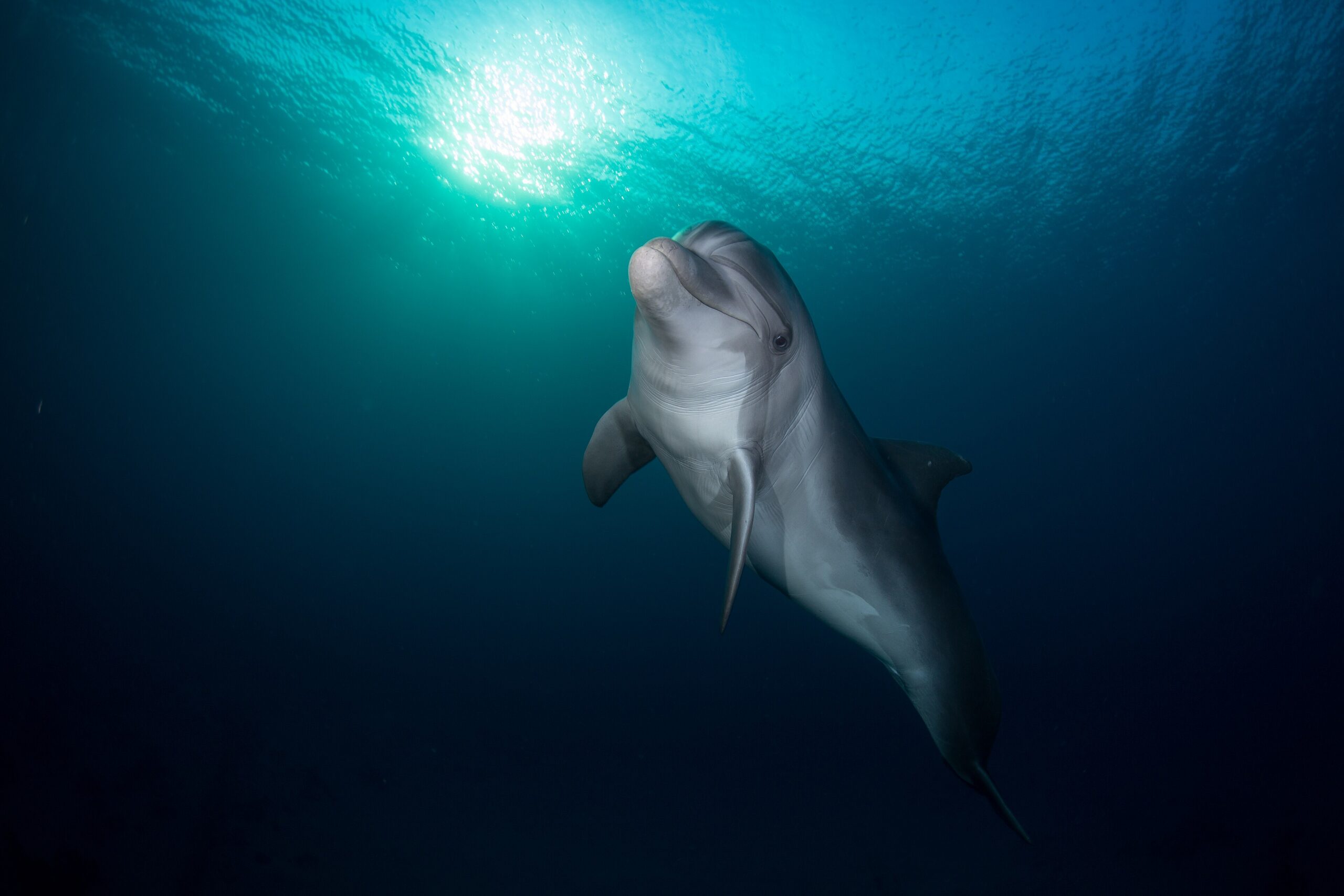
Banner image: An Indo-Pacific bottlenose dolphin (Tursiops aduncus) in the Red Sea. Image by טל שמע via Wikimedia Commons (CC BY-SA 4.0).