

A new study warns climate change could increase the global area susceptible to wildfires in the future, putting many more species at risk than today.
Previous research has shown that climate change is increasing the risk of wildfires as precipitation patterns change and vegetation becomes drier in parts of the world. Researchers have now projected how the length of fire seasons and the extent of burned area might change in the future under four scenarios of greenhouse gas emissions. Using these forecasts, they also assessed the future impact of wildfire for 9,592 species of animals, plants and fungi, currently reported on the IUCN Red List as threatened by wildfire.
Under the moderate-emissions scenario, where current greenhouse gas emission trends continue, the researchers found that by 2100, the extent of burned areas globally could increase by 9.3%, and that nearly 84% of fire-threatened species will be exposed to higher risk of wildfires.
Xiaoye Yang, study lead author from the University of Gothenburg, Sweden, told Mongabay by email that “there are clear spatial disparities in future wildfire risk to biodiversity.”
Regions such as South America and Oceania are expected to face especially elevated risks of burning, Yang said. Fires in high-latitude areas of the Northern Hemisphere are also projected to increase rapidly in the future, although they’ve historically been rare in these regions, he added.
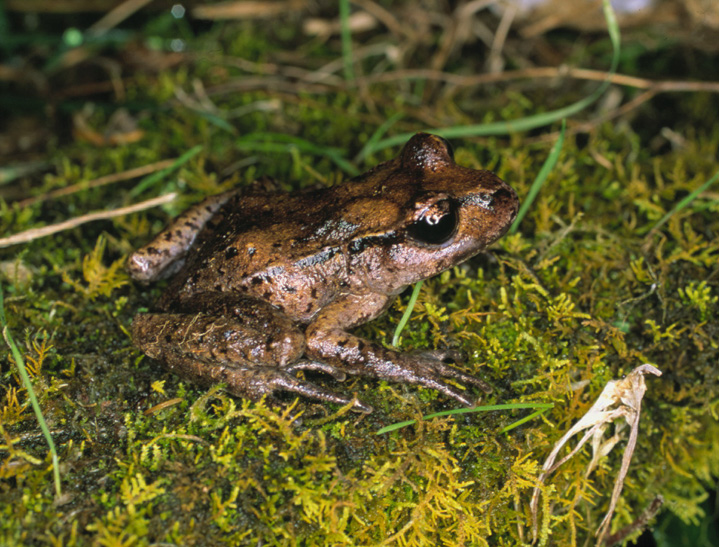
The study found that the top 1% of species most affected by wildfires (96 species) are found in South America, South Asia, southern Australia and New Zealand. These species, including the Maud Island frog (Leiopelma pakeka) and North Island saddleback (Philesturnus rufusater), a bird, both from New Zealand, share common traits, the authors write: they have very small geographic ranges and are already threatened with extinction.
Species in areas newly threatened by wildfires may lack adaptive experience with fire, making them particularly vulnerable to emerging wildfire regimes, Yang said.
At the same time, some regions like Central Africa could see a reduction in burned area in the future, the study found. About 1,000 species in Africa could also experience lower exposure to wildfire risk.
“Although the increase in wildfire risk will vary across regions — meaning that some countries contributing more to emissions may not experience proportional increases in wildfire impacts — collective action remains crucial,” Yang said.
Carla Staver, a professor at Princeton University in the U.S., who studies wildfires in savannas, told Mongabay that framing wildfires as a blanket biodiversity threat is a limited perspective, since certain ecosystems depend on fires. “For example, the 41.8% of African species that could experience a decrease in wildfire risk probably mostly occur in savannas, which are fire dependent, so reductions in fire activity in those systems aren’t good news either,” she said.
Banner image: The Maud Island frog of New Zealand is expected to face rising wildfire risk due to climate change. Image by Phil Bishop via Wikimedia Commons (CC BY-SA 2.5).