

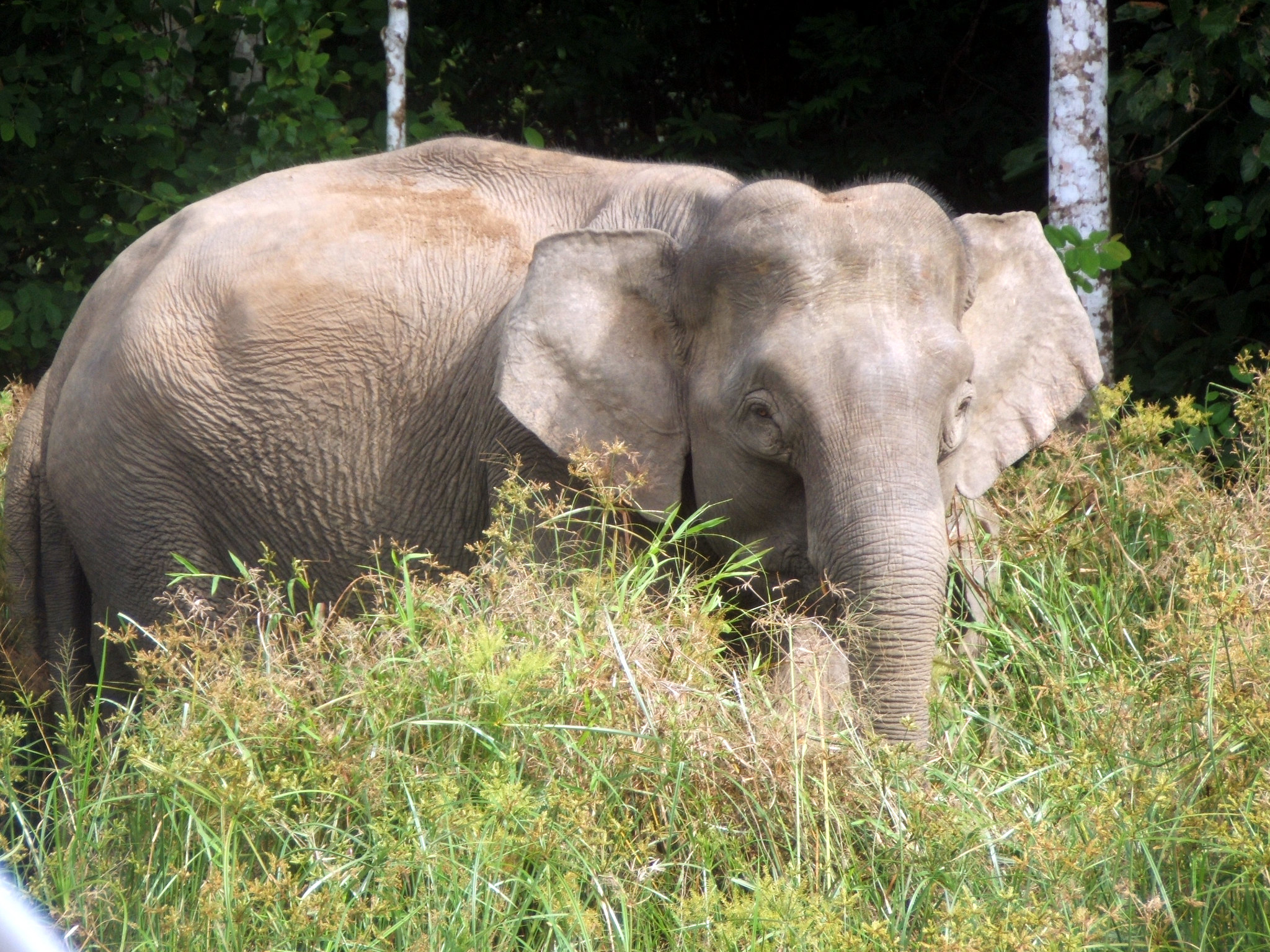
Asian elephants are adapting to rapidly changing landscapes by diversifying their diets — a sign of resilience, but also a warning about the pressures reshaping their habitats, according to a recent study from Malaysia.
Researchers collected feces from wild Asian elephants (Elephas maximus) across two distinct landscapes in Peninsular Malaysia: one with primary and secondary forests fragmented by recent large-scale logging and a hydropower dam development, and a second landscape transformed into oil palm plantations between the 1980s and 2000s, with a narrow remaining strip of forest.
Elephant dung contains remnants of the plants the animals have consumed, so the researchers used DNA sequencing to reconstruct the elephants’ diets in the two landscapes.
The analysis revealed that elephants in the logging-dominated landscape eat a wide variety of available plant resources across diverse habitats like grasslands, secondary forests and regenerating vegetation. According to the researchers, the findings suggest that when disturbances in forests reduce the availability of their preferred plants, elephants could be meeting their nutritional requirements by expanding their diets to include a broader selection of plants available across diverse habitats beyond formal reserve boundaries.
By contrast, elephants in the oil palm-dominated landscape ate a much more predictable, narrower range of plant groups, dominated by the cultivated oil palm crops. The researchers say it’s likely that elephants in palm oil habitats have adapted to the predictable availability of crops like African oil palm (Elaeis guineensis). This might expose them to conflict with people.
“Our findings highlight that elephants are highly adaptable feeders, but this flexibility often brings them into human-dominated landscapes, increasing the risk of conflict,” Mohammad Saiful Mansor, study co-author from the National University of Malaysia, told Mongabay by email.
Mansor said a key recommendation resulting from the study is to prioritize the retention of remaining natural forage, improve habitat quality, and identify as well as improve ecological corridors. “DNA-based dietary data can help identify key plant species that should be conserved, restored, or even planted where necessary,” he said.
Mansor added his team is actively engaging with relevant agencies and stakeholders in Malaysia to integrate their findings into conservation planning and human-elephant conflict mitigation efforts.
Chase LaDue, an elephant biologist working in Sri Lanka, who wasn’t involved in the study, said the findings offer a rare window into how wild Asian elephants are coping with habitat destruction and degradation: “What makes this research so important is that it demonstrates how habitat loss doesn’t just remove species: it degrades ecosystems at every level, altering animal behavior, nutritional health, and the ecological services that elephants provide as seed dispersers and forest engineers.”
Banner image: Asian elephant in Sabah, Malaysian Borneo. Image by Tim Parkinson via Flickr (CC BY 2.0).