

- For the first time, Bangladesh has enacted a dedicated law on the conservation of its unique natural wetlands, such as the haors, baors and beels.
- Experts have assessed that the new law overlaps with already existing conservation tools.
- However, better coordination with related government agencies has been suggested for the expected outcome.
On April 7, the Bangladesh Parliament unanimously passed the Haor and Wetlands Conservation Act, 2026, which strictly prohibits encroachment of, unauthorized mining of minerals from, poisoning of, and electrocuting aquatic life in natural wetlands such as haors, baors and beels. It also prohibits construction of structures that could obstruct natural water flow to the wetlands.
According to the new law, these acts will be considered cognizable and non-bailable offences.
The Bangladesh Water Act of 2013 defines a haor as any large saucer-shaped shallow natural depression between two separate rivers, a baor as an oxbow-shaped natural lake, and a beel as a natural low-lying land that gets inundated in the monsoon and either remains submerged year-round or dries up for a certain period of the year.
Bangladesh has an estimated 373 haors and some 6,300 beels in the northeastern and eastern districts of Sunamganj, Habiganj, Moulvibazar, Sylhet, Netrokona, Kishoreganj and Brahmanbaria, covering 1.99 million hectares (4.9 million acres) of area.
The five central-western districts have 23 baors of varying sizes ranging between 4 and 89 hectares (10 and 220 acres).
To conserve the biodiversity of the natural wetlands across the country, the government had formed the Haor Development Board (HDB) in 1977. The board was mandated to bring the wetlands under integrated management with the development of infrastructures, irrigation and flood control systems for fisheries and agriculture. Later, in 2016, the government established the Department of Bangladesh Haor and Wetlands Development (DBHWD) for the same purposes.
While placing the new law as a bill in the parliament, the water resources minister Shahiduddin Chowdhury Anee said, “Enactment of the law is crucial [because], despite the establishment of the department, the absence of a comprehensive legal framework had led to unregulated development in the wetland regions, unplanned embankments and obstruction of river routes, indiscriminate use of toxic substances to exploit fisheries, and adverse impacts of tourism.”
The law imposes a fine of up to 1 million takas ($8,150) or imprisonment for up to two years, or both, for offenses including encroachment of and land filling in any natural wetland, alteration of its classification, extraction of natural resources from or poisoning aquatic life in the wetlands, and obstruction of natural drainage through infrastructure development.
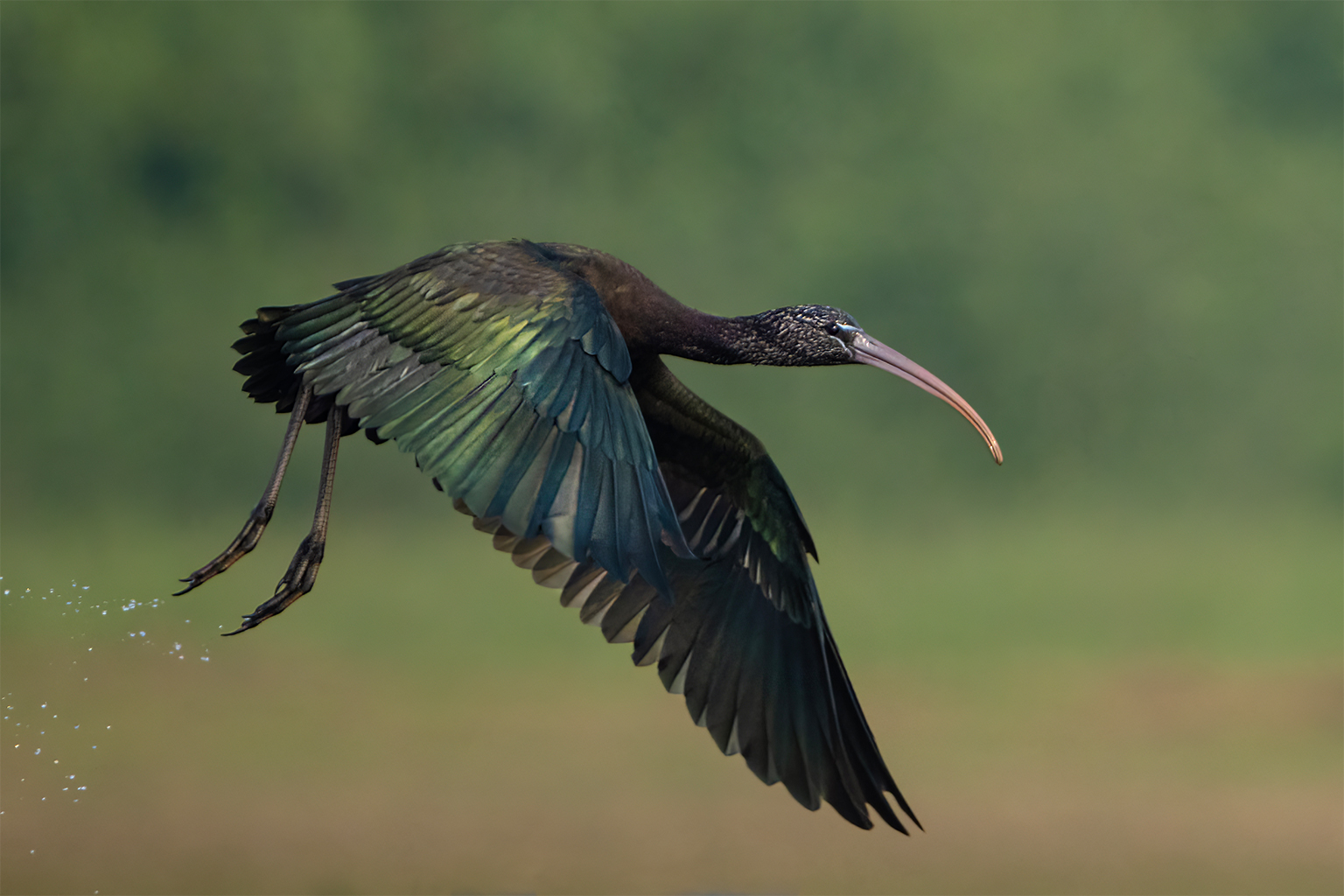
The new law also prohibits the hunting of migratory birds and the destruction of swamp forests and wetland wildlife habitats. Violators of these provisions will face fines of up to 500,000 takas ($4,075) and imprisonment for up to two years, or both.
Experts have expressed mixed reactions regarding the enactment of the law, saying that it overlaps existing laws.
“I appreciate the enactment of the law because it will serve as the charter of jurisdiction for the dedicated department,” says Md. Mojibur Rahman, who served as the director general of the DBHWD between April 2016 and February 2020.
However, the former director general of the HDB, M. Inamul Haque, observes that the terms of reference of the DBHWD will overlap the major responsibilities of some other ministries and departments.
“Now, coordination among the related government wings is the key,” Inamul tells Mongabay.
Multiple custodians
According to the new law, the DBHWD can undertake all necessary steps for the protection, conservation and development of the environment and ecosystems of haors and wetlands under its jurisdiction, issuing necessary “written” orders or directives to any individual or institution.
The DBHWD is also tasked with ensuring uninterrupted water flow in haors and wetlands and managing sediment through sustainable dredging and the conservation of kandas (natural levees).
The new law provisions that all development projects in haors and other wetland areas must require prior approval from the DBHWD, which will review such project proposals, explicitly evaluating potential environmental and ecological impacts, and risks to flood control or disaster management.
The Ministry of Water Resources, particularly its 24-member executive committee, led by the water resources minister, already has such power for approving projects under the Water Act of 2013.
The Water Act also mandates that authorities or local government institutions planning any water resource development project shall require to submit an application regarding the plan to the executive committee prior to initiating the project.
The new law empowers the DBHWD to take necessary steps to declare any haor and wetland a protected area , impose restrictions on activities deemed harmful to the biodiversity, environment, ecology and ecosystems of wetlands , ensure the safety of the habitats of migratory birds and various endangered species in the protected areas , conserve swamp forests and kanda vegetation , and regulate and monitor eco-friendly tourism.
The Ministry of Environment, Forest and Climate Change maintains similar protective measures under the Wildlife (Protection and Safety) Act 2012 (amended in 2026).
The DBHWD has been tasked by the new law to carry out demarcation and prepare maps and develop an inventory and update them from time to time. Interestingly, the Ministry of Land, the ultimate custodian of the wetlands, does these tasks, according to the Jalmohal (public wetlands) Management Policy, 2009.
A 2025 study paper, published before the enactment of the new law, identified that many institutions’ active participation in wetlands complicated natural resource management and led to various disputes between resource users and managers.
Author of the study, Mohammad Fakhrus Salam, also a hydro-politics expert and an assistant professor at Shahjalal University of Science & Technology, Sylhet, says, “Four to five government agencies have been involved in the haor and wetland affairs, but there is no visible coordination among them.”
Former DBHWD director general Rahman says, “Still, there are some cross-cutting issues in the new law. It requires supporting rules with clarification of the DBHWD’s terms of reference.”
‘Coordination is the key’
According to the new law, the DBHWD shall ensure necessary coordination with the separate departments for environment, fisheries, forests, livestock, agricultural extension, public health engineering, local government engineering, land records and geological surveys.
The law also mandates the DBHWD to work in coordination with the River Research Institute (RRI), National River Conservation Commission (NRCC), Bangladesh Water Development Board (BWDB), Bangladesh Inland Water Transport Authority (BIWTA), Water Resources Planning Organization (WARPO), Bangladesh Agricultural Development Corporation (BADC) and the related ministries.
Rahman and former HDB director general Haque recommend that the DBHWD maintain strong and effective coordination with relevant agencies to deliver on its mandate.
They argue that specific wetlands, distinct from other ecosystems, require a specialized department equipped with chartered conservation tools and skilled manpower.
“Hence, the DBHWB now needs auxiliary rules and specified procedures to work in coordination with other government agencies,” Rahman and Haque say.
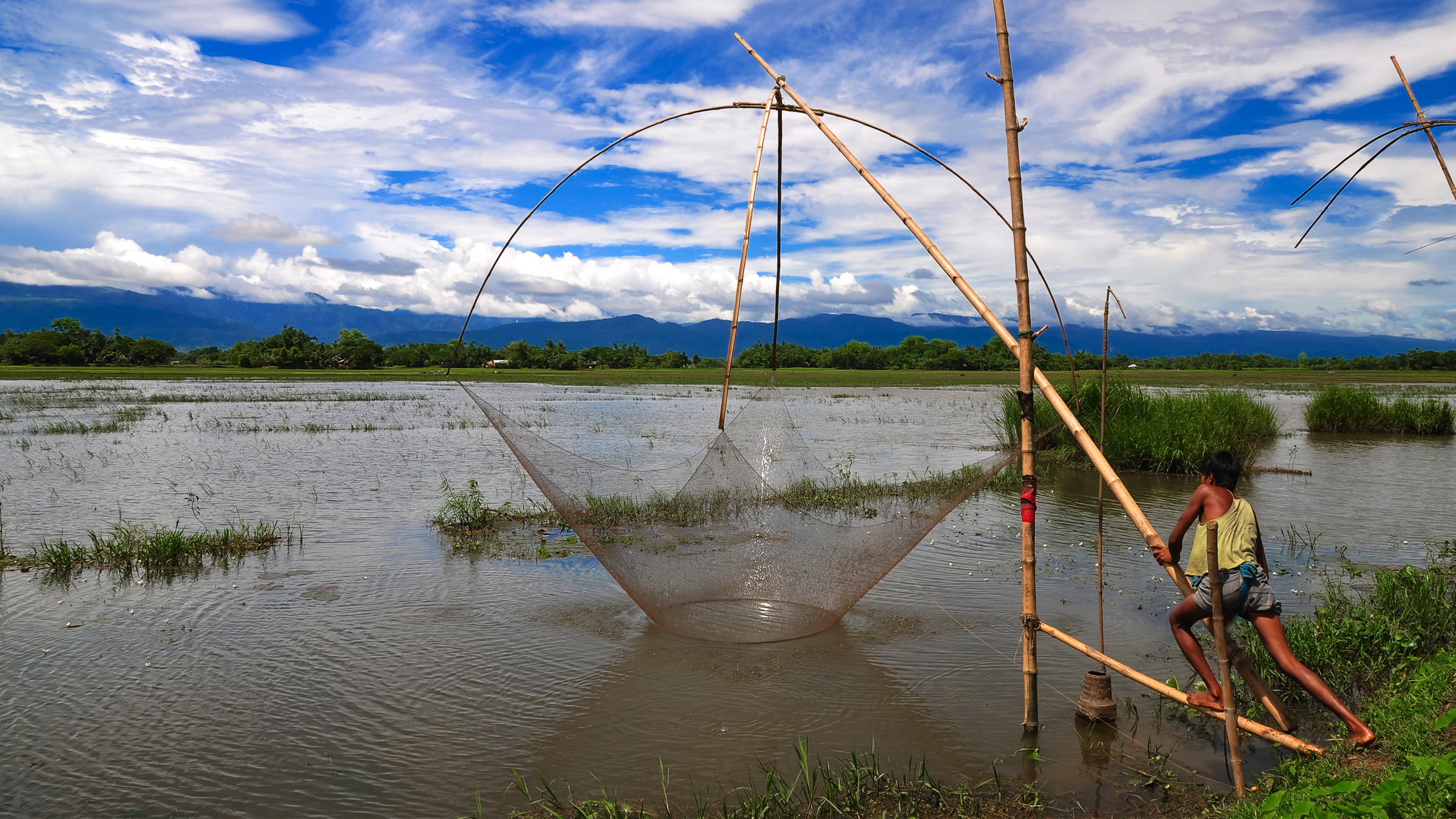
Banner image: A fisher fishes in a haor using a small lift net, locally called dharma jal or shib jal in Bangladesh. Image by Balaram Mahalder via Wikimedia Commons (CC BY-SA 3.0).
Citation:
Salam, M. F. (2025). Historical insights into wetland management in Bangladesh: Policies, practices, and transformations. Law and Humanities Quarterly Reviews, 4(2), 1–14. doi:10.31014/aior.1996.04.02.146
Feedback: Use this form to send a message to the author of this post. If you want to post a public comment, you can do that at the bottom of the page.
