

- Nigeria’s Senate recently passed a new bill to strengthen wildlife legislation in the country, which is a hub for international trafficking rings.
- Supporters say the government will need to provide resources for agencies to enforce the law.
- Despite many headline seizures of illegally trafficked wildlife, many cases do not go to court and even fewer end in convictions , experts also point to a confusing and contradictory patchwork of existing wildlife legislation.
- Conservationists see this as an opportunity to reset Nigeria’s handling of wildlife crime, but villagers who supplement their income through hunting fear that enforcement of the new law could mean the loss of an important safety net in difficult farming seasons.
In recent years, spectacular seizures of illegally trafficked wildlife products, including consignments of ivory and pangolin scales weighing several tons, have provided plenty of evidence of Nigeria’s position as a hub for international trafficking rings operating across Africa, Europe and Asia. In October 2025, the country’s Senate passed a new bill to strengthen the country’s wildlife legislation.
As the bill awaits the president’s signature, its supporters say the country now has the basis for stronger wildlife protection on paper, but the government will need to provide agencies with the resources, coordination and political backing to enforce the law.
“This new bill addresses long-existing gaps in our legal framework,” the bill’s sponsor and vice chair of the environment committee in the House of Representatives, Terseer Ugbor, told Mongabay in September 2025. “The old law was riddled with ambiguities. It failed to specify whether its provisions applied only to international wildlife trade or also to domestic transactions.”
Despite many headline seizures of illegally trafficked wildlife, including pangolin scales and ivory, these busts rarely result in prosecution of traffickers. Mongabay previously examined official records covering the decade from 2012-21 and found just 11 cases had gone to court — just three convictions were secured. In each case, those found guilty paid a fine equivalent to $240 to avoid a three-year jail sentence.
In interviews with prosecutors, enforcement officials, campaigners and traders at wildlife markets at the time, Mongabay heard that in most cases, seizures of contraband were not followed by investigation , the same applied to following up on shipments of wildlife parts shipped from Nigeria and intercepted overseas.

New law, new sanctions
Tunde Morakinyo, executive director of the Africa Nature Investors Foundation, tells Mongabay that legal protection for wildlife in Nigeria has been held back by both weak legislation and lack of knowledge of the law.
In 2021, Morakinyo’s foundation and the U.K.-headquartered Environmental Investigation Agency reviewed laws related to protection of threatened wildlife in Nigeria. They found a confusing and contradictory patchwork of legislation. Under the country’s Endangered Species Act (ESA) as amended in 2016, guilty parties are subject to an administrative fine (5 million naira, currently $3,650, for a listed species), but under another law, the venerable Customs & Excise Management Act of 1959, attempting to export the same item is punishable by five years in prison with no option of a fine. In another example, the ESA prohibits hunting of listed species without setting any penalty at all, but the National Parks Act of 1999 calls for a five-year prison term for people caught hunting in a protected area.
The analysis also pointed to difficulties in passing cases from state-level officials to prosecutors at the federal level, where a confusing range of different agencies hold the authority to prosecute , alarmingly, the report’s authors said none of the prosecutors they interviewed had ever seen a wildlife crime brought to court: “For some, the first time they ever considered offences against wildlife was in the course of being interviewed for this report.”
The new law will replace a collection of aging legislation to give fresh domestic force to Nigeria’s obligations under treaties such as CITES and the Convention on the Conservation of Migratory Species, aligning the country’s regulation of handling and trade of endangered species with these international agreements as well as providing for the regular review of fines and penalties.
The bill also broadens and clarifies what constitutes a wildlife offense. Hunting, possessing, transporting or selling any species listed on Schedule I — roughly corresponding to highly endangered species listed in Appendix I of CITES — is illegal. Species listed under Schedule II are regarded as less vulnerable, but may only be hunted or traded with a permit.
The new bill also clarifies which agencies are responsible for investigating and prosecuting these offenses. For instance, it assigns responsibility for seizures of wildlife products to the Nigeria Customs Service, regardless of whether these are being exported or trafficked domestically, resolving earlier confusion over the role played by various environmental agencies.
“A law is only effective if properly enforced, but the agencies tasked with enforcement frequently lack both knowledge of the law and the capacity to implement it,” Morakinyo tells Mongabay. He says agencies including the police and customs service, the Economic and Financial Crimes Commission and the judiciary itself will need training and capacity building to carry out their roles.

The ANI Foundation already works on these issues with Nigerian law enforcement, providing training, developing legal tools and facilitating intelligence-sharing among various agencies involved in tackling the illegal wildlife trade.
The Environmental Investigation Agency, a regular collaborator with the foundation, has uncovered networks involving Chinese and Vietnamese syndicates working alongside Nigerians and other Africans. Justin Gosling, who works on a criminal justice program for EIA, tells Mongabay that by clearly defining wildlife trafficking as a federal criminal offence, the bill will make it easier for enforcement agencies to justify the sometimes expensive use of investigative tools like forensic analysis or controlled deliveries to apprehend wildlife criminals.
He says the bill will also strengthens cooperation with wildlife law enforcement in other countries. “This new bill significantly strengthens Nigeria’s capacity to tackle serious wildlife trafficking, targeting not only individual offenders but also organized criminal networks operating across borders. It facilitates international cooperation through extradition, mutual legal assistance and joint investigations with foreign law enforcement agencies.”
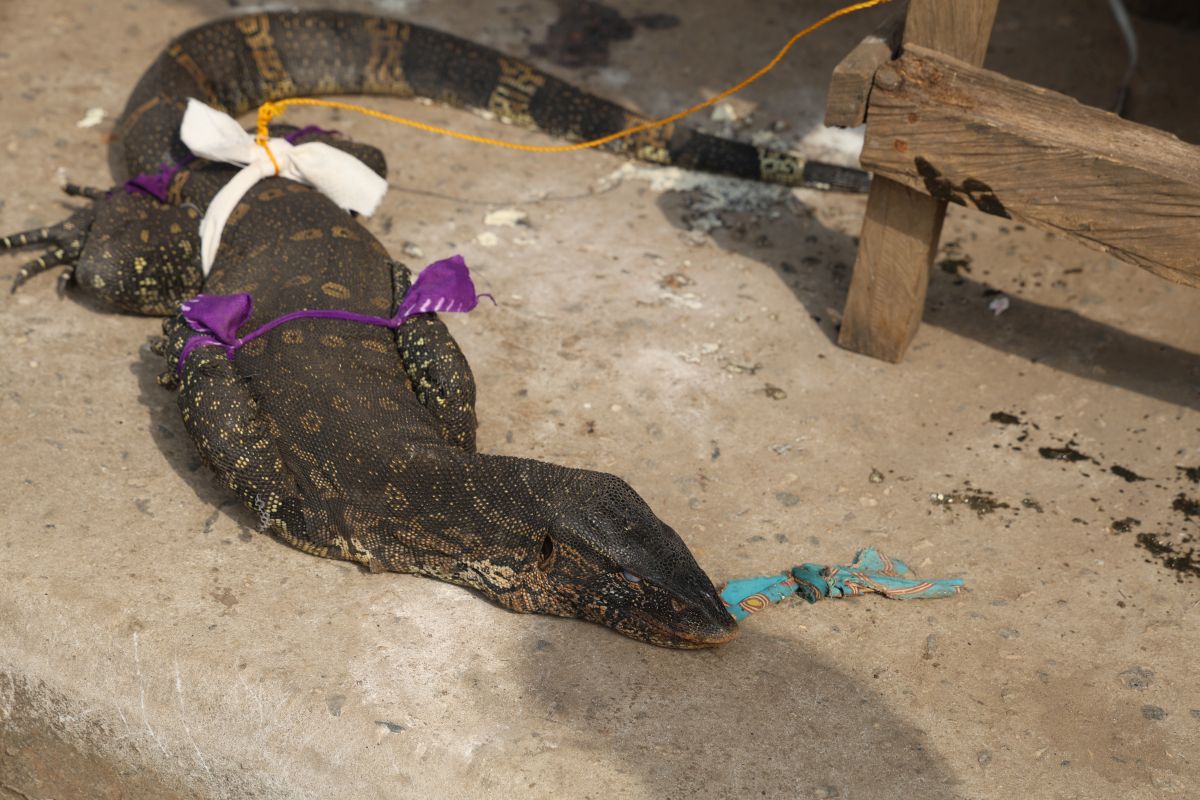
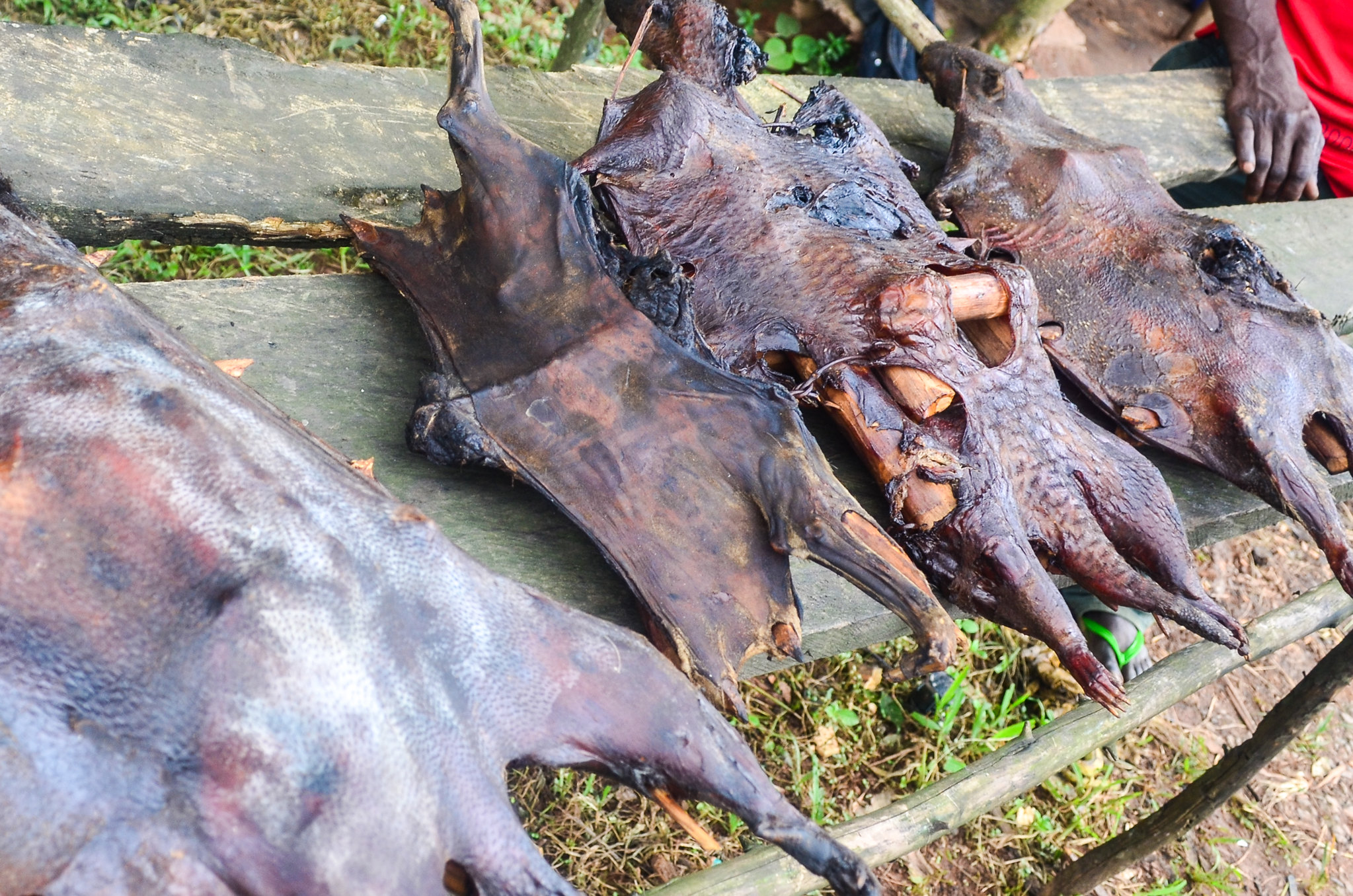
Morakinyo argues that the real test of Nigeria’s commitment to its new wildlife law is not the severity of the listed penalties, but whether the government funds its enforcement. Across the country, he says, illicit wildlife products are widely available in various markets, ranging from pangolins, sea turtles and crocodiles at the Lekki Fish Market to ivory and wild animal skins in Lagos hotels and art markets.
“The problem isn’t just the strength of the law,” he says. “It’s whether officers have the authority, training and equipment to shut down these sales. You need boots on the ground, you need adequate training, forensics and vehicles. You need to pay people to do this work.”
Boots on the ground
Ugbor calls the bill overdue housekeeping. Conservationists see an opportunity to reset Nigeria’s handling of wildlife crime. Rex Edidiong, a farmer who supplements his income through hunting, is uncertain. Like many others in his village of Nung Idoro, in the rainforest zone of southeastern Nigeria, he hunts various small mammals for food and to earn additional income.
He fears that enforcement of the new law will put hunters like him in the crosshairs of security agencies. For his family, as well as many others, new restrictions could mean the loss of an important safety net in difficult farming seasons.
“We don’t kill elephants or sea turtles,” he tells Mongabay in a phone call, “but bushmeat like rabbits, squirrels, duikers, porcupines and grasscutters ― that’s what we know. It is how our fathers survived.”
The list of protected species has been expanded to include all vulture species as well as others that had not been described when previous legislation was adopted, such as the Nigeria-Cameroon chimpanzee (Pan troglodytes ellioti) and the Niger Delta red colobus (Piliocolobus epieni).
“Both the old and new bills classify species under Schedule I and Schedule II. Schedule I covers species that are completely prohibited from trade because they are listed as endangered or critically endangered in the International Union for Conservation of Nature database,” Morakinyo tells Mongabay. “Schedule II includes species that the IUCN categorizes as vulnerable or near threatened. These species may be traded, but only with a license.”
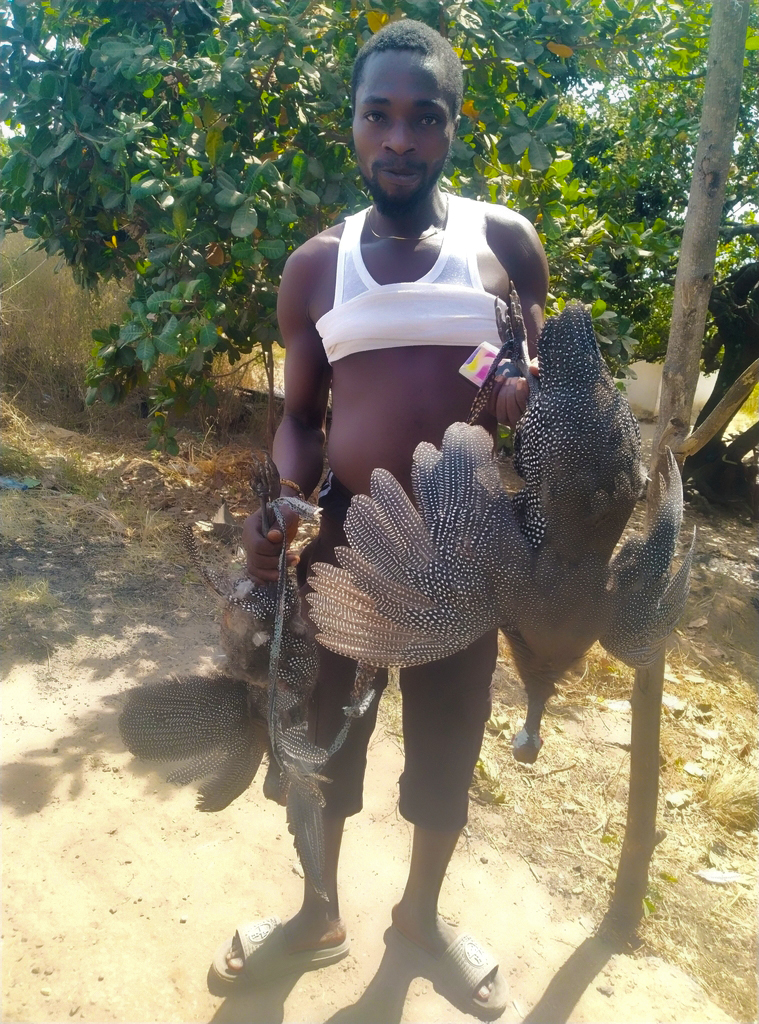
What is unclear to hunters in Nung Idoro at this point — and, seemingly, to officials from the Akwa Ibom Forest Service who visited them to explain the incoming legislation — is what happens if the police or forest officers find one of them in possession of a commonly hunted and eaten species like a duiker or guinea fowl.
The full text approved by the Senate is not available to the public, but one duiker species is listed under Schedule 1, along with pangolins and chimpanzees, as a species in which hunting, eating and trade are entirely prohibited under Nigeria’s new Endangered Species Act. Four others are listed under Schedule 2, which covers plants and animals that can only be traded, in line with CITES Appendix II, with a license.
In the draft text of the bill reviewed by Mongabay, the least severe penalty for hunting without a permit would be two years, up to 3 million naira (around $2,200) or both — a crippling sum for a village hunter. If the arresting officers/courts determined their catch was listed under Schedule 1, they would then face up to five years in prison with no option of a fine , killing or possession of a Schedule 2 species would leave a hunter facing up to three years in prison, a fine equivalent to $3,000 or both.
It is far from clear what training will be provided to customs or police officers — or to hunters — to allow for correct identification of species in field conditions, raising the risk of stiff penalties being applied in error.
Edidiong, 43, says he has never trafficked ivory and has never seen a pangolin scale packed for export. “Officials [from the state environment ministry] told us the new wildlife law would restrict the hunting of some animals,” he tells Mongabay. “I am not sure if they are animals we depend on for food and income. The government promised to support us but hasn’t done anything yet.”
Edidiong says he does not depend on hunting as his main income but occasionally relies on it to pay school fees and household expenses. He will accommodate himself to new regulations, but he wants the government to offer alternatives. “If they want us not to hunt certain animals, they must also explain how we are supposed to survive,” he says.
“I’m tired of this hunting job. We’re restricted in what animals we can hunt, and they’re not easy to find. I need another opportunity, maybe a small business, that can provide daily income to pay school fees and support my family.”
Prosecuting high-level traffickers
The ANI Foundation and EIA’s primary interest, however, looks beyond those typically caught in possession of wildlife illegally. From EIA’s work observing wildlife trafficking cases moving through federal courts in Lagos, Gosling says the main obstacle to successful prosecutions is the quality of the evidence gathered by police and other law enforcement.
“Many cases rely on catching someone red-handed or seizing contraband, which often leads to guilty pleas or plea bargains. But this doesn’t get to the root of the network — those giving orders or funding the operations usually go unpunished. Effective investigations should involve digging into phone records, raiding premises, seizing documents and tracking financial flows.”
Wildlife crime investigations in Nigeria too frequently end with the prosecution of individuals caught with contraband. Limited capacity and the absence of a robust legal framework have prevented investigators from pursuing the broader criminal networks behind these crimes, particularly through intelligence-led tools such as financial and telecommunications data.
The new law closes these gaps by broadening investigations beyond simple possession offenses. It strengthens access to and preservation of critical evidence such as phone records, financial information and business records and provides a clear basis for intelligence-led operations. This allows prosecutors to trace funding sources and command structures, enabling prosecution of those ultimately responsible rather than just low-level offenders.
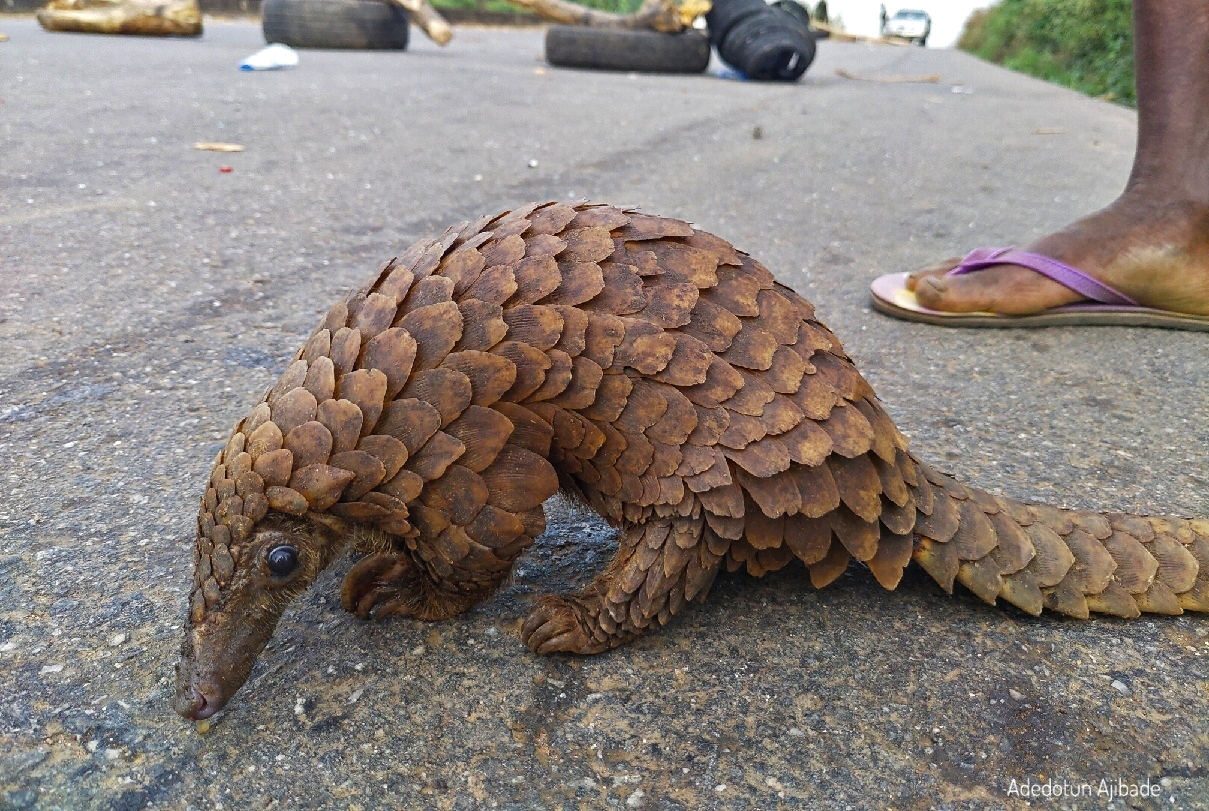
Banner image: White-bellied pangolin (Phataginus tricuspis) in Ondo state, Nigeria. Image by Adedotun Ajibade via iNaturalist (CC BY-NC 4.0)
In southeast Nigeria, pangolins hunted for meat, not scales, study finds
Citation:
Emogor, C. A., Ingram, D. J., Coad, L., Worthington, T. A., Dunn, A., Imong, I., & Balmford, A. (2021). The scale of Nigeria’s involvement in the trans-national illegal pangolin trade: Temporal and spatial patterns and the effectiveness of wildlife trade regulations. Biological Conservation, 264, 109365. doi:10.1016/j.biocon.2021.109365
Feedback: Use this form to send a message to the author of this post. If you want to post a public comment, you can do that at the bottom of the page.
