

- The blue economy is a somewhat ambiguous term that’s been used in international policy circles for the past decade and a half.
- The World Bank defines it as “the sustainable use of resources for economic growth, improved livelihoods, and job creation while preserving the health of ocean ecosystems.”
- In recent years, some small-scale fishers and coastal community members have started to question the blue economy agenda, arguing that it’s bad for them and the ecosystems they depend on — a kind of cover for business as usual.
- Groups of small-scale fishers are now working together across countries and continents to fight for their interests, and some are calling for “blue justice,” a concept that centers human rights and marine tenure rights.
Globally, the “blue economy” dominates discussions of ocean-related projects. At the United Nations Ocean Conference (UNOC) in France in June 2025, references to the blue economy abounded, and the government of Monaco co-sponsored a two-day event on the blue economy and finance that featured world-famous dignitaries. The tagline for the upcoming Ocean Impact Summit in Bali, Indonesia, is “Unlocking the Potential of the Blue Economy.” World Economic Forum participants frequently use the term, while the World Bank has a blue economy program complete with a multidonor trust fund. The African Union has a blue economy strategy, and Brazil is currently developing one of its own. Countries such as Belize and Madagascar, meanwhile, have in recent years incorporated the “blue economy” into ministry names.
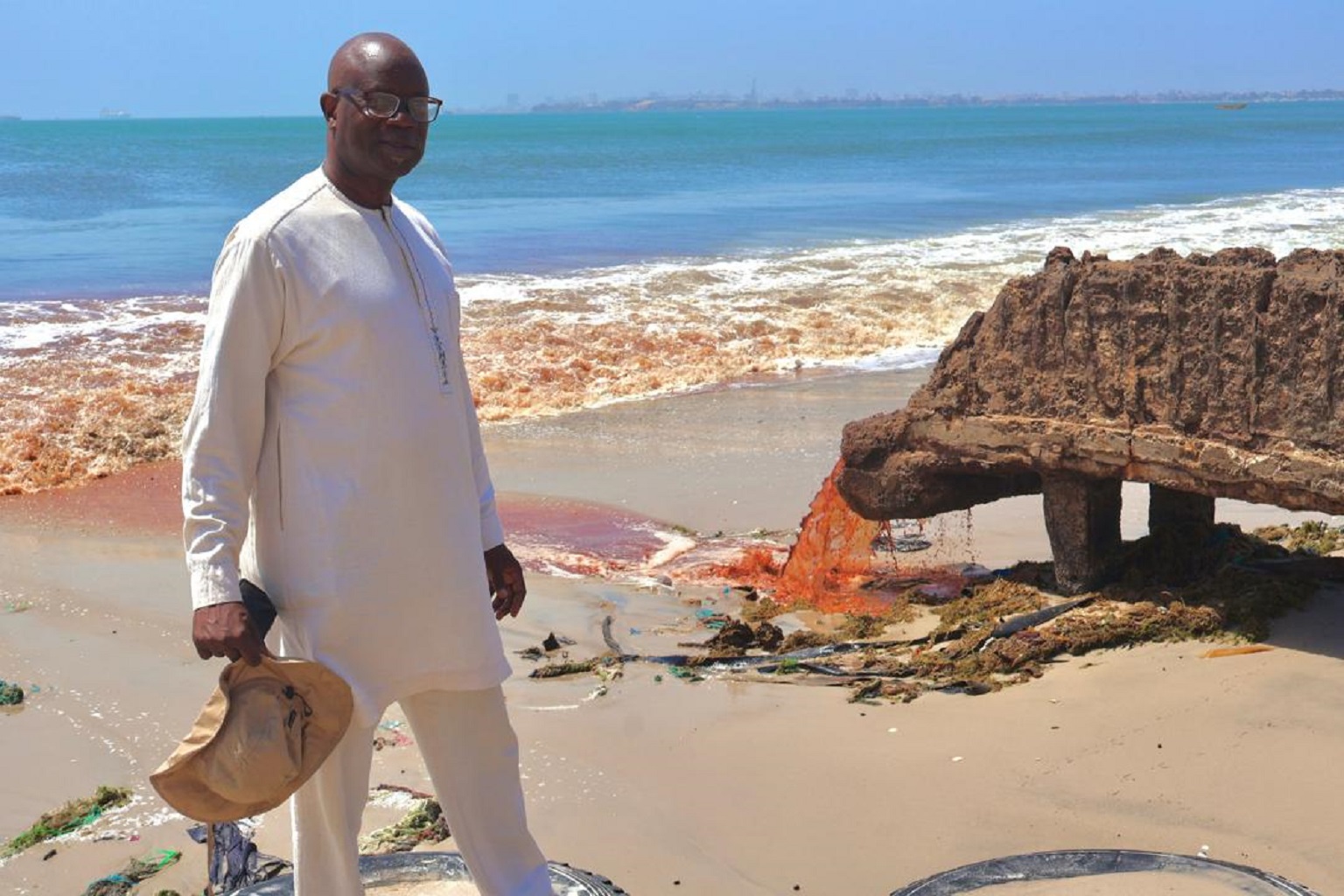
Yet there’s debate and confusion over what the blue economy is. Understanding on the ground can be limited, with definitions squishy. Mbacke Seck, executive director of Hann Baykeeper, a coastal community organization in Senegal, told Mongabay the term is relatively new and “its contents remain poorly understood within our community.”
The World Bank, for its part, calls a blue economy approach “the sustainable use of resources for economic growth, improved livelihoods, and job creation while preserving the health of ocean ecosystems.” Offshore energy, coastal infrastructure, tourism, maritime transport, aquaculture and fishing are often considered part of the blue economy. The bank declined an interview request for this story.
However, development projects, even some that carry the blue economy banner, can profoundly affect coastal communities. For example, a new $20 million fishing port in Shimoni, Kenya, was advanced as part of the national government’s blue economy plan, and celebrated as such after its completion. The blue economy is expected to contribute more than $1 billion annually to the country’s gross domestic product by 2027, Deputy President Kithure Kindiki said in a recent speech at the port.
Yet the Shimoni port’s construction may have reduced small-scale fishing catch and hurt local seaweed farmers, while also affecting ecotourism and coral restoration projects, according to Mongabay reporting. Community members said they feared the impacts would worsen once dredging was done to accommodate industrial fishing vessels.
In recent years, some small-scale fishers and coastal community members have started to question the blue economy agenda, arguing that it’s bad for them and the ecosystems they depend on.
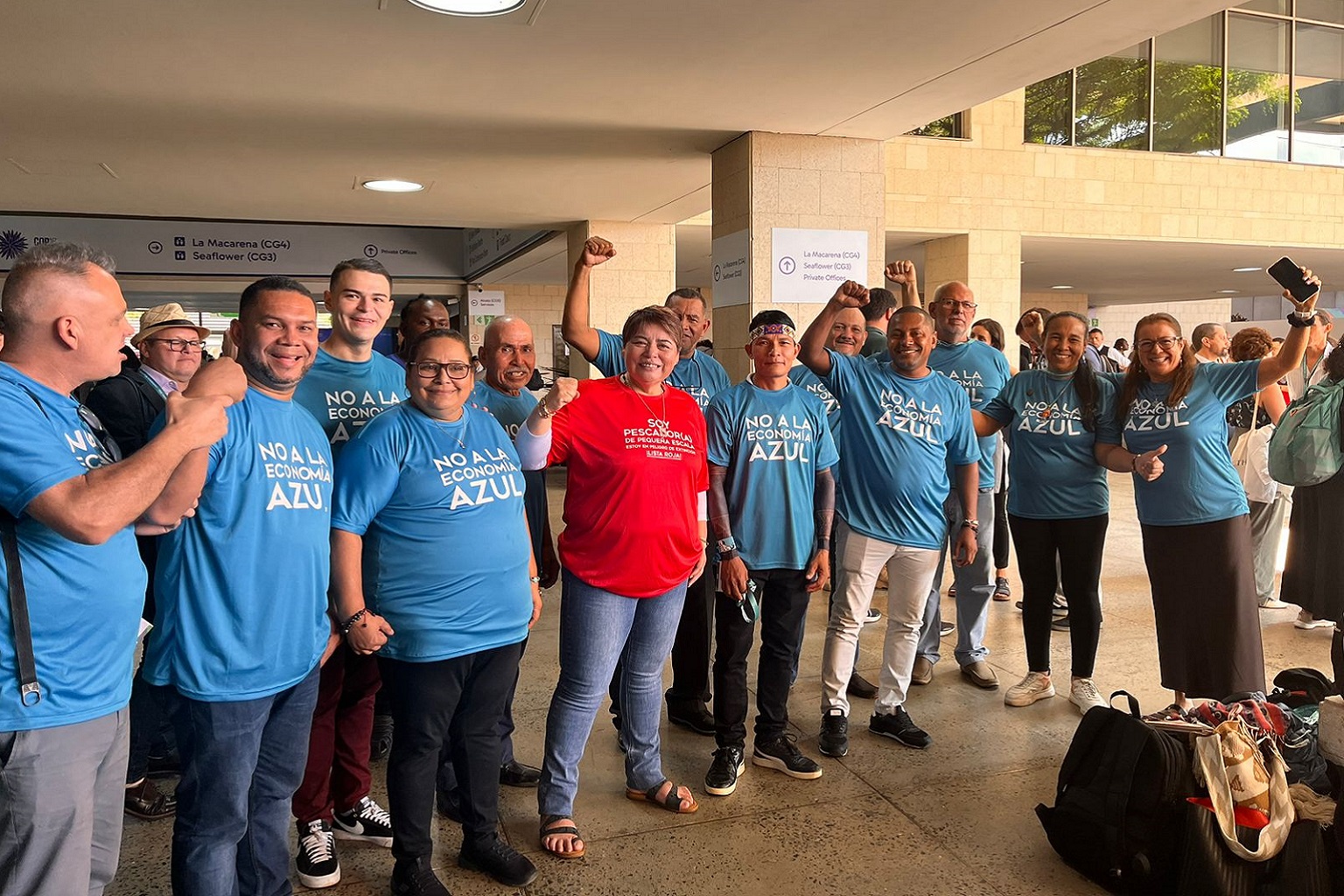
At last year’s UNOC, small-scale fishers from Latin America wore “No to the blue economy” T-shirts. The backs of the shirts listed what they opposed: mass tourism, offshore energy production, unsustainable industrial fishing, deep-sea mining, fishmeal factories and large-scale aquaculture.
Julián Medina Salgado, the leader of a small-scale fishing group in Colombia and one of the T-shirt wearers, said he associates the blue economy with the activities that have hurt small-scale fishers along the Gulf of Morrosquillo, where he lives. He said the most damaging for his community has been maritime transport. The gulf is home to several oil and gas export terminals that have been the site of a number of loading-related oil spills over the last two decades, including a 2014 spill that Medina said left him unable to fish for eight days because of the resulting “black tide.”
“I feel that the phrase is something they invented to sound appealing, so that when you hear ‘blue economy’ you’ll think it’s something that is working in favor of our oceans,” Medina told Mongabay. “That’s how they sell the image of the ‘blue economy.’ Nevertheless, those of us who live off the sea and spend time at sea, which is our work and ancestral territory, have seen that the blue economy has actually displaced us.”
Deborah Prado, a postdoctoral fellow at the Federal University of São Paulo in Brazil and the lead author of two 2025 studies on the blue economy in Latin America — one on Brazil and one on the entire region — said business interests use the term for cover.
“They are just expropriating territories … in these communities, but they are using the rhetoric of ‘blue’ [to imply they’re doing it] in a sustainable way,” she told Mongabay.
What’s the blue economy?
Gunter Pauli, a Belgian entrepreneur and economist, is credited with coining the term “blue economy.” His 2010 book on the subject laid out 100 sustainable innovations to create ocean-related jobs. The term began to receive international institutional backing at the U.N. Conference on Sustainable Development (Rio+20) in 2012.
A 2022 paper in the journal One Earth says the term blue economy “has quickly risen as the foremost policy narrative for shaping future oceans.” The term is “fuzzy” and its use is “confusing (or contradictory),” the authors write. The “ocean economy” is a related term that, at least in the authors’ conceptualization, is used when there’s less focus on equity or the environment , for example, offshore oil and gas activity would be more likely to fit into an ocean economy rubric than a blue economy one. U.N. bodies commonly slap the word “sustainable” on both terms.
Proponents of the blue economy generally argue that it offers a win-win: What’s good for business can be good for the marine environment. The blue economy concept has helped generate funding from governments, private foundations and multilateral and regional banks. A reported 8.7 billion euros (about $10 billion) was committed just at the UNOC event in Monaco. The pledged funding will go toward “decarbonization of maritime transport and ports, marine ecosystem restoration, ocean energy, [and] biotechnology,” according to a post-event press release.
Marine spatial planning, a data-driven process that’s like zoning for the ocean, now often falls under the blue economy rubric. Experts generally regard the work as crucial to ensuring that ocean areas can be used for multiple purposes by different user groups, though some caution that small-scale fishers and coastal communities are being left out of these zoning processes.
Béatrice Gorez, coordinator of the Coalition for Fair Fisheries Arrangements (CFFA), a Brussels-based advocacy group, is among them. She said she raised this concern at a 2025 event affiliated with the European Economic and Social Committee, a consultative body to the European Union comprised of both business and workers’ groups. She said an official from the European Commission, the EU’s executive branch, responded in a way that made impacts on small-scale fishers seem “marginal.”
“It can’t be a win-win-win situation,” Gorez told Mongabay. “You will have people who are losing out, and you will have trade-offs, but they just don’t want to discuss that.”
According to Gorez, the commission official “said something like ‘don’t worry, there will be plenty of jobs for coastal communities — just maybe not in fisheries.’”
“The European Commission is deeply committed to safeguarding the interests of small-scale fishers,” a spokesperson for the commission told Mongabay in an email. Since mid-2025, the commission has released guidelines for member countries to use in supporting small-scale fishers, initiated a coastal community strategy process, and hosted an implementation dialogue on marine spatial planning, the spokesperson said. “A cornerstone of the [marine spatial planning] process is early stakeholder engagement and public consultation, ensuring that all voices — including those of coastal communities and small-scale fishers — are heard,” said the spokesperson, who declined to be named, per commission policy.
Coming together in opposition
Though that discussion was about European waters, CFFA also works to protect the interests of small-scale fishers and coastal communities in the Global South. It’s one of several civil society groups that’s supported efforts by small-scale fishers to work together across borders. Others include the African Confederation of Professional Organizations of Artisanal Fisheries, or CAOPA, a Senegal-based coalition of small-scale fishers’ groups, and CoopeSoliDar, a Costa Rica-based conservation and human rights organization working with groups across Latin America.
These and other organizations helped launch a “call to action” with five key demands, including “protect small-scale fisheries from competing blue economy sectors.”
“The negative impacts of more powerful blue economy sea and land-based sectors … jeopardise the future of coastal communities,” the call-to-action website says. “The precautionary approach and … effective participation of small-scale fisheries should guide any new ocean use.”
In recent years, small-scale fishers affiliated with this loose coalition, which includes groups from several continents, started coordinating on monthly Zoom calls and pushing their agenda at international forums. Several spoke on a panel about human rights-based ocean governance at the 2025 UNOC, including Seck of Senegal and Medina of Colombia. The panel was headlined by Astrid Puentes, the U.N. special rapporteur on the human right to a healthy environment. She told Mongabay that “Unfortunately, Indigenous people [and] small-scale fishers, when protecting their land or the ocean, are under threat and criminalization.”
In a 2024 report on the ocean and human rights, Puentes called attention to the threat of “ocean-grabbing,” which she said can result in “communities’ loss of traditional territories, with fisherfolk reduced to mere workers in fisheries, energy or port infrastructure and petrochemical, tourism or other industry.”
She also wrote that blue economy initiatives often prioritize “corporate profits over environmental protection and human rights,” citing research by the Masifundise Development Trust, a South African civil society group that works with fishing communities.
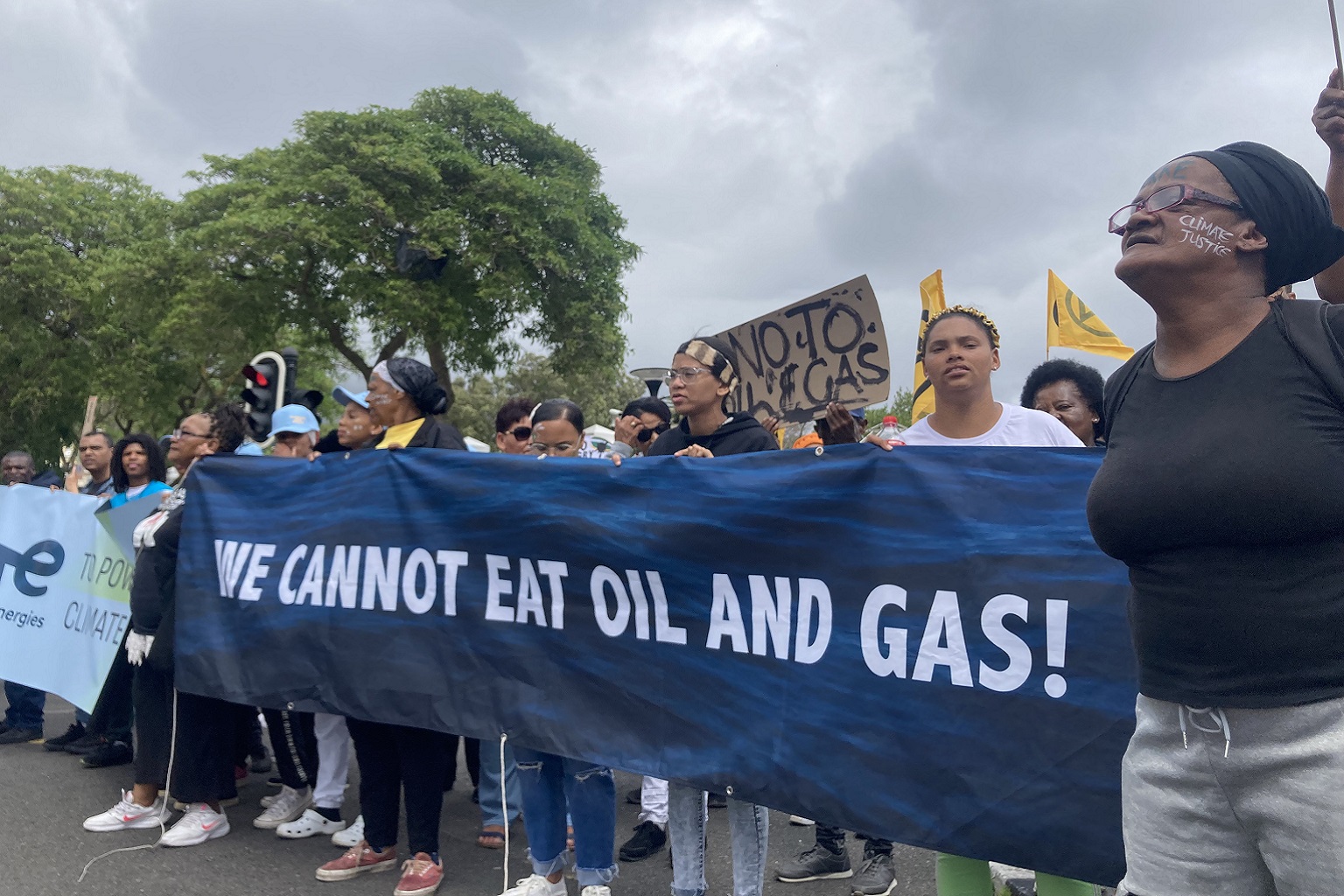
A 2024 Masifundise case study found that South Africa’s blue economy program “completely disregarded” concerns from communities on the country’s west coast about the impacts of extractive projects, including offshore oil and gas. Carmen Mannarino, a Masifundise program manager, told Mongabay that small-scale fishers have been “largely ignored” in marine spatial planning processes in South Africa.
“The first thing I think about when I hear blue economy is ‘greenwashing’ or blue washing,” Mannarino told Mongabay in a written response to questions.
“[A]fter more than a decade that this term has been used by policy makers, corporate actors and international institutions and agencies, it is clear that the Blue Economy is a process to foster extractivism and economic growth, and fishing communities are the ones that are often paying the price,” she added.
Zolile Nqayi, a spokesperson for South Africa’s Department of Forestry, Fisheries and the Environment, told Mongabay in an emailed statement that “The Department firmly rejects the assertion that Marine Spatial Planning processes excluded small-scale fishers. Marine Spatial Planning in South Africa is implemented in terms of a legislated, consultative framework that requires the participation of all affected stakeholders, including coastal communities and the small-scale fisheries sector. The Department acknowledges that stakeholder experiences may differ and continues to strengthen engagement mechanisms to ensure that these processes are inclusive, transparent and responsive to community concerns, while balancing socio-economic development with environmental sustainability.”
Blue justice
Criticisms of the blue economy have led to the development of a countervailing concept: blue justice. The term was coined in 2018 at the World Small-Scale Fisheries Congress, a conference organized by Too Big To Ignore (TBTI), a Thailand-based small-scale fisheries research institute.
TBTI’s blue justice demands include that governments support the implementation of the U.N. Food and Agriculture Organization’s (FAO) voluntary guidelines to ensure small-scale fishers’ participation in ocean-related decision-making. The FAO published the guidelines in 2015 following what the body has called a “long and intensive global bottom-up consultative process.” But to implement the guidelines, which center human rights, gender equity and cultural respect, governments must create national plans of action, something only a “handful” of the more than 190 U.N. member states have done, TBTI director Ratana Chuenpagdee told Mongabay by email.
“We have been promoting blue justice ‘for’ small-scale fisheries (as opposed to blue justice for all) for the reason that small-scale fisheries are often marginalized and disadvantaged in planning, policy and decision-making about fisheries and ocean,” said Chuenpagdee, who helped edit a 2022 book on blue justice.
Advocates for small-scale fishers emphasize the importance of marine tenure rights. One system of extending such rights is called territorial use rights in fisheries (TURFs). Experts often cite Chile as a model because more than 700 local fishing associations have established TURFs there since the 1990s. Chile also has a law protecting Indigenous groups’ marine tenure rights, though it hasn’t been fully implemented.
Another policy option small-scale fishers tend to support is preferential access areas, also known as inshore exclusion zones, which generally prohibit industrial-scale fishing or particular gear types within a certain distance from the shore. While these offer no formal ownership rights, they tend to be much bigger than TURFs.
Gorez of CFFA said the focus should go beyond regulating industrial fishing activity to also cover other blue economy activities, and even what’s happening on land, such as tourist development that pushes fishers out. She said terrestrial rights are especially important for women, who do much of the processing work once small-scale catch is landed and need space to do so. Women fisherfolk in Africa are starting to discuss land tenure rights in meetings, Gorez said.
Vivienne Solis Rivera, a representative of CoopeSoliDar, made similar points about the situation in Latin America, where she said gentrification has reduced access to the ocean by people of Indigenous or African descent.
Puentes, the U.N. rapporteur, said a just blue economy would be one with huge investments to recognize the rights of Indigenous and local communities , stop land pollution and runoff into the sea , restore marine ecosystems such as mangroves, coral reefs and seagrasses , improve urban planning in coastal cities to account for ocean health , and prevent illegal, unreported and unregulated fishing.
Medina, the Colombian fisher, agreed about the path forward.
“We view this concept of the blue economy as very aggressive. A lot of people will see it as progress. We don’t see it as progress because progress to us means living well, living healthily, having clear air to breathe, being able to bathe with clean water and drink uncontaminated water.”
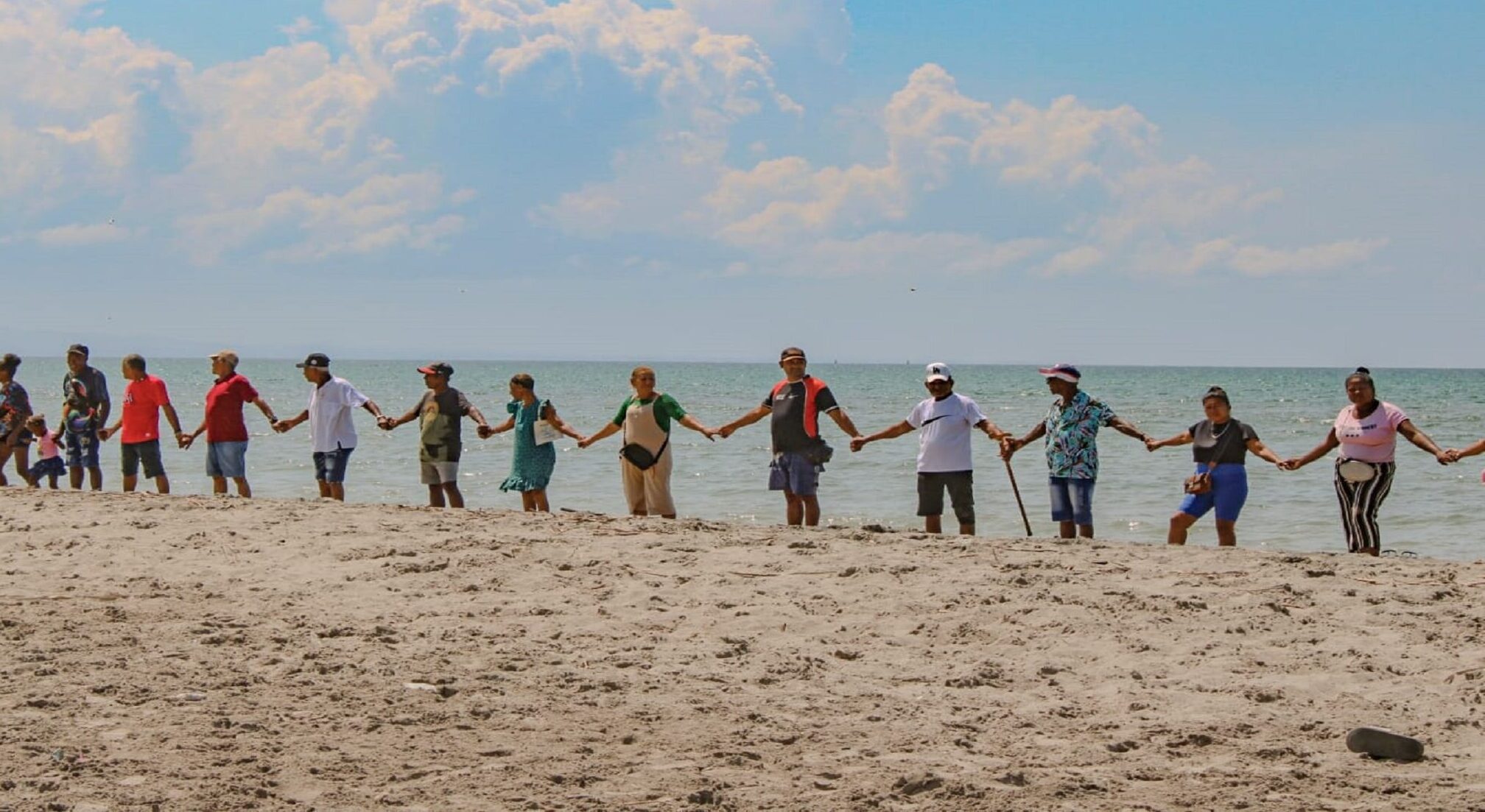
Banner image: Community members protest fossil fuels at a beach in Tolú, a town on the Gulf of Morrosquillo in Colombia, in November 2025. Crude oil is exported from the area. Image courtesy of ASOPARGOLMO.
Maxwell Radwin and Borja Bauzá contributed reporting for this story.
Citations:
Prado, D., Armitage, D., Nayak, P., Arriagada, N., Castillo, T., De la Lama, R. L., … Epstein, G. (2026). Threats and prospects for the viability of small-scale fishing communities in Latin America: A systematic review of conflicts and blue injustices. Ocean & Coastal Management, 271, 107934. doi:10.1016/j.ocecoaman.2025.107934
Prado, D. S., Rodrigues, L. M., Mendonça, É. S., Gimenez, B. G., Ferreira, B. M. P., De Melo, P. W., & Gerhardinger, L. C. (2025). Unpacking small-scale fishing interactions with Brazilian blue economy. Desenvolvimento e Meio Ambiente, 66, 162-179. doi:10.5380/dma.v66i.90992
Cisneros-Montemayor, A. M., Croft, F., Issifu, I., Swartz, W., & Voyer, M. (2022). A primer on the “blue economy:” Promise, pitfalls, and pathways. One Earth, 5(9), 982-986. doi:10.1016/j.oneear.2022.08.011
Feedback: Use this form to send a message to the author of this post. If you want to post a public comment, you can do that at the bottom of the page.
