

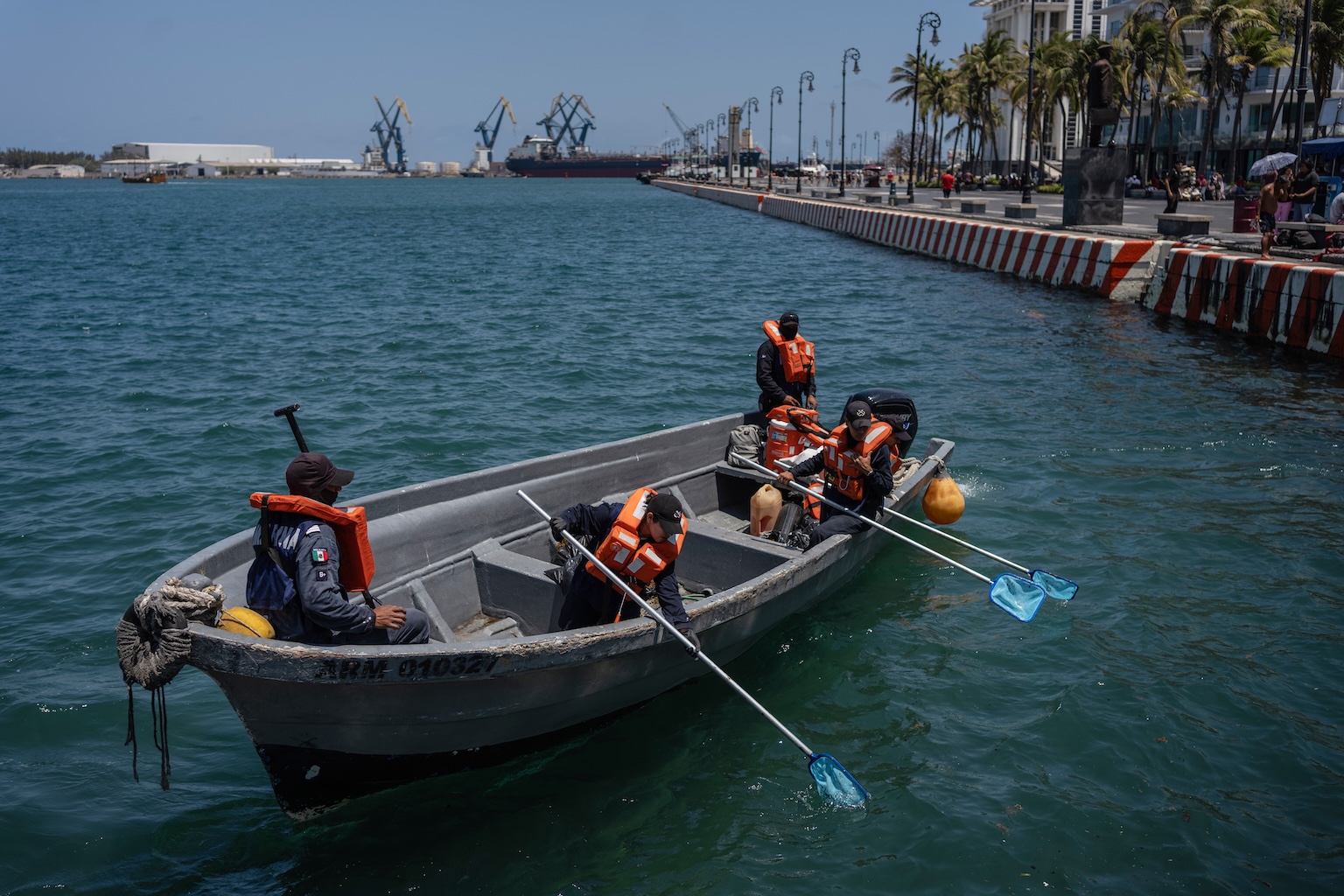
- An oil spill has contaminated 933 kilometers (about 580 miles) of shoreline along the western Gulf of Mexico, impacting the Mexican states of Veracruz, Tamaulipas, Campeche and Tabasco in eastern Mexico.
- After two months of contradictory theories about what could have caused the spill, Mexico’s national oil company, Pemex, admitted the spill was caused by a leak in one of its pipelines.
- Local communities have had to reduce or stop their fishing and ecotourism activities due to a lack of information from authorities about the risks of coming into contact with the water, and despite a government-led cleanup, residents continue to document damages to the environment, such as oil-slicked vegetation and intoxicated or dead fauna.
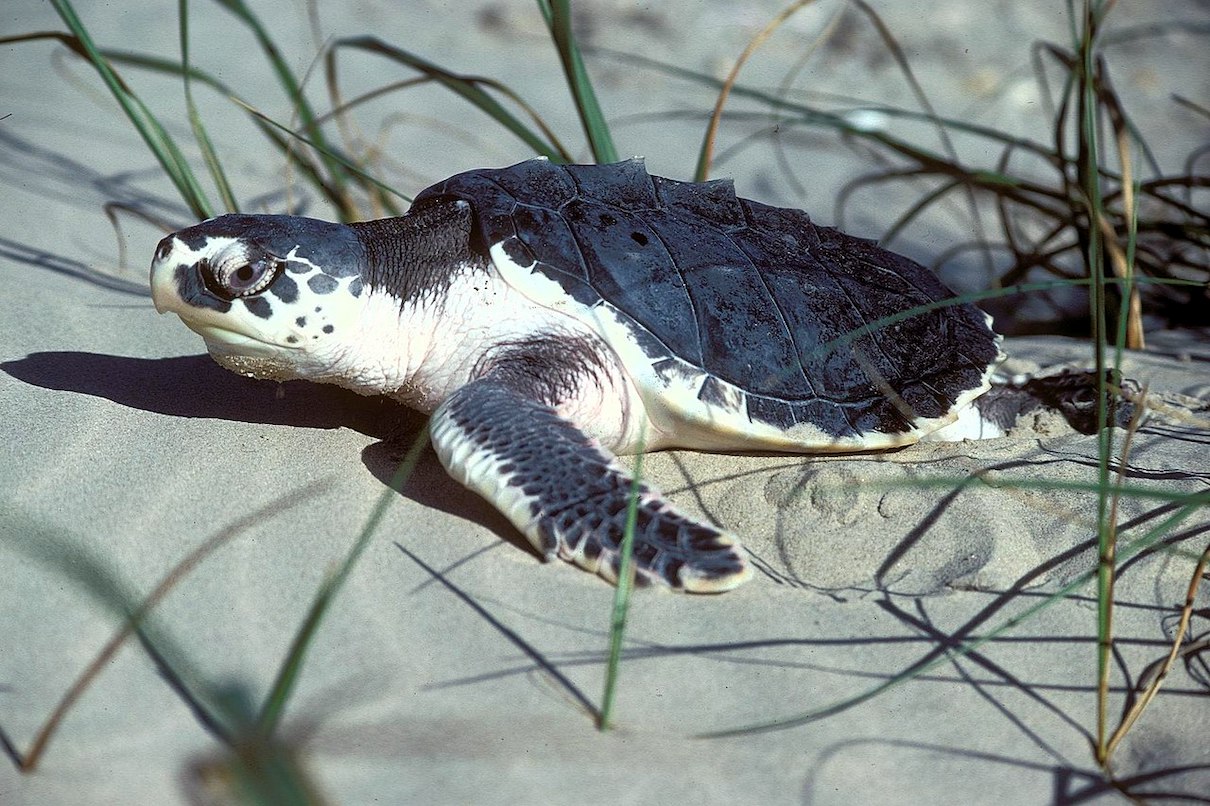
- Conservationists say the containment of the spill is urgent for the protection of more than 1,000 marine species, among them, endangered Kemp’s ridley sea turtles whose nesting season is underway on the beaches of northern Veracruz and Tamaulipas.
MEXICO CITY — In Nautla, a municipality on the coast of the Mexican state of Veracruz, soft folds of sand await sea turtles as their annual nesting season begins between April and June. But instead of the miniature olive-green turtles — the Kemp’s ridley turtles (Lepidochelys kempii) that show up here are the world’s smallest species of their kind — sticky black discs the size of coins dot the coastline. Along a 1-meter (3-foot) section of beach, Nautla resident Ricardo Yepez Gerón, director-general of the Yepez Foundation, an NGO focused on sea turtle conservation, said he could count approximately 100 of these spots.
“To remove the oil that has [washed up] on these beaches … let’s be honest, the coastline is too long,” Yepez Gerón told Mongabay in a video interview. “You need one person for every 10 meters [33 ft].”
Similar reports of tar stains on the beaches of Veracruz, Tabasco and Campeche, along the southern arc of the Gulf of Mexico, have cropped up since early March. According to a late March report from the Coral Reef Network of the Gulf of Mexico, what appeared to be an oil spill had impacted 933 kilometers (about 580 miles) of shoreline — and at least seven of nine natural protected areas, ANPs by their Spanish acronym, in the Tabasco, Veracruz and Tamaulipas states, according to Alicia Bárcena Ibarra, Mexico’s secretary of environment and natural resources.
For 67 days, the government denied any wrongdoing as various scenarios circulated regarding the source of the oil spill. Then, on April 16, the state-owned oil company, Petroleos de México (Pemex), announced at a press conference that the spill’s origin had been identified in a pipeline leak that started on Feb. 6 from within its own platform in the Cantarell oil field in the southern Gulf of Mexico.
This information, according to the Pemex’s director-general, Víctor Rodríguez Padilla, was mishandled by the corresponding operators and “systematically denied” by the chain of command. However, an independent satellite investigation led by Manuel Llano Vázquez Prada of the NGO CartoCrítica revealed on March 30 that a Pemex-owned ship for repairing oil pipes had been stationed at the faulty pipeline, Old AK C, for approximately eight days in early February. According to Rodríguez Padilla, neither the breach of the pipeline’s mechanical integrity nor the details of its repair were reported to his office or to Pemex’s senior management. Meanwhile, communities and habitats in the Gulf of Mexico were exposed to significant oil pollution for more than two months.
The coastal waters of the Gulf of Mexico that run from Tabasco in the south to Tamaulipas in the north are critical habitats for a rich diversity of marine species to rest and feed. Veracruz’s Alvarado Lagoon System and connecting Coral Reef System, both Ramsar sites of international importance, are considered crucial estuarine ecosystems in Mexico, where nearly 500 species of shorefish make their home among 33 species of soft and stony corals, including the reef-building elkhorn coral (Acropora palmata). The area’s marsh edges and more than 17,000 hectares (42,000 acres) of mangrove forests are sanctuaries for hundreds of wetland bird species like terns (genus Thalasseus) and limpkins (Aramus guarauna) , 23 species of sharks and rays , and the endangered greater Caribbean manatee (Trichechus manatus manatus). The shallow, soft-bottom environment also makes it a highly productive natural nursery for the commercial fishing of mojarra (Diapterus rhombeus), wedge clams (Rangia cuneata) and horse-eye jack (Caranx latus).
On March 7, Yepez Gerón, whose organization has monitored and maintained sea turtle habitats for 59 years, traveled to southern Veracruz after fishermen in the coastal town of Pajapan alerted him that they had found tar on the beach. Once there, it was clear that there was “a very serious petroleum problem,” he said.
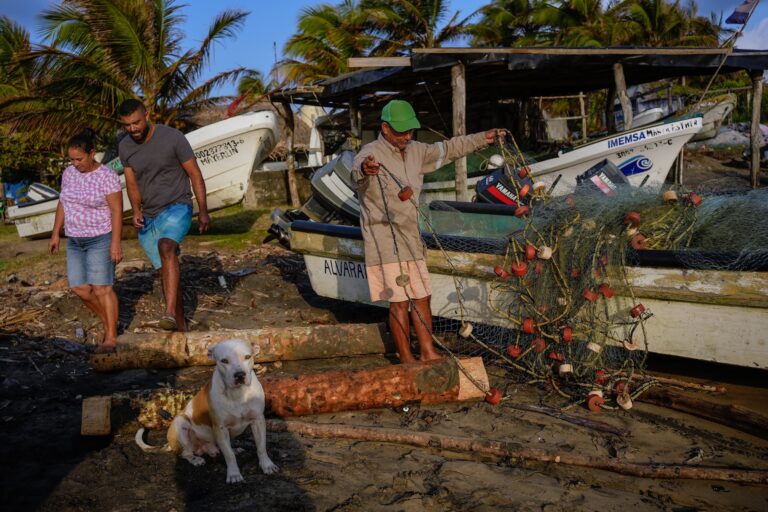
Fishermen and women described oil-slicked fishing nets, floating globs of oil in the ocean, reduced catch volumes, and tar stains affecting dozens of coastal communities between southern Veracruz and northern Tabasco. In a March 3 town hall organized by municipal authorities, one fisherman said, “We are hurt and sad … we have a lot of love for our mangroves because they give us life and the air to breathe. They’re going to dry up.” Fishing activities in the immediate area had ground to a halt, and environmental organizations began to sound the alarm.
The chronicle of an expanding spill
In a press release dated March 4, the Mexican Center for Environmental Law (CEMDA) said the oil spill had resulted in “dead turtles, manatees and fish,” as well as potential harm to residents’ health. “Fishing communities and environmental organizations are calling for an investigation into the causes, immediate action to restore the affected ecosystems, compensation for the communities that have suffered losses, and the establishment of improved spill response protocols and protection measures for the Gulf of Mexico,” CEMDA said.
Within days, tar started to wash up 125 km (78 mi) north in the central Veracruz city of Alvarado. By March 19, it had spread to the municipalities of Tamiahua, Tuxpan and Cazones, raising concern among residents that a major oil spill had occurred. Given its pace and reach, “you start to think, this spill must have [started] much further out,” Yepez Gerón told Mongabay. “It must have traveled for some time.”
On March 31, residual oil had reached the coast of southern Tamaulipas, which, along with northern Veracruz, is one of the very few natural habitats for Kemp’s ridley sea turtle. The species, along with other sea turtles, are experiencing severe habitat loss due to coastal erosion, overdevelopment, and increasing sand temperatures, which threatens the incubation period of their young.
“It is the start of the nesting season,” Yepez Gerón said. “Whether or not there is pollution, the turtles will come out of the water to complete their natural cycle. As the sand heats up, these patches [of oil] boil and turn into larger patches, becoming like mousetraps.”
He added that besides being a turtle nesting site, the coastline sustains shorebirds like herons, kingfishers and ospreys (Pandion haliaetus), which come to feed on small fish and sand crabs. “We’re talking about an ecocide,” Yepez Gerón said.
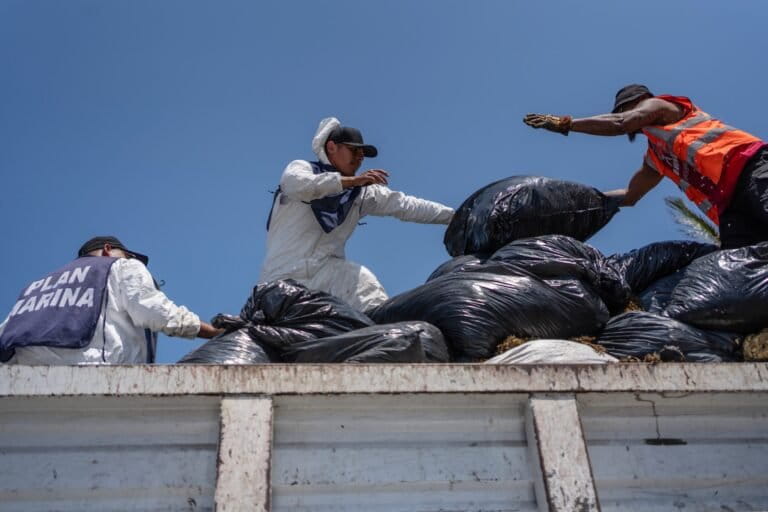
The government has given a jumbled account of the events. On March 11, Veracruz Governor Rocío Nahle Garcia attributed the patches of oil to natural seeps , a day later she said the cause was “a ship working off the coast of Tabasco,” near the town of Sánchez Magallanes. Two days later, the secretary of the Navy activated the local contingency plan, deploying, along with the secretary of the environment and Pemex, more than 200 workers to clean up contaminated beaches in Veracruz and Tabasco.
On March 16, Pemex reported that the affected beaches were 85% free of tar, but authorities had not revealed the name of the ship reportedly responsible for the spill, which continued to splatter beaches farther north, according to Estephanie Villalva, a resident of the region of Los Tuxtlas in Veracruz.
President Claudia Sheinbaum reiterated the claim that a private ship, not operated or employed by Pemex, was likely at fault, and announced that an interdisciplinary group would investigate the source of the contamination and determine the appropriate sanction. “More workers have been sent by Pemex to continue clean up,” the president said on March 24, “but [the spill’s] origin is not yet known.”
On March 25, Greenpeace pointed to satellite imagery that suggested the spill had started between Feb. 11 and 17 off the coast of Campeche, covering an area of approximately 50 square kilometers (19 square miles). The culprit, according to the organization’s press release, was a ship located near the state-owned Abkatún oil platform, which the Mexican government denied.
In a March 26 press conference, the Navy and the secretary of the environment said the spill could be linked to three possible sources: a natural seep located near the port of Coatzacoalcos, in southern Veracruz , another in the Pemex oil field of Cantarell, Campeche , and an unnamed ship that allegedly made an illegal discharge near Coatzacoalcos. As of March 30, federal workers, assisted by locals, had removed more than 825 metric tons of tar-covered waste across 631 km (392 mi) of coastline.
Two weeks later, on April 16, Pemex finally admitted responsibility for the spill, confirming its origin in a pipeline leak within the Abkatún oil platform. The agency reported that the leak was active for eight days, and that at least 350 cubic meters (92,460 gallons) of oily water had been recovered in containment booms, unknown to senior company officials at the time. In response, Pemex removed from their positions the deputy director of safety, occupational health and environmental protection , the coordinator of marine control, spills and waste , and the head of spills and waste.
Mariana Robles García, subsecretary of biodiversity and environmental restoration, said on April 16 that 1,300 km (about 800 miles) of coastline, 58 turtle sites and 24 nesting camps had been observed and cleaned. She added there had been no mass die-off of any species in the Gulf of Mexico, or any damage to the Veracruz Coral Reef Network. Bárcena Ibarra, the environment secretary, said at her press conference that there’s no evidence the environmental impact is severe. Pemex did not reply to a request for comment from Mongabay by the time this story was published.
Oil spill impacts go beyond the coastline
“There are several concerns. One is that it’s unclear how much oil was spilled,” Arturo Serrano-Solis, a marine biologist at the University of Veracruz, told Mongabay in a video interview. “We have the immediate effects which, as we are already seeing, are the animals that show up dead.”
According to a crowdsourced map managed by the Coral Reef Network of the Gulf of Mexico documenting the oil spill’s impacts, 13 sea turtles, three dolphins, a manatee and two pelicans have been found covered in oil and/or dead as of April 16. “But the bigger problem are the long-term effects,” Serrano-Solis said.
“If [the government] didn’t act in time out at sea … that oil stays there. And it destroys what are known as primary producers, that is, algae and phytoplankton.” As bottom feeders come in contact with contaminated food sources, that toxicity travels up in the ecosystem. “The food web is broken,” Serrano-Solis said.
Serrano-Solis, who specializes in marine biogeography, co-authored a study tracking the long-term impacts of the 2010 Deepwater Horizon oil spill on various species of toothed whales in the Gulf of Mexico. Between 2010 and 2020, seven of the eight species monitored declined in numbers, both in sites immediately impacted by the spill and in those several hundred kilometers beyond the wellhead. In the area immediately surrounding the spill, numbers of sperm whales (Physeter macrocephalus) decreased by 25%, dwarf sperm whales (Kogia sima) by 40% and Gervais’s beaked whales (Mesoplodon europaeus) by 84%.
“We’ll see this in the long run, and it depends on how much oil formed [from the latest spill]. That data is missing to be able to estimate [the impact],” Serrano-Solis said. “But if it reached here relatively quickly — all the way to northern Veracruz and southern Tamaulipas — that means there was a lot of it.”<
Oil spills in the Gulf of Mexico are becoming more frequent as oil exploration increases, with greater risks of contamination from ultra-deep-water projects. According to Llano Vázquez Prada from CartoCrítica, which uses public data requests and mapping to track the environmental impacts of extractive industries, underreporting is chronic. This, compounded by a push to extract oil from overused fields, makes it difficult to measure the true scale of oil pollution in the gulf, he said.
“The instruction [from the government] is to extract whatever you can find, which leads us to use old infrastructure that isn’t maintained. So, what we have is a situation where, time and again, we see this infrastructure that just can’t take it anymore,” Llano Vázquez Prada told Mongabay during a video interview. “It’s left there poorly capped and leaking continuously, and so these impacts are felt in every way: on the immediate environment, the regional environment, the climate, and of course also on the health of the workers.”
According to a recent public information request, between 2018 and 2025, Pemex reported only six oil spills in the Gulf of Mexico to Mexico’s Security, Energy and Environment Agency (ASEA). A Mongabay investigation, however, found that the agency is registering fewer than half of the leaks and spills that are actually occurring.
“We need to have a very clear tracking system for spills,” Llano Vázquez Prada said, noting that the type of substance, the volume, how the damage happened and how it’s repaired are vital to measuring the sector’s harm to the Gulf of Mexico ecosystem.
“We’re not just talking about major spills, but about all the thousands of everyday spills,” he said. “It’s not just the impact on the coast, but everything that happened out in the ocean — that’s where the impacts begin.”
Estephanie Villalva, an ecotourism guide in the town of Catemaco, in southern Veracruz, said she hasn’t seen any real intention from the authorities to repair the damage to the affected communities and ecosystems. “To leave the people from the coast without resources. It’s problematic not to warn people of the possible risks of going into the water,” said Villalva, who has had to suspend her guided beach and kayaking tours through Los Tuxtlas Biosphere Reserve due to the spill.
The office of the environment secretary said it has collected samples from beaches, sediments, seagrass beds and coral reefs to assess the impacts of the spill, but a comprehensive restoration plan based on the quantity of oil spilled is pending.
In association with the Coral Reef Network of the Gulf of Mexico, Villalva’s community is taking it upon themselves to create an oil spill response protocol and test the toxicity of the water. But she said the cost and work required to assess the pollution is “monumental.”
“[The effort] should come from the government, from the government and whoever is responsible for the spill,” she said. “Something that, to this day, we still don’t know.”
Citations:
Cruz-Escalona, V. H., Arreguín-Sánchez, F., & Zetina-Rejón, M. (2007). Analysis of the ecosystem structure of Laguna Alvarado, western Gulf of Mexico, by means of a mass balance model. Estuarine, Coastal and Shelf Science, 72(1-2), 155-167. doi:10.1016/j.ecss.2006.10.013
Ortiz-Lozano, L., Pérez-España, H., Granados-Barba, A., González-Gándara, C., Gutiérrez-Velázquez, A., & Martos, J. (2013). The Reef Corridor of the Southwest Gulf of Mexico: Challenges for its management and conservation. Ocean & Coastal Management, 86, 22-32. doi:10.1016/j.ocecoaman.2013.10.006
Robertson, D. R., Pérez-España, H., Domínguez-Domínguez, O., Estapé, C. J., & Morgan Estapé, A. (2019). An update to the inventory of shore-fishes from the Parque Nacional Sistema Arrecifal Veracruzano, Veracruz, México. ZooKeys, 882, 127-157. doi:10.3897/zookeys.882.38449
Frasier, K. E., Kadifa, M. A., Solsona Berga, A., Hildebrand, J. A., Wiggins, S. M., Garrison, L. P., … Soldevilla, M. S. (2024). A decade of declines in toothed whale densities following the Deepwater Horizon oil spill. Communications Earth & Environment, 5(1). doi:10.1038/s43247-024-01920-8
Banner image: Mexican Navy sailors collect sargassum stained with oil from a spill in the Gulf of Mexico, Thursday, March 26, 2026. (AP Photo/Felix Marquez)
FEEDBACK: Use this form to send a message to the author of this post. If you want to post a public comment, you can do that at the bottom of the page.
