

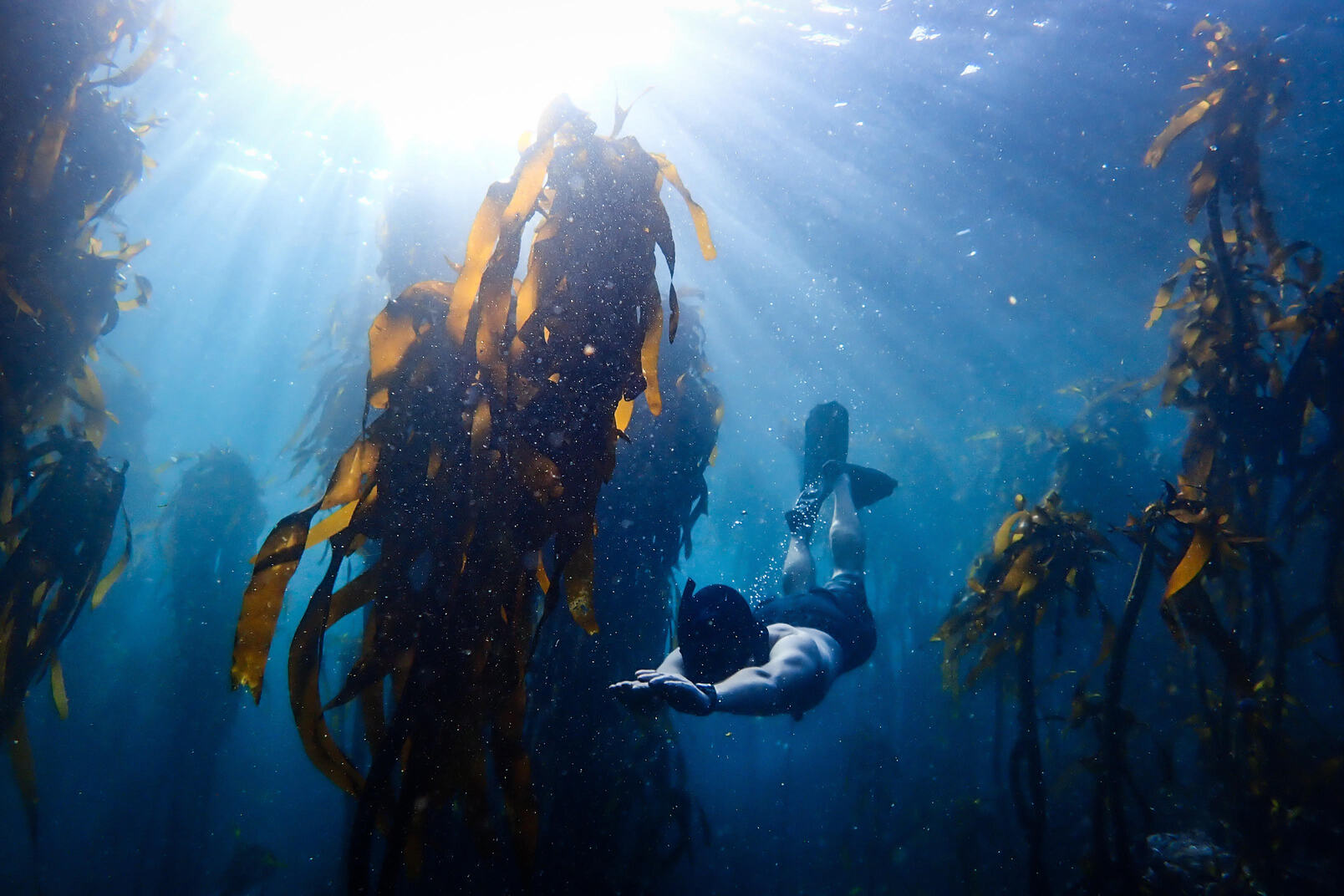
- Stretching more than 1,300 kilometers (800 miles) along the coast of South Africa, the Great African Seaforest is home to thousands of species, many of them endemic, and is one of the few expanding kelp forests in the world.
- The Academy Award-winning documentary “My Octopus Teacher” was set in the Great African Seaforest.
- Although slivers of the kelp forest fall under marine protected areas, the ecosystem is mostly not conserved.
- Marine scientists are working to inventory the species found here in the hopes of raising its profile, both internationally and among the communities that live alongside it on the South African coast.
CAPE TOWN, South Africa — Diving in the Great African Seaforest, with its tightly packed towering kelp stipes that can rise up to 9 meters, or 30 feet, from the seabed, is a surreal experience, even for those who study this vast underwater habitat.
“You see fish swimming as birds would do in the forest,” says marine biologist Loyiso Dunga.
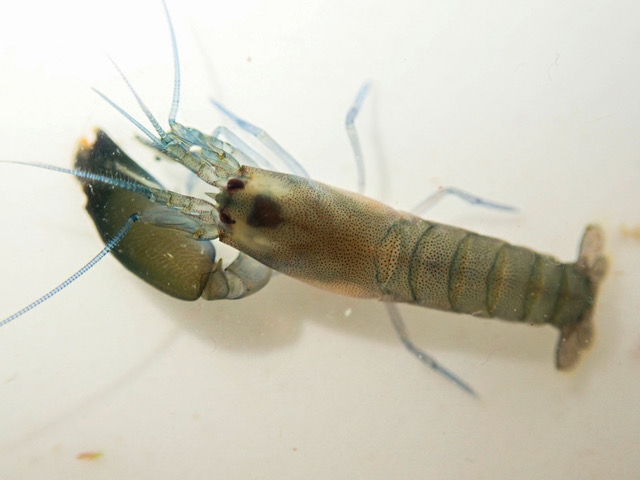
The name describes a belt of marine vegetation around 1,300 kilometers (800 miles) long, stretching along South Africa’s Atlantic coast, around the Cape of Good Hope and extending into the Indian Ocean. It’s composed of hundreds of varieties of seaweed and hosts a kaleidoscope of marine species, from snapping shrimp (family Alpheidae) that fill the ocean with their popping sounds, to neon-colored mollusks called nudibranchs (order Nudibranchia), to the African penguin (Spheniscus demersus). It’s also home to a charismatic octopus, made famous by the Netflix documentary My Octopus Teacher.
Dunga, executive director at the Seas of Good Hope initiative, is one the few people who understand the true expanse of this unique ecosystem: He helped map it through the use of satellite imagery. “You can’t really protect what you don’t know,” he says.
For many years, resident scientists understood that the Great African Seaforest was special , it’s one of the few documented sites on the planet where kelp forests are expanding. But now, with growing research, South African scientists are piecing together a granular picture of this underwater system and its inhabitants, in the hope of raising its profile, both internationally and among the communities that live along South Africa’s coast.
Although slivers of the Great African Seaforest fall within marine protected areas, the ecosystem is mostly not conserved. Globally, too, less than 2% of kelp forests enjoy strong protections, and they receive less attention than other marine ecosystems like coral reefs or mangrove forests. This is despite the fact that kelp covers 30% of the world’s coastline and provides key ecosystem functions. Researchers estimate that kelp forests generate up to $562 billion each year in ecosystem services by “boosting fisheries productivity, removing harmful nutrients from seawater, and sequestering carbon dioxide.”
Part of the reason for limited formal protections for this ecosystem is the complicated legacy of conservation in South Africa. During the apartheid era, exclusionary conservation efforts entailed the forcible removal of local communities from coastal areas. Efforts to conserve the kelp forest today emphasize engaging communities.
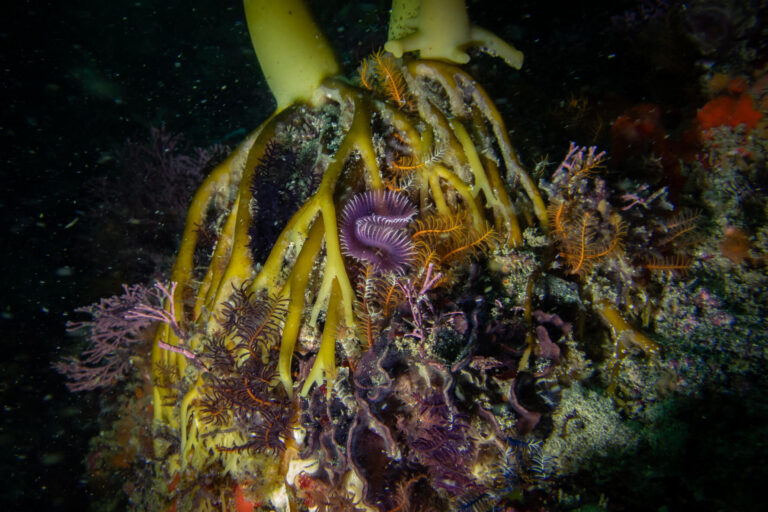
Getting a better understanding of the Great African Seaforest, however, is hampered by the difficulty of funding expensive ocean research. “Trying to sell a biodiversity research project is always a challenge,” says Nasreen Peer, a senior researcher at Stellenbosch University. Peer leads a project that studies the macro-invertebrates that live on holdfasts, the brown bulbous root-like structures of bamboo kelp, like the neon-pink Ceradocus rubromaculatus, a shrimp-like amphipod.
“People want to know, ‘how does this tie into food security or carbon climate regulation?’” she said.
Peer says there’s a link between uncovering this “hidden biodiversity” and bigger initiatives, like climate change mitigation research, which is more attractive to funders. The small creatures that Peer studies contribute key functions, like recycling nutrients within the forest system or filtering the water, making the ecosystem healthier. This in turn likely contributes to the kelp forest capturing more atmospheric carbon dioxide.
Some of the species Peer works on were never studied at all, like ostracods, a quite prevalent crustacean in the kelp forest. So she has the added challenge, and cost, of developing an entire taxonomy for the group.
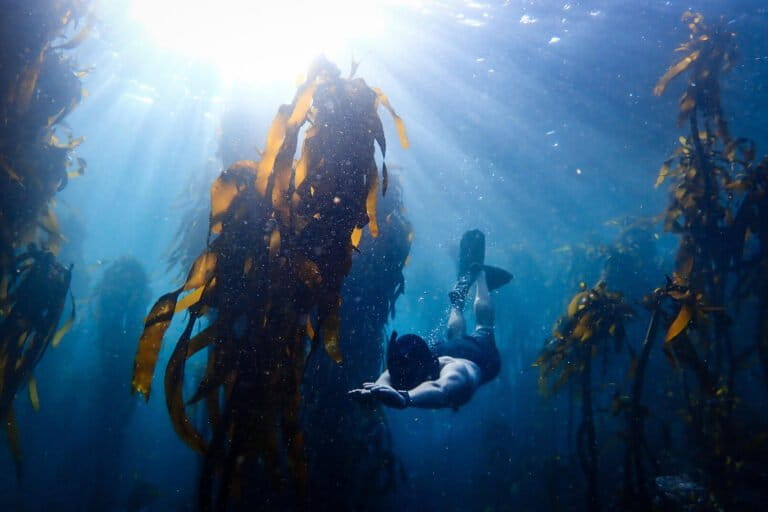
Jannes Landschoff, a taxonomist who studies marine arthropods, collaborates with Peer on her holdfast project. Working for the Sea Change Project, he leads a group that will launch the 1001 Seaforest Species application in 2027.
“My hope for this project is that people can access biodiversity that is really out there, instead of looking for animals with big eyes,” Landschoff says.
For example, South Africa boasts more than 20 kinds of limpets, a type of sea snail, including a kelp limpet (Cymbula compressa) that lives exclusively on bamboo kelp stipes deep in the sea forest. “They are perfectly evolved and adapted to this time and space,” Landschoff says.
Landschoff has been working on the 1001 Seaforest Species project for the past four years. It’s supported, in part, by the Save our Seas Foundation, a global nonprofit. Users of the app will be able to browse through thousands of species in the Great African Seaforest, clicking on photographs and videos, all of which Landschoff and his team have collected over the years.
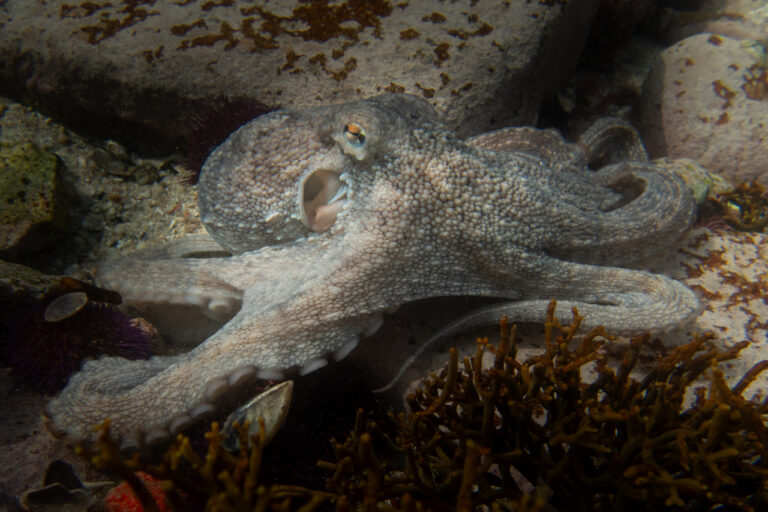
The campaign to give this kelp forest in South Africa more visibility received a boost in 2020 with the release of the film My Octopus Teacher. The Oscar-winning documentary portrayed an unlikely friendship between cinematographer Craig Foster and a common octopus (Octopus vulgaris).
During COVID-19 lockdowns, Foster and Landschoff, who are neighbors in Cape Town, went diving every day in the nearby Great African Seaforest, where Foster was inspired to begin shooting the film.
“Being able to immerse oneself inside an ecosystem where your whole being is covered with it … you feel the beating heart of this extraordinary, precious thing that keeps us all alive,” Foster says.
Foster’s nonprofit, the Sea Change Project is supporting Landschoff’s 1001 Seaforest Species application.
Scientists are also engaging communities in their own language. As a coordinator of the Seaweed Specialist Group at the IUCN, the global nature conservation authority, Dunga is spearheading an initiative to have kelp forests named with their native names.
In South Africa, Dunga says, kelp is called imbambosi, which is similar to the word for penguin, unombombiya.
“Many Indigenous communities are already interfacing with kelp forests,” Dunga says, pointing out that they already have local names for these ecosystems. To promote our shared ocean culture, Dunga says it’s important to engage people using words that they already know.
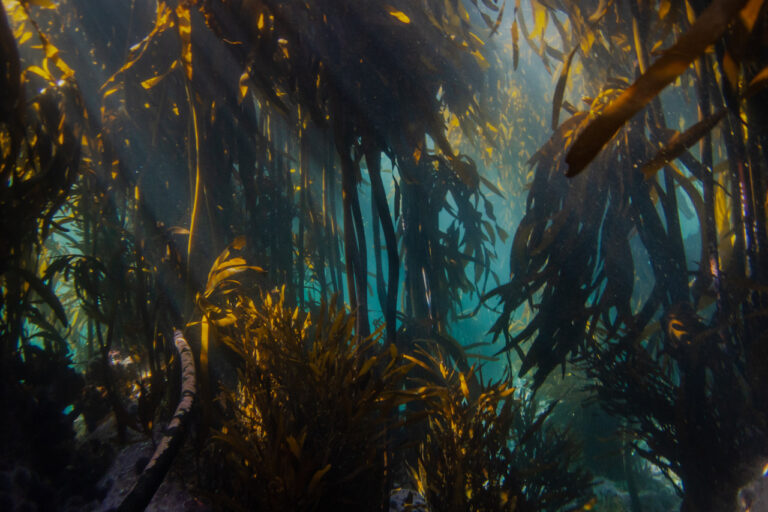
Greater attention, funding and awareness could be crucial to safeguard the Great African Seaforest in the coming years.
“The kelp forest in South Africa is special,” says Albertus Smit, a marine biologist at the University of the Western Cape, where he heads a working group focused on the country’s kelp beds.
Globally, kelp forests are declining at a rate of 1.8% a year, with some regions experiencing losses up to 96%. In contrast, South Africa’s kelp beds are growing, with its bamboo kelp (Ecklonia maxima) beds extending eastward up the coastline.
The Great African Seaforest is uniquely positioned between two oceans, the Atlantic and the Indian, and shaped by two ocean currents with different heat characteristics: the Benguela Current and the Agulhas Current. The former creates a powerful upwelling that brings colder, nutrient-rich water from the ocean depths to the surface.
South African ecologists are studying this forest’s unique characteristics in the hopes of understanding its resiliency. So far, their research indicates that kelp species such as bamboo kelp grow best in cool, nutrient-rich conditions associated with the Atlantic Ocean’s upwelling.
But Smit and others also express worry about how climate change could affect kelp forests.
“If you have warming of ocean water around kelp forests, that kelp forests would become dominated by smaller [kelp] plants,” Smit says. This could change the ecosystem’s structure and composition, and also has implications for future climate predictions. Forecast models rely on current estimates of how much carbon kelp forests across the world store.
Banner image: Jannes Landschoff diving in the Great African Seaforest. Image courtesy of Jannes Landschoff.
Citations:
Dunga, L., Lück-Vogel, M., Blamey, L. K., Bolton, J., Rothman, M., Desmet, P., & Sink, K. (2024). Mapping South Africa’s canopy-forming kelp forests using low-cost, high-resolution Sentinel-2 imagery. Estuarine, Coastal and Shelf Science, 310, 108989. doi:10.1016/j.ecss.2024.108989
Peer, N., Muhl, E., Janna, J., Brown, M., Zukulu, S., & Mbatha, P. (2022). Community and marine conservation in South Africa: Are we still missing the mark? Frontiers in Marine Science, 9. doi:10.3389/fmars.2022.884442
Eger, A. M., Marzinelli, E. M., Beas-Luna, R., Blain, C. O., Blamey, L. K., Byrnes, J. E., … Vergés, A. (2023). The value of ecosystem services in global marine kelp forests. Nature communications, 14(1), 1894. doi:10.1038/s41467-023-37385-0
Mbatha, P. (2022). Unravelling the perpetuated marginalization of customary livelihoods on the coast by plural and multi-level conservation governance systems. Marine Policy, 143, 105143. doi:10.1016/j.marpol.2022.105143
Katharoyan, C., Peer, N., Landschoff, J., Griffiths, C. L., Samaai, T., & Beeslaar, D. (2024). Kelp holdfasts in the Great African Seaforest provide habitat for diverse assemblages of macroinvertebrates. Aquatic Biology, 33, 33-45. doi:10.3354/ab00766
Takano, T., Landschoff, J., Griffiths, C. L., & Kano, Y. (2025). First endoparasitic eulimid from Ophiuroidea and its implications for the ecological diversification of the family (Caenogastropoda: Vanikoroidea). Journal of Molluscan Studies, 91(4). doi:10.1093/mollus/eyaf023
Krumhansl, K. A., Okamoto, D. K., Rassweiler, A., Novak, M., Bolton, J. J., Cavanaugh, K. C., … Byrnes, J. E. (2016). Global patterns of kelp forest change over the past half-century. Proceedings of the National Academy of Sciences, 113(48), 13785-13790. doi:10.1073/pnas.1606102113
Prew, Z. S., Reddy, M. M., Mehta, A., Dyer, D. C., & Smit, A. J. (2024). The African seaforest: A review. Botanica Marina, 67(5), 425-442. doi:10.1515/bot-2023-0060
Wernberg, T., Filbee-Dexter, K., De Bettignies, T., Leclerc, J.-C., Davoult, D., Lévêque, L., … Smit, A. J. (2025). Smaller plants in warmer water could have implications for future kelp forests. Scientific Reports, 15(1). doi:10.1038/s41598-025-13950-z
FEEDBACK: Use this form to send a message to the author of this post. If you want to post a public comment, you can do that at the bottom of the page.
