

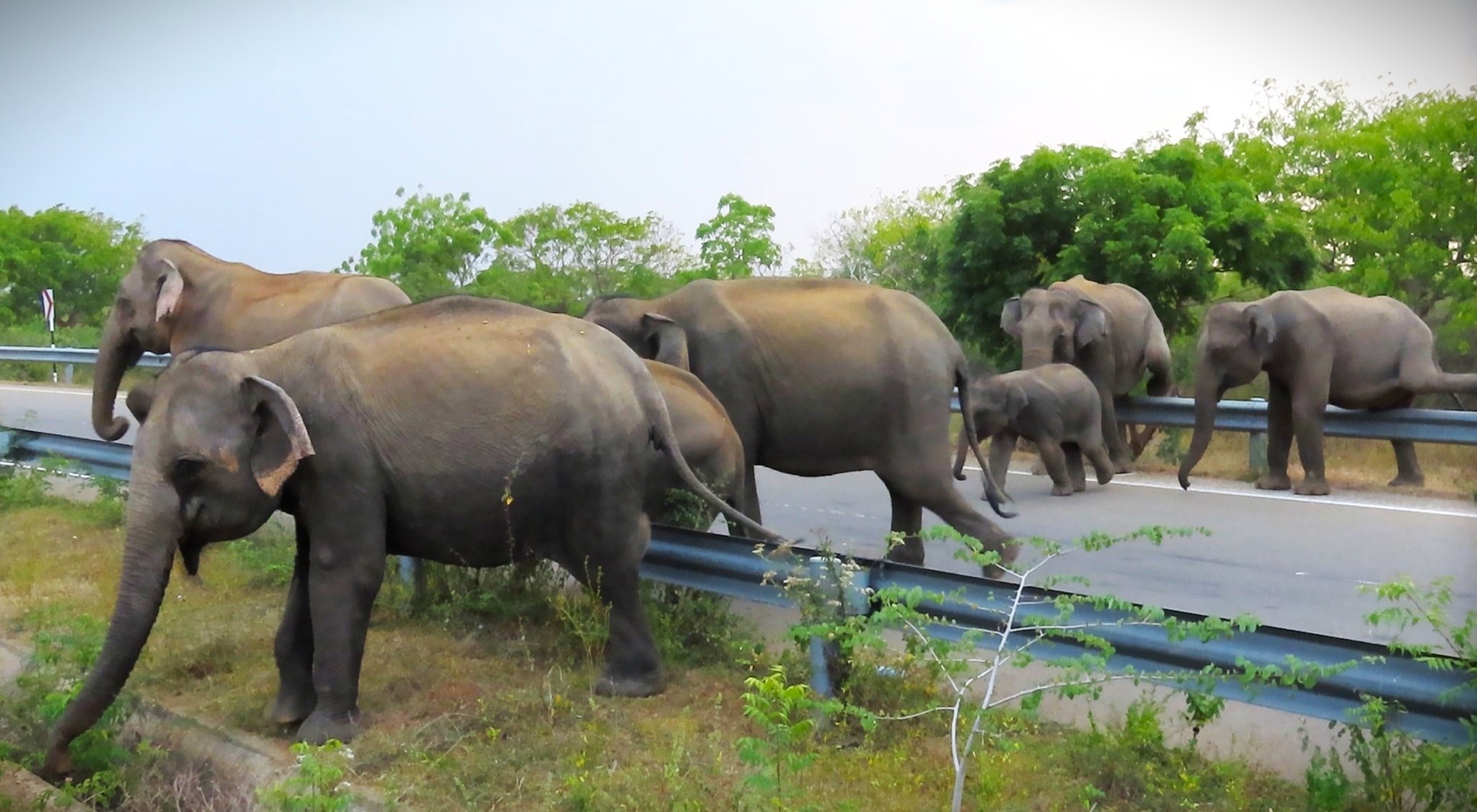
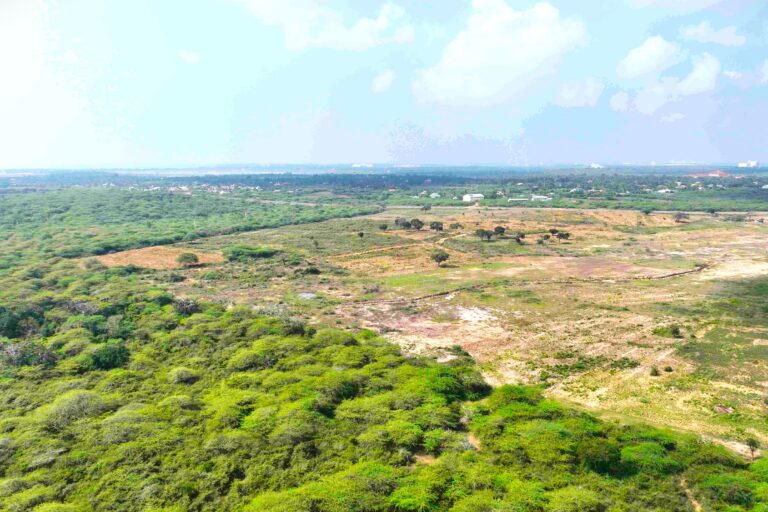
- A state-approved solar energy park in Hambantota in southern Sri Lanka is being developed on the edge of a managed elephant range, or MER, with some land clearances overlapping with elephant ranges.
- Local communities are protesting the clearing of shrub forests, which are key elephant habitats, a disruption of which can result in the fragmentation of traditional elephant corridors and intensify human-elephant conflict, driving the animals toward villages and farms.
- Conservationists call for adherence to the original MER boundaries, noting that unclear procedures for land-use approval, de-listing and boundary revisions are impacting the intended conservation framework.
- While renewable energy expansion is critical for Sri Lanka’s energy security and to reach its climate goals by reducing fossil fuel dependence, the Hambantota solar push highlights growing tension between clean energy development and biodiversity protection in Sri Lanka.
HAMBANTOTA, Sri Lanka — As a new wave of large-scale solar energy projects take shape along the fringes of Sri Lanka’s Managed Elephant Range, or MER, in the southern district of Hambantota, activists, farmers and wildlife conservationists are opposing the move.
Those opposing the solar push — in a district that has significant ‘elephant terrain’ — warn that clearing forests in one of the most critical elephant landscapes on the island would escalate the existing human-elephant conflict (HEC) rather than reduce it.
Sri Lanka holds one of the worst records for human-elephant conflict, an issue that continues to worsen as the island’s conservation efforts are no match for the escalating conflict. Every year, around 100 people and 400 elephants are killed in the country due to HEC.
The Sri Lankan government has granted approval to set up multiple privately-owned solar power plants, forming a solar energy park bordering the Hambantota MER, with as much as 405 hectares (1,000 acres) of elephant habitat slated for clearance, according to Sajeewa Chamikara of the Movement for Land and Agricultural Reform (MONLAR), a network of farmer organizations and community-based organizations.
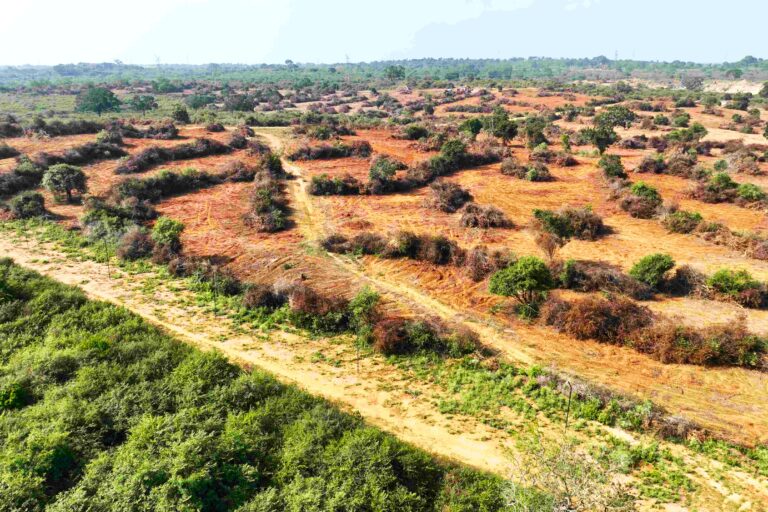
“Ground investigations by MONLAR confirm that forest clearing has already begun, with heavy machinery being used to clear the scrub forests and to burn them,” Chamikara tells Mongabay. “This will inevitably escalate human-elephant conflict in an area already among the worst affected by HEC.”
Local communities echo these fears. “We are already struggling with elephants, and we simply cannot bear any further intensification of this conflict,” says Manoj Gayan, president of a regional farmers’ association in Hambantota.
The Hambantota region in southern Sri Lanka supports more than 400 elephants that depend on a mosaic of grasslands, scrub forests and water catchments. Decades of habitat loss caused by infrastructure projects, agricultural expansion and resettlement have already forced elephants into closer contact with people, increasing conflicts.
Intensifying HEC
According to Department of Wildlife Conservation (DWC) data, between 2015 and 2025, 72 humans were killed in the Hambantota district, while the elephant death toll is double, reaching 154.
In recent years, elephants have also begun moving into areas where they were not previously seen, even entering townships. “This happens because they are losing the habitats where they can feed and live freely,” Gayan says. “Clearing large tracts of forest will only push them further into our villages, even putting our children at risk.”
The human cost is already evident. Gayan recalls the death of a 7-year-old girl killed by an elephant while accompanying her father in their chena — the slash-and-burn cultivation practiced in Sri Lanka — fields last year. “A few days ago, a farmer was killed by an elephant in a nearby village, and I never know when it [could] be my turn,” Gayan says.
“It’s not just the deaths — but a constant fear we deal with as we are not sure from where an elephant may emerge. Elephants also destroy our homes while searching for fodder,” he says. “We do accept that the elephants are not to be blamed as they do not understand human boundaries. So, we urge the government and its officials to stop this kind of largescale forest clearances.”
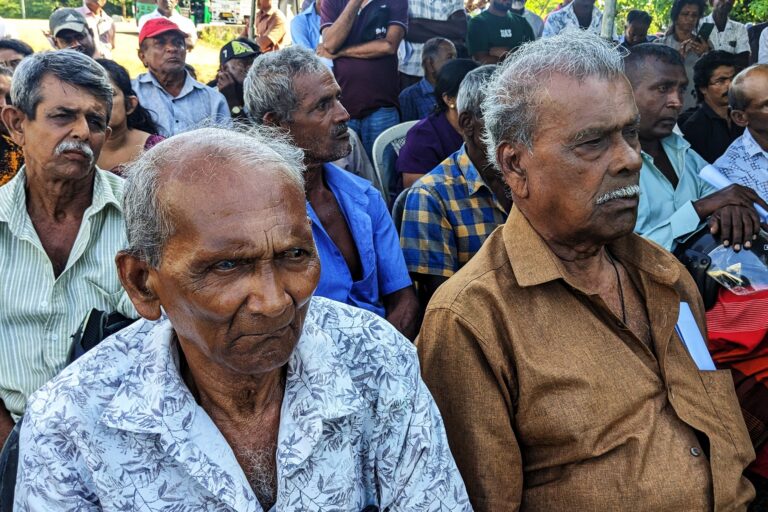
Meanwhile, several farmer associations in Hambantota have recently convened a meeting to protest the upcoming solar parks.
Managed Elephant Range under strain
The MER concept was introduced as a land-use planning strategy to conserve elephants outside protected areas, allowing for regulated human activity while maintaining ecological connectivity.
In Hambantota, however, the landscape has already been heavily altered. Nearly 8,094 hectares (20,000 acres) of elephant habitat have been lost to major development projects, including a port, an airport and other infrastructure. In response to escalating conflict and the failure of elephant drives, in 2010, conservation scientists led by Prithiviraj Fernando, chair of the Sri Lankan NGO Centre for Conservation and Research (CCR), radio-collared several elephants from different herds based on their range patterns to identify the Hambantota MER.
Following sustained farmer protests and the lapse of more than 10 years, MER was finally declared in 2021. However, the gazetted MER demarcates a boundary of 23,746 hectares (58,677 acres) excluding 866 hectares (2139 acres) set aside for the Mattala International Airport, so the MER actually covers 22,880 hectares (56,537 acres). This is significantly smaller than the originally identified area that was necessary for effective habitat management, Fernando says. “Some areas used by elephants were not included in MER as these were decided as more important for development and eventually it was a compromise between development and conservation,” he adds.
Over the years, the DWC made several ad hoc revisions to the MER boundary when erecting boundary fences, effectively shrinking the area. “When it was gazetted, the area was further decreased, with DWC’s consent,” Fernando notes.
Meanwhile, MONLAR’s Chamikara says that the lands now allocated for solar projects fall within areas originally proposed to be included in the MER. He also points to ongoing encroachments within the designated range, which have concentrated elephant populations, but are currently being cleared for solar farms.
“As these areas are cleared and fenced, elephants will be forced out and will move into villages and farmlands,” he warns.
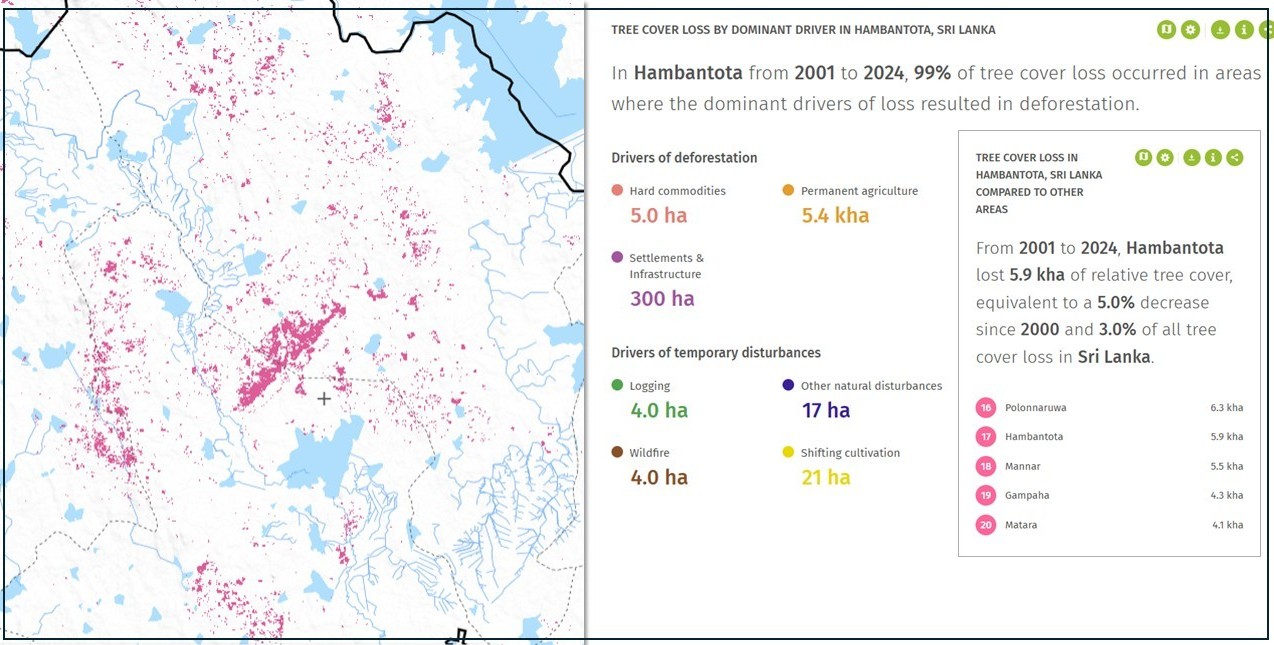
Between 2001 and 2024, Hambantota lost 5,900 ha (14,579 acres) of tree cover according to the Global Forest Watch (GFW) data but experts caution that the tree cover alone does not capture the ecological value of the region that is home to many species.
“Some argue these are not biodiversity rich as wet zone rainforests, but just degraded lands that can be cleared, but this is incorrect as the scrub forests and grasslands are a highly suitable and traditional habitat for elephants who live in this [semi-]arid zone,” Fernando says.
Being located in the dry zone with fewer rainy days, Hambantota would be ideal for solar power generation: The region already has several solar power plants, says Bimal Indrajith De Silva, district secretary of Hambantota. “Any development project would bear some environmental impact, but [they must] be assessed carefully and, as this project gets approvals from 12 government agencies, I believe the project [isn’t as] harmful the way some make it out to be,” de Silva tells Mongabay.
Impact assessment loophole
In Sri Lanka, environmental approval for solar power projects is governed by the National Environmental Act (NEA). Largescale solar projects generally require a full environmental impact assessment (EIA), while smaller or less sensitive projects may be approved through an Initial environmental examination (IEE), depending on their size and location, and finally approved by the Central Environmental Authority (CEA).
In Hambantota, the proposed solar energy park consists of 17 smaller project units built by various companies, allowing each to be assessed separately under the IEE process and not through a single comprehensive EIA, says Hemantha Withanage, chairperson of the Colombo-based environmental organization Centre for Environmental Justice (CEJ), which pursues public interest litigation as a deterrent mechanism.
These IEE approvals were granted by the CEA’s Hambantota regional office and other agencies, but the individual projects are now being developed in the same location as a single project generating 150 megawatts and together will clear nearly 202 hectares (500 acres) of scrub forests, Withanage says, adding that this cumulative impact requires a proper EIA.
Meanwhile, CEA’s director general Kapila Rajapaksha says that the IEE approvals for these individual projects were granted by the Hambantota district office based on the smaller scale of each project. However, if these projects are being set up next to each other, combining them into a single solar park, further environmental assessment would be required, and the CEA is currently engaging with the developers. If any irregularities are found, a decision will be taken to intervene within a few weeks, he adds.
Renewable energy vs. biodiversity
The proposed projects are expected to generate up to 150 MW of electricity, part of Sri Lanka’s broader push toward renewable energy goals amid rising global fuel prices and economic pressures. The country is currently attempting to overcome the debilitating impact of the 2022 economic crisis.
Sri Lanka aspires to becoming a carbon neutral country by 2050 by utilizing available energy and through development of cleaner energy resources including solar. Despite the country’s strong solar potential, solar still accounts for only about 8% of electricity generation and lays far behind hydropower, responsible for 40% of the grid, in the national renewable energy mix, says Wijendra Bandara, chairman of the Sustainable Energy Authority (SEA).
Hambantota is well suited for solar energy generation as it receives high and consistent sunlight throughout the year, with relatively low rainfall and cloud cover. Its flat, open land and existing infrastructure make it ideal for largescale solar power projects, enabling efficient installation and strong grid connectivity, Bandara tells Mongabay.
Energy independence and security are critically important for Sri Lanka, especially amid current global fuel supply uncertainties as geopolitical tensions escalate. Renewable energy is the most viable path forward, as most hydropower potential in the country is already utilized, making solar and wind the key future sources, Bandara says, emphasizing the need to avoid fossil fuels, which cause significant environmental impacts and long-term impacts such as climate change.
However, Withanage argues that while solar power offers a low-carbon alternative, pursuing climate solutions at the expense of biodiversity is an imprudent policy and practice.
Similar environmental concerns have been raised on the proposed wind energy project in the northwestern Mannar Island, another ecologically sensitive region and a key migratory bird corridor. The project was halted following protests by environmentalists and the local community.
The CEJ also filed a fundamental rights petition before the Supreme Court, Sri Lanka’s apex court, challenging the government over its failure to protect and properly manage the Hambantota MER, resulting in the government issuing an extraordinary gazette on Jan. 30 imposing the MER regulations after a lapse of four years since its declaration.
Way forward
The concept of MER was included in Sri Lanka’s 2006 national elephant conservation policy to help manage all elephant-occupied landscapes outside the protected areas, allowing regulated human activities while reducing HEC through community-based measures. However, Fernando notes that the idea has become unclear and misinterpreted, especially after being referred to as a “managed elephant reserve” in the 2021 gazette.
The policy identifies MER as areas outside protected reserves that are actively managed to support elephant populations, recognizing that most elephants in Sri Lanka live beyond formal protected areas. They are part of a broader strategy to integrate human-used landscapes into elephant conservation, ensuring these wide-ranging animals have sufficient space to survive.
Fernando suggests the priority should be to clear the MER of encroachments. “These encroachments are illegal under the existing law, which highlights not the absence of a legal framework but weak enforcement. Unfortunately, the newly gazetted ‘management activities’ fail to confront this fundamental problem and instead focuses mainly on regulating future activities [rather] than resolving ongoing issues,” Fernando says.
Banner Image: A herd of elephants crosses a road in the Hambantota-Mattala area at dusk, the time when they typically begin to move about. Image courtesy of CCR.
