

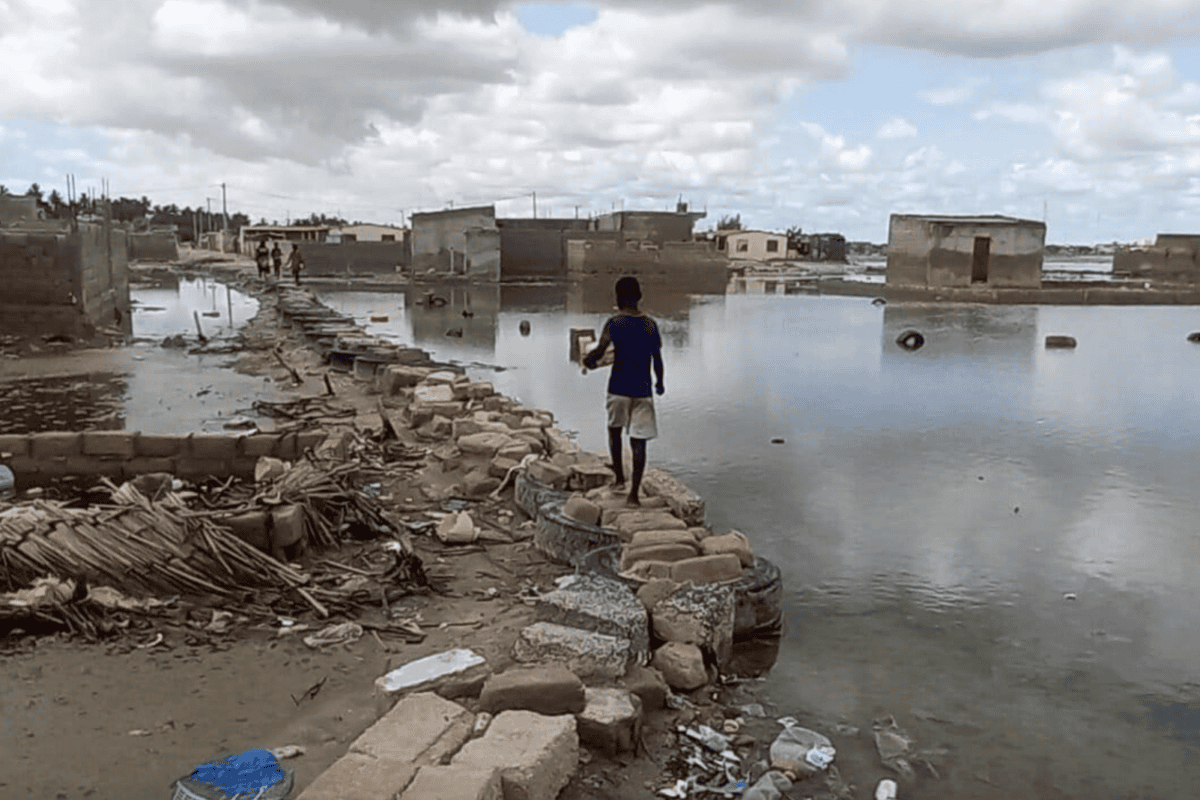
The African Court on Human and Peoples’ Rights is expected to soon issue an advisory opinion on states’ obligations toward internally displaced persons affected by climate change.
“Internally displaced people exist on every inhabited continent,” Erica Bower, a researcher on climate displacement with Human Rights Watch, said in a phone interview with Mongabay. “The advisory opinion could make it very clear that states have obligations to provide durable solutions for people displaced by disasters.”
In Africa, according to the Platform on Disaster Displacement data, in 2024 millions of people were displaced from roughly 20 African countries as a result of climate-related disasters including floods and coastal erosion.
Senegal offers a prime example. Roughly a decade ago, a community along the Langue de Barbarie, in Saint-Louis, was forced to move following severe coastal erosion.
“The sea destroyed our homes. There was no space left for us to live,” Khady Gueye, a former resident, told Mongabay in a phone call. “So, we left, and they settled us on a football field. We stayed there for nine months before moving here to Khar Yalla.”
She has lived in Khar Yalla for 10 years, about 10 kilometers (6.2 miles) from the land where she, her mother and her grandmother were born. She said Khar Yalla has no infrastructure for a long-term community.
“There is nothing here. No health center, no school, no market, no sanitation, nothing,” she said. “We are 13 people living in a house with only two rooms, without electricity … and we are not allowed to expand it to make it livable. This is not normal. We cannot continue living like this. We are Senegalese, we are citizens!” she added.
Gueye had to stop her studies because it is too difficult to get to school. Similarly, many fishers and fish sellers have had to reduce or stop their activities due to transportation costs since being displaced.
Human Rights Watch has published several reports on the situation in Khar Yalla. Following an August 2025 report, roughly a dozen out of 68 households received electricity.
But the community is still waiting for a long-term solution, Bower told Mongabay. She said the upcoming advisory opinion from the African Court is an important step toward addressing a growing problem across the continent.
“With this advisory opinion, the African Court has a major opportunity to become a global leader and clearly define what obligations states have toward populations like those in Khar Yalla,” she added, noting that advisory opinions are authoritative interpretations, not binding court rulings.
Banner image: Khar Yalla site in Senegal, which is poorly sheltering flood survivors according to Human Right Watch. Image by Momar Niang for Mongabay.