

- Drone technology is revealing new information about the elusive dugong, a marine herbivore classified as globally vulnerable but already extinct in parts of its range.
- Scientists are using drones to improve estimates of dugong numbers and conduct noninvasive health checks.
- Dugongs feed exclusively on seagrass meadows, where their foraging helps to maintain these important carbon sinks.
- Researchers are highlighting the need to link efforts to conserve seagrass meadows with protecting dugongs.
Drone technology is providing important new insights into the lives of dugongs, while also revealing the vital role they play in managing seagrass meadows, one of the ocean’s most important carbon sinks.
Often referred to as sea cows, dugongs (Dugong dugon) are marine herbivores that can grow up to 3 meters (10 feet) long and weigh up to 420 kilograms (925 pounds). They feed almost exclusively on seagrass in shallow coastal waters across a wide range in the Indian and southeastern Pacific oceans.
However, their population spread was revealed to be extremely uneven in an August 2025 report, published by the Convention on the Conservation of Migratory Species of Wild Animals (CMS) and touted as “offering the most comprehensive global update on the status and conservation needs of dugongs in over two decades.”
By far the largest concentration of dugongs is in Australia, where an estimated 166,000 live in the country’s coastal waters, the CMS report shows. Other hotspots include the Arabian Gulf, the Red Sea, and Indonesia, while around 300 dugongs live along the coast of Mozambique, their last stronghold in Africa.
But elsewhere the picture is less healthy. The IUCN, the global wildlife conservation authority, has listed the dugong as globally vulnerable to extinction for more than 40 years now. Some jurisdictions, such as the French territory of New Caledonia and Japan’s Nasei Islands, have listed the dugong as endangered. In 2022, research declared the species extinct in China.
According to Helene Marsh, a professor of environmental sciences at Australia’s James Cook University and the CMS report’s lead author, global dugong numbers are certainly underestimated because most of their range has never been surveyed.
Drones for dugongs
Unmanned aerial vehicles (UAVs), or drones, could help fill the gaps as they take over from traditional surveying techniques that rely on human observations from light aircraft, Marsh told Mongabay in an email.
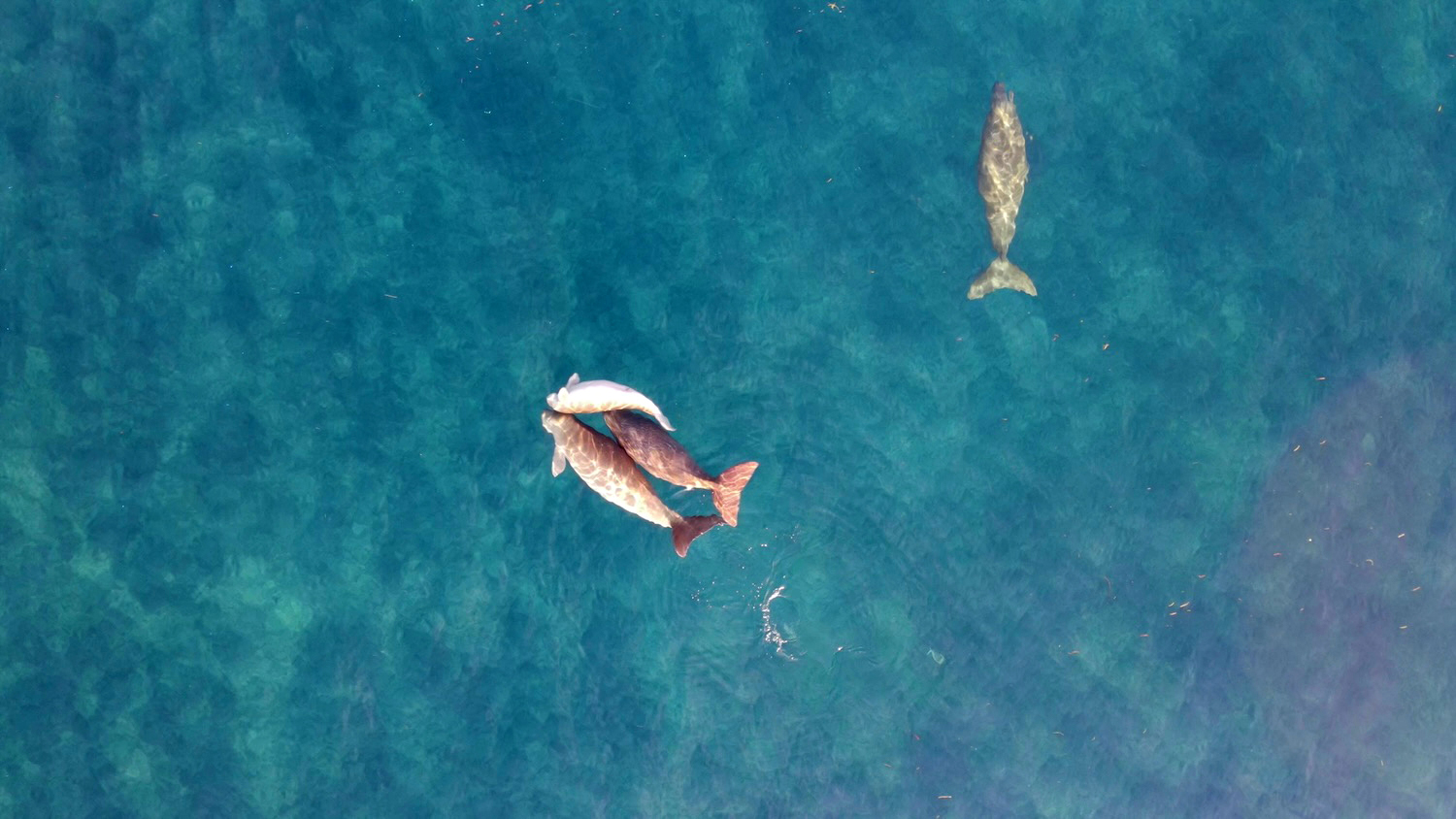
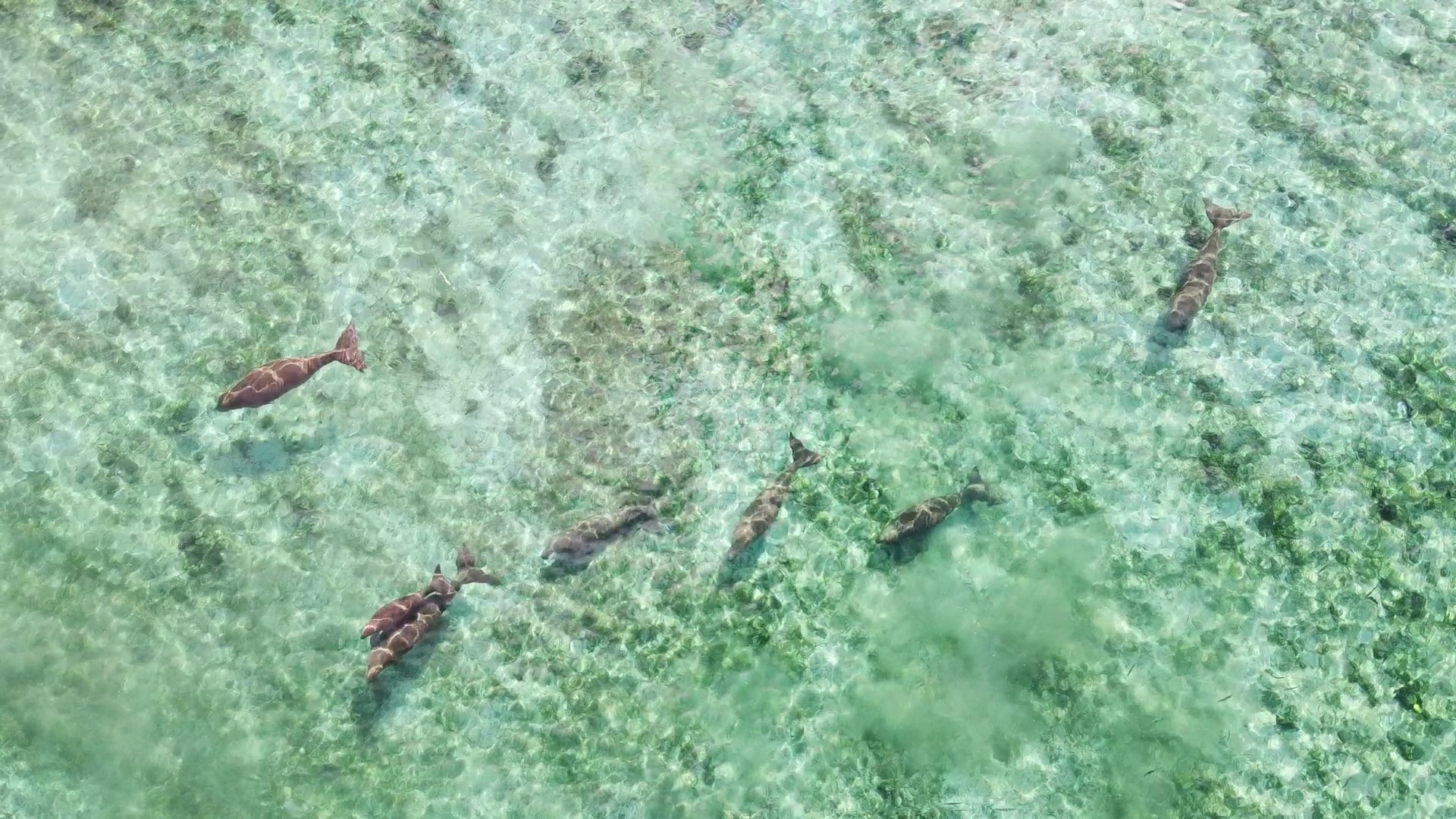
For instance, drones have recorded huge dugong herds of up to 1,200 individuals in the Persian Gulf, and drone footage picked up more than 200 in India’s first Dugong Conservation Reserve in the southwestern state of Tamil Nadu.
“Drones are becoming increasingly important, especially combined with AI,” Marsh said, with algorithms processing huge numbers of drone-generated images and helping researchers estimate dugong numbers more accurately. Drones can also spot plumes of disturbed sediment that show where dugongs are feeding. To support this, scientists have developed correction factors for image processing, as even the highest-definition drone cameras can fail to penetrate the turbid waters where dugongs live.
This methodology can also identify little-known populations, according to Laura Mannocci, from French research institute MARBEC (Marine Biodiversity Exploitation & Conservation), which has three sites in southern France, as well as hubs in developing countries including Indonesia, Madagascar and the Comoros. “Drone surveys can help us spot small local populations in countries where the species had only been seen rarely before,” she told Mongabay in an interview.
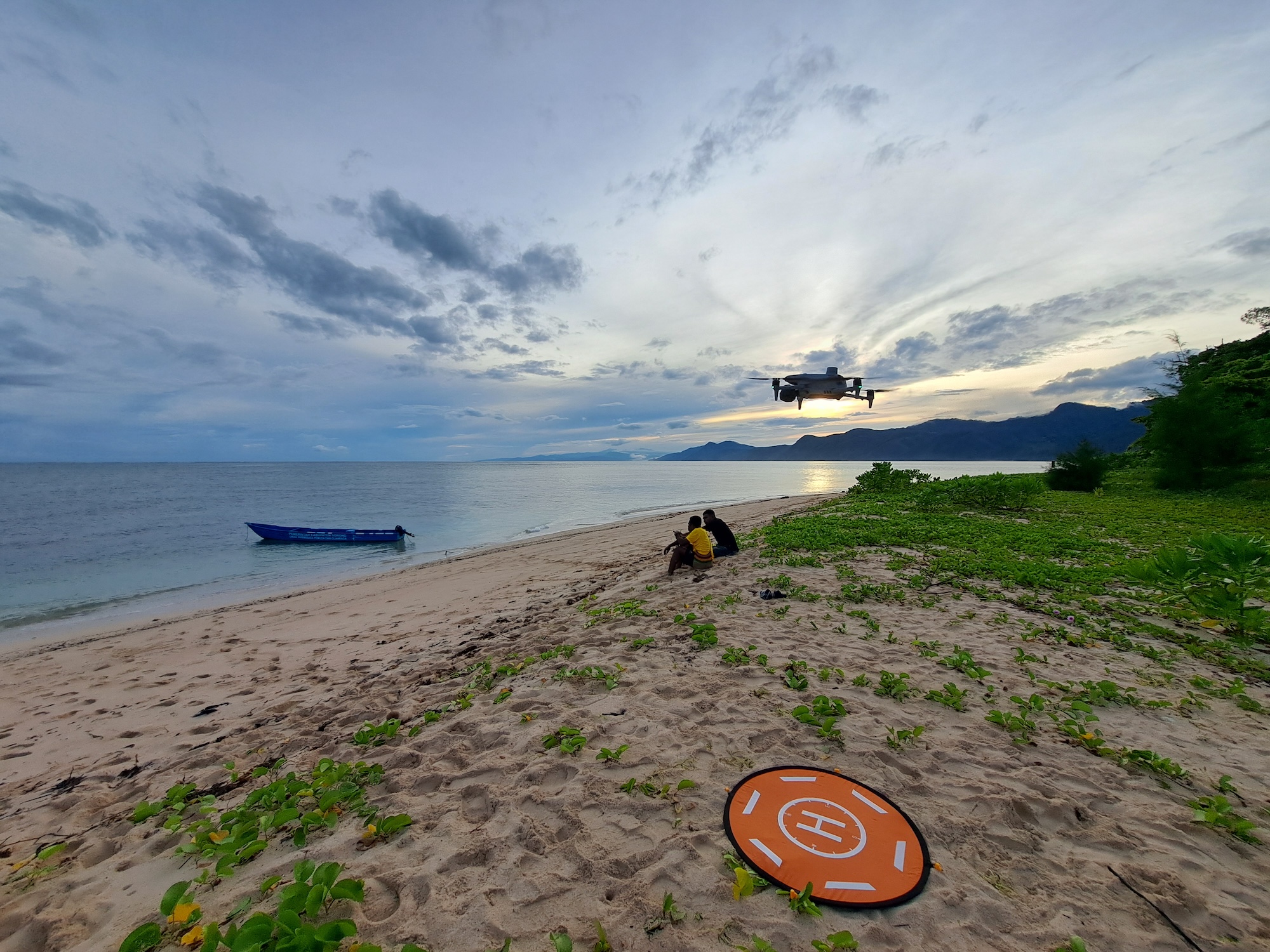
Mannocci is currently trialing fixed-wing drones off the island of Mayotte, in the Mozambique Channel. With a 2-m (6.5-ft) wingspan, these are larger than quadcopters, which have become the staple of many scientific drone surveys, and can also fly farther and for longer, she said. Moreover, fixed-wing drones can still take off vertically, which is important when space is limited, such as during boat deployments.
Mannocci said she aims to use this new generation of drones to improve surveys in Indonesia, where dugongs remain largely unstudied. Akbar Ario Digdo, a researcher at Indonesia’s Bogor Institute of Agriculture (IPB), works on the project. In an interview with Mongabay, he said preliminary research at his university suggests Indonesia supports 1.6 million to 1.8 million hectares (4 million to 4.4 million acres) of seagrass beds — prime dugong habitat — along its extensive coastline and islands, which Digdo estimates may account for 20-30% of dugongs’ global geographic range.
“Given the size of the seagrass ecosystems, I believe it is highly plausible that Indonesia is home to a significant proportion of the world’s dugong population,” said Digdo, who also chairs local conservation nonprofit YAPEKA.
Anthropocene threats
Slow-moving and often lingering near the surface, dugongs are particularly vulnerable to human-caused threats such as collisions with boats, ensnarement in fishing gear, and pollution events such as oil spills. The current war in the Middle East is exacerbating the latter, with a risk of pollution from ships damaged during the conflict or stranded in the Persian Gulf.
Internationally, hunting of dugongs has decreased significantly in recent years, but other threats have grown, especially climate change and coastal development, which destroy the seagrass meadows where dugongs feed, Digdo said.
Their biological characteristics augment this vulnerability. Dugongs, which can live to 70 years, often take 10 years to reach maturity and calve only every three to seven years, making it hard for populations to recover from setbacks.
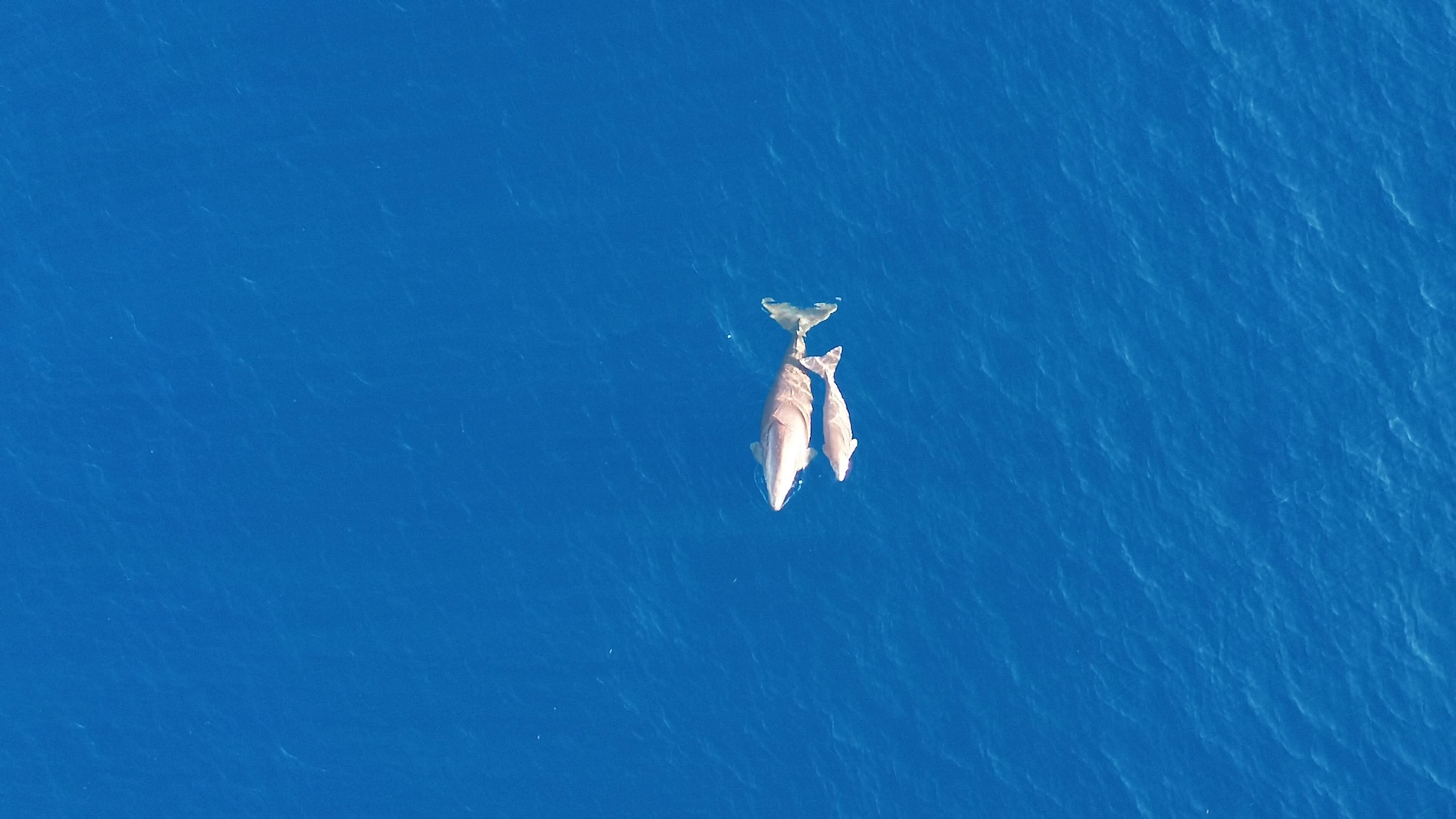
Monitoring the health of dugong herds is crucial, Mannocci said. She also uses drones to carry out aerial health checks, which allow her to collect data at scale and much more quickly than traditional methods. Under the conventional way of running health checks, “dugongs were caught in the water and lifted on board boats and then some measurements were taken … and even some blubber samples,” Mannocci said, “but that’s so invasive.”
Catching dugongs this way is also complex and costly, and only possible where there are large concentrations, such as in Australia, she said. In areas where they’re threatened or their numbers are low, drones are an excellent solution, she added.
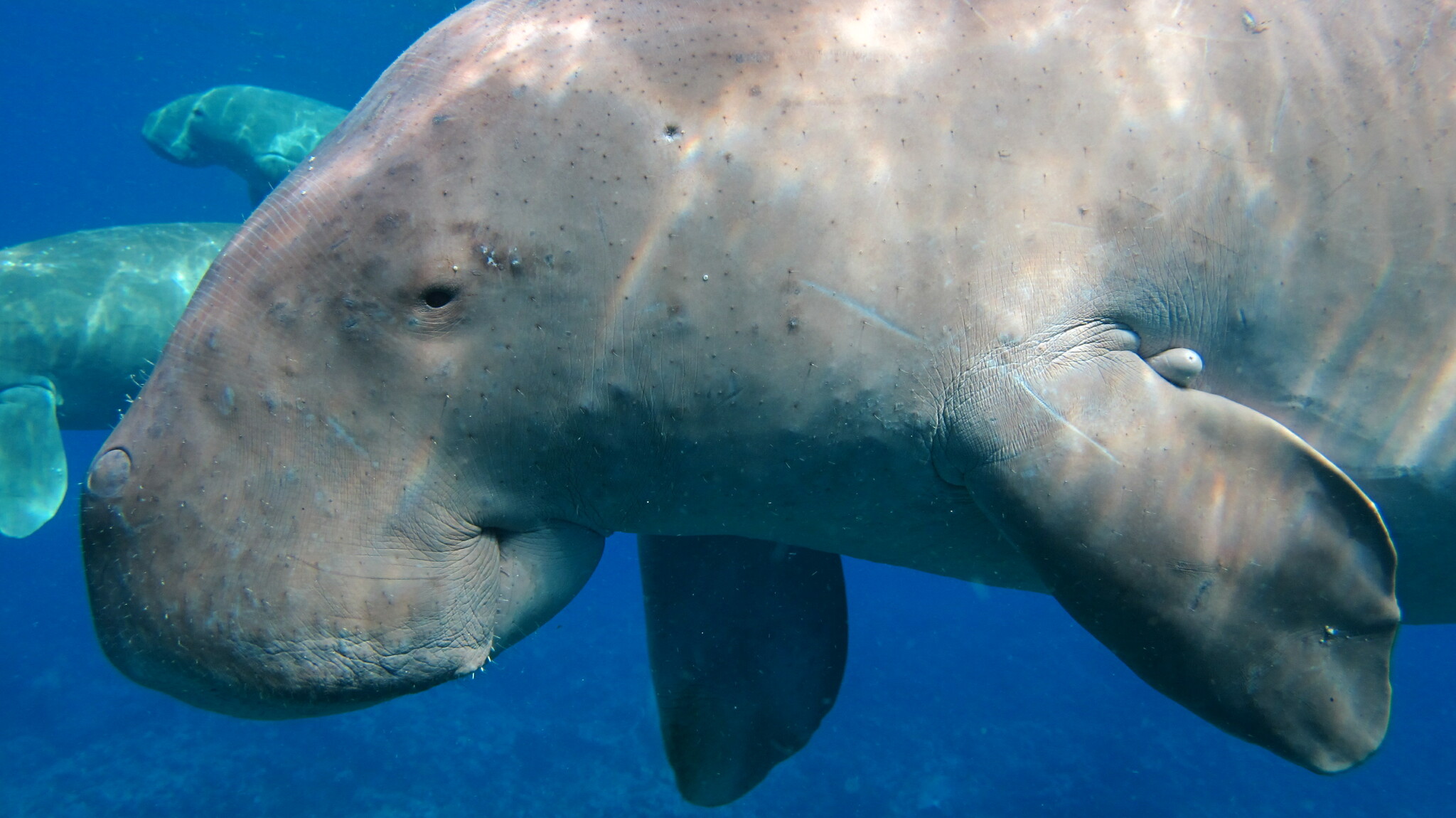
Mannocci’s team has now carried out health checks on 272 individuals in 18 countries across the Indo-Pacific region. Drones take high-resolution videos of a dugong, and Mannocci’s team then calculates its body condition index (BCI), the ratio of body width at the belly to total length. The higher the BCI, the better , plumpness is an excellent indicator of a dugong’s health, she said.
The partnership between dugongs and seagrass
In 2012, studies first recognized the importance of seagrass meadows as a carbon sink. Since then, the fortunes of seagrass and the dugong — and its close cousin the manatee (genus Trichechus) — have been bound together.
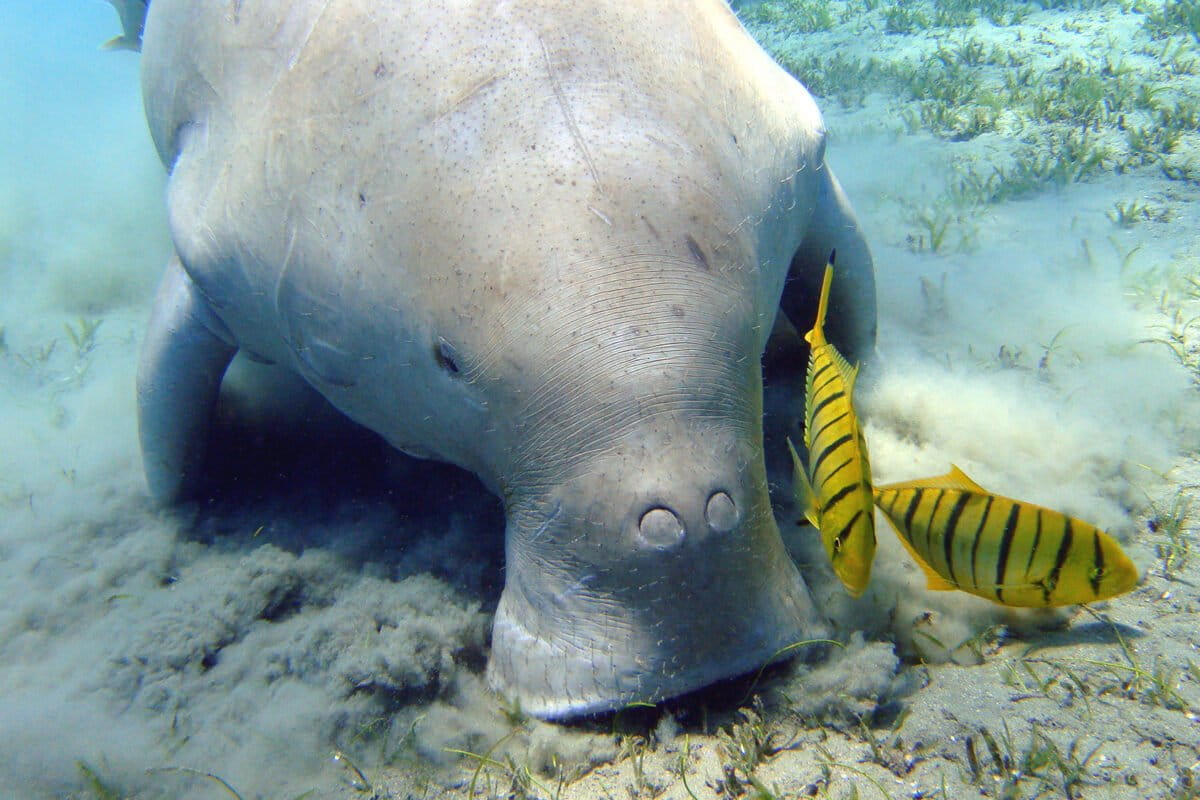
Dugongs feed exclusively on seagrass, consuming up to 30 kg (66 lbs) per day. But it’s a symbiotic relationship, Digdo said. Dugongs have been described as cultivation grazers and marine ecosystem engineers, meaning that the way they feed helps maintain healthy seagrass meadows.
They “eat like tractors,” Digdo said — plowing forward, aerating the seabed, and creating openings where other species can take hold. Broken seagrass pieces spread in the current, colonizing new areas.
Although seagrass meadows cover only about 0.2% of the ocean, they store about 10% of oceanic carbon by trapping CO₂ in seabed sediments via their roots. This makes them highly effective at mitigating climate change.
“Whenever the seagrass is impacted, it has an impact on dugong health” that can be picked up in BCI measurements, Mannocci said.
The BCI checks can serve as an early warning system, she said. If they show dugongs in an area are becoming thinner, with dwindling energy reserves, people can react quickly to address any threats, such as pollution or coastal development, that are impacting local seagrass meadows.
By the time surveys of dugong numbers show declining populations, it could be too late to act, as the seagrass may already be dead, she added.
Global efforts are now underway to save seagrass meadows, and at the same time to strengthen protections for the dugongs that maintain them. The CMS assessment, for instance, called for dugong habitat mapping to be incorporated into the 2030 Seagrass Breakthrough, a global plan to halt seagrass loss and safeguard more than 16 million hectares (about 40 million acres) of the ecosystem. CMS has also called for better quantification of carbon storage by seagrass meadows that are used and managed by dugongs, to strengthen the rationale for conservation and restoration efforts.
Community groups are also supporting conservation efforts. In Australia’s Queensland state, Marsh noted that Indigenous groups are signing legally binding traditional-use marine resource agreements with the Great Barrier Reef Marine Park Authority and voluntarily regulating their right to hunt dugongs. “When the seagrass has been damaged by extreme weather events, some groups ban hunting [altogether],” Marsh said. Similar agreements have been developed in other parts of the dugongs’ Australian range.
What’s really important, Mannocci said, is “strong communication with the locals and sometimes trying to find alternative livelihoods for these fishermen who are using potentially harmful gear.”
This’s what’s happening along Thailand’s Andaman coast, where CMS backs the Save Andaman Network Foundation (SAN), a coalition that supports local coastal communities. SAN is providing alternative livelihoods for fishing-dependent communities and helping to reduce pressure on the dugongs’ seagrass feeding grounds.
But conserving the seagrass isn’t just about supporting dugongs. The meadows support a diverse range of fish and echinoderms such as sea urchins. Fished sustainably, “the seagrass beds are also very important for coastal people,” Digdo said. “There is a lot of dependency on the seagrass fishery … for daily sustenance.”
Banner image: A dugong munches seagrass near Marsa Alam, Egypt. Image by Julien Willem via Wikimedia Commons (CC BY-SA 3.0).
Dugong numbers plummet amid seagrass decline in Thailand’s Andaman Sea
Citations:
Lin, M., Turvey, S. T., Han, C., Huang, X., Mazaris, A. D., Liu, M., … Li, S. (2022). Functional extinction of dugongs in China. Royal Society Open Science, 9(8), 211994. doi:10.1098/rsos.211994
Fourqurean, J. W., Duarte, C. M., Kennedy, H., Marbà, N., Holmer, M., Mateo, M. A., … Serrano, O. (2012). Seagrass ecosystems as a globally significant carbon stock. Nature Geoscience, 5(7), 505-509. doi:10.1038/ngeo1477
