

- Alexandre de Santi is Mongabay’s managing editor for Brazil, where he leads coverage of the Amazon and other national environmental issues.
- His career spans more than two decades, from founding the investigative studio Fronteira to serving as deputy editor at The Intercept Brazil, where he helped lead landmark investigations.
- Since joining Mongabay in 2022, Santi has brought a collaborative approach to investigative reporting, including editing a 2024 story that exposed links between Amazon carbon credits and timber laundering.
- This interview is part of Inside Mongabay, a series that spotlights the people who bring environmental and conservation stories to life across our global newsroom.
When telling stories about nature, Alexandre de Santi’s interest stems from the climate. “Climate collapse is the greatest challenge of my generation,” he says.
Before joining Mongabay, Santi began his career as a reporter in 1999. His trajectory included founding the editorial studio Fronteira, contributing as a founding associate of Porto Alegre-based news nonprofit Matinal, and serving as deputy editor at The Intercept Brazil, where he played a key role in major investigations, including the Vaza Jato scandal that led to political turmoil in Brazil.
Santi joined Mongabay in 2022 and became managing editor for Brazil in 2025. He has always lived in the country’s urban landscapes where the Atlantic Forest once stood. Today, less than 24% of it remains. “It always struck me how the forest is always trying to regain its space in the urban concrete,” he says.
For Santi, Brazil’s urban expansion stands in stark contrast to the nature and communities that predate it. He says Indigenous peoples have long understood how to coexist with the natural world rather than oppose it. While fully adopting traditional lifestyles is unrealistic today, drawing inspiration from “many of those concepts” could guide Brazil and other rapidly growing countries toward an alternative development model, he says. Santi sees reasons to hope for the future. “There’s too much potential and an opportunity to make things better.”
One of his proudest achievements at Mongabay was editing an investigation into Brazil’s carbon credit market that exposed a timber laundering scam. “We revealed something truly new that no outlet had approached yet, and it led to a great impact, including the arrest of the main target and seizures of assets” he says.
For Santi, the camaraderie of collaborative storytelling makes the arduous work of covering threats to ecosystems like the Amazon worthwhile. “I enjoy the long-term craft of developing stories alongside excellent reporters like my colleague and neighbor Fernanda Wenzel.” For him, Mongabay is the “perfect place” to tell these narratives.
To keep producing relevant and engaging news, Santi makes a conscious effort to put himself in his audience’s shoes. “My advice is to always keep a fresh approach to the stories as a reader, as a human, not only as a journalist.” In short, he guides his efforts by asking himself the same question time and again: “Am I delighted or inspired by reading this?”
In this conversation with Santi about his career at Mongabay, we explore the stories he’s proudest of, his collaborative approach to investigative journalism, and his commitment to fresh perspectives in storytelling. This interview is part of Inside Mongabay, a series that spotlights the people who bring environmental and conservation stories to life across our global newsroom.
An interview with Alexandre de Santi
Mongabay: What inspired your interest in the work you do for Mongabay?
Alexandre de Santi: Climate collapse is the greatest challenge of my generation. Brazil has a particular take on it, for better or worse. In Brazil, I’ve always lived in cities that were once home to the lush Atlantic Forest, which is as diverse and amazing as the Amazon, but it’s now reduced to not much more than 24% of its original size. It always struck me how the forest is always trying to regain its space in the urban concrete, how you can see glimpses of that power trying to come back.
When you travel to the shore, you’ll find the most preserved areas of the Atlantic Forest, and it’s so thick and beautiful. And, of course, it provides us all with clean water, rain and so many environmental services. So, in a way, I’ve already witnessed what it’s like to lose that powerful nature around you. Brazil’s largest cities are all located within the Atlantic Forest biome and could be rich in natural beauty. But the European colonization of Brazil (and U.S. influence, more recently) led to an urbanism that totally ignores that lushness. Our cities are gray and brutish, like many in the world.
The Indigenous peoples of Brazil knew how to build human settlements while living with nature and not against it. I’m not saying we should live as they lived, it’s unthinkable at this point, but we should incorporate many of those concepts. That’s the conflict happening in the Amazon right now. Some people want to bring the same “development” model Brazil allowed in the Atlantic Forest to the Amazon. But there’s a better way. Beyond being a personal issue (I have two children and I worry a lot about their future), it’s the greatest journalistic story of our times. Mongabay is the perfect place to tell it all to the world.
Mongabay: What do you most enjoy about your work?
Alexandre de Santi: I enjoy the long-term craft of developing stories alongside excellent reporters like my colleague and neighbor Fernanda Wenzel. Bringing great stories that otherwise wouldn’t be known to a wide audience is deeply rewarding. Sitting at my computer to edit it and do all the proper proceedings needed to publish a story (read it, cut it, check it, review it, fact-check it) is not what I like the most. The fun part is to discuss a story from the very beginning and help develop it until it gets to the point where I need to sit on the computer and deep-work it.
So, my advice is to always keep a fresh approach to the stories as a reader, as a human, not only as a journalist. Am I delighted or inspired by reading this? This is a question I keep asking myself. How do I engage the readers, provide them the chance to truly dive into how absurd or wild or fantastic this story really is? These are the things that go through my mind while editing pieces. I’m not saying journalism should be confused with entertainment, especially when telling stories about violence or crimes that have a profound impact on the planet, such as crimes against nature. Journalism must present things as seriously as they are. But you can’t ignore that humans are drawn to narrative hooks that are deeply rooted in feelings of surprise, amusement, and even anger. I certainly am as a reader or a viewer.
As I covered several different topics in my career, I managed to seek this fresh perspective on stories, trying to convey to readers how new or fresh that story felt to me as a reporter or editor, on a human level. I really respect journalists who are actually experts on some issues, but I don’t belong to that category, even though I have been covering the environment in Brazil for several years now. I want to feel surprised or excited by the things I’m covering and maybe the key is not letting oneself be dragged by the repetitive news cycles and ongoing issues that feel like a Ferris wheel of repetitive issues. This is obviously easier said than done. I’m an ADHD person, so I can get bored looking at the computer screen and quite often the news looks all too similar. Making a conscious effort to constantly look for engaging stories helps me get on the right track.
Mongabay: How does the region you work on shape the way you report on environmental issues?
Alexandre de Santi: As I said before, living in Brazil is being constantly exposed to incredible nature, even as an urban person. Many folks in Brazil ignore it, of course, but once you start seeing it, it’s hard to unsee it. It’s everywhere. So, you get a sense, even in an urban landscape, of how different this country could look. Not just different from what it is right now, but probably unique compared to any country in the world.
So, covering Amazon issues always gets me thinking that we still have more than 80% of the Amazon standing. It’s still there! It’s not like the poor Atlantic Forest, which is still amazing despite having been devastated over a few centuries. There’s too much potential and an opportunity to make things better — or at least different. But covering the Amazon is a challenge because many of the issues have been ongoing for literally 500 years and can feel commonplace. I tend to look for what’s genuinely new in conservation, policies and conflicts. And try to get a sense to readers that our approach to nature as humans should be better, more integrated.
Mongabay: What is one of your favorite stories you’ve edited for Mongabay, and why?
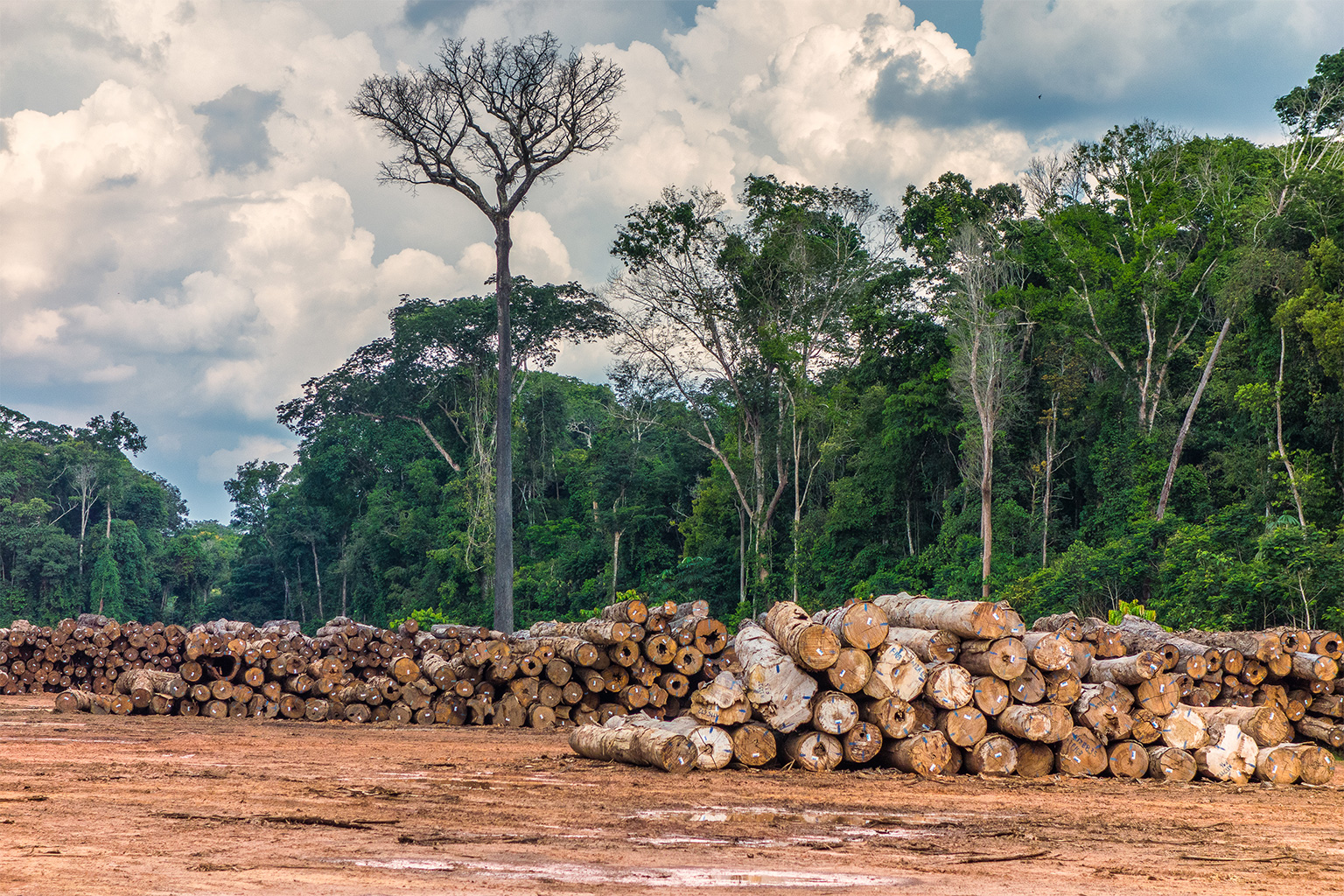
Alexandre de Santi: I am most proud of the 2024 piece “Top brands buy Amazon carbon credits from suspected timber laundering scam,” reported by Fernanda, which I edited. It was a long process of understanding what story we had, checking it, taking steps back and then forward again, with fact-checking and legal review. We revealed something truly new that no outlet had approached yet, and it led to a great impact, including the arrest of the main target and seizures of assets. It was a joy to work with Fernanda and it’s a prime example of how investigative editing and teamwork can make a difference.
Mongabay: What are three interesting takeaways from this story?
Alexandre de Santi: The investigation revealed that two carbon credit projects in the Brazilian Amazon may have been connected to illegal timber laundering. These projects belonged to Ricardo Stoppe Jr., the largest individual seller of carbon credits in Brazil, who made millions of dollars selling credits to companies such as GOL Airlines, Nestlé, Toshiba, Spotify, Boeing and PwC. One of his partners had previously been convicted of timber laundering six years earlier. The projects were developed by Carbonext, Brazil’s largest carbon credit provider, and certified by Verra, one of the world’s largest voluntary carbon market registries, raising important questions about oversight in the voluntary carbon market.
Mongabay: Do you have a behind-the-scenes moment that stands out from working on this story?
Alexandre de Santi: I think there are two things that I find interesting about the carbon credit story, definitely not funny, but meaningful about how editing works behind the scenes.
The first is that we had the insight that these guys were laundering timber through forest management projects (which was unheard of) while having coffee in our neighborhood — we live nearby. We had a tip that something smelled funny in those projects, but we didn’t know what it was. It’s a different situation from having a tip or an ongoing investigation pointing to which issues are happening — which are more common. We didn’t know what was wrong, so we were making educated guesses. Fernanda, talented as she is, found a way to test the hypothesis and “prove” it. It is wonderful to work with someone who can take an idea and find ways to pursue it.
Also, after having a first draft, we felt our findings, although revealing, could expose us to legal issues. At one point, we feared the story just couldn’t be published even though we had info that could spark investigations by authorities. We had to take some steps back and negotiate with CCCA (the Center for Climate Crime Analysis, a Netherlands-based nonprofit founded by prosecutors and investigators that investigates emitters of climate-warming greenhouse gases), our research partners, to cite them as the source of the information (which was true, they had made the study which pointed to irregularities). That proved to be a smart strategy to give the story the backbone it needed and protect us from legal challenges.
My work behind the scenes is never glamorous, but I feel these stories reveal a bit about how these investigations only happen when we devote attention to crafting these small solutions. It’s somewhat artisanal.
Mongabay: What advice would you give to someone following your footsteps?
Alexandre de Santi: It’s hard to get bored in journalism if you put on the right lenses. I managed to work on different topics over my career, which gave me the opportunity to learn about many subjects. This is what makes journalism awesome to me: You always have the chance to learn about different initiatives, scientists doing incredible work, or telling stories that fiction writers would envy — or maybe couldn’t make up.
I’m even fond of crooks and criminals, who usually provide journalists with the juicier stories. I don’t admire them as individuals, of course, but besides revealing their crimes and having a positive impact on society, which is the point of investigative journalism and a goal in itself, I love those stories just because they are wild or absurd.
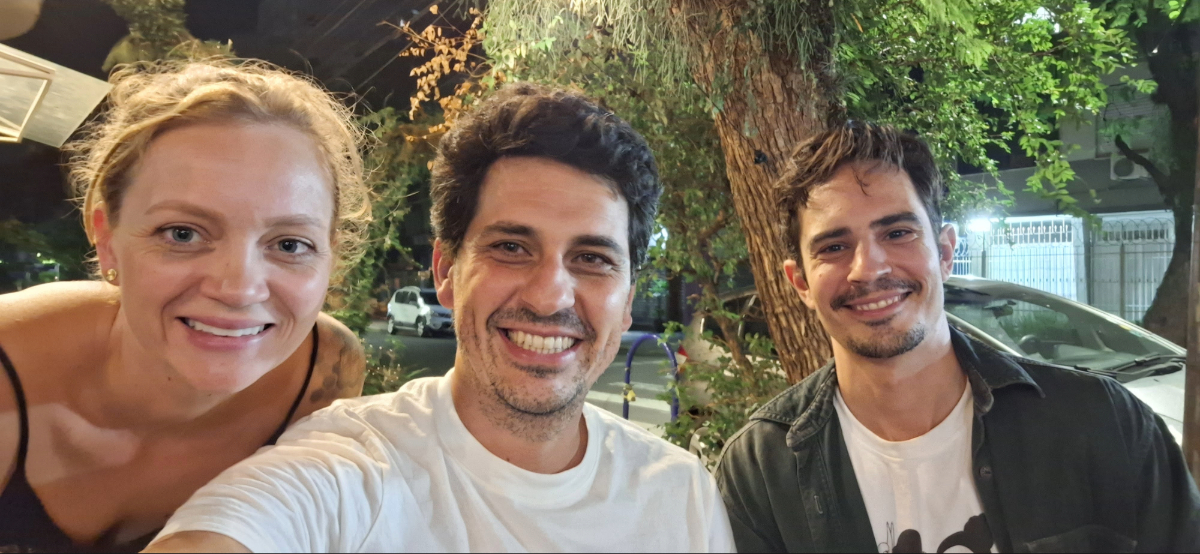
Banner image: Santi, middle, flanked by Mongabay staff writer for Brazil Fernanda Wenzel, left, and senior editor for Southeast Asia Philip Jacobson. Image by Alexandre de Santi.
