

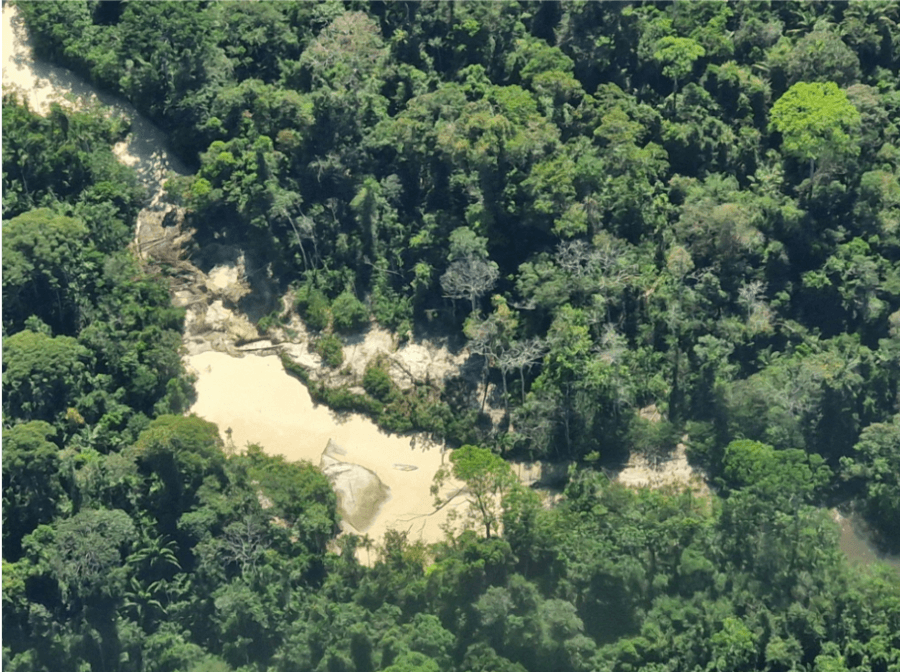
The Kayapó Indigenous Territory has emerged as a major hotspot for illegal gold mining in the Brazilian Amazon’s Xingu River Basin, a major Amazon tributary. That’s according to a new report from the watchdog Monitoring of the Andes Amazon Program (MAAP).
At least 7,940 hectares (19,620 acres) of forest on Kayapó land were cut down for mining since 2018, according to Amazon Mining Watch. Around 140 hectares (346 acres) were felled in 2025.
The Xingu Basin, a 51-million-hectare river basin (126 million acres), roughly the size of Spain, cuts through Brazil’s Pará and Mato Grosso states and is home to some of the highest levels of deforestation from illegal gold mining in Brazil.
In May 2025, the Brazilian government carried out operations to remove illegal miners, destroying 25 large excavators, almost 1,000 tents and more than 400 engines. They seized 63 grams (2.2 ounces) of gold and almost 500 kilograms (1,100 pounds) of refined cocaine and cocaine base paste. A month later, in June 2025, just 2 hectares (5 acres) of land were illegally deforested.
But by October 2025, mining activities began to encroach on the forest again, and an additional 15 hectares (37 acres) were deforested, MAAP’s satellite monitoring showed.
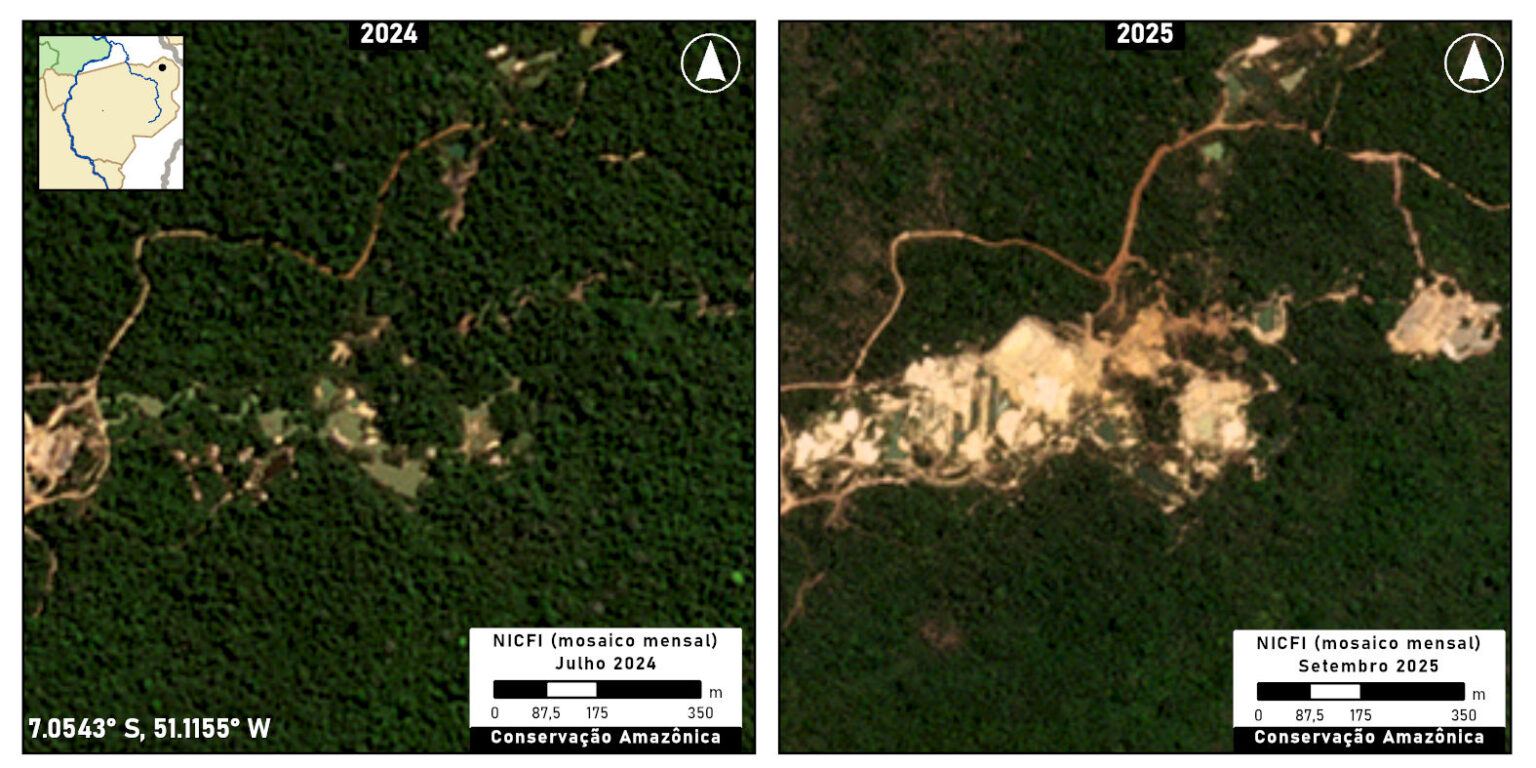
Roughly 16,000 hectares (39,540 acres) of forest were destroyed between 2018 and 2024, according to Amazon Mining Watch. An additional 400 hectares (990 acres) of mining-related deforestation was recorded between January and September of 2025.
“Illegal mining in the Xingu basin is not an isolated activity,” the MAAP report writes. “It has spread to both Indigenous territories and protected areas, indicating the existence of a support network that provides the operational capacity and infrastructure necessary for the activity. This expansion brings with it a series of serious risks to the region and its communities.”
Mercury used in mining contaminates the rivers that communities depend on for drinking, bathing and fishing. Stagnant pools of mining waste also become biohazards: outbreaks of mosquito-borne diseases such as malaria and yellow fever are frequent.
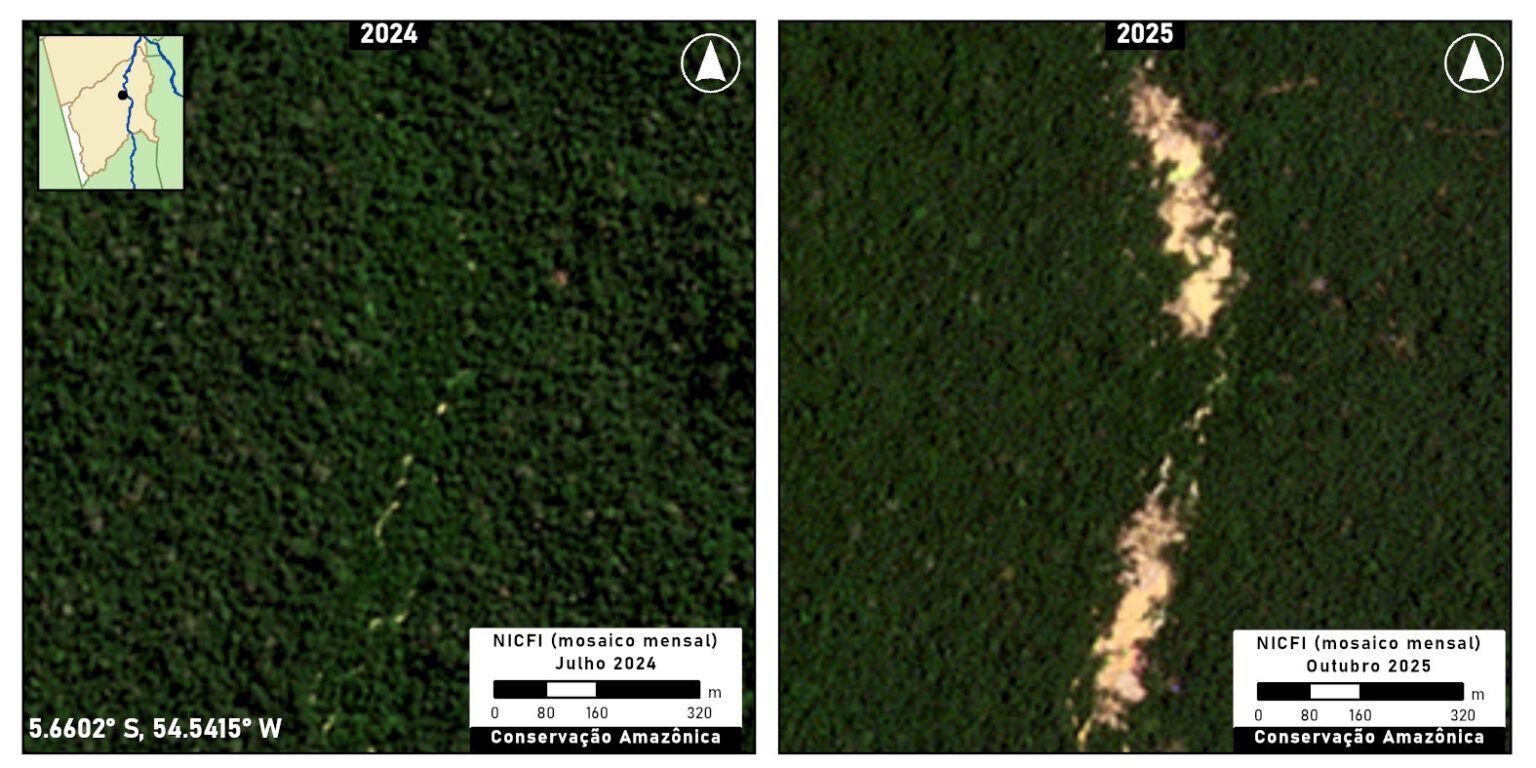
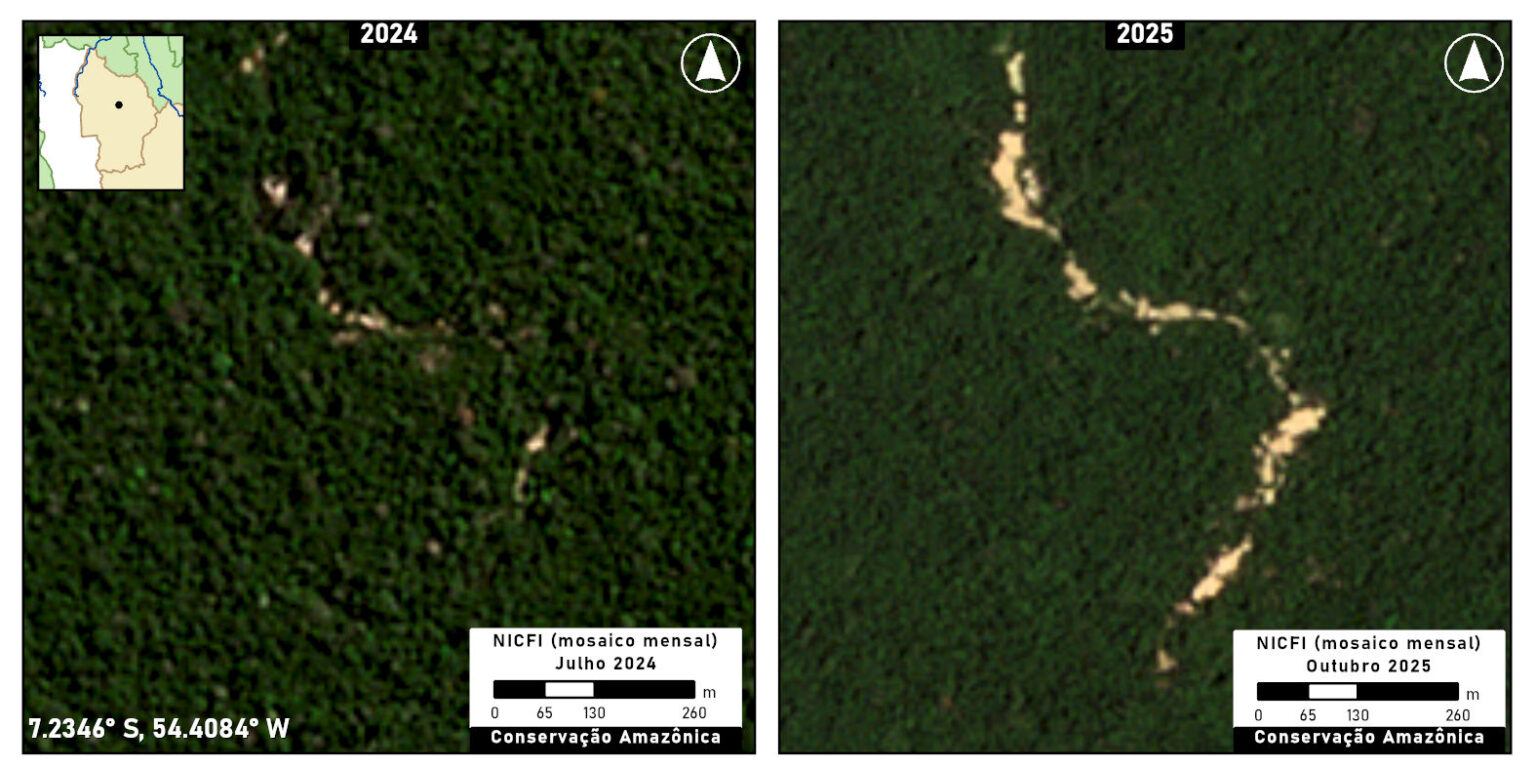
Mining and deforestation in the Xingu Basin corridor impacts five protected areas (Altamira National Forest, Iriri State Forest, Riozinho do Anfrísio Extractive Reserve, Nascentes da Serra do Cachimbo Biological Reserve and Rio Iriri Extractive Reserve) and five Indigenous lands (Kayapó, Baú, Kuruaya, Trincheira Bacajá and Apyterewa).
In the Baú Indigenous Territory, 10 hectares (25 acres) were cut down for mining in 2025. In the Kuruaya territory farther north, satellites detected another 4 hectares (10 acres) of deforestation.
Banner image: Pista Velha mining site in the Baú Indigenous Territory captured during an overflight on July 19, 2025. Image courtesy of the Xingu+ Network.
