

- A 30-year study documents a rare split within a chimpanzee community in Uganda’s Kibale National Park — one that sparked a deadly war.
- Two rival chimp groups have staged coordinated raids that killed both adult males and infants.
- Researchers recorded at least 24 attacks between 2018 and 2024, suggesting unusually intense violence.
- The findings show how shifting social ties can fracture animal societies and trigger collective violence.
A chimpanzee community in Uganda’s Kibale National Park that split into rival factions later attacked former allies in what researchers are describing as a rare chimpanzee “civil war.”
The new study, published in the journal Science, draws on nearly three decades of observations at the Ngogo chimpanzee research site, led by primatologist Aaron A. Sandel of the University of Texas at Austin, in the U.S. He and his colleagues say this is a rare event that may occur only once every 500 years. It’s only been observed once before by humans.
Before the split, the Ngogo community was unusually large, with roughly 150 to 200 chimpanzees (Pan troglodytes), making it one of the largest chimp groups ever recorded in the wild. After the rupture, the community divided into two factions, which researchers call the Central and Western groups — named after the areas of forest they occupied.
Between 2018 and 2024, the Western group carried out 24 attacks on the Central group, killing at least seven adult males and 17 infants. Sandel told Mongabay the conflict is still unfolding and may have lasting consequences for the population.
“The Central group is at risk — they have had a dramatic increase in mortality,” Sandel said. “A key question is: How are they going to fight back?”
Unlike most primate group fissions, the Ngogo split involved “coordinated killing of long-term affiliates,” Sandel and colleagues wrote. Killing rates also exceeded estimates for intergroup aggression in chimps. Researchers estimate that Central chimps died at the equivalent rate of about 3,376 per 100,000 individuals per year — more than 30 times the median rate of about 100 per 100,000 reported for other chimp populations.
Researchers say the conflict may offer rare insight into how violence can emerge within tightly bonded animal societies. The study suggests that shifts in relationships within a social network may be enough to fracture a once-cohesive community — an idea explored in detail in the researchers’ analysis of the Ngogo split.
From social split to lethal conflict
Signs of division first appeared around 2015, when the Ngogo chimps began forming two increasingly distinct social clusters. Researchers detected the shift using long-term observations, demographic records, and changes in social networks based on which chimps spent time together or groomed each other — grooming is a key indicator of social bonds.
Over time, interactions within each cluster increased while interactions between them declined.
By 2017, the Western and Central groups were using largely separate parts of the forest, turning the center of their former shared territory into a border.
Reproduction between members of the two groups ceased: The last cross-group baby was conceived in March 2015, and since then, all offspring with known parentage were conceived within the same group.
By 2018, researchers concluded that the community had undergone a permanent fission, splitting into two groups that no longer maintained social ties.
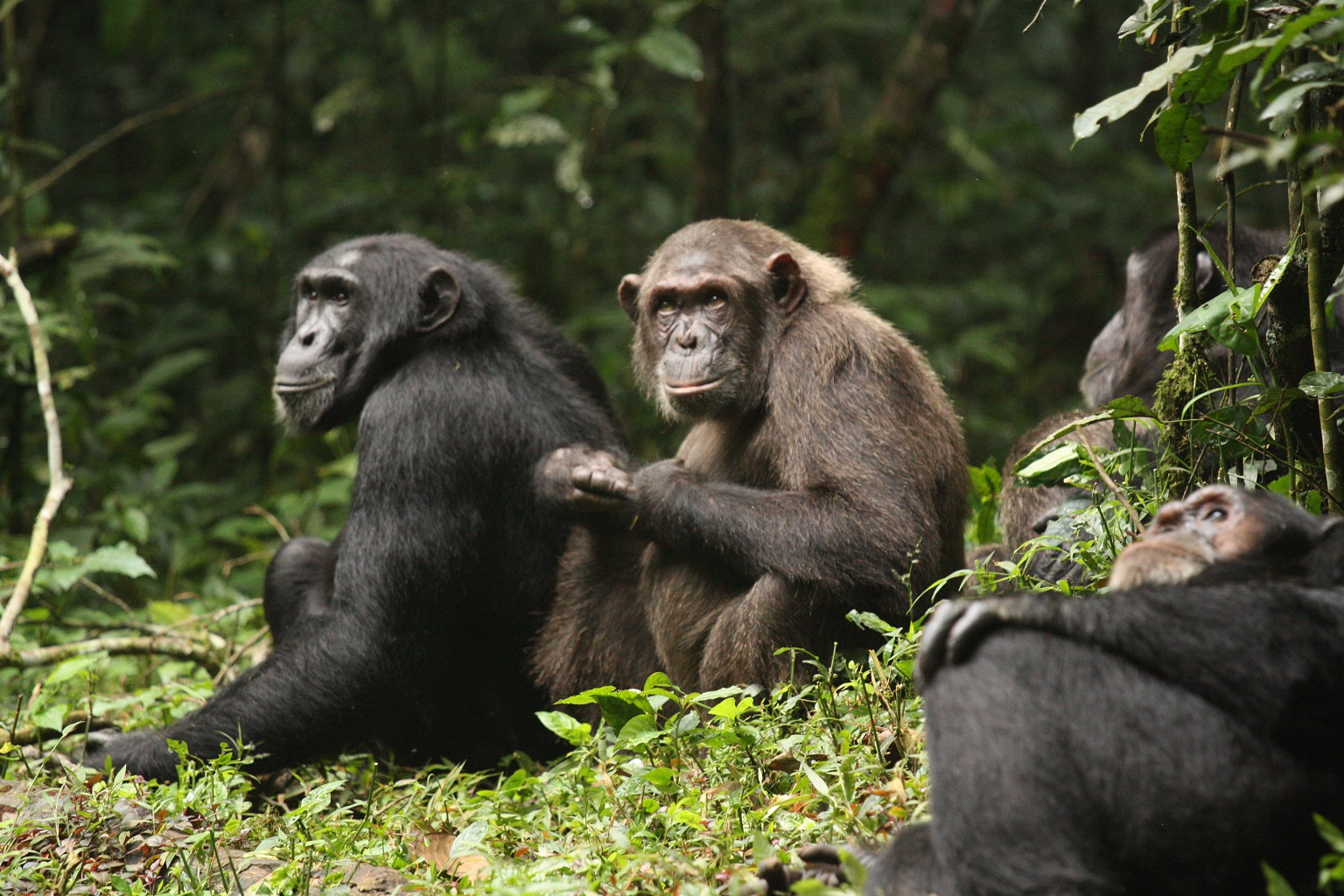
Researchers documented territorial patrols starting in 2016, mostly by the Western chimps. The patrols became more frequent in the following years. Many preceded deadly attacks on the Central group after the permanent split in 2018.
What surprised researchers most was the relationship between the attackers and the victims. Chimpanzees that “lived, fed, groomed and patrolled together for years became targets of lethal attacks on the basis of their new group membership,” the authors wrote.
Because chimpanzees are listed as endangered on the IUCN Red List, the loss of even a few individuals can have a significant impact on their future.
Possible causes of the split
The reasons for the rupture in Ngogo are unknown. However, both the study authors and outside experts point to several possible social and ecological factors.
Sandel and colleagues wrote that their observations support what they call the “relational dynamics hypothesis,” a theory suggesting that shifts in relationships within a social network can reshape group identities — and eventually produce collective violence.
As the authors wrote, “social networks can divide, and new group boundaries can emerge, leading to collective violence.”
Michael L. Wilson, a primatologist at the University of Minnesota in the U.S., who wasn’t involved in the study, said changes in social ties alone may not fully explain the split.
“Shifting social relations are clearly important here,” Wilson said. “But it makes me wonder what might have caused those social relations to shift.”
Wilson suggested that ecological pressures might have played a role, including competition over territory or areas with abundant food. Differences in males’ ages or patterns of kinship within the new groups can also influence how alliances form and conflicts unfold, he said.
Wilson also questioned whether the conflict should be described as a “civil war.” In his view, the events more closely resemble “a group fission followed by fighting,” rather than a war within a society with at least one side attempting to remain united.
Sandel said they’re continuing to investigate these possibilities using the site’s long-term data sets, which go back decades: Scientists began studying the Ngogo chimps in 1995.
“This is a major hypothesis,” Sandel told Mongabay. “My initial hunch is that the chimps weren’t limited in food, but we have teams of Ugandan and international researchers working on these questions now.”
Determining the exact cause of the conflict may not be easy, he added. “It will be very difficult to confirm the causes. But by combining long-term data and new statistical methods, I think we will be able to uncover a lot.”
A rare but not unprecedented pattern
Although unusual, the Ngogo conflict isn’t without precedent.
“The only other documented split of a chimpanzee community occurred at Gombe National Park in Tanzania in the early 1970s,” Wilson said.
That conflict, between the Kasekela and Kahama chimp groups, was famously described by the late primatologist Jane Goodall as the “Four-Year War.”
Sandel said the Ngogo observations reinforce interpretations made decades earlier at Gombe, where Goodall’s team first documented lethal conflict following a community split.
Wilson noted that the Ngogo case benefits from far more extensive documentation than the Gombe conflict, which occurred during the early years of chimpanzee research.
This highlights the importance of long-term field research, Sandel said, which made it possible to track the social fracture as it unfolded in Ngogo.
They have three decades of natural history data and long-term behavioral observations. “This is an ongoing story. Using long-term data, we will be able to understand causes and consequences.”
The Ngogo research site is also unusual because these chimps have been largely shielded from human pressures. Unlike Gombe, where the chimps were provided with bananas and lived near human settlements and tourist activity, the Ngogo chimps have been studied in a largely undisturbed forest environment.
“This site is in the middle of the forest and has been protected by the Uganda Wildlife Authority for 30 years,” Sandel said. “That protection is what enabled our long-term study and uncovering this story.”
Knowing their history may help scientists better understand how conflict reshapes a community.
“Our study is just the beginning,” Sandel said. “We need statistical ways to determine which individuals are really important for maintaining cohesion in the network.”
Although the Ngogo chimps live in a protected forest within Kibale National Park, they remain vulnerable to human-borne disease. Protecting chimpanzees from human diseases is another key concern for researchers working at the site. A human-caused respiratory epidemic in 2017 killed 25 chimps at Ngogo.
Since then, researchers have implemented stricter health protocols in collaboration with the Uganda Wildlife Authority, including a seven-day quarantine for humans seeking to enter the forest.
According to Sandel, the measures appear to be helping. “Since quarantine was implemented at Ngogo, we’ve seen a drop in viral loads among chimpanzees.”
He added, “We’re excited to see what we learn in the next 30 years.”
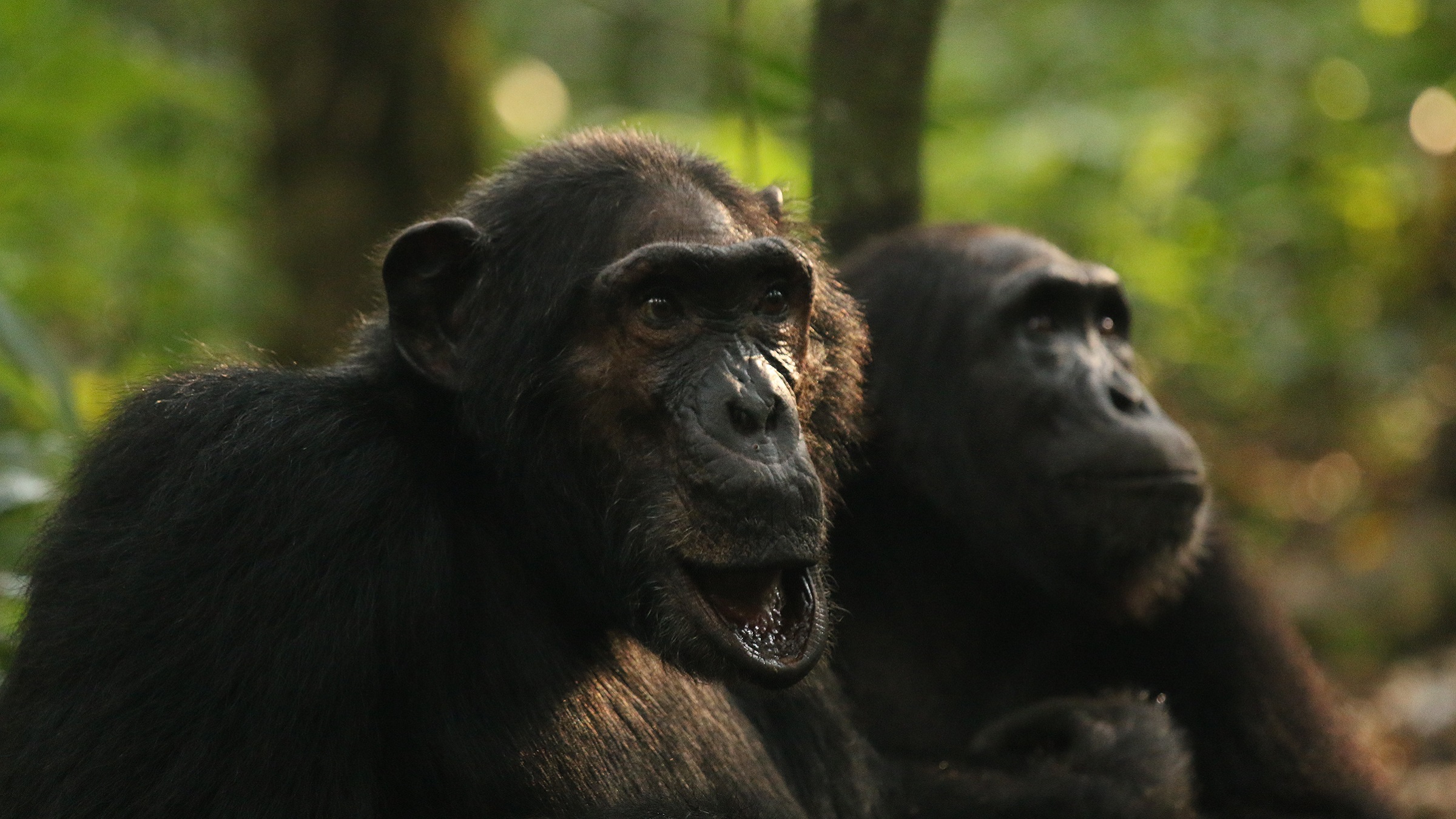
Banner image: An older chimp, BF, was the last male to go between the two groups. Image by Aaron Sandel.
Citation:
Sandel, A. A., He, Y., Ren, J., Kei, Y. L., Lee, K. C., Clark, I. R., … Mitani, J. C. (2026). Lethal conflict after group fission in wild chimpanzees. Science, 392(6794), 216-220. doi:10.1126/science.adz4944
