

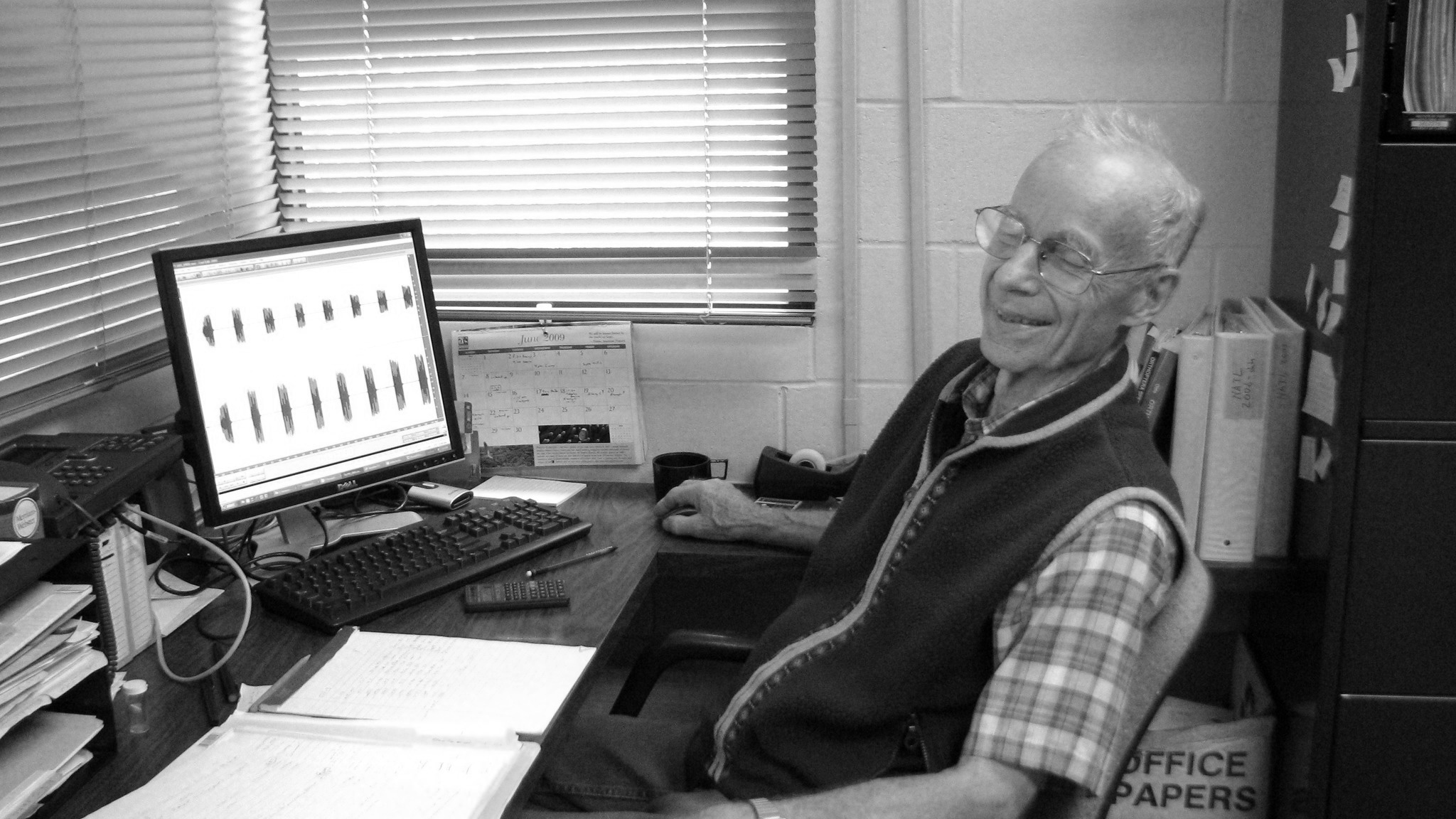
- Thomas J. Walker, who died on April 8th 2026 aged 94, spent his career studying the behavior and acoustics of crickets and katydids, treating their songs as a way to understand species and ecology.
- Over more than four decades at the University of Florida, he questioned conventional taxonomy by arguing for the importance of studying living insects rather than relying mainly on preserved specimens.
- He was an early advocate of making research freely available, helping to move scientific publishing online and creating the “Singing Insects of North America” website, which allowed both specialists and amateurs to identify species and access data.
- His legacy also includes the protection and development of the Natural Area Teaching Laboratory, reflecting a practical commitment to conservation, education, and public engagement with the natural world.
Late summer evenings in much of North America carry a particular kind of insistence. It comes not from anything visible, but from a steady, patterned sound: a rasp, a pulse, a sequence that seems at once mechanical and expressive. For generations it was treated as background, a seasonal accompaniment to heat and dusk. Yet for those who listened more closely, the sound suggested something else—a system, perhaps even a language, shaped by anatomy but not wholly explained by it.
Understanding that gap—between structure and performance, between what could be seen and what had to be heard—became a life’s work for Thomas J. Walker, an entomologist who approached insects not simply as specimens but as part of an acoustic world. He died on April 8th 2026, aged 94.
He was born in 1931 in Dyersburg, Tennessee, and raised on a farm during the Depression. The setting was unremarkable in one sense , many naturalists trace their beginnings to such places. But the combination of agricultural routine and long hours outdoors left him attentive to patterns that others ignored. Boy Scouts and farm work provided structure, though not direction. That came later, through formal study, first at the University of Tennessee and then at Ohio State University, where he completed a doctorate in entomology.
Walker joined the University of Florida in 1957 and remained there for more than four decades. His academic titles changed—assistant professor, then professor, and eventually professor emeritus—but his interests remained consistent. He focused on insect ecology, behavior and systematics, with particular attention to crickets and katydids, animals better known for their sound than their appearance.
At a time when taxonomy still leaned heavily on preserved specimens, Walker insisted on the importance of living behavior. Songs, he argued, were not incidental traits but defining features. They distinguished species, structured mating, and reflected environmental conditions. Understanding them required more than collection , it meant recording, timing and analysis.
One study, involving high-speed filming synchronized with sound recordings, examined how a katydid produced its complex call. The insect’s apparatus—a file and scraper on its wings—appeared simple. Yet the resulting song varied in tempo, pressure and sequence, yielding a pattern far more intricate than its mechanism suggested. Walker drew a broader lesson: morphology alone could not predict function. One had to listen.
This emphasis on accessibility extended beyond his research. Long before “open access” became a policy objective, Walker treated it as an obligation. He worked to make scientific literature freely available online, helping to move the journal Florida Entomologist onto the internet in the 1990s and to digitise its back catalogue. He also created the “Singing Insects of North America” website, combining recordings, images and data into a resource that enabled both amateurs and professionals to identify species by sound.
His institutional legacy was also significant. In the early 1990s, as development pressures grew around the University of Florida campus, Walker played a central role in establishing the Natural Area Teaching Laboratory, a tract of land set aside for ecological study and public education. Over the years he helped oversee its restoration, trails and infrastructure, and resisted attempts to repurpose it. The project was practical in its aims: to give students and visitors direct exposure to Florida’s ecosystems, and to show that conservation could be embedded within everyday landscapes.
He continued this work into retirement, serving as a mentor and contributing time and resources to the institutions he had helped build. His advocacy extended to local conservation efforts, including support for the Alachua Conservation Trust.

Walker’s manner was not especially forceful. Colleagues recalled persistence rather than prominence, and a willingness to share information without claiming ownership. His influence was cumulative, expressed through datasets assembled, recordings archived, and students trained to notice what might otherwise pass unheard.
The sounds that interested him have not changed. They remain seasonal, local and easily overlooked. What has changed is the framework through which they are understood. Walker did not invent the songs. He helped show how they could be heard.
