

A U.S. fishing regulator recently recommended allowing commercial fishing across all four of the country’s Pacific marine national monuments.
The Western Pacific Regional Fishery Management Council (Wespac) said the move is “about restoring sustainable fishing.” Conservationists and native peoples, however, say it will damage some of Earth’s most pristine ocean ecosystems.
The monuments — Pacific Islands Heritage, Rose Atoll, Marianas Trench, and Papahānaumokuākea — cover 3.1 million square kilometers (1.2 million square miles) of coral atolls, deep-sea trenches and remote islands.
All four monuments have banned commercial fishing since their establishment.
“I am sad that with all these restrictions in our areas, we are slowly losing some of our culture,” Wespac council member Pedro Itibus said in a press release.
Many locals say recreational fishing was never banned and some sites are far from any community.
“The practice of commercial fishing and the unavoidable and significant waste of marine resources caused by bycatch is an affront to Native Hawaiian practices and beliefs,” Solomon Pili Kaho’ohalahala, a native Hawaiian with Kāpaʻa, a local NGO, told Wespac in a statement.
Commercial fishing would allow the use of longlines and purse seines, which result in large numbers of nontarget species — turtles, seabirds, sharks — being caught.
“In 2014, before the expansion of Papahānaumokuākea, Hawaii-based longliners caught more than 5,600 sharks as bycatch in the now protected area,” Sheila Sarhangi, executive director of the Hawai‘i-based Pacific Islands Heritage Coalition and the Papahānaumokuākea Coalition, told Mongabay by email. “If you compare this shark bycatch to catch of bigeye [tuna] in the same area (11,700), that’s one shark caught for every two bigeye.”
The push to reopen fishing follows a 2025 proclamation by U.S. President Donald Trump aimed at “unleashing American fishing in the Pacific.” Trump used the Antiquities Act to allow commercial fishing in parts of the Pacific Islands Heritage monument. The National Marine Fisheries Service (NMFS) subsequently sent a letter to permitted commercial fishers declaring the area open.
Earthjustice, an environmental law nonprofit, challenged both the proclamation and NMFS’s letter, the organization’s lawyer, David Henkin, told Mongabay.
The Antiquities Act has so far only been used to confer protection, not remove it, Henkin said. Deciding the constitutionality of that use will take time to work through the courts. However, a Hawaiian district court has already ruled NMFS can’t change regulations with a letter.
“There’s a whole process that you go through starting with Wespac suggesting changes to regulations,” Henkin said, which the council has now done. NMFS must review those suggestions and open them to public comment, he added.
The regulations can only change if the courts uphold Trump’s use of the Antiquities Act, and NMFS completes its process, Henkin said.
NMFS didn’t respond to Mongabay’s questions about bycatch and sustainability by deadline, but provided links to online resources.
An Atlantic Ocean marine monument was also opened to commercial fishing via presidential proclamation in February.
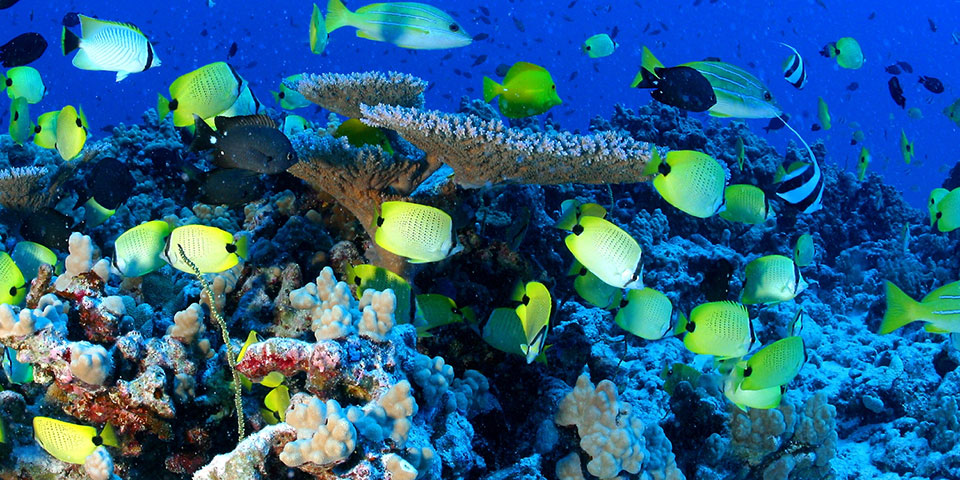
Banner image: Fish in Papahānaumokuākea. Image courtesy of NOAA.
