

- According to Kenya’s environment ministry, water levels in Lake Turkana have risen by several meters in the past decade, expanding its total surface area by around 10%.
- The rise, mainly caused by increased rainfall far upstream, has affected communities and infrastructure on the lake’s shores, as well as disrupted fishing in its changing waters.
- Extended drought in surrounding areas has drawn thousands of new fishers to Lake Turkana, sometimes sparking conflict.
- The people who have lived here the longest are negotiating their survival in what a researcher calls “a system with many variables, both natural and human.”
KOMOTE, Kenya — At sunrise on Komote Island, 36-year-old James Lekubo walks his two children down a rocky hillside to the water’s edge, where they clamber into a small fishing boat with a couple of dozen others to journey across a stretch of lake that didn’t exist a few years ago. On the other side lie their school and the nearest clinic — services that were previously within walking distance.
Lekubo is a member of the El Molo, Kenya’s smallest and most marginalized ethnic group, who have lived here along the stark eastern shores of Lake Turkana for centuries. But in more recent years, the world’s largest desert lake has begun to turn against them, threatening not only their traditional livelihood but the very fabric of their cultural identity.
According to a 2021 report by Kenya’s environment ministry, over the preceding decade, Turkana’s water levels rose by several meters, expanding the lake’s total surface area by around 10%, largely due to heavier rainfall in the Ethiopian highlands that feed it via the Omo River. Since then, the lake has continued to grow, submerging up to 1,000 square kilometers (about 390 square miles) of the surrounding landscape — an area half the size of London — including roads, grazing land, ancient burial sites, and even entire villages.
Lekubo watched helplessly as Komote was gradually cut off from the mainland. “Most people left as the water came up. Even my family has been separated. I have cousins and uncles who are now on that side,” he said, gesturing at the new shoreline about 600 meters, nearly half a mile, away. “I don’t really see them anymore.”
Lekubo, his wife and children are part of the few dozen El Molo households that have so far refused to leave the newly formed island, despite the additional obstacles and repeated calls from the local government of Marsabit county for them to relocate to mainland villages.
“This is my home,” Lekubo said. “It is what I know.”
But it may only be a matter of time. The fish that he and his family depend on — both for food and to pay for the boat that now ferries his children to school — are also becoming harder to find.
As the lake has risen, it has flooded breeding grounds and altered nearshore habitats. Lekubo, who has fished these waters since he was a teenager, told Mongabay that his monthly catch has more than halved. “It’s not enough,” he said.
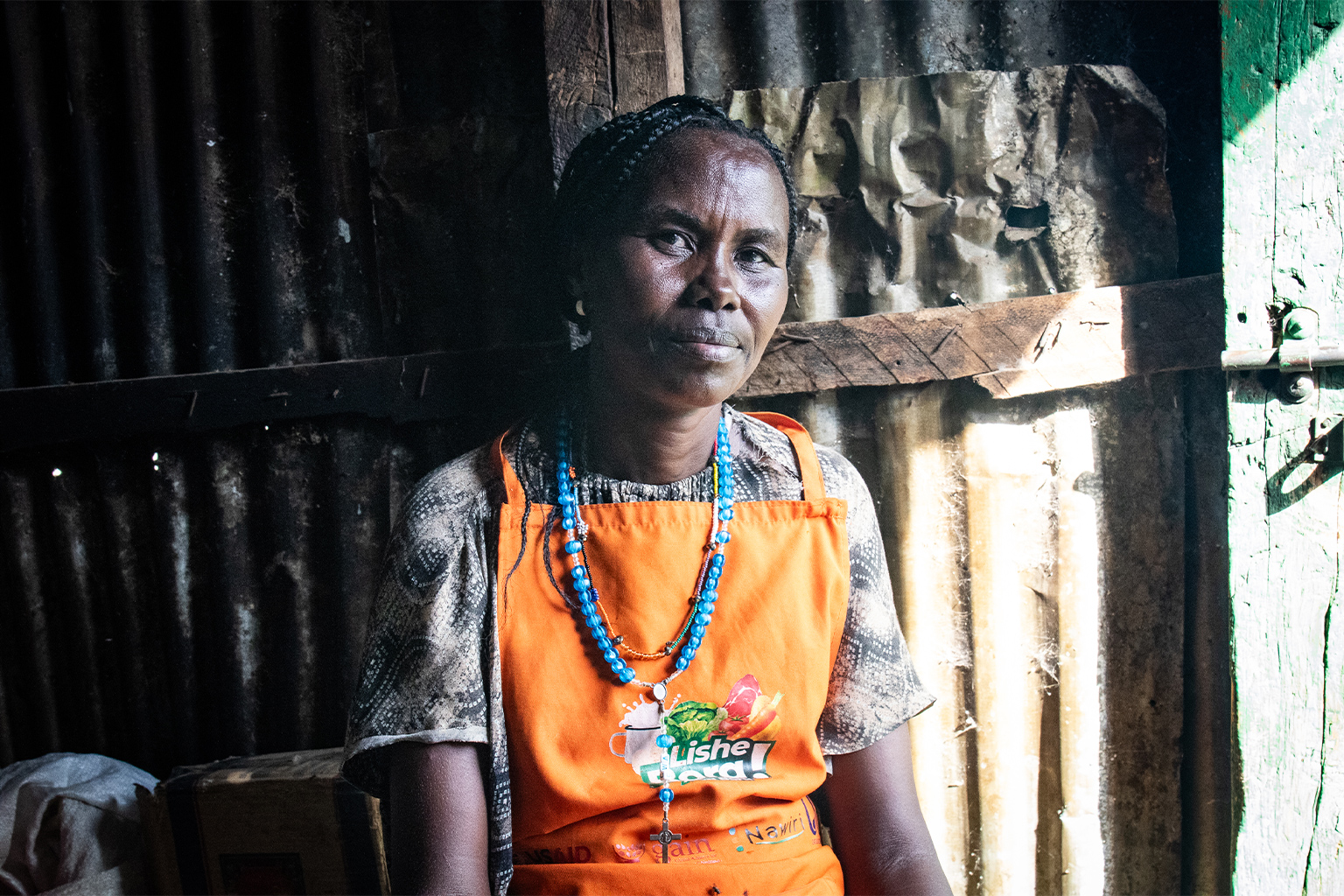
On the opposite shore, Lucy Lenapir, who runs a shoestring business selling chapatis and chai out of a small shack made of corrugated zinc, has observed the same trend.
“The men still go out to fish because there is no other option,” she said. “But there are no more fish.”
Mounting pressures
This severe downward trend is not confined to the El Molo. All around the lake, fishermen and local leaders told Mongabay that catches have fallen in recent years as what was once a relatively small-scale activity has rapidly expanded.
Much of that expansion has been driven by prolonged drought across northern Kenya and southern Ethiopia in recent years, which has devastated pastoralist livelihoods and pushed many herders toward fishing as an alternative means of survival.
Meanwhile, improved road access and growing demand for fish in urban centers have made it easier to sell catches farther afield, drawing more people into the sector. Population growth around the lake and a lack of viable alternatives have further intensified the shift.
A comparison of recent estimates from a 2024 World Food Programme (WFP) report and historical government fisheries data suggests the total number of fishers on the Kenyan side of Lake Turkana has more than doubled, from around 7,000 to more than 14,000, in the last 15 years. In total, around half a million people now depend on the lake’s fishery for food and income.
“More people are coming to fish every day,” said Stephen Ekuwom, who chairs the Beach Management Unit, the community-run group that coordinates fishers and traders, in Kalokol, a major fishing hub on the lake’s western shore. “They are coming from all over.”
As the fishery has expanded, it has also become more mobile and more commercial, with traditional rafts and wooden boats increasingly joined by motorized fiberglass craft and long gill nets set farther offshore. All of these changes are now visible in what fishers are catching. Madison Muehl, a fisheries researcher at Stony Brook University in the U.S. who has studied Lake Turkana, said both catch data and her own field observations point to a shift away from staple species such as tilapia and Nile perch toward smaller fish.
“People aren’t able to find these larger-bodied species anymore,” she said. “They are moving whole fishing operations to other places just to try to catch these fish.”
Kenya Fisheries Service statistics show fish production on Lake Turkana rising from 6,430 metric tons in 2010 to 17,251 metric tons in 2022, before falling to around 15,600 metric tons in 2023, the most recent year for which full data are available. The WFP report attributes this decline to rising water levels restricting access to fishing grounds.
“We’re not seeing that uptick in yields that people predicted when the lake first began to expand,” Muehl said. Instead, she added, the removal of larger, more reproductively important fish is beginning to destabilize the wider ecosystem. “The fishermen are definitely feeling it — and we can see that in the data too.”
‘My family is crying’
As fishermen are forced to travel farther afield in search of dwindling fish stocks, the potential for conflict has increased. Along the northern shores of the lake, tensions between ethnic Turkana and Dassanech fishers, in particular, have intensified as ever more boats push into already contested fishing grounds. In February last year, more than 20 fishermen were killed in an attack near Todonyang on the Kenya–Ethiopia border in one of the deadliest incidents in recent years.
Among those navigating these risks is Kute Hero. Sitting in a cramped manyatta at a makeshift fishing camp in the arid north of Marsabit county, the 32-year-old recounts how crippling drought forced him to swap his traditional pastoral livelihood for fishing to support his family about three years ago. “I had about 1,000 animals,” he said. “All of them died except for two goats and a sheep.”
It has not been an easy transition. “Fishing is very difficult,” Hero told Mongabay, adding that, like many Dassanech, whose cultural identity is underpinned by livestock herding, he once looked down on the practice of fishing.
As thousands of others have followed a similar path, Hero said he has witnessed the growing conflict on the lake firsthand. Just a few months ago, he recalled, he was fishing near the border when his boat came under fire , a close friend was shot and killed. “Now my family is crying every time I go back onto the lake,” he said.
After several such incidents over the past year, Hero and others at the camp said they have reverted to fishing closer to the shoreline to avoid clashes. But this has taken a further toll on catches, which, as elsewhere on the lake, they said had already been affected by rising waters and the growing number of fishermen driven to the lake.
As drought once again deepens across Marsabit county, these pressures are likely to intensify. A 2021 U.N. Environment Programme report suggested that the climate crisis will also continue to cause heavier rainfall over the lake’s key river inflows, leading to a further rise in water levels over the next 20 years, deepening the already dire impacts on local livelihoods.
Elisabeth Hildebrand, a pastoralism expert and associate professor of anthropology at Stony Brook University, said that while Lake Turkana has always been “a system with many variables, both natural and human,” several of those variables are now changing simultaneously in increasingly unpredictable ways. “I wish I could tell you there was a sort of neat answer to all of this,” she said, “but the chaos is actually the story.”
‘Still have a place’
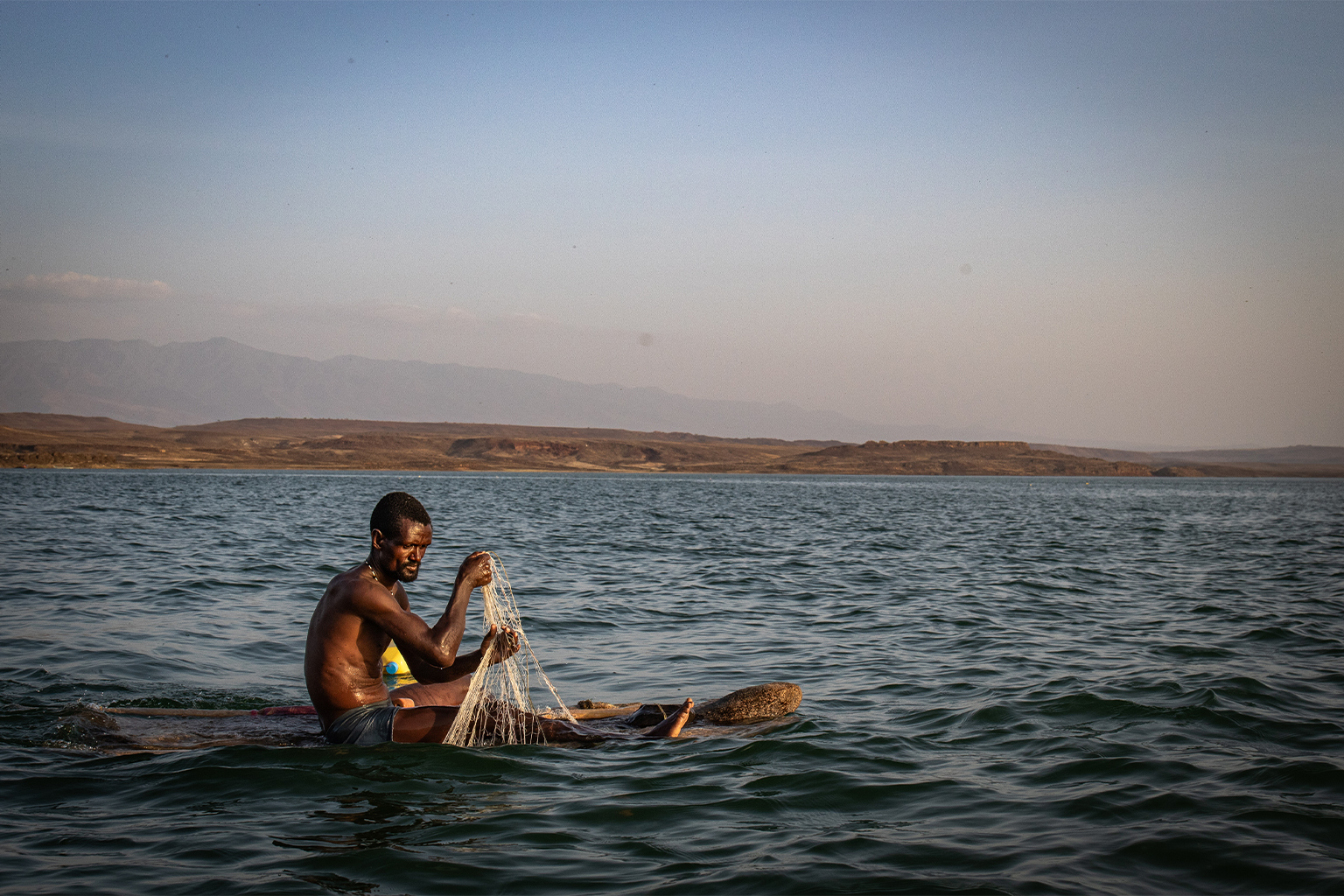
Just before dusk, as the harsh afternoon sun begins to soften and the wind subsides, Lekubo paddles out onto the lake on a traditional log raft to fish. “We depend on this lake — it is our daily bread,” he said, letting out a small hand-cast gill net into the jade-colored water.
For the El Molo, this connection is inseparable from their identity.
A few miles away, on the outskirts of the town of Loiyangalani, the Desert Museum houses artifacts — hand-carved harpoons, woven nets, plates made from turtle shells, spoons carved from fish bones, among others — that trace the El Molo’s long relationship with Lake Turkana.
They also point to some of the customs that have already been lost, as the El Molo, who numbered just over 1,000 in the last census, have intermarried with neighboring Nilotic populations, including the Samburu and Turkana. “Many of our traditions have slowly disappeared,” said Lucas Lemoto, a 45-year-old El Molo caretaker at the museum. “Our language was already extinct when I was growing up.”
But even as rising waters further fragment the El Molo’s fragile population and fish become ever harder to find, Lemoto insisted their culture would endure. “We still have a place here,” he said. “We will be OK.”
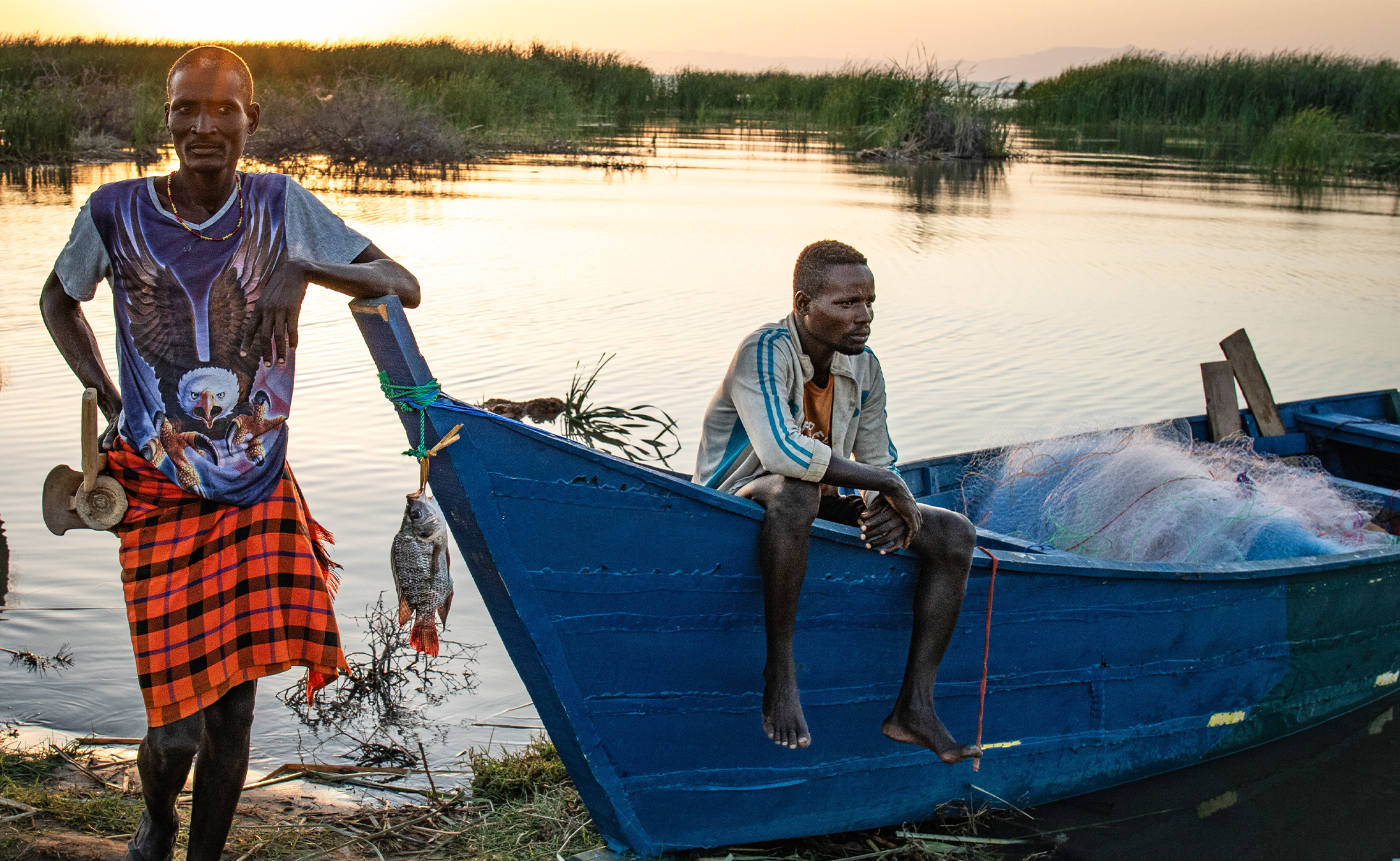
Banner image: Kute Hero (right) abandoned his traditional pastoralist livelihood for fishing after most of his livestock perished during a severe drought. Image by Christopher Clark for Mongabay.
Feedback: Use this form to send a message to the author of this post. If you want to post a public comment, you can do that at the bottom of the page.
