

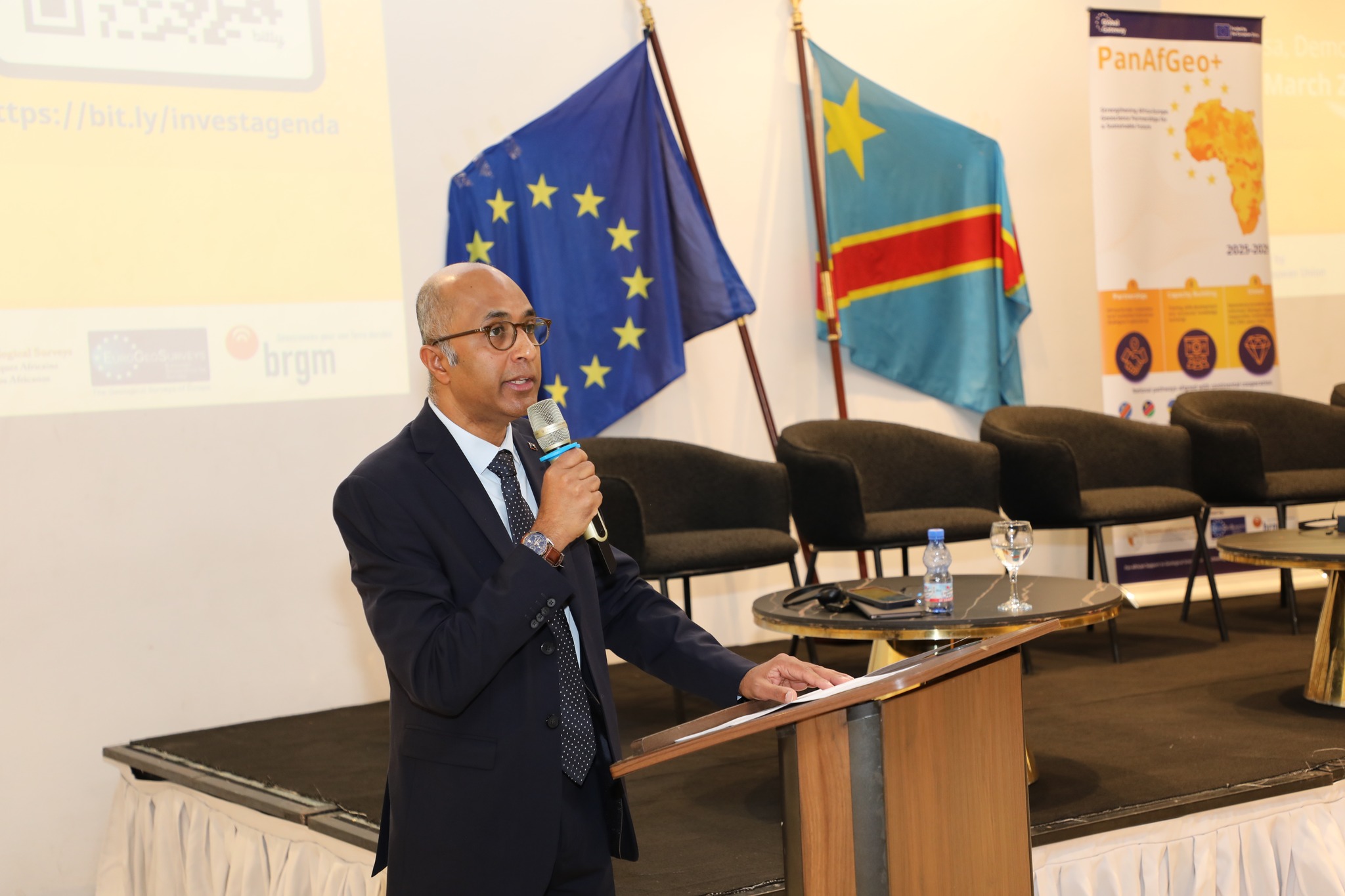
- The European Union’s top envoy to the Democratic Republic of Congo says he hopes to see less foreign presence in the DRC as a sign the country can drive its own development and ensure its people benefit from its resources.
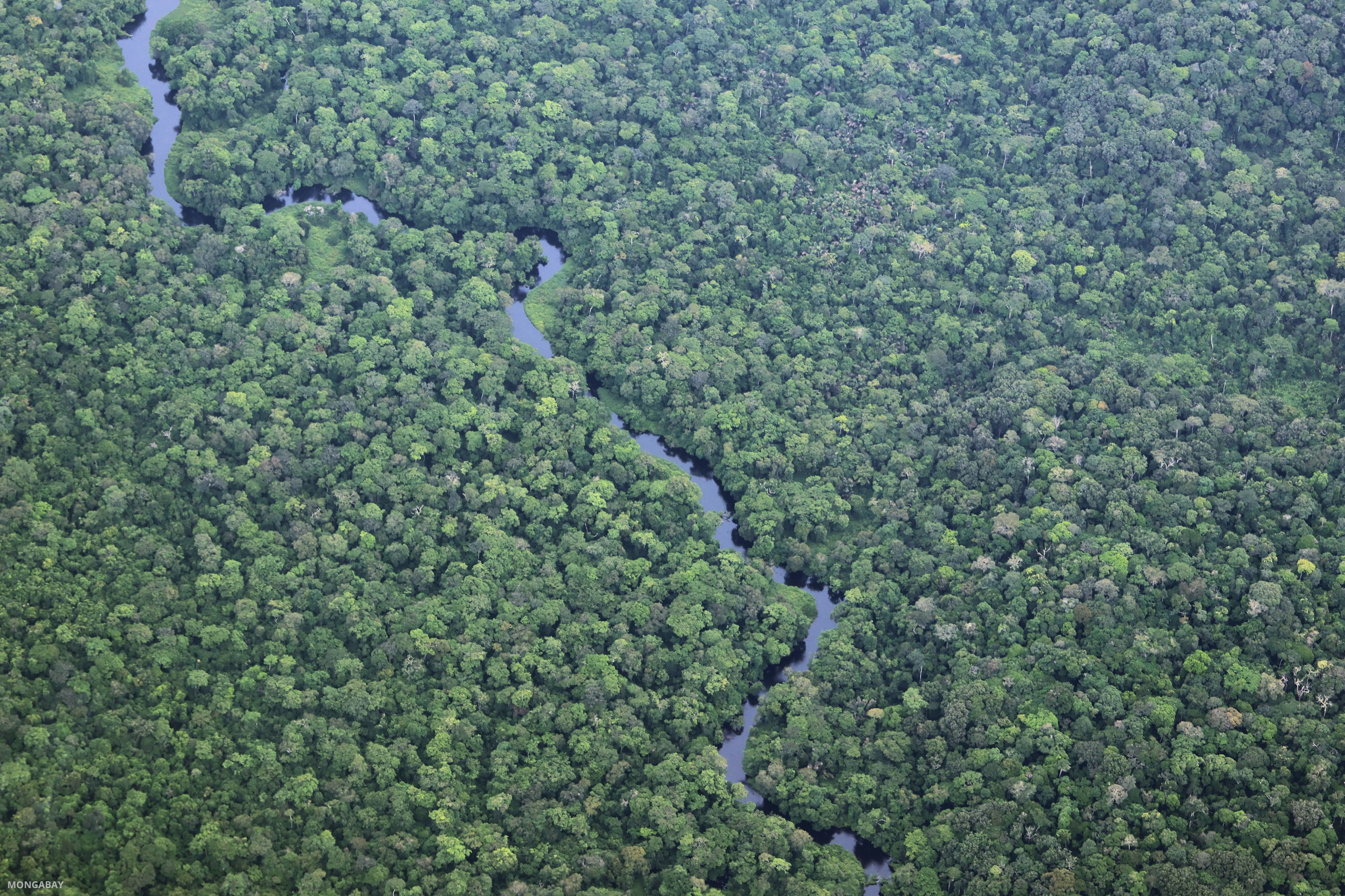
- The DRC holds vast reserves of critical minerals such as cobalt, coltan, copper and lithium, and is also home to the Congo Basin, the world’s second-largest rainforest and a key carbon sink.
- Fabrice Basile says the EU is working with the DRC government to improve natural resource management, emphasizing transparency, traceability and local value creation through approaches tailored to local realities.
- In an interview with Mongabay, he says the EU will support a U.S.-brokered DRC-Rwanda agreement on critical minerals, while stressing that lasting stability depends on governance reforms and pointing to conservation efforts like Virunga National Park as reasons for cautious optimism.
KINSHASA — Few countries are the focal point of as many expectations, tensions and contradictions as the Democratic Republic of Congo. With its vast forests, iconic protected areas and mineral resources among the most coveted in the world, the country finds itself at the heart of two global dynamics often portrayed as opposing forces: biodiversity conservation and the energy transition.
Cobalt, copper and lithium, the country’s strategic minerals, fuel global supply chains. At the same time, its forests play a vital role in regulating the climate. Caught between these two realities, the fundamental question remains: how can resource extraction, conservation and development be reconciled in a country still marked by insecurity, governance challenges and regional inequalities?
In the capital, Kinshasa, the European Union has positioned itself as a key partner, engaging in natural resource management, the traceability of critical minerals, the financing of protected areas, and diplomatic efforts aimed at stabilizing Africa’s Great Lakes region. This presence is part of a broader approach that combines investment, structural reforms and support for public policy.
In this interview, Fabrice Basile, the European Union’s chargé d’affaires (top envoy) to the DRC, reflects on this cooperation and advocates for a strategy he describes as pragmatic: strengthening transparency in the extractive sectors , supporting local economic models, such as that of Virunga National Park , and fostering a more inclusive approach that integrates local and Indigenous communities.
In the face of criticism regarding past resource management or the impact of certain conservation projects, Basile emphasizes the evolution of practices and the need to adapt models to local realities. He also expresses a distinct optimism regarding the country’s potential, while acknowledging the persistent challenges — security, governance and financing — that continue to hinder its development.
Yet, beyond specific projects and policies, he outlines a broader vision: that of a DRC capable, in the long run, of dispensing with massive support from international partners. For him, success will not be measured by the scale of external investment, but by the moment when the DRC can manage its resources independently and ensure they fully benefit its own people.
It is an ambitious goal in a country where ground realities remain complex — yet one that, in his view, already rests upon a central element: the hope held by the Congolese people themselves. The following interview has been translated from French and edited for length and clarity.
Mongabay: The Democratic Republic of Congo is at the very heart of both biodiversity conservation issues and the energy transition. In the context of your cooperation with the country, how do you ensure that these two dimensions are effectively managed in tandem?
Fabrice Basile: As you rightly point out, this is a subject that is as relevant to the present moment as it is to the future. The green energy transition is central to our commitment. However, it goes hand in hand with the preservation of biodiversity.
In practical terms, the European Union operates in the DRC across five major zones, which we refer to as “landscapes.” Within these areas, we focus simultaneously on conservation and on fostering an integrated and inclusive economy. The objective is to create jobs, ensure the security of local populations, and provide economic alternatives, particularly to prevent individuals from joining armed groups.
In parallel, we are also deeply committed to the issue of critical minerals, particularly regarding traceability. Having signed an agreement with the DRC in this area, we continue to actively implement it.
For instance, we recently launched the PanAfGeo+ Invest program in Kinshasa, in collaboration with the Ministry of Mines. This program, backed by approximately 12 million euros [about $14 million] allocated to the DRC, aims to improve resource management, notably through the digitalization of geological data.
The objective is clear: to assist the DRC in managing its natural wealth more effectively and with greater transparency, and to preserve this potential for future generations.
Mongabay: Let’s stay on the subject of critical minerals. In the past, there have been errors and controversial practices. What is the European Union doing today to prevent a recurrence of such issues?
Fabrice Basile: Allow me, however, to add a nuance to the term “error.” These instances may also stem from differing perceptions or interpretations. What matters today is our commitment to greater transparency. We conduct our work in accordance with our core values, whether in the DRC or elsewhere.
Our goal is to support the DRC in better identifying its resources, optimizing their extraction, and, above all, ensuring that the benefits flow back to its people.
A key element here is local processing. That is where added value is truly generated for the country.
Mongabay: You mentioned traceability. In practical terms, what does that entail within the context of minerals in the DRC?
Fabrice Basile: Traceability means being able to certify that these resources genuinely originate from the Congolese subsoil and that they belong to the DRC.
To put it simply, I often draw a parallel with the Appellation d’Origine Contrôlée (AOC) system in France, specifically for cheeses. The underlying logic is quite similar: guaranteeing both origin and quality. In a sense, what we are talking about here is a “certification of origin” for minerals.
Mongabay: Regarding the Washington Agreements involving the United States, the DRC and Rwanda, the European Union is also supporting this process. Could you clarify the role of the European Union delegation in the DRC within this framework?
Fabrice Basile: I would like to clarify that the European Union has always been willing to support such processes, provided that they contribute to lasting peace in the DRC. Within the framework of the Washington Agreements, as in other mediation processes, particularly those led by the African Union, we remain committed.
Our role is, above all, political and diplomatic: to support efforts aimed at restoring peace.
We also possess a unique form of experience. We know where we come from in Europe, and why we built the European Union.
Today, we stand as a model of regional integration. And we are ready to share this experience to support the Great Lakes region, starting with the DRC.
Mongabay: Do you believe that this agreement, particularly the component related to the management of critical minerals, can contribute to peace in the DRC?
Fabrice Basile: We are not deluding ourselves. Critical minerals, the wealth lying beneath the DRC’s soil, have always attracted outside interests — not to say covetousness.
However, I believe that the entire value chain — from extraction to processing, and finally to the end use of these minerals — can be conducted within a structured framework, governed by clear rules, covering both trade and operational practices, so that everyone may benefit.
It is not acceptable for neighbors to encroach upon the territory of another country, whether here or elsewhere. One can draw a parallel with other crises, such as the situation in Ukraine. Nor is it acceptable to seek to appropriate resources and certify them as if they were one’s own.
Conversely, it is entirely appropriate for the European Union, together with its member states, to support the DRC — or any other country that so desires — within the framework of freely negotiated agreements, ensuring that its natural wealth truly benefits its people and contributes to its development.
In this sense, our engagement is both coherent and relevant. And when we speak of the energy transition, we are not referring solely to the European transition , Africa, too, requires its own transition.
Today, in the DRC, there is much discussion surrounding the exploitation of natural resources. However, with our vision, focused on future generations, we believe it is possible to do better: for instance, by utilizing renewable energy sources such as solar power, rather than replicating models based on coal.
The country also possesses significant hydroelectric potential. Much is said about the Inga 3 project, a concept that has been discussed for over 50 years, but one which, in our view, will ultimately come to fruition. With the support of other partners, such as the World Bank and agencies from our member states, there is a clear determination to move forward.
It is, therefore, a matter of transition, of providing support, and of a shared commitment to enabling the country, and future generations, to progress and achieve the level of development to which it aspires.
The “Green Corridor” fits squarely within this logic. This Congolese initiative has captured our full attention. The European Union, already active in several regions of the country, sought to integrate it into a broader approach: a veritable “bundle” of actions.
Everything gained momentum following the announcement made in Davos by the president of the republic. The European Union was among the first partners to step forward, making financial commitments that we have since honored.
Today, we have entered a concrete phase: we are testing the corridor’s route, applying a multimodal approach. A first convoy is currently being prepared to link the east, the Kivu region, to Kinshasa. This serves as a powerful symbol, but also as a response to an economic reality: goods produced in the east struggle to reach the west, and vice versa.
Beyond economics, the aim is also to strengthen territorial cohesion. The DRC is a diverse country, yet one with a united population. Breaking down isolation is therefore essential to enabling genuine development. This means enabling people to earn a dignified living from their labor. Farmers must be able to reap the rewards of their efforts. It is a matter of economic justice.
In this context, the European Union seeks to support the DRC in unlocking its full potential. We possess a particularly important instrument for this purpose: the “Everything But Arms” agreement, which grants Congolese products duty-free access to the European market — a market comprising more than 500 million consumers.
Our objective is twofold: to support Congolese enterprises and to encourage European investment, accompanied by a transfer of know-how. This also entails maintaining a constant dialogue with the authorities in order to improve the business climate.
Finally, the Green Corridor forms part of a broader vision of regional corridors. For instance, the Douala–Kampala corridor will complement this dynamic by connecting different regions of the continent.
The “Green Corridor” is, therefore, a project for the future, not only for the DRC but for the entire region.
Mongabay: How did you contribute to it? Do you think that it might, ultimately, serve as a symbol of integration between eastern and western DRC?
Fabrice Basile: Let’s not be modest. This was a joint effort undertaken in collaboration with the authorities of the DRC. Therefore, given the scope of this undertaking and the level of commitment involved, spanning the entire distance from Virunga all the way to Kinshasa, it is something we can all take pride in. Beyond the Congolese people and the DRC, itself, I believe that, to the north, south, east and west, everyone should be able to celebrate such a success, for we are speaking of Africa.
You see this continent-nation—spilling over, so to speak (thanks in part to its rivers), into neighboring countries. It is this dynamic that we must foster, for a significant part of the future lies right there.
Mongabay: You have supported Virunga National Park for more than 15 years. In your view, did this work lay the groundwork for what is currently being attempted with the “Green Corridor”? Could you briefly outline your investments in Virunga?
Fabrice Basile: I won’t dwell on the figures. What matters are the results. Today, despite the challenges stemming from the conflict in the east, Virunga remains a success story. No one can truly deny that. For instance, regarding energy in Goma, we helped establish three power plants that now supply more than 80% of the city’s electricity.
Then there is all the work focused on local processing. Coffee, cocoa, palm oil … We are producing chocolate right here in the DRC, which is then exported to Europe. And it is a high-quality product. I myself make a point of prioritizing these local goods. This isn’t just rhetoric , it’s reality. We can see that it works.
Virunga is, therefore, a success, even if the journey hasn’t been easy. The road has been arduous. However, there is a strong commitment, particularly from the ICCN [the DRC protected areas agency] and Emmanuel de Merode [the Virunga park director], who is doing remarkable work on the ground.
Social impact is another key aspect. Through the projects developed in the vicinity of the park, many young people have found employment. In some cases, this has also helped prevent them from joining armed groups. Local communities have taken ownership of these projects, and therein lies their true strength.
This model, driven primarily by revenues generated through energy production and local economic activities, works. And when a model works, we try to replicate it wherever possible.
So yes, Virunga has clearly helped lay the foundations. Yes, it is a success, and we are proud of it. But above all, it demonstrates the need to continue investing and taking risks. Without taking risks, we cannot support a country like the DRC in its development.
The challenge remains the same: to open up the country and enable it to fully realize its potential, especially for the sake of its youth.
Mongabay: Allow me to return for a moment to the Virunga model, specifically its economic framework and the investments that have been made. In your view, is it currently possible to replicate this model at Salonga National Park, for instance? More broadly, do you believe it could be applied to other protected areas within the Democratic Republic of Congo?
Fabrice Basile: The Virunga model can be replicated, at least in part. However, one must respect the specific characteristics of each individual zone.
Whether at Salonga, Garamba or elsewhere, we can implement similar initiatives, provided they are always adapted to the local realities, needs, resources and specific contexts unique to each location.
Not all areas possess the same natural wealth, nor do they face the same constraints. So, yes, it is possible, provided that we adapt. And above all, this work must be undertaken with the local communities, ensuring their genuine involvement.
That is precisely where our added value lies: listening to the people, working alongside them, and ensuring that they take true ownership of these projects.
Mongabay: In certain parks, such as Garamba, achieving results has appeared to be more challenging. How do your account for this?
Fabrice Basile: I would offer a slightly more nuanced perspective. I wouldn’t go so far as to say that it hasn’t worked.
I would encourage you to look at what is happening today within Garamba National Park. Working alongside various partners, we have successfully reintroduced white rhinoceroses — and we have even witnessed a birth. I recently invited the president of the republic to visit the area with us, as part of the development of a tourism project. It is a collective success.
We must also know how to highlight this achievement. The DRC possesses real potential for tourism, including safaris, much like those found in Tanzania or Kenya. The challenge is certainly there, but it is one that can be met. And we will meet it together, alongside the authorities. Their commitment is essential, particularly when it comes to facilitating investment and supporting these efforts on the ground.
Mongabay: We were on the ground and observed several realities, specifically regarding the level of local ownership demonstrated by the authorities. In your view, can the European Union successfully implement its investments in a context where this local ownership remains limited?
Fabrice Basile: “Ownership,” as you put it, is essentially taking full charge. Allow me to use the French term for it.
The DRC is a vast country, one that has expanded from 11 to 26 provinces. This evolution is part of a broader decentralization strategy, designed to better distribute resources and enable the provinces to generate their own revenue. However, this does not happen overnight. It takes time.
We cannot rush these processes. Conversely, if we provide the right support, things can certainly move forward.
I am convinced that if you were to survey 100 people, the majority would want to move in this direction. Therefore, little by little, we will get there.
We are already seeing signs of this. For instance, the president recently traveled to Bandundu for the conference of governors, visiting a region that had rarely been frequented for years. These are clear signs of progress.
I am not making political judgments , I am simply stating facts. And these observations must serve as a basis for engaging with the authorities: working alongside the local population, and with partners on the ground, is absolutely essential.
Help us succeed, and help us help you. That is the reality of the situation. It is a transformation that must be achieved together.
Mongabay: Overall, you seem very positive about the country, whether regarding the “Green Corridor” initiative or your own interventions there. However, we must also acknowledge that issues surrounding security and funding present a much more challenging reality. Beyond everything we’ve discussed so far, what, in your view, is truly needed to kick-start the country’s development right now?
Fabrice Basile: Look, I believe I have already provided some elements of an answer, but to be clear: what is needed is transformational change. And that begins with strong political will.
The authorities are committed, but we must not underestimate the complexity of the situation in the east of the country, nor in other regions. There are many challenges that must be managed at the very highest levels of the state.
Now, this political will must translate into concrete action. It is no longer merely a matter of initiating initiatives — that has already been done — but rather of going further in their implementation. This is where the real breakthrough lies, particularly in economic terms.
And this breakthrough will require significant structural reforms. The European Union is already supporting the Ministry of Finance, alongside other partners such as the IMF and the World Bank, on tools and initiatives such as the Single Treasury Account and the fight against corruption.
However, everyone must play their part. Political boldness is also required. State authority must be fully asserted across the entire national territory. Without stability and peace, there can be no development.
In parallel, together with our partners, we must continue to support these reforms to enable the country to enter a new era — an era of development, but above all, of inclusive development. No one must be left behind.
Mongabay: Some argue that development should primarily stem from endogenous solutions rather than imported models. In the case of the DRC, particularly regarding natural resource management, do you believe that local solutions should take precedence, or is a blend with external approaches necessary?
Fabrice Basile: I do not take a radical stance. One must be pragmatic. Yes, there are local models that deserve to be championed. However, there are also models from elsewhere that have proven their worth.
When foreign investments arrive, they often bring their own models with them , yet, they must also adapt to the local context. One cannot simply transpose an external model wholesale, nor can one impose anything unilaterally.
Therefore, the key lies in adaptation and synergy among the authorities, the partners and the economic stakeholders. That is how a robust approach is built.
Mongabay: What has been the impact of the withdrawal of U.S. government funding from the conservation sector in the DRC?
Fabrice Basile: This withdrawal has primarily affected the humanitarian sector. It is regrettable, and we have said as much.
For its part, the European Union has sought to step up its efforts to partially offset this shortfall. Indeed, the European commissioner [for equality] was on a visit recently. However, we must be realistic: humanitarian aid is an emergency response. It is necessary, but it is not a sustainable solution.
The objective remains to move beyond this emergency-driven mindset and return to stability, to the well-being of the population, and, above all, to development. Ultimately, this is what will enable the creation of wealth for the country.
Mongabay: I cannot conclude this interview without addressing the issue of Indigenous populations. They often have little voice, yet they are directly affected by conservation and biodiversity management activities. As part of your funding initiatives, how do you ensure that their aspirations are taken into account and that these interventions do not cause them harm?
Fabrice Basile: Look, we don’t do things blindly. We don’t develop projects without careful thought. We develop them with the people.
I spoke earlier about local ownership. If you want a project to succeed, especially if you believe it can contribute to improving living conditions, you must build it together with the people it concerns. And that is exactly what we do.
We conduct consultations upfront, we engage with local leaders, and we make sure to include everyone. Our approach is inclusive, and it will remain so.
Of course, we have also learned from the past. There were times when certain projects were carried out with less consultation, or in contexts where local stakeholders were not always fully aligned. But that was a long time ago. For years now, we have been working in a much more inclusive manner.
We do this for the people. For the Congo, and for the Congolese people, wherever they may be.
It is essential. And I can state this clearly: nothing is done — and nothing will be done — without their inclusion.
Mongabay: To wrap up, how do you define success in your relationship with the Democratic Republic of Congo? For you, what does a successful relationship look like?
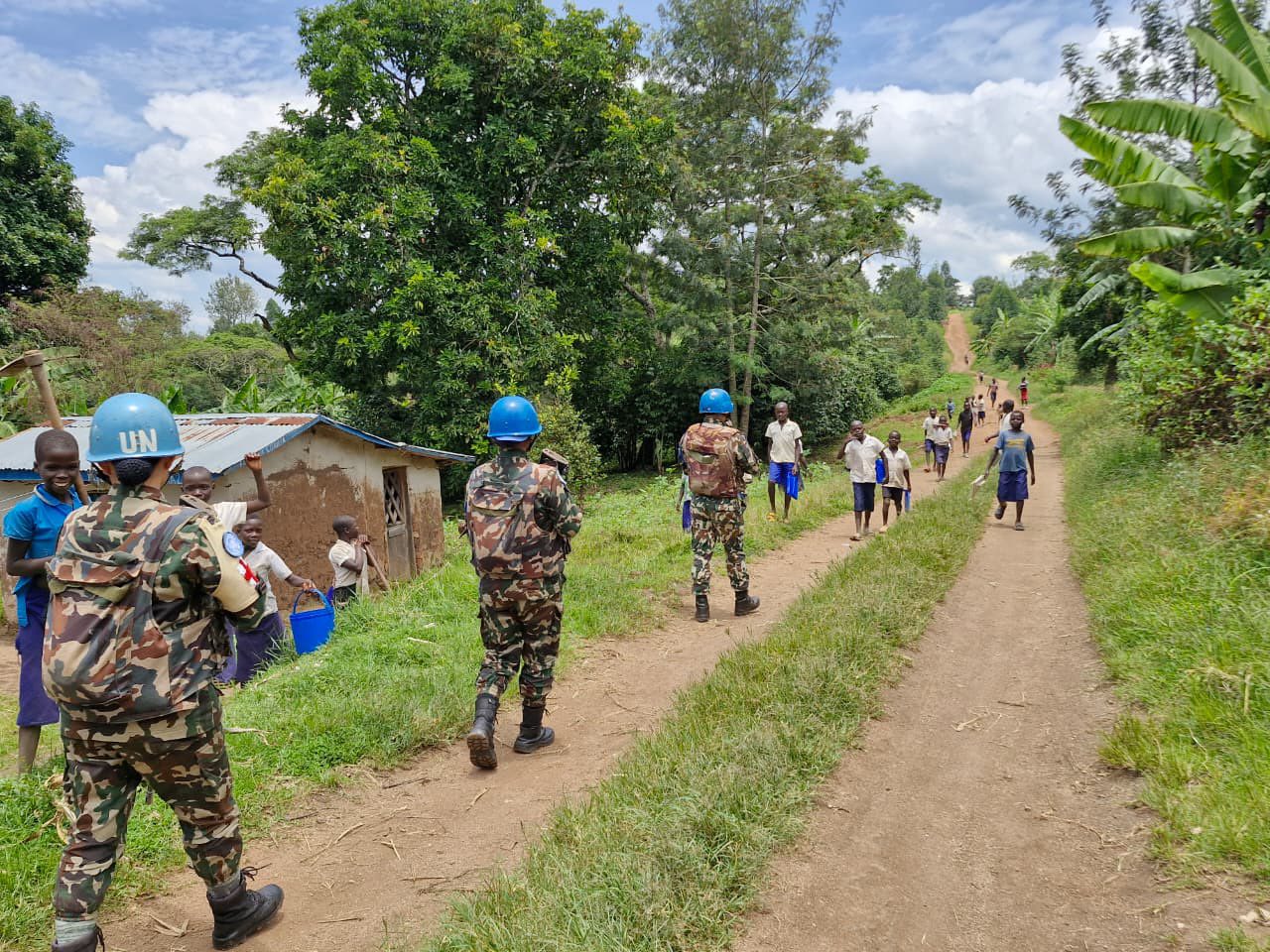
Fabrice Basile: You know, to answer that, allow me to step back for a moment. About 15 years ago, when I first arrived here, what struck me was the number of United Nations agencies present in the country.
Some leaders might welcome this. But for me — and this is a very personal reflection — the more agencies and external partners there are, the more it demonstrates that significant needs still exist.
Conversely, the less a country depends on these actors, the more it signifies that it has reached a certain level of development.
Therefore, my hope is that, in the long run, this country will have less need for this external presence. That it will be able to drive its own development — drawing, of course, on external expertise — but, above all, by fully taking ownership of its own resources.
And that the Congolese people, both men and women, may benefit from these resources, enabling them to earn a dignified living through their work.
To me, that is what true success looks like. It is a deeply humanistic vision.
Mongabay: Abroad, in Paris, Brussels or London, many people remain apprehensive when the subject of the DRC comes up. They tend to focus primarily on insecurity, disease and crises. Personally, what gives you hope?
Fabrice Basile: I have traveled across this country, and I continue to do so, alongside my teams.
When you visit a village, shake someone’s hand, and see their eyes light up as they speak about farming or their work, you realize that hope truly exists. And it is this hope that we must nurture and support. We must remain positive. Without that mindset, we cannot contribute to development. If we are here — if my team is here — it is because we believe in it.
It is precisely because this hope exists, driven by the people themselves, that I am convinced this country can succeed.
Despite the apprehensions held by some, I see that hope firsthand, right there on the ground. And I believe that, together with the Congolese people, we will achieve it.
This interview was first published here in French on April 23, 2026.
Banner image: Fabrice Basile, chargé d’affaires at the European Union Delegation in Kinshasa. Image by European Union Delegation, Kinshasa
FEEDBACK: Use this form to send a message to the author of this post. If you want to post a public comment, you can do that at the bottom of the page.
