

The state of Pará in the Brazilian Amazon has authorized Canadian mining company Belo Sun to begin clearing nearly 600 hectares, or almost 1,500 acres, of rainforest for an open-pit gold mine. Legal experts say it’s premature to clear a forest the size of 840 soccer fields while key aspects of the project remain unresolved.
The April 14 decision by Pará’s environment secretariat, SEMAS, is being challenged in court by federal agencies and prosecutors. They say the state lacks authority to approve a mine along the Xingu River, a major tributary of the Amazon, which could impact several Indigenous territories. Management of Brazil’s rivers and Indigenous affairs falls under federal jurisdiction.
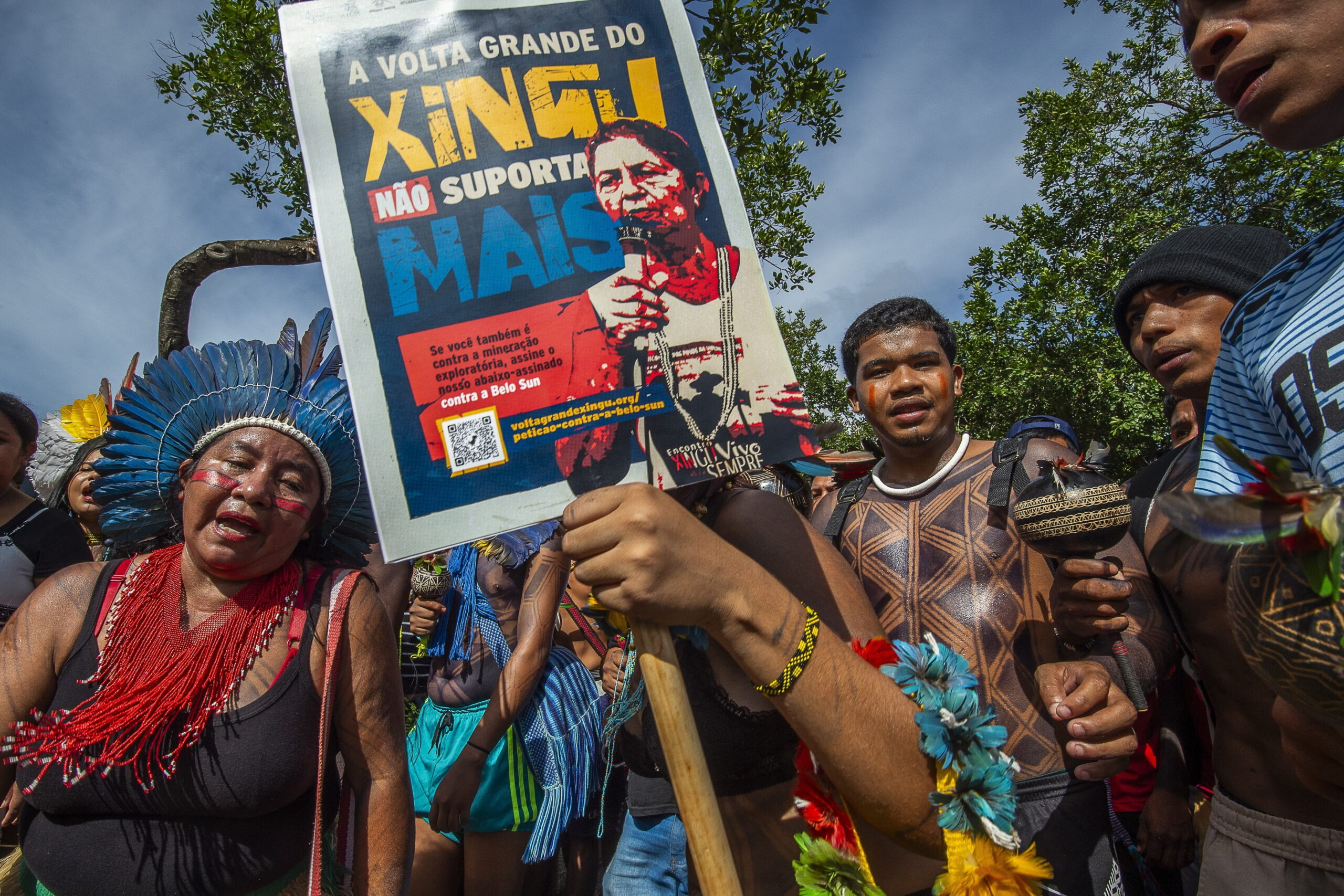
Indigenous groups, including the Juruna, Xikrin, Xipaia, Arara and Parakanã peoples, protested the Belo Sun mine project for more than a month, saying they weren’t properly consulted, and warning the project could irreversibly harm their way of life.
“For the Indigenous, riverine and extractive women of the Middle Xingu, water is not a resource, it is the very condition of existence,” the coalition Indigenous Women Against Belo Sun wrote in an April 22 statement. “The contamination of rivers with mercury and other heavy metals would permanently destroy life in traditional territories.”
The public prosecutor’s office told Mongabay by email that Indigenous consultation was conducted by private consultants hired by the company, and that this violates the international treaty governing Indigenous rights.
Belo Sun denied the allegation in an email to Mongabay, saying the consultation was conducted with government oversight and respected Indigenous rights.
Belo Sun also noted that a federal appeals court had reinstated the installation license to begin clearing the forest and leveling the land, which it said confirms the company had followed proper procedures following “rigorous technical scrutiny.”
Belo Sun says it plans to extract 6.3 metric tons of gold every year for roughly 17 years, and build a dam to hold an anticipated 35 million cubic meters (1.24 billion cubic feet) of mining waste, or tailings — enough to fill 14,000 Olympic-sized swimming pools. However, SEMAS told Mongabay by email that while a wet tailings dam might be possible, the mining installation license requires the company to propose safer alternatives, prioritizing dry stacking, for storing mining waste.
SEMAS also said the license prohibits water withdrawal from the Xingu. Gold mining is water-intensive, and the company hasn’t yet disclosed where it plans to get water from without the river.
Prosecutors told Mongabay that nearby Indigenous communities cannot give informed consent until plans for waste storage and water access are made clear, as these will determine the project’s full environmental impact.
Pyja Xipaia, a leader of the Xipaia people, told Mongabay in a voice message that her community is worried about contamination of the rivers, fish and soil — resources they depend on.
“We do not accept and do not want Belo Sun in our territories.”
Banner image: Indigenous protests in Brasilia, Brazil, on April 7. Image courtesy of Anderson Barbosa/Amazon Watch.