

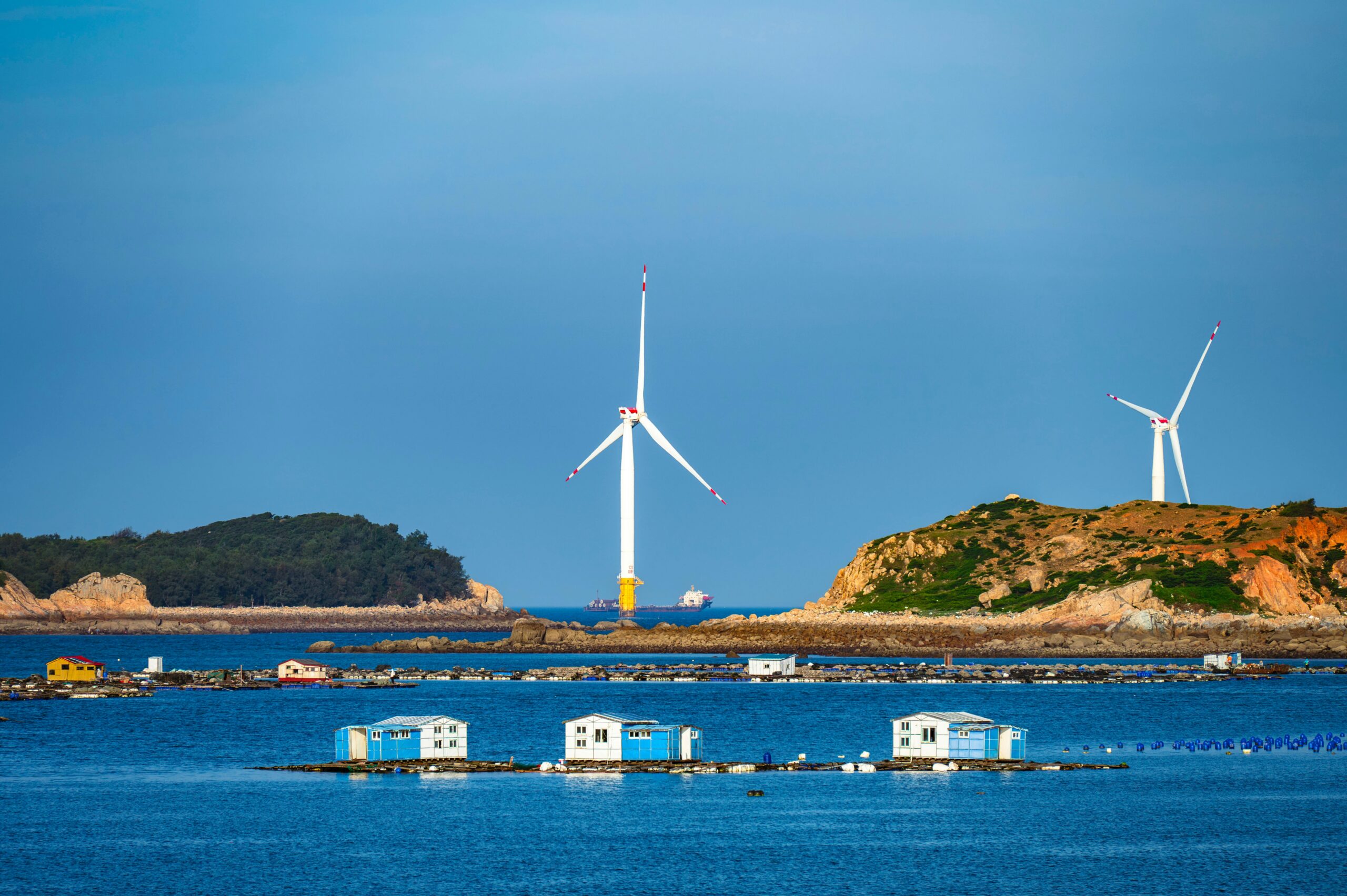
- Offshore wind has enormous clean energy potential across the globe. Though the sector has expanded in recent years that potential remains largely untapped.
- Today, China and European nations lead the way in developing offshore wind farms, with the U.S. hampered by the Trump administration, and other nations just beginning to tap into the potential of marine wind.
- Currently, about 80 gigawatts of power is generated by existing marine wind farms. According to some estimates, more than 2,000 GW of offshore wind is needed to meet climate goals, requiring a huge expansion including in deeper waters using floating platforms.
Winds sweep across the world’s oceans every day, and harnessing that largely unused resource has the potential to provide abundant, clean and reliable energy. Experts widely agree that marine wind could play a vital role in reducing fossil fuel reliance and tackling climate change, while also bolstering energy security.
“The beauty of it is that the technology is tried, tested, proven, and has scaled,” says Amisha Patel, head of secretariat at the Global Offshore Wind Alliance. “This is not just about climate, it’s about having energy independence for many nations and regions as well.”
Tapping into only a tiny fraction of that overall potential could reap gigantic benefits. A 2025 paper found that utilizing even just 1% of the global area suitable for offshore wind could produce roughly 20% of current global electricity demand, and cut carbon emissions by more than 2.3 billion metric tons annually.
“Our key finding is that a relatively small fraction of suitable ocean area could deliver substantial climate and energy benefits,” Yi Wen, a lead author on that study with the National University of Singapore (NUS), told Mongabay in an email.
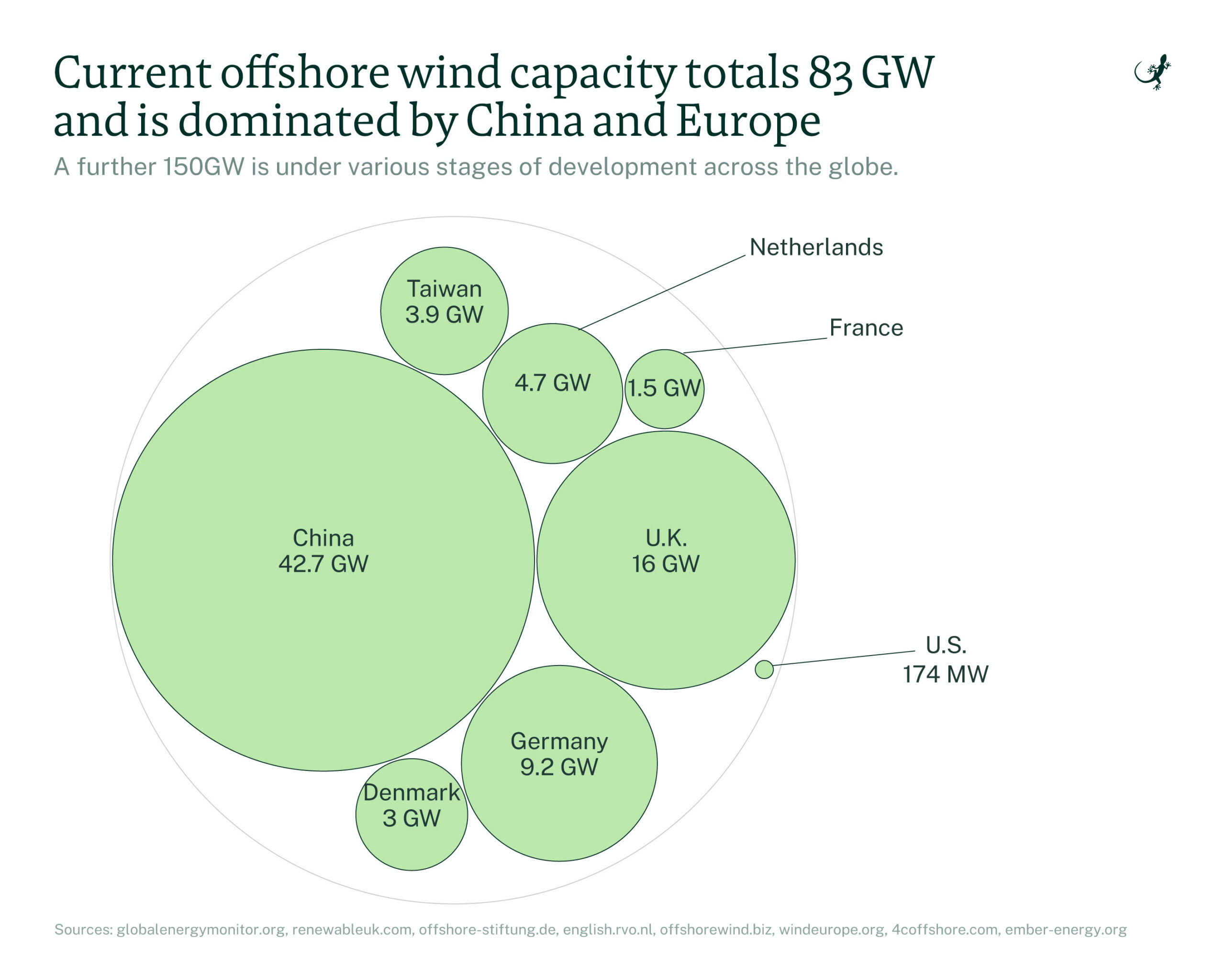
But today, marine wind remains almost entirely untapped, with only around 15,000 offshore turbines producing just over 80 gigawatts of electricity, and another 150 GW of offshore wind farms under development. In 2024, energy generation from these turbines was sufficient to power around 73 million households.
To date, the lion’s share of offshore wind development has occurred in just a few locations, namely China and Europe. The U.S. remains far off pace due to legal wrangling that has slowed projects , it recently confronted new roadblocks thrown up by the fossil fuel industry-friendly Trump administration. Across Latin America and Asia, offshore wind developments are being planned, including in Brazil, Colombia, Japan, South Korea, the Philippines, Vietnam and Taiwan.
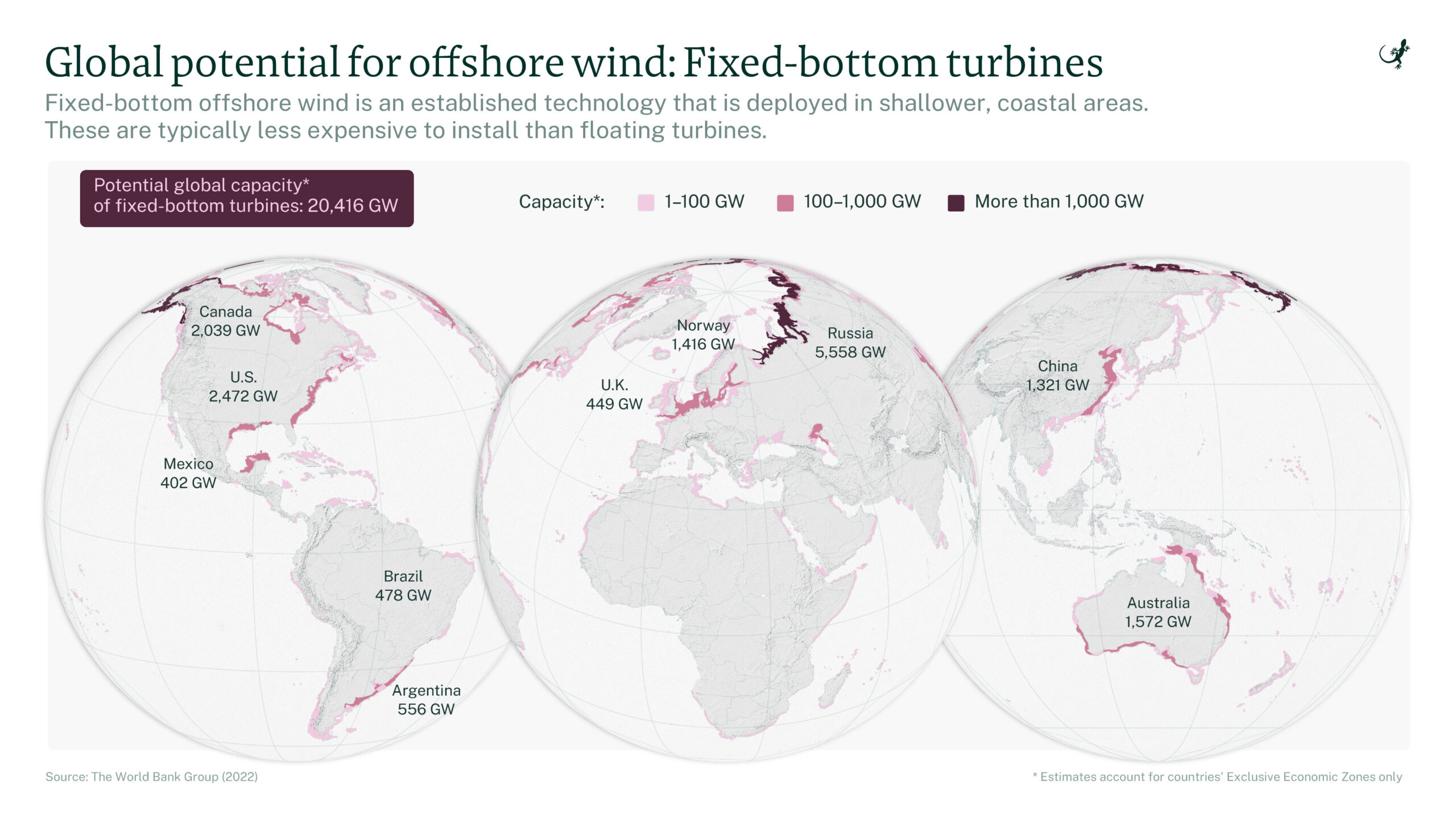
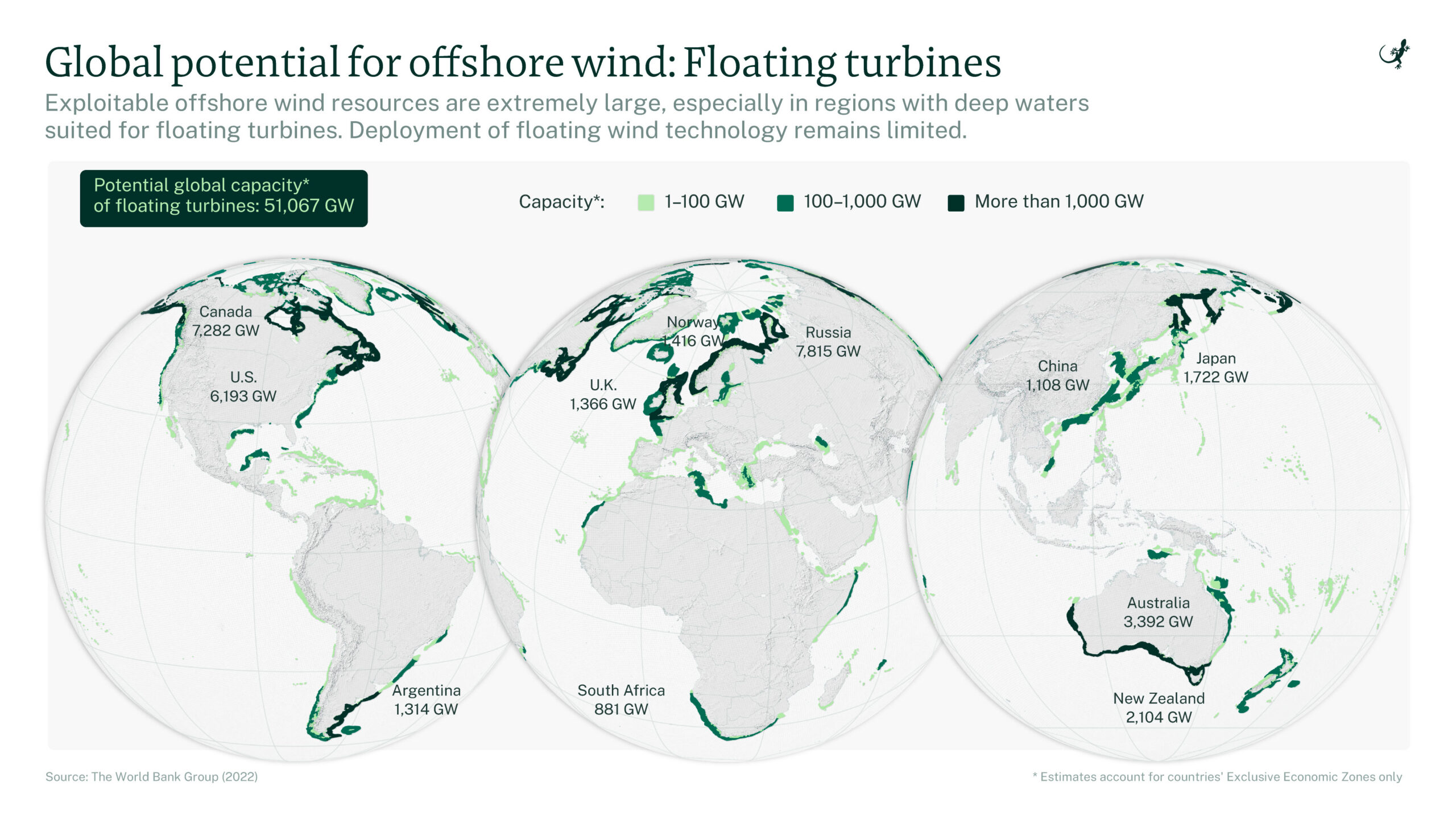
“Our resource mapping highlights several high-wind regions that remain comparatively underdeveloped — particularly in the Southern Hemisphere — such as waters near southern South America, southeastern Australia, and southern New Zealand, as well as Alaska and southeastern Canada,” Wen writes.
Situating wind developments offshore has multiple advantages over siting them on land, experts agree. Marine wind can harness the strong, steady breezes blowing over the seas (terrestrial winds are more intermittent), and avoid competition for scarce and expensive property while feeding energy directly to coastal communities.
A slow growing industry
“The first offshore wind farm ever was built in 1991, and that was a few tens of megawatts,” consisting of 11 small turbines off the coast of Denmark developed as a proof of concept, says Christopher Vogel, an associate professor in the Department of Engineering Science at the University of Oxford in the U.K.
Fast-forward to 2015, and marine wind had become one of the most technologically mature forms of renewable energy, generating 12 GW globally. Since then, the industry has grown apace, with a significant step change in recent years as multiple coastal countries began offshore wind development.
“Now we’re talking about building [offshore wind] farms that are multiple gigawatts,” Vogel says. “The growth has actually been huge over quite a short amount of time.”
Take Ørsted, for example. Formerly a fossil fuel energy company, it was behind that first small-scale demonstration wind farm in Denmark. Today, it has transformed itself into a global leader in renewable energy and is the world’s second-biggest offshore wind company, with 10.2 GW of installed capacity in Europe, North America and Asia.
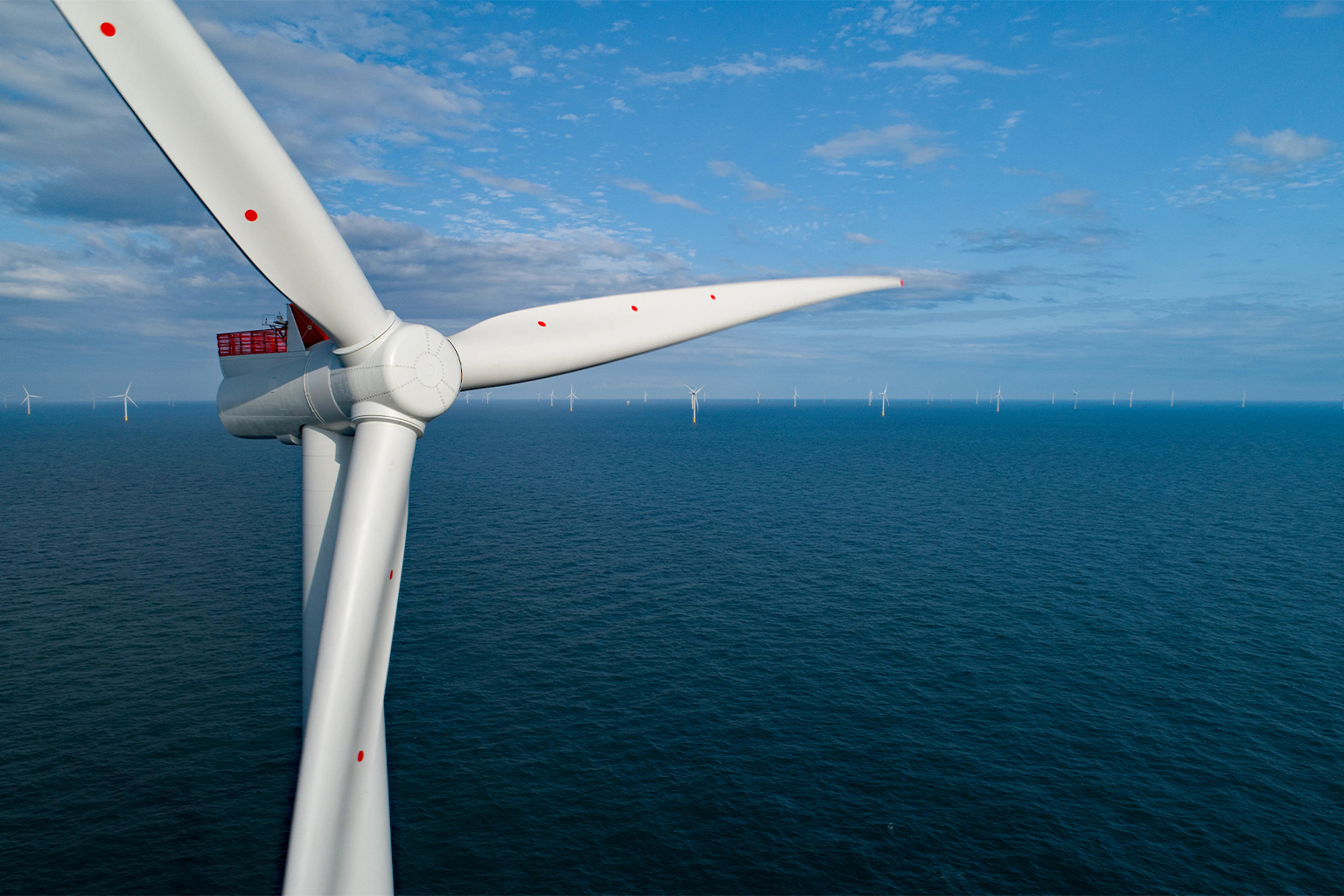
Ørsted’s installations include Hornsea 2 in the U.K., one of the world’s largest wind farms, comprised of 165 turbines that generate 1.32 GW, enough to power 1.4 million homes.
Another effort, the Berwick Bank project, also in the U.K., will surpass Hornsea 2 once built. It’ll generate 4.1 GW, enough power to run roughly 6 million households. It’s led by SSE Renewables and as of yet has no scheduled completion date.
It is China, however, that’s currently the world’s “offshore wind powerhouse” with capacity growing from less than 5 GW in 2018 to 42.7 GW in 2025. More than half of the world’s operational offshore turbines are in Chinese waters, and the Yangjiang Shaba wind farm in the South China Sea is one of the largest in the world, with a capacity of 2 GW and consisting of more than 300 turbines.
Part of China’s success is built on continued innovation, Vogel says. A huge, 300-meter (985-foot) tall, 26-megawatt turbine is currently undergoing tests in the country. A single turbine of that size, functioning at full capacity, could produce enough energy to power 55,000 households, according to the manufacturer.
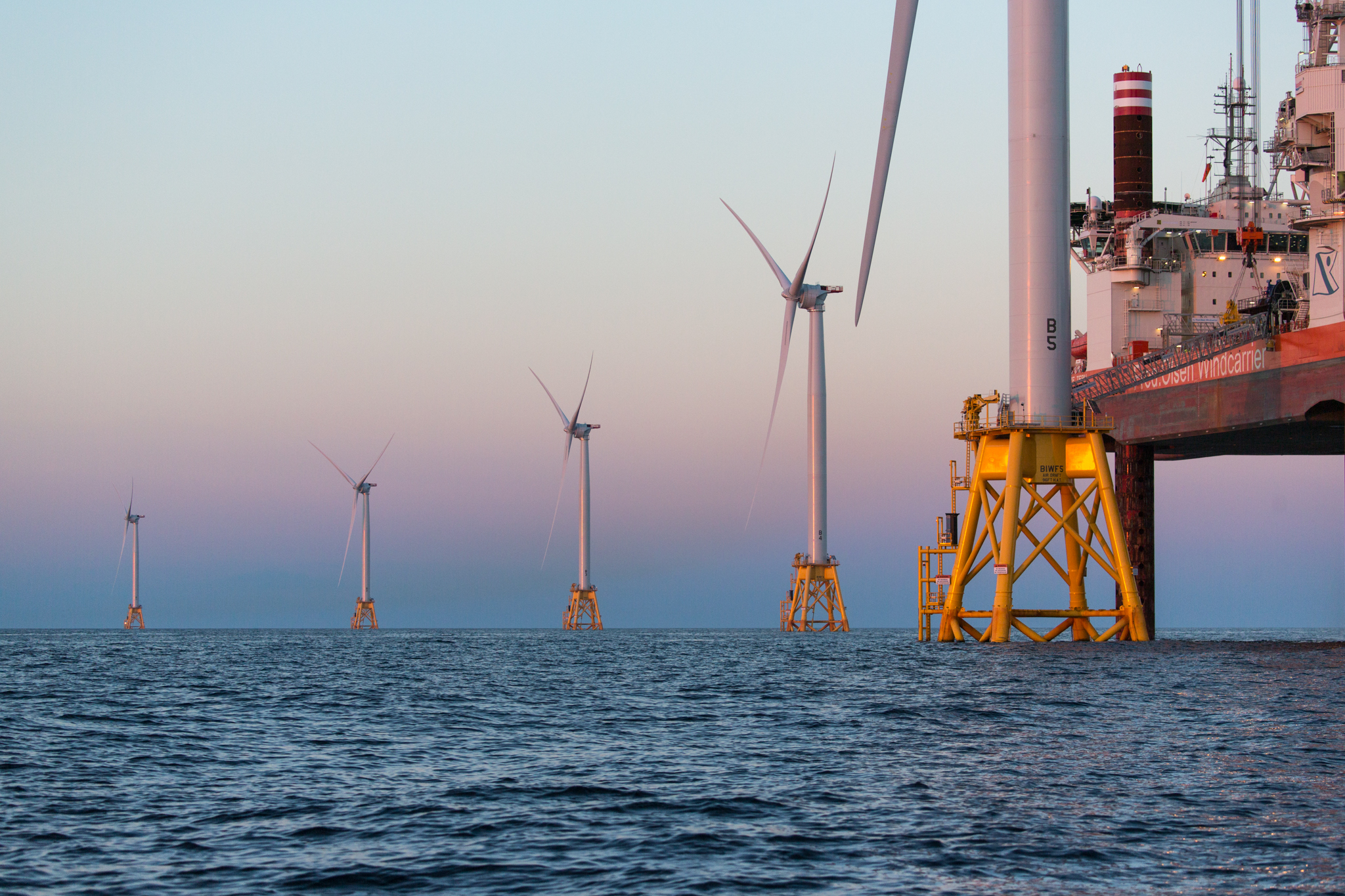
As the number of wind farms has increased globally, so too has the average size of turbines. As in China, that’s enabled ever greater power generation: In 2017, the average capacity of a single offshore wind turbine was around 5.7 MW. Now, turbines of 10 MW are being installed, with the average size in 2024 reaching 9.8 MW. In Europe, testing of 15 MW turbines (with blades spanning 115.5 m, or 379 ft) and larger is underway.
Costs have fallen too. Over the past decade, the price of offshore wind decreased by as much as 60% as technologies matured. This economic advantage aided expansion, though in the past two years inflation and supply chain issues have remained a challenge to overcome, with numerous planned projects cancelled as a result.
Global challenges have resulted in uneven marine wind growth. A large jump in installations was seen in 2021, with installed wind capacity worldwide rising from 5.2 GW to 15.7 GW, largely driven by China (which accounted for about 80% of new installations that year). But only another 9.4 GW of marine wind was installed in 2022, then 10.8 GW in 2023, around 8 GW in 2024, and 8.8 GW in 2025.
Reaching for ambitious targets
Though this growth of offshore wind has been impressive in scale and size, the rate of development remains insufficient, experts say, with most countries lagging behind their set targets and the necessary amounts of sustainable energy generated to keep pace with national climate targets.
“The capacity to reach the potential of offshore wind is still way, way below what it could be,” says Jonathan Bruegel, power sector analyst at the Institute for Energy Economics and Financial Analysis, a U.S.-based nonprofit think tank.
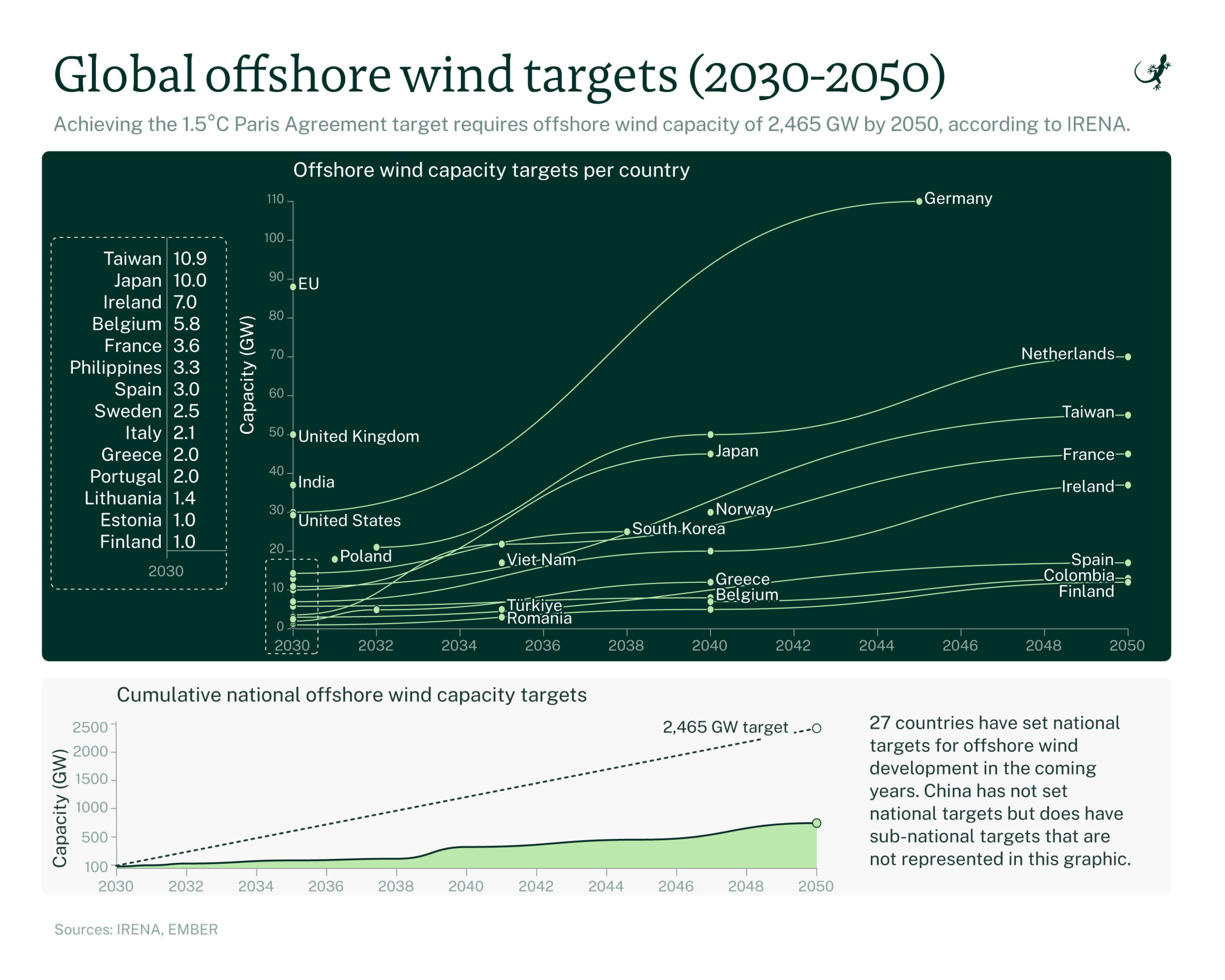
In order to meet climate targets set out in the Paris Agreement, roughly 500 GW of offshore wind power is required by 2030, with nearly 2,500 GW needed by 2050, according to the International Renewable Energy Agency. The Global Wind Energy Council has set a comparable goal of reaching 2,000 GW of installed capacity by 2050.
“It’s an ambitious target, but it’s reachable,” says Patel from the Global Offshore Wind Alliance. But based on current projections, global capacity will only reach around 238 GW by 2030, less than half of the Paris Agreement target for marine wind, though that would still represent a tripling of current capacity.
This growth is likely to continue being driven by ongoing expansion in Europe and China, but also by new developments in the Americas and Asia, where project planning is gaining momentum, Patel adds.
“We’re seeing a lot of ambition and growth actually being underpinned by policy frameworks and auctions in these newer regions, while also seeing a doubling down of commitment in Europe,” she says. But reaching full commercialization of the still nascent floating wind industry will be necessary to achieve those goals.
To date, 27 countries have set offshore wind targets, according to analysis by EMBER, a global energy think tank, with those growth estimates running through 2030 and beyond. A further 11 nations are actively developing plans, including Australia, Canada, Chile and Brazil.
“It’s exciting that even with that long list of 27 countries already, there are more countries still working out if offshore wind is going to work for them,” says Dave Jones, chief analyst at EMBER. “I’d expect that looking at the industry 10 years from now, there will be an awful lot more than 27 countries building offshore wind.”
Harnessing the marine wind future
The North Sea is one location that’s ripe with potential. It currently hosts more than 100 wind farms, with a total capacity of 30 GW, including four of the five largest marine wind farms in the world.
In early 2026, 10 European countries — Belgium, Denmark, France, , Iceland, Ireland, Luxembourg, the Netherlands, Norway and the U.K. — signed the Hamburg Declaration, confirming their intention of turning the North Sea into a “clean energy hub.”
At fruition in 2050, the nations of the Hamburg Declaration aim to generate more than 100 GW of energy in a series of cross-border projects that will see costs and power shared. That’s part of a wider marine wind ambition by North Sea countries to generate 300 GW there in the same year. To meet that goal, countries plan to develop at least 5 GW of wind power each year in the 2030s.
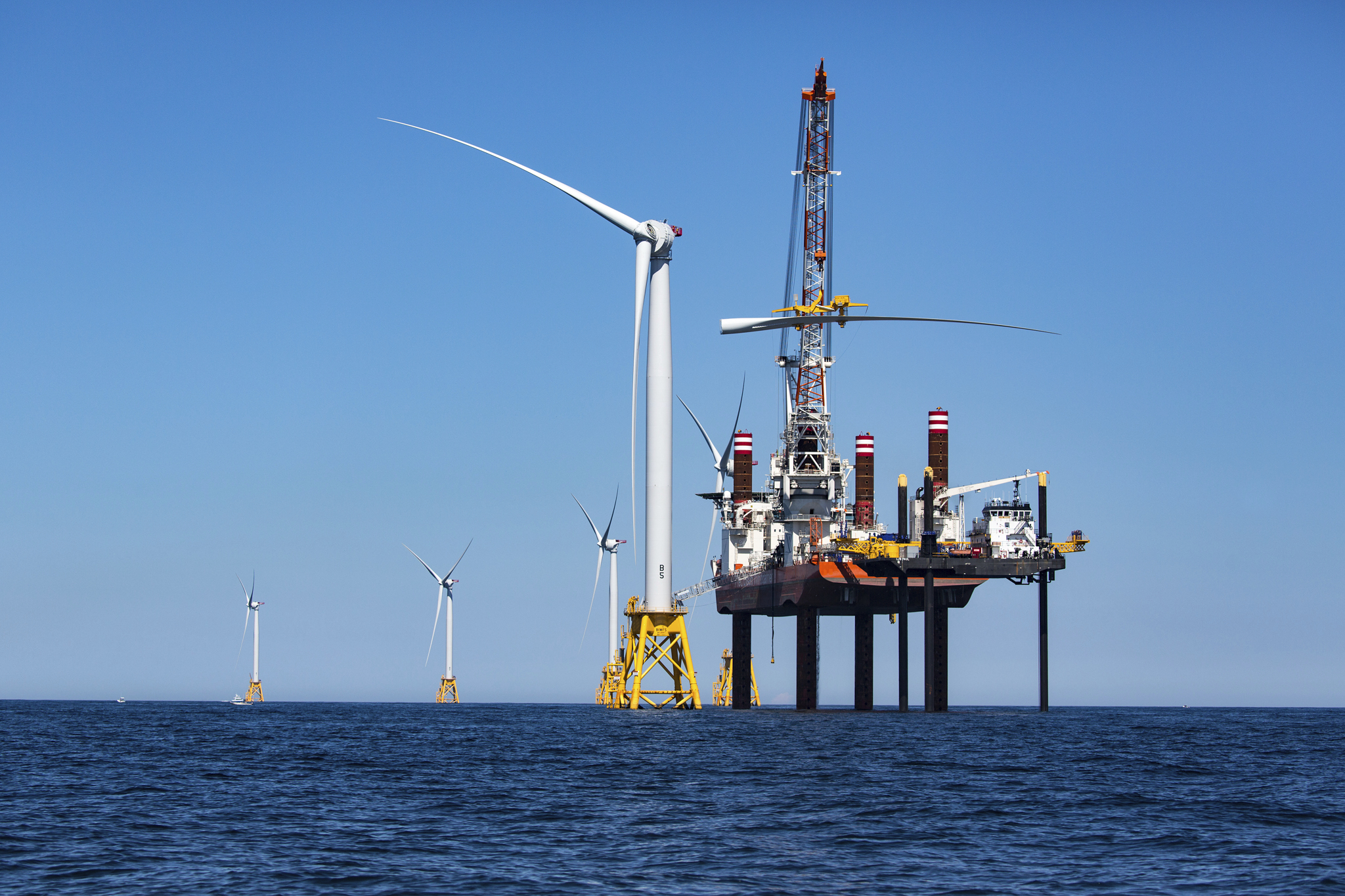
Experts point to the Hamburg Declaration as an example of how cross-country collaboration and cost sharing can drive progress forward. In another instance, Germany and Denmark are collaborating to create the Bornholm Energy Island in the Baltic Sea. That project will produce a far smaller amount of energy, but it’s a step toward sharing produced power and costs. Strong international collaboration of this kind is one of the conditions that needs to be met to reach global targets, according to experts such as Yi Wen, the NUS academic.
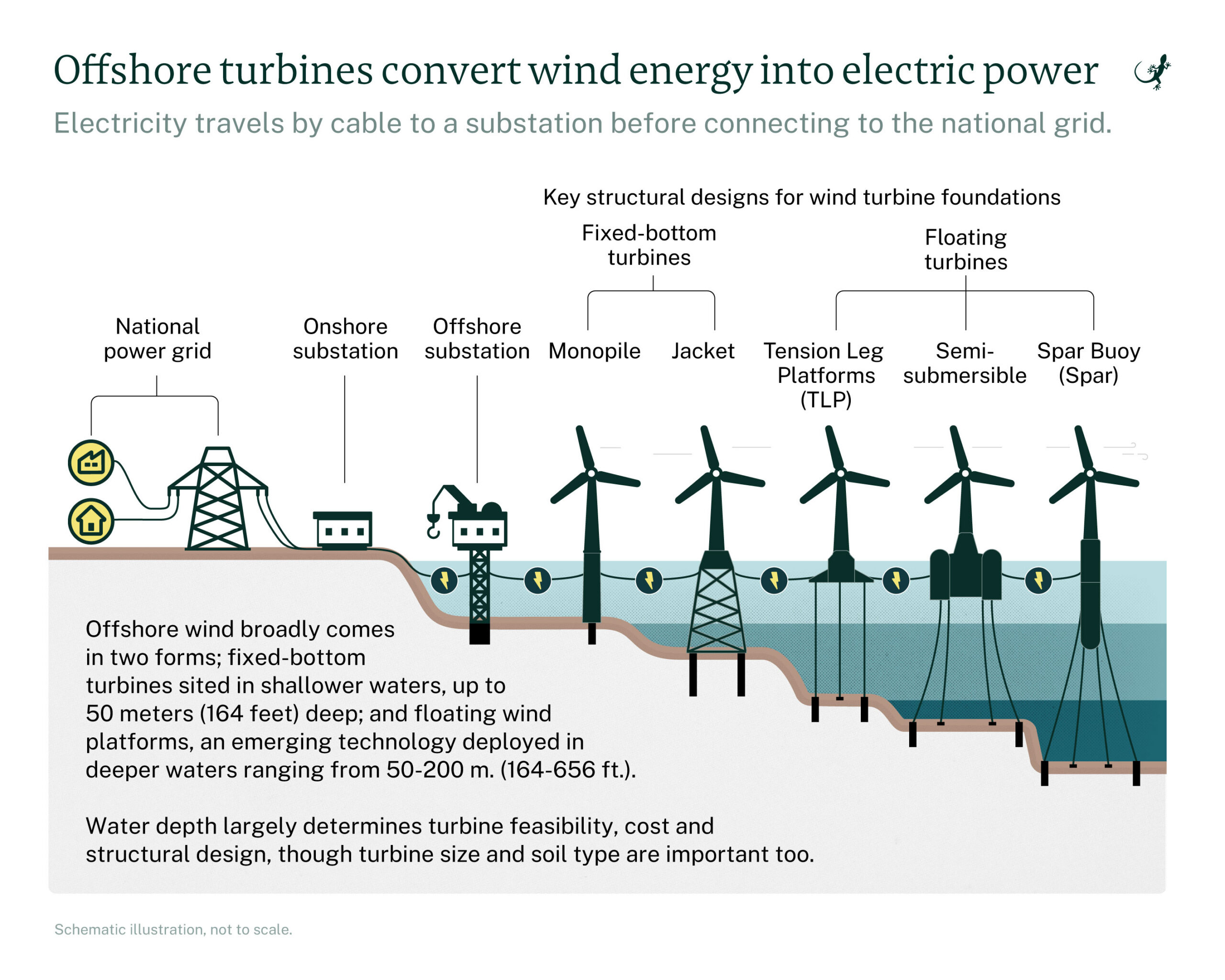
Offshore wind, mostly using fixed turbines in shallow waters, is set to expand to new locations, and potentially to deeper waters, as floating turbines come online for use in more challenging deeper-water locales.
“This is really the moment where things are starting to become big, and offshore wind will start to deliver at scale,” says Jones of EMBER. “The question is whether in five years’ time we will be looking at the next stage of even larger growth?”
Banner image: Wind farm off Pingtan Island in Pingtan county, Fuzhou, China. Image by Kilian Murphy via Unsplash (Public domain).
Citation:
Wen, Y., Wu, J., Lin, P., & Low, Y. M. (2025). The role of offshore wind and solar PV resources in global low-carbon transition. Science Advances, 11(43). doi:10.1126/sciadv.adx5580
FEEDBACK: Use this form to send a message to the author of this post. If you want to post a public comment, you can do that at the bottom of the page.
