

- Since 2023, Peruvian development agency PROVRAEM has spent nearly $5 million planting almost 1,300 hectares (3,200 acres) of bamboo across the VRAEM, the country’s largest coca-producing region, promoting it as a legal, environmentally restorative alternative to illegal coca cultivation.
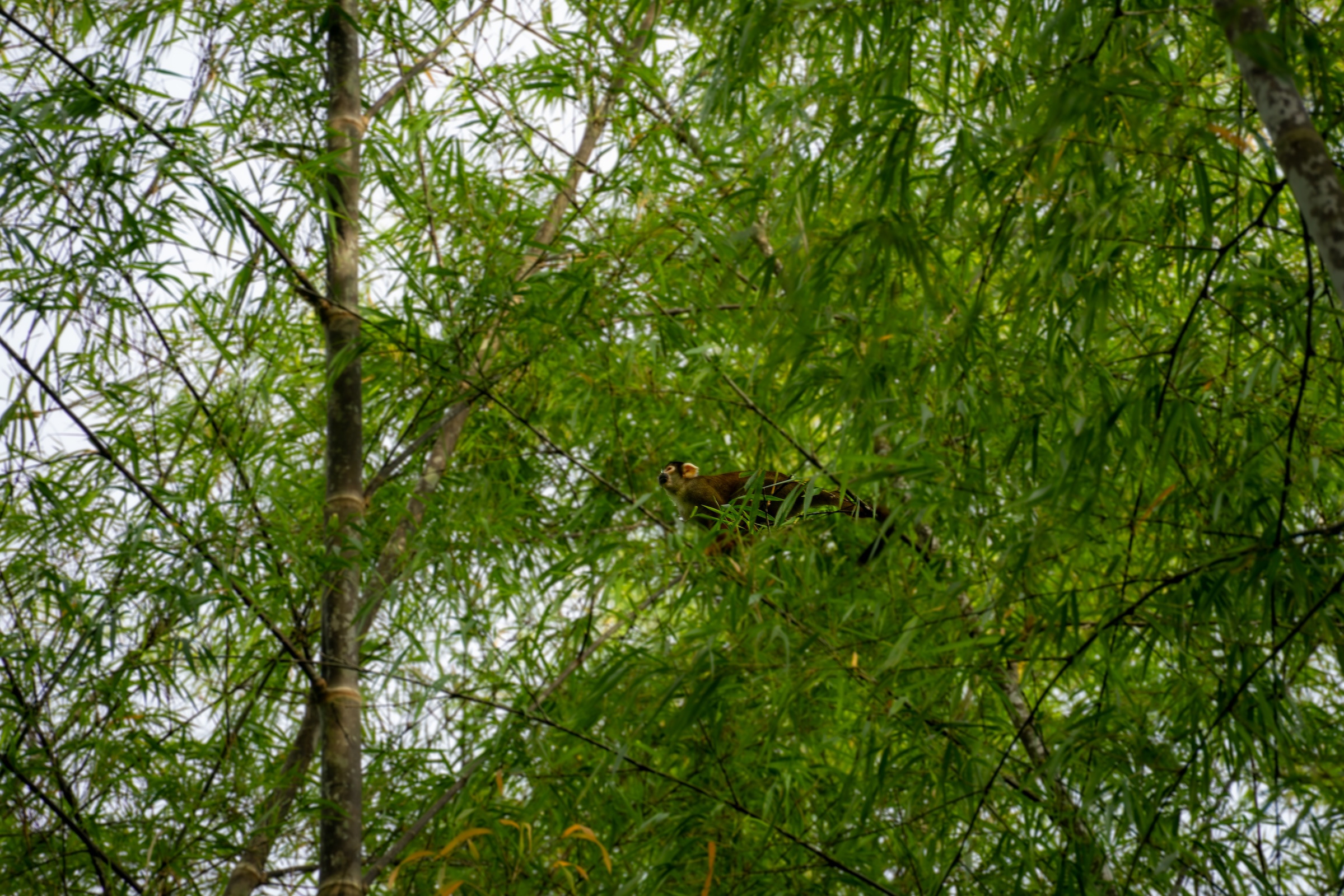
- On one farm in Pichari, growing bamboo as a monoculture has created a self-sustaining microclimate that has attracted more than 50 squirrel monkeys and dozens of bird species to what was once degraded land.
- The farm has since expanded into a successful ecotourism venture, and Peruvian authorities are promoting it as a model of success for their program.
- But bamboo is no miracle crop, experts say: It takes up to eight years to reach a first mature harvest, doesn’t bring nearly as much income as high-yielding coca, and its biodiversity benefits only hold when plantations are connected to larger forest corridors.
PICHARI, Peru — It’s nearly 5 p.m., and the bamboo grove is filled with children. In silence, they’re looking up in awe. The monkeys have arrived. They jump from stalk to bamboo stalk and skitter down trees, not approaching the humans below but sometimes pausing to stare back.
Monkey sightings are rare in Peru’s Valley of the Rivers Apurímac, Ene and Mantaro, also known as VRAEM. Deforestation, much of it to make way for coca crops, has pushed wildlife to the margins of populated areas. But here, in the bamboo forest planted by Yuri Paredes just a few kilometers outside Pichari, VRAEM’s de facto capital, monkeys are coming back.
For decades, illegal coca cultivation has dominated the region, clearing its primary forests and stripping the soil of nutrients. To restore local ecosystems, in the last three years Peruvian authorities have been counting on expanding bamboo plantations, which they say will also bring back wildlife and allow farmers to profit from the crop. Yet some farmers and experts remain critical.
In 2023, PROVRAEM, a Ministry of Agriculture initiative for sustainable rural development in the region, launched the Bamboo Sustainable Development Project to help more than 2,400 local farming families and boost the industry. So far, it has spent approximately 16.7 million soles ($4.9 million) to plant nearly 1,300 hectares (about 3,200 acres) of bamboo. The agency hopes to extend the project for at least another three years.
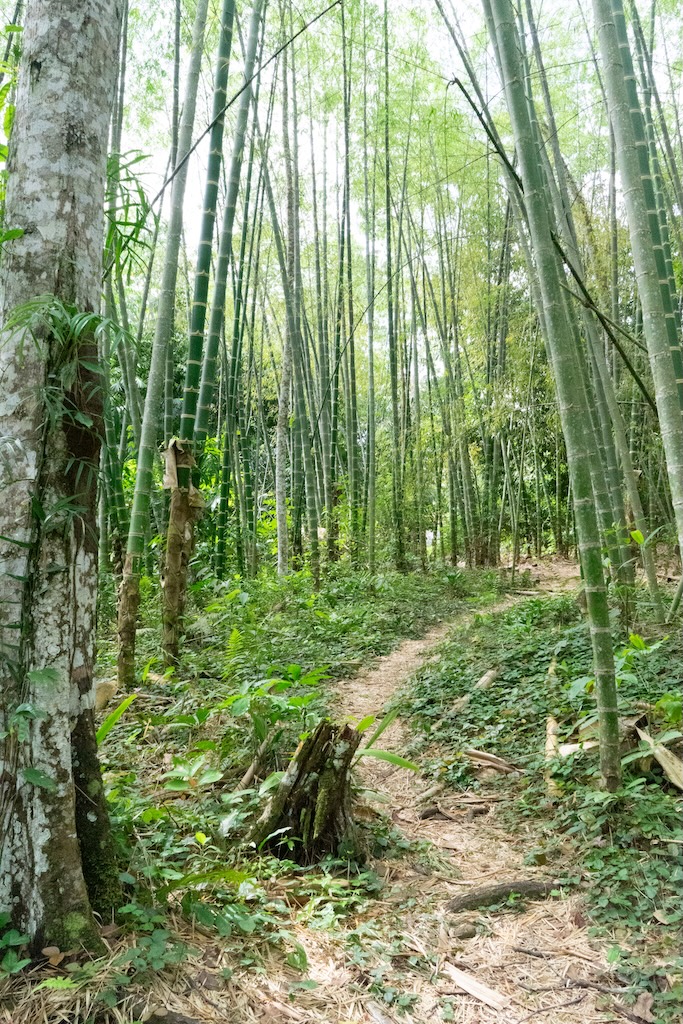
Paredes’s 6-hectare (15-acre) bamboo forest, the biggest of its kind in the region, has become PROVRAEM’s model of success. The bamboo stalks that reach 15-20 meters (49-66 feet) high have created a microclimate with more shade and higher humidity than its surroundings.
But bamboo is far from a miracle crop. Many farmers might struggle to replicate Paredes’s project due to a lack of resources and time. And scientists warn that while bamboo is far better than a full-sun monoculture or agrochemical-heavy coca, it only increases biodiversity if it’s connected to a network of forest patches. There are also risks, as nonnative bamboo species can become invasive.
The ‘perfect’ crop
Paredes has been growing his bamboo forest since 2009. When asked how he got involved with the crop, he laughs. “They say bamboo is for lazy people. You only work two months a year. The other 10 you sip your whisky, chew your coca leaves, and smoke your cigarettes,” he says.
Bamboo requires just one harvest a year, so Paredes chose it because he didn’t have the time to work his land. Unlike most farmers, he also had a full-time job as a government agronomist, traveling to remote farms to advise smallholders. This meant he couldn’t plant commercial crops like cacao and coffee. Coca, the crop that dominates the VRAEM, was also out of the question — and not just because it’s illegal. “If you plant coca, you worry that someone will steal it or that it won’t sell,” he says. “You’re always scared.”
But most of his neighbors continue to grow coca. Coca has been the main driver of the VRAEM’s economy for four decades. In 2024, DEVIDA, the national agency responsible for monitoring the illegal crop, documented more than 36,000 hectares (about 89,00 acres) of coca in the VRAEM, making the region Peru’s biggest cultivator.
Without regulation, coca farmers use large amounts of pesticides that degrade the soil, contaminate water sources, and harm farmers’ health. “Ninety-nine percent will be used for [cocaine production] … the majority feeds into narcotrafficking,” Marleny Salazar, head of DEVIDA in the VRAEM, tells Mongabay. Traditional, legal uses for tea or chewing, locally known as chaccheo, represent only a minuscule part of the market.
And though authorities tolerate cultivation, coca farmers live in a tense calm, operating in a legally gray market in one of the country’s most heavily militarized zones.
Officials promise farmers peace of mind by switching to alternative crops. Bamboo is one option. An extremely versatile plant, its global market value is projected to almost triple by 2036.
“In China, bamboo has more than 10 thousand uses. Buttons, watches, pens, everything, ” Arturo Yupanqui Cerrón, a PROVRAEM forestry engineer who oversees the bamboo project, tells Mongabay.
Officials say that, with time, the VRAEM can tap into the demand for bamboo both in Peru and abroad. In 2023, Peru’s top forestry official told national media that the country only produces enough bamboo to meet 25% of its internal needs for the construction sector, importing the rest. He estimated that an extra 10,000 hectares (about 25,000 acres) of bamboo would be needed to plug that domestic gap.
PROVRAEM promotes bamboo planting and teaches farmers to harvest and treat it with an ecofriendly borax solution, vital for increasing its durability and resistance to insects, pests and fungi. “Previously, no one applied the coating. The bamboo would only last three or four years — it was useless,” Yupanqui Cerrón says. “But treated, this bamboo will last for more than 50 years, no problem.”
Bamboo as a biodiversity refuge
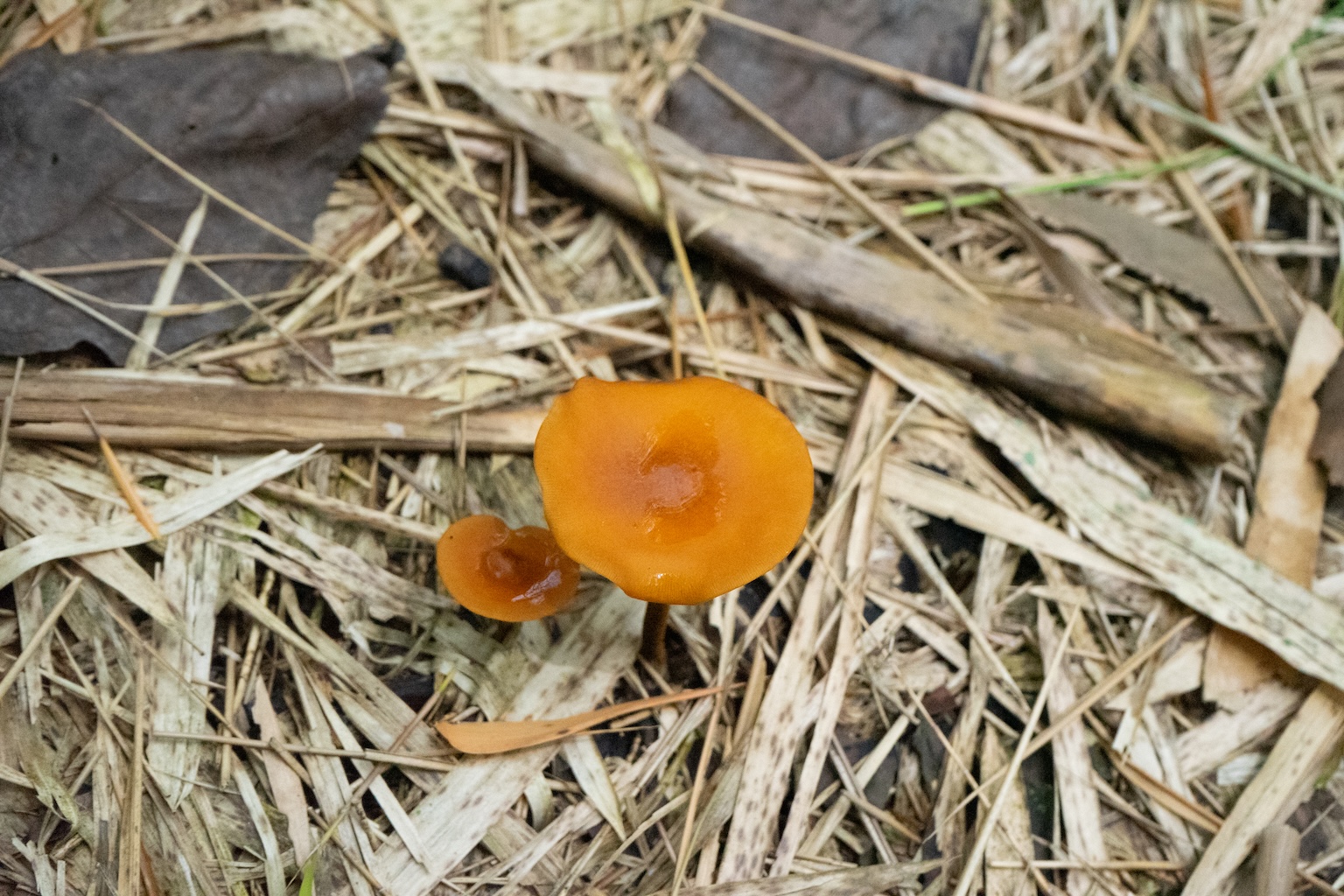
As his forest began to reach maturity, Paredes says he realized bamboo wasn’t just a crop — it was becoming a sanctuary for the native flora and fauna that had been pushed to the fringes of human settlements in the VRAEM. Today, his plantation supports a diverse, self-sustaining ecosystem of other plants, including orchids, wild coca, pacay trees (Inga feuilleei), medicinal plants such as chuchuhuasi (Maytenus macrocarpa), and various fungi.
“The bamboo has formed a layer of protection, like a blanket,” Paredes says. “It does not repel life , it attracts it. It has created a perfect microclimate.”
This is possible thanks to the passive nature of bamboo cultivation, according to Gilberto Domínguez Torrejón, a professor at the National Agrarian University La Molina who specializes in bamboo research.
After each harvest, bamboo sprouts new shoots from its roots with minimal replanting or chemical inputs. And without the need for constant intervention from farmers, the seed-rich droppings from birds and other animals help create a rich undergrowth that thrives in the bamboo’s shade.
The microclimate has, in turn, created a habitat for more than 50 black-capped squirrel monkeys (Saimiri boliviensis peruviensis) that find safety in the bamboo “forest,” feeding on the insect larvae that thrive in the stalks.
“Since we don’t hunt them or bother them, since we take care of them, the monkeys aren’t scared,” Paredes says. “They know that no one will hurt them here.” He says there are also bats, fireflies, and at least 18 types of birds, including large owls, that have made a permanent home in the forest.
PROVRAEM officials say that such environmental successes are as much a reason to invest in bamboo as its potential profitability. They point to bamboo’s ability to renew depleted soil, protect deforested banks and slopes from avalanches, potentially capture more carbon than native tree species, store water — helping regulate water cycles — and create habitat corridors for wildlife.
“In these areas where there was nothing, now there is bamboo — and the animals are returning,” Yupanqui Cerrón says.
Domínguez Torrejón says bamboo really can deliver on most of these goals. “Bamboo produces more biomass [than natural forest], and the mulch forming on the ground helps with humidity, storing water.” Even relatively small plots can have a positive impact on local plants and animals, he says. “In [the department of] Amazonas I saw monkeys on a plantation of just half a hectare!”
But he cautions that small bamboo groves, like Paredes’s, work only when they’re part of a larger ecosystem. “Probably [the monkeys] just come to eat and then go off to find other food,” he says. “So the habitat creates the conditions for a temporary refuge … but it has to be connected to the natural forest.”
There’s also the well-documented risk of nonnative bamboo species becoming invasive, forming dense monocultures that push out native flora and fauna. Of the two species of bamboo promoted by PROVRAEM, Guadua angustifolia is native , the other, Phyllostachys aurea, is native to China and poses a potential threat. “The plant is smart and will search for ways to expand,” Domínguez Torrejón says.
The PROVRAEM project is still in its early stages. Planting started in early 2023, so it will be a few more years before the bamboo reaches maturity. Only then will it be possible to assess whether the project can live up to its environmental objectives.
A unique case
Despite his success, Paredes is the first to point out bamboo’s limitations.
“So far, I’m the only person to plant hectares of bamboo. Others stick to five or 10 plants — they don’t grow more because it’s not in their interest,” he says, referring to the fact that coca, which yields four harvests per year, continues to be far more profitable than bamboo, which takes seven or eight years from planting to the first mature harvest.
“Many farmers say, ‘What am I supposed to do for a decade? What do I eat? I’ll be dead by then,’” Paredes says. “Why on earth would they plant bamboo?
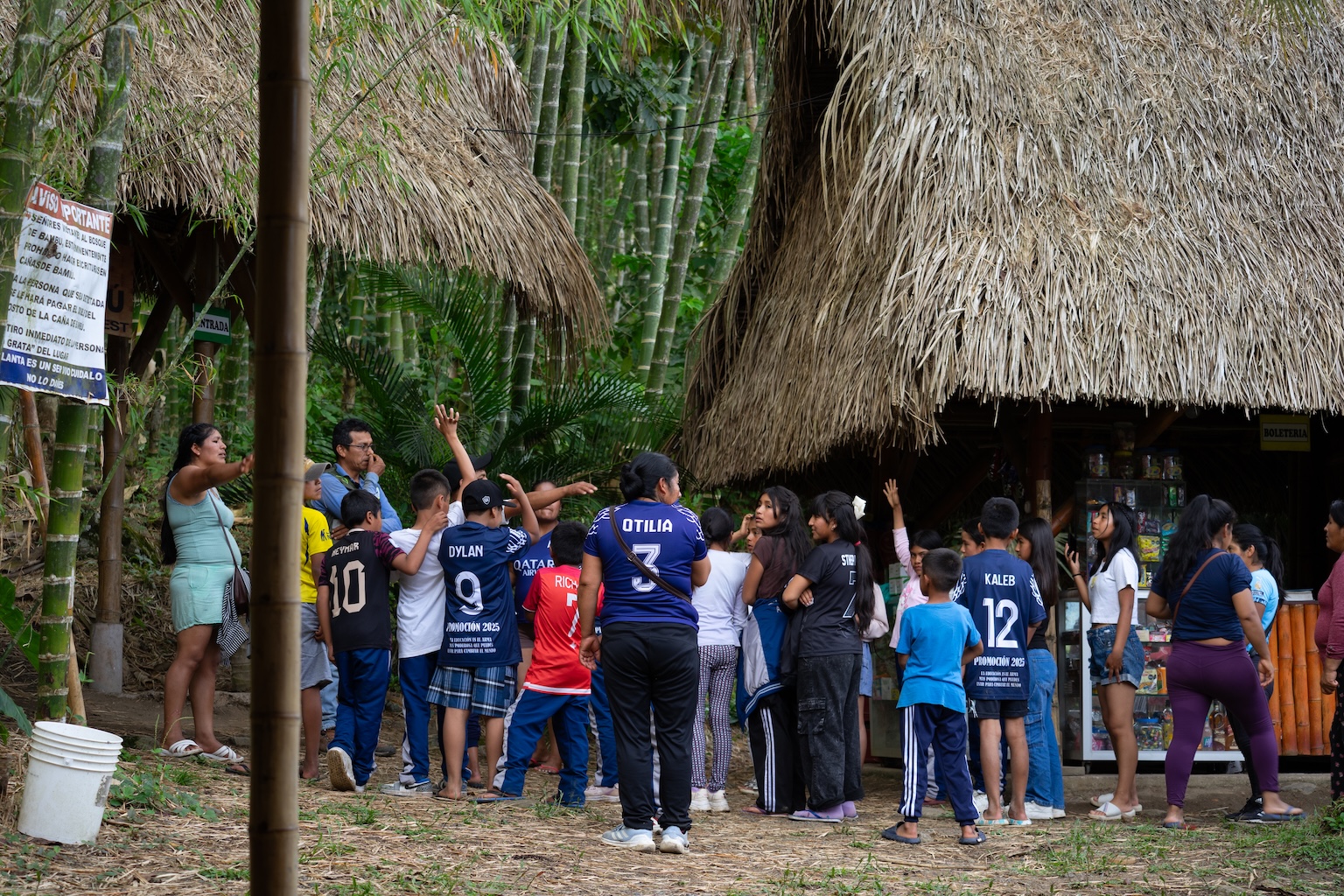
Aside from harvesting bamboo, Paredes earns a living from the tourists who come to see his bamboo forest. His ecotourism venture became so profitable that in 2017 he quit his day job.
Since then, he has attracted national media attention and around 10,000 guests in 2025. But this stream of income is also hard to replicate — especially in the VRAEM.
“You can’t expand that much,” Paredes says. “If there are 20 bamboo forests, obviously everyone will only go to one.”
The VRAEM’s permanent state of emergency also severely limits tourism.
That designation stems from the Peruvian state’s decades-long conflict with guerrilla groups. Although levels of violence have dropped since the peaks of the 1980s and ’90s, the government never lifted the state of emergency, citing the rogue remnant groups and large-scale cocaine production.
Though Paredes’s bamboo forest is one of the main tourist attractions here, of the thousands of people who visited it, only one in three came from outside the VRAEM, and only 14 were foreigners, according to the most recent granular data available.
Then there’s the fact that, if it were to become too successful, bamboo farming and tourism could undermine conservation gains, according to Domínguez Torrejón. Too many visitors can negatively affect the conservation efforts in a plantation like Paredes’s, he says: “It can scare away animals, especially birds.”
Commercially cultivated bamboo is still a crop, he adds. “The priority is producing bamboo, so naturally fewer tree species will be allowed to grow,” Domínguez Torrejón says.
Ultimately, he says, it would be a mistake to substitute bamboo for real jungle.
Banner image: More than 50 squirrel monkeys find security in Paredes’ bamboo forest. Image by Anastasia Austin.
Citations:
Bedoya Garland, E., Aramburú López de Romaña, C. E., & López de Romaña Pancorvo, A. M. (2023). El cultivo de la coca en el Huallaga y en el VRAE: Un enfoque comparativo sobre sistemas productivos y su impacto en los bosques (1978-2003). Anthropologica, 41(50), 139-166. doi:10.18800/anthropologica.202301.006
Rhodes, T., Ordoñez, L. S., Acero, C., Harris, M., Holland, A., & Gutiérrez Sanín, F. (2023). Caring for coca, living with chemicals: Towards ecological harm reduction. International Journal of Drug Policy, 120, 104179. doi:10.1016/j.drugpo.2023.104179
Troya Mera, F. A., & Xu, C. (2014). Plantation management and bamboo resource economics in China. Ciencia y Tecnología, 7(1), 1. doi:10.18779/cyt.v7i1.137
Dwivedi, A. K., Kumar, A., Baredar, P., & Prakash, O. (2019). Bamboo as a complementary crop to address climate change and livelihoods — Insights from India. Forest Policy and Economics, 102, 66-74. doi:10.1016/j.forpol.2019.02.007
Mishra, G, Giri, K., Panday, S., Kumar, R., & Bisht, N. S. (2014). Bamboo: Potential resource for eco-restoration of degraded lands. Journal of Biology and Earth Sciences, 4(2), B130-B136. Retrieved from https://www.researchgate.net/profile/Gaurav-Mishra-27/publication/309457014_Bamboo_Potential_resource_for_eco-restoration_of_degraded_lands/links/5c960fb092851cf0ae919a11/Bamboo-Potential-resource-for-eco-restoration-of-degraded-lands.pdf
Eryani, I. G., Jayantari, M. W., Priliandani, N. M., & Mustika, N. W. (2025). The relationship between climatic conditions and bamboo water potential in the Sandan Forest. The International Journal of Engineering and Science, 14(11), 40-47. Retrieved from https://www.theijes.com/papers/vol14-issue11/14114047.pdf
Kuok, K. K., Bin Bakri, M. K., Chan, C. P., Rahman, M. R., Namakka, M., Said, K. A., … Rahman, M. M. (2024). Merits of bamboo utilization in earth preservation, water, and wastewater treatment: A mini review. BioResources, 19(2), 3921-3944. doi:10.15376/biores.19.2.kuok
FEEDBACK: Use this form to send a message to the author of this post. If you want to post a public comment, you can do that at the bottom of the page.
