

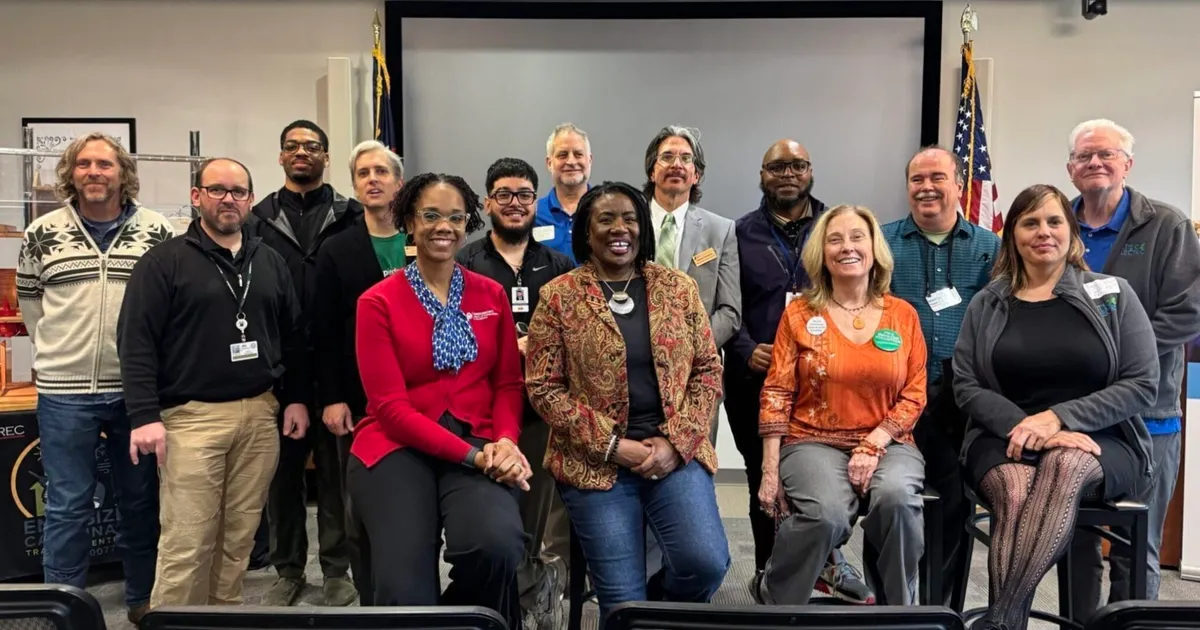
After Susan Lindsay got rooftop solar panels installed on her home in Greensboro, North Carolina, she wanted the low-income households she visited as a parent educator to be able to do the same — but without the expense.
“I realized how hard that would be for any of these families I was working with, but also how quickly it reduced my energy burden,” she said. “I started looking around for people trying to get clean energy into the hands of people who don’t make as much money.”
Soon, Lindsay found a coalition of groups working to solarize their communities. The basic concept has been around for nearly two decades: Organizers vet installers, negotiate prices, and recruit as many residents as possible to go solar during a limited sign-up window. The more participants, the lower the cost, thanks to the power of bulk purchasing.
As part of Solarize the Triad — a campaign that covers the north-central region of North Carolina, anchored by the cities of Greensboro, Winston-Salem, and High Point — Lindsay raised money and in-kind donations to help low- and moderate-income families go solar. Plus, she said, “I introduced my neighbors to all the ways they could get solar panels,” and many did. “I feel like I multiplied my contribution.”
Indeed, in a campaign that ran from July 2024 to the following May, Solarize the Triad led to three houses of worship and over 70 households installing solar. Now, Lindsay is among those kicking off a similar effort called Electrify the Triad, which officially launched last Saturday. The latest initiative focuses on electrification: switching out gas heat, stoves, and hot water appliances for electric versions , installing EV chargers , and increasing efficiency — all steps to reduce fossil-fuel combustion, improve indoor quality, and lower household bills.
Lindsay plans to participate in the program, too — not just recruit for it. “I’m doing this because I really want to be more energy-efficient and to help other people be more energy-efficient,” she said. “It’s not enough for me just to make my house work. We need to do this collectively.”
When it comes to electrification, “information is power”
Backed by many of the same nonprofit partners that made Solarize the Triad a success, including the Piedmont Environmental Alliance and the North Carolina League of Conservation Voters Foundation, the electrification initiative includes contractors ready to install electric heat pumps, hook up induction stoves, upgrade electrical boxes, and make other energy-saving home improvements.
Undergirding Electrify the Triad is Bright Spaces, a Georgia-based firm that has supported over 20 Solarize campaigns around the country by bringing organizers, installers, and participants together through its online platform. Electrify the Triad is its third electrification effort , the others are in the Atlanta suburb of Decatur and Buncombe County, home to Asheville, where the company also has an office.
Of course, not all lessons from Solarize the Triad — a discrete project focused on one technology — will translate to the electrification campaign, which has no set end date. The key benefit of Electrify, said Ken Haldin, development partner for Bright Spaces, is that organizers identify contractors and help participants navigate how to cut costs and reduce their carbon footprint when they’re ready.
“With solar, you either have it or you don’t,” Haldin said. The options under the electrification umbrella, by contrast, are myriad, and a homeowner could swap out old, inefficient appliances with electric versions over time, rather than all at once. “It’s less binary than solar is. It’s much more a matter of choice and timing.”