

- According to Brazil’s Ministry of Health data obtained by Mongabay, of the 4,134 Indigenous villages in Brazil’s North Region, only 1,934 — about 47% — have proper infrastructure to supply drinking water to the population.
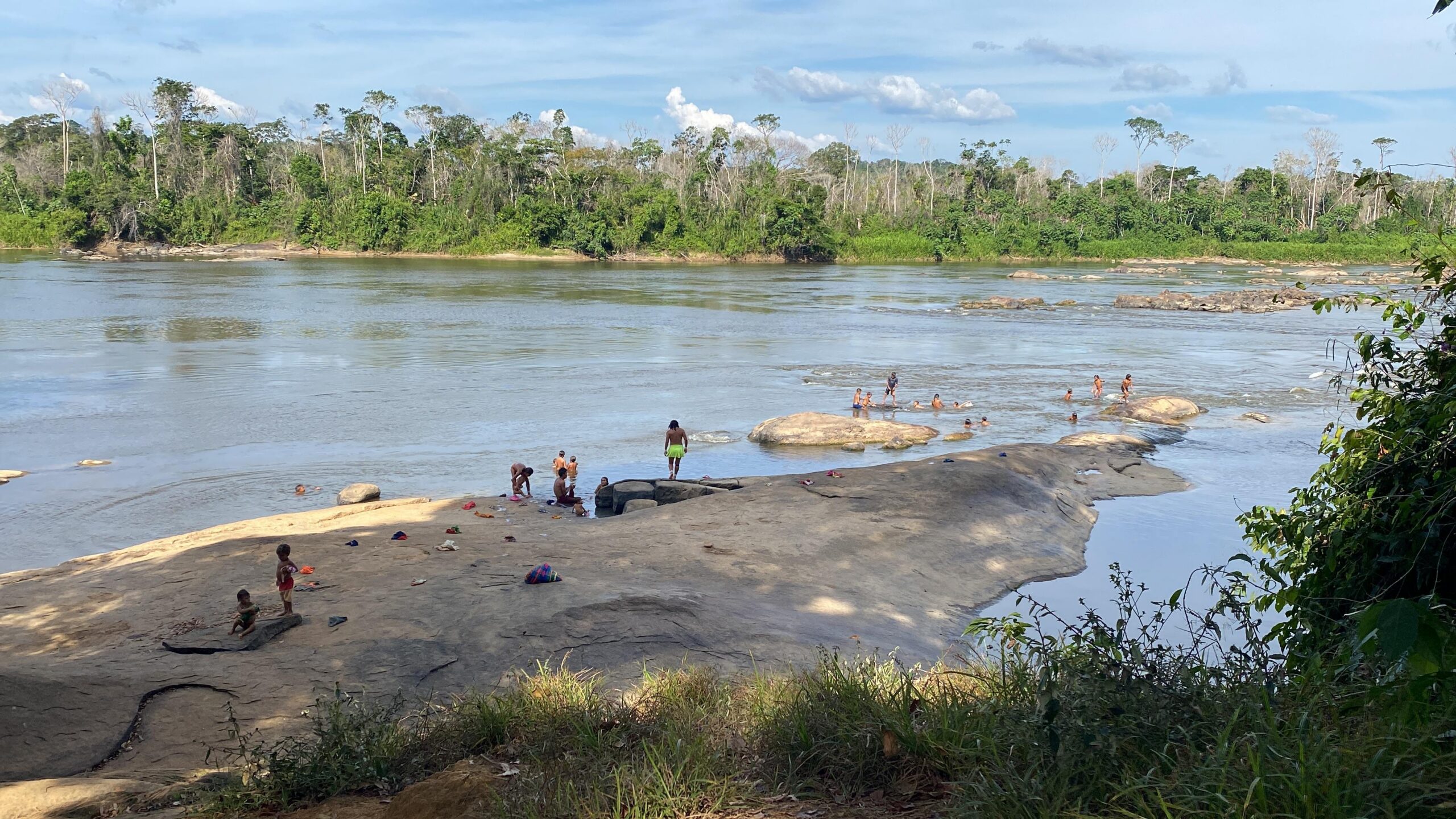
- To avoid scarcity, many communities resort to improvised solutions, using buckets and pipes to fill their reservoirs with water from rivers and waterfalls. In times of drought, shallow wells are also dug on riverbanks.
- Their emergency strategy against thirst, however, increases a series of health risks, forcing entire villages to consume ferrous, dirty, and contaminated water — all vectors for infectious diseases.
- In some areas of the North, in addition to chemical purification solutions such as Salta-Z, nanotechnology-based collective filters have helped communities cope with the water crisis — and, according to their complaints, with government neglect.
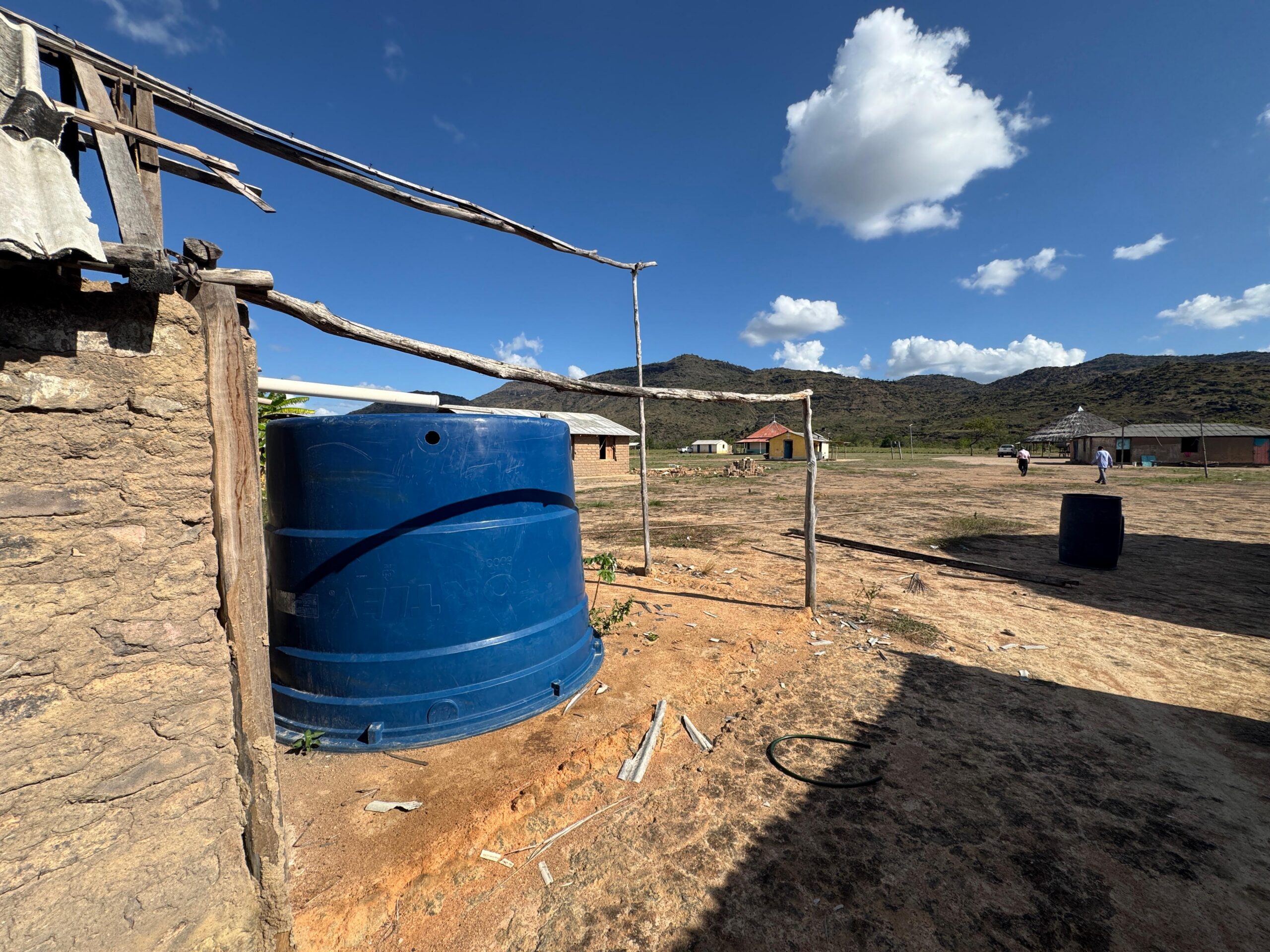
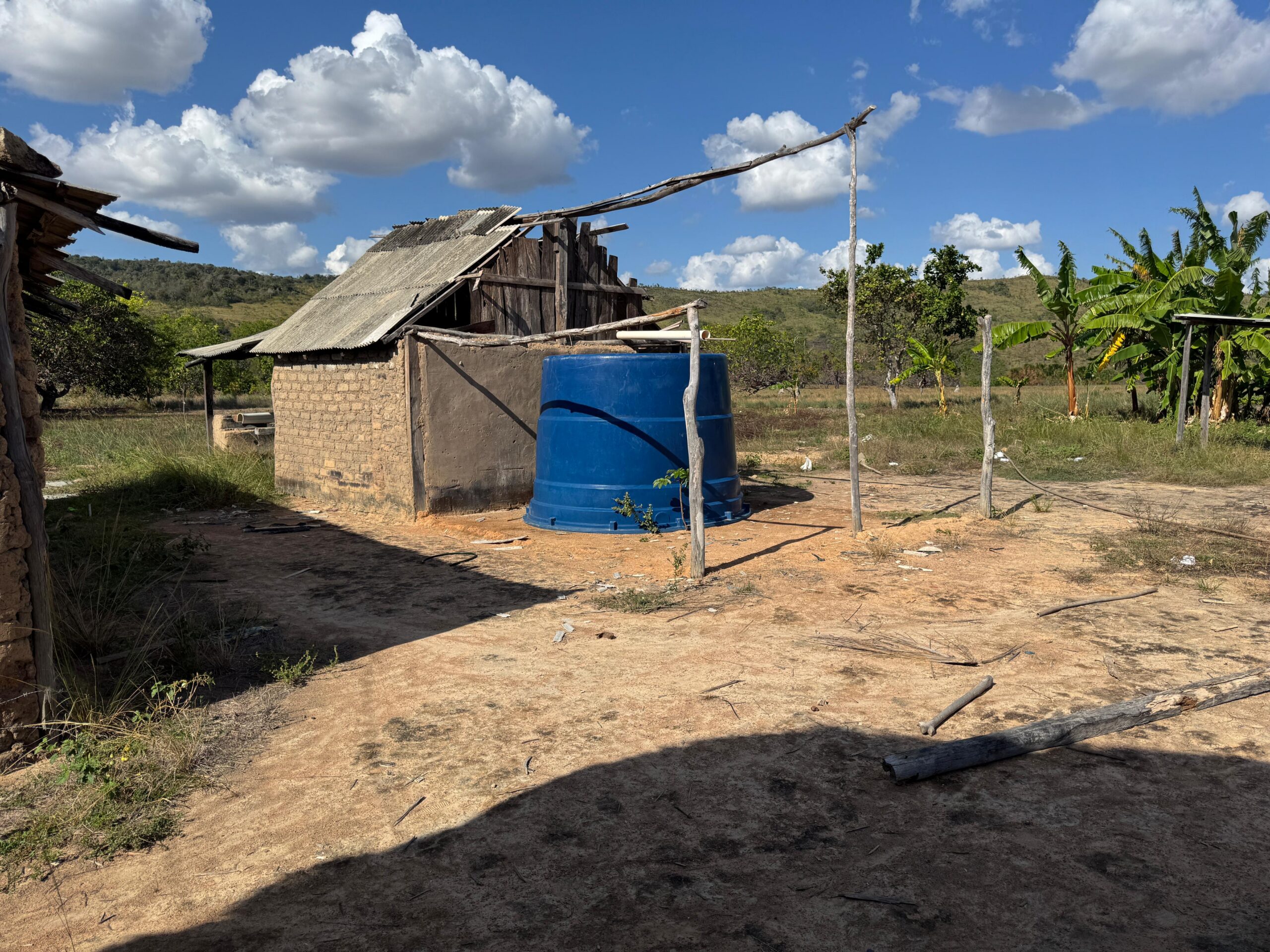
RAPOSA SERRA DO SOL, Brazil — Turned upside down on the dirt floor, next to an artisanal flour mill, a huge water tank catches the eye of those passing through the Bem Viver community, in the Raposa Serra do Sol Indigenous Territory, located 300 kilometers (186 miles) from Roraima’s state capital Boa Vista.
Under the sun and rain, in the open air, the dusty object conveys an urgent message: Instead of storing drinking water for the Bem Viver (an Indigenous concept of ‘living well’ lifestyle prevalent in Latin America) village population, the 5,000-liter (1,320-gallon) container has remained unused for almost two years.
The reservoir was provided to the community by the East Roraima Special Indigenous Sanitation District (DSEI in Portuguese), the managing unit of the federal government’s Indigenous Health Care Subsystem (SASISUS). It has not received a single drop of water — because it has not even been installed yet.
Unable to use it, local residents were forced to devise an alternative plan: The mission consists of collecting water from a nearby waterfall connected to the village through an improvised network of pipes approximately 700 meters (2,296 feet) long.
While the connection provides some water, it is consumed without proper treatment. At the same time, the thin and fragile pipes suffer from daily obstructions, almost always caused by the accumulation of leaves and debris.
According to Diassis Gabriel de Souza, chief of the Macuxi Indigenous community, the government also promised residents at Bem Viver that a well would be drilled and a ‘water castle’ — as the elevated reservoir structure is called — would be built. But this never happened. “They just left the water tank there, idle,” de Souza told Mongabay.
The cistern itself took long to arrive. With no time to lose, the residents traveled to the São Mateus community, 38 km (23.6 mi) away, in search of a solution to the impasse. The entire mission involved freight costs of 2,000 reais (around $390). “We told them that we’d already brought the [water] tank and that they could come to finish the job. That was in 2023. They said they’d come back in August [of that year], but they never did,” complained the Indigenous leader.
A resident of the village, Eldina Gabriel Macuxi complained of frequent health problems caused by the lack of treated drinking water, especially for the children. According to her, the situation gets worse at the beginning of the wet season — from April to August — when the water from springs, rivers and streams becomes a little dirtier.
“In winter, there is always an increase [in the number of cases] of diarrhea, both in children and adults. The water comes to us dirty because it runs off from the mountains with filth from animals, plants and fires. We try to strain it, but it’s not enough,” she said.
Their dependence on surface water — that which is not obtained from wells — also poses other risks for those who use and consume it, according to Eldina’s husband Jacir Macuxi. A former coordinator of the Roraima Indigenous Council (CIR), he warned that the expansion of illegal mining and pesticide application on plantations expose many water sources to chemicals.
“In some places, mercury has already contaminated the rivers. The fish ingest it, then we fish them and eat them without knowing it. If the water comes from the bottom, we believe it is cleaner. The river can be used for other activities,” he said, mentioning farming. “But we need safe water for drinking.”
Mongabay questioned the Ministry of Health about the situation at Bem Viver. In a statement at the end of January, citing information from the East Roraima DSEI, they said that the system was established in the community “on an emergency basis” and that the “final installation depends on the arrival of complementary materials, which are already being purchased.”
The ministry added that “provisional measures are in place to ensure access to safe water while the system is being finished.” However, the document does not explain the delay in purchasing equipment or the unused water tank.
A region-wide problem
In its official response to Mongabay, the Ministry of Health stated that approximately 63% of the Indigenous population in Brazil’s North Region (248,700 people) “have access to water supply systems.” The government also said that the number of Indigenous villages covered increased by 20.6% from 2022 to 2023, going from 1,593 to 1,934 communities.
Nevertheless, the data may hide an uncomfortable reality: Considering the total number of villages registered in Brazil’s North (4,134), the 1,934 that have water supply structures account for only 47%, that is, less than half.
Throughout the state of Roraima, 345 out of 704 villages lack adequate access to water (49%), while in Pará state, they are 516 out of 843 (61.2%). In Amazonas state, 582 out of 1,883 villages (30.9%) lack drinking water. The ministry confirmed the figures to Mongabay during our investigation in 2025. However, the agency said by email that data by state “are not accurate, since extraction is conducted by the DSEI, which covers more than one state.”
Even when water arrives, there are many challenges. Some villages, for example, have to use the Zeolite-based Alternative Water Treatment Solution (Salta-Z), a low-cost technology created to provide safe drinking water to Indigenous and Quilombola populations.
Developed by Brazil’s National Health Foundation (FUNASA), the solution is essential for communities where raw water has high turbidity levels and high concentration of toxic elements such as iron and manganese.
In other places, the water does reach the tanks but is not properly distributed to residents. In these cases, families use gallons, buckets and other containers to move what they need to survive. Everything is even worse during periods of extreme drought, such as the one that devastated the Amazon in recent years.
Ligia da Paz is a researcher and sanitation engineer at . She said that the drama experienced in the North Region is the result of a “historical problem” of the Brazilian State.
In her opinion, national sanitation policies “were devised from a sanitarian and hygienist logic imported from Eurocentric models, which are focused on controlling water and territories rather than guaranteeing rights or engaging in dialogue with Amazonian ecosystems.”
“It’s a model designed to channel rivers, build large infrastructure projects, and concentrate investments, but it doesn’t respond to the climate and territorial reality of the Amazon,” she said.
The water does arrive, but it’s rusty
Kátia Barbosa, a Munduruku leader, is a teacher at the Ester Caldeira Cardoso Indigenous School in Kwatá village, in the municipality of Borba, 150 km (93 mi) from Amazonas’s state capital Manaus. She pointed out another problem: They always have to pay attention to the color and smell of the water they find.
According to her, several wells were dug where she lives and works, but the water often has high concentration of rust, which prevents its immediate consumption. The problem may extend throughout the Coatá-Laranjal Indigenous Territory, where her village is located, along with 37 other communities.
“They’ve tried digging 100 meters [328 ft] deep and they didn’t find good quality water,” she said. In her Indigenous land, Salta-Z has also become essential to guarantee a supply of purified water to the 4,171 residents.
The water that receives the solution is collected directly from the rivers, stored in water tanks, and then purified. What comes out of this process is used by Indigenous people for drinking, cooking and brushing their teeth. But it is not always possible to guarantee the basics: During periods of drought, the level of the rivers drops, which makes continuous supply impossible.
When crises hit, village women dig 4-5-meter-deep (13-16.4-feet-deep) wells on the banks of the river, overcoming the limitations imposed by the climate. This emergency strategy, however, does not prevent residual problems: According to Barbosa, drought periods come with “contamination outbreaks.”
The task almost always falls on the Indigenous women, who are responsible for household chores and flour production. “When there is no water in the cacimba — a well dug in a floodplain or riverbank — they resort to springs to soften the cassava. When the wells get dirty, they are the ones who clean them. In our culture, women are responsible for dealing with water,” she said.
According to her, things could be different. “We send photos [to the authorities], we make demands, but the water won’t come. Even if the village has an artesian well, it dries up. We are rarely heard.”
This concern is confirmed by Alexandre Pessoa, a sanitation engineer and head of the water and sanitation project at Oswaldo Cruz Foundation (Fiocruz), a scientific institution for biological research and development. According to him, government agencies such as the Indigenous Health Secretariat (SESAI), which operates under the Ministry of Health, must be strengthened to address the problem.
“Brazil is the size of a continent, with dozens of distinct ethnic groups and Indigenous territories. Guaranteeing sanitation, territory, education and health means guaranteeing their right to life,” Pessoa said.
Infections are always lurking
The sanitation drama is the same in other northern states. In the municipality of Barreirinha, Amazonas, members of the Sateré-Mawé Indigenous people report living in constant fear of getting usually preventable diseases such as infections, vomiting and diarrhea.
There, neglect also seems pathological.
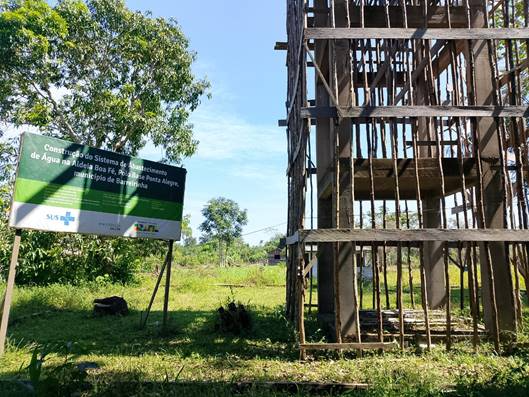
Silas Sateré-Mawé, a resident of the village, said that his community has been waiting for water supply works to be finished for at least two years. “The construction of the artesian well began on April 28, 2023. At the village, we spent a month helping with the drilling of the wells. And then it was left unfinished. It was a dream of the Sateré-Mawé that was just thrown I don’t know where,” he said.
Silas’s village is part of the Andirá-Marau Indigenous Territory, with a population of more than 14,000. The works in the territory are the responsibility of the Parintins DSEI, which blamed “any stoppages” on “contractual non-compliance by companies hired to execute it. They say that all applicable administrative measures have been enforced, including contract termination, and budgetary provision is guaranteed for the completion and expansion of the systems.”
The DSEI also said that “some works have been already delivered in the territory while other work fronts are underway, and a robust set of investments is planned for 2026, totaling more than 20 million reais [around $3.9 million], in addition to keeping emergency actions to mitigate health risks.”
Experts challenge this information. Ligia da Paz argued that construction delays are part of a “systemic” crisis. “When there is no proper planning, systems are poorly designed , without governance, there is no continuity , and without resources, projects simply stop,” she said.
She also pointed out the role played by the global climate crisis and warned of reduced aquifer recharge and altered rainfall patterns. When these events take place simultaneously, they compromise both the quantity and quality of the water available to Indigenous villages.
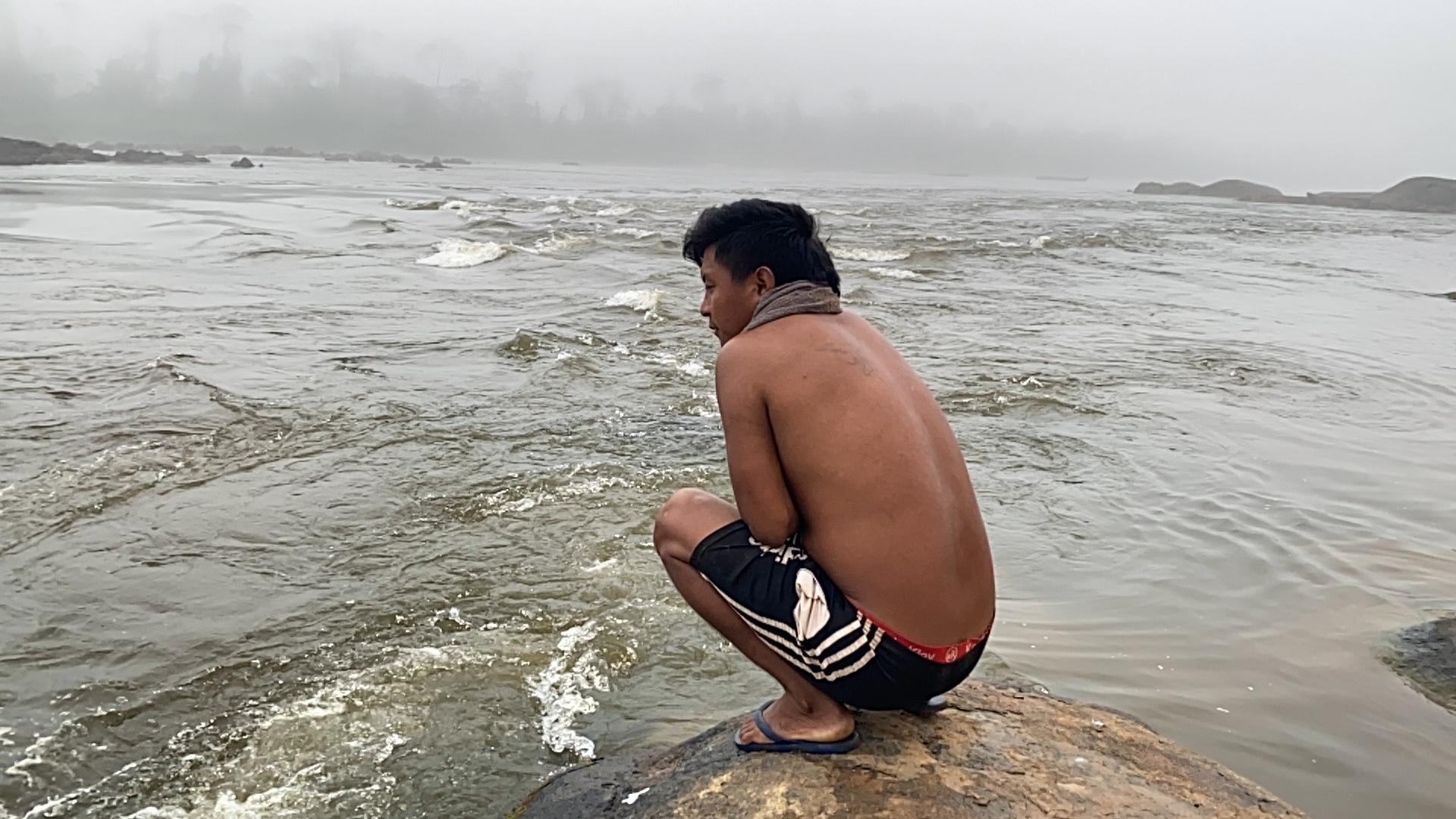
In early 2023, the humanitarian crisis in the Yanomami Indigenous Territory, a topic featured in several Mongabay articles, clearly involved the advance of illegal mining. Since then, members of the community have become just another Indigenous group fighting for decent access to treated water, and whose existence is threatened by mineral extraction.
Fernando Palimitheli, chief of the Hokomai-ú Indigenous community in Roraima’s Palimiú region, told Mongabay that he still has to carry water in buckets when he leaves the stream, since no “water tank or tap” is available yet.
“There where the giant anteater [lives], up there, at the headwaters, it bathes, it craps, and [everything] comes down. Another animal dies and it comes down from upstream , it smells rotten. The children get diarrhea and stomach aches,” he said.
The Ministry of Indigenous Peoples was questioned by Mongabay about Palimitheli’s account, but no official statement had been sent by the time this report was finished.
Future technological solutions
Considering drought periods, unfinished works and lack of guarantees from the government, nanotechnology becomes an ally of many traditional communities.
In 185 communities located in the municipalities of Santarém, Alenquer, Óbidos, Aveiro, Oriximiná, Jacareacanga and Juruti, in western Pará, as well as Nhamundá, in Amazonas, the water that Indigenous and Quilombola groups consume from streams, ponds and other reservoirs now has new filters that promise to contain more than 99% of impurities.
The technology was recognized by the Department of Health and Environment Surveillance (SVSA) on technical note 68/2024. The agency observes that “such devices involve the use of a treatment technique with microfiltration membranes and that this process is highly efficient for removing suspended particles [turbidity] and pathogenic agents whose size is greater than the pores of the membranes.”
In another part of the document, the department states that “the use [of the filter] tends to contribute significantly to improve health safety for the population that has no access to treated water.” After filtration, in a step prior to human consumption, sodium hypochlorite — a powerful disinfectant and oxidizing agent — also has to be added to the treated liquid to complete the process.
The technology was adopted in 2024, during the extreme drought that hit several parts of the Amazon. At the time, the project relied on donations made to a fundraising campaign created by the NGO Saúde & Alegria, which has been working since 1987 with community and sustainable development in western Pará.
A student fills a glass with water treated by microfiltration at a riverine school in the rural area of Santarém, Pará. Image courtesy of Saúde & Alegria.
The collective filters are installed in schools, Basic Health Units (UBS, primary healthcare facilities of the public health system) and community facilities in order to supply domestic needs. More than 10,000 people are expected to benefit from the system.
“The impact [of the filter] on public health is immediate, with a significant reduction in the incidence of diarrheal diseases, hepatitis A and intestinal parasitosis — the main causes of child morbidity and mortality among these traditional populations,” said the NGO’s community infrastructure manager Rodrigo Souza.
According to him, the solution should be replicated as a public policy. He stressed that, in Amazonian regions, the problem is often not lack of water, but rather water that can be drunk. “Conventional artesian wells don’t always solve the problem,” he said.
Pessoa, from Fiocruz, agreed that improvised wells cannot be treated as a sole solution. “Faced with water insecurity, complementary solutions become increasingly necessary.”
Edited by: Lucas Berti
Banner image: Unused water tank at the Bem Viver community in the Raposa Serra do Sol Indigenous Territory, Roraima. Image by Felipe Medeiros.
