

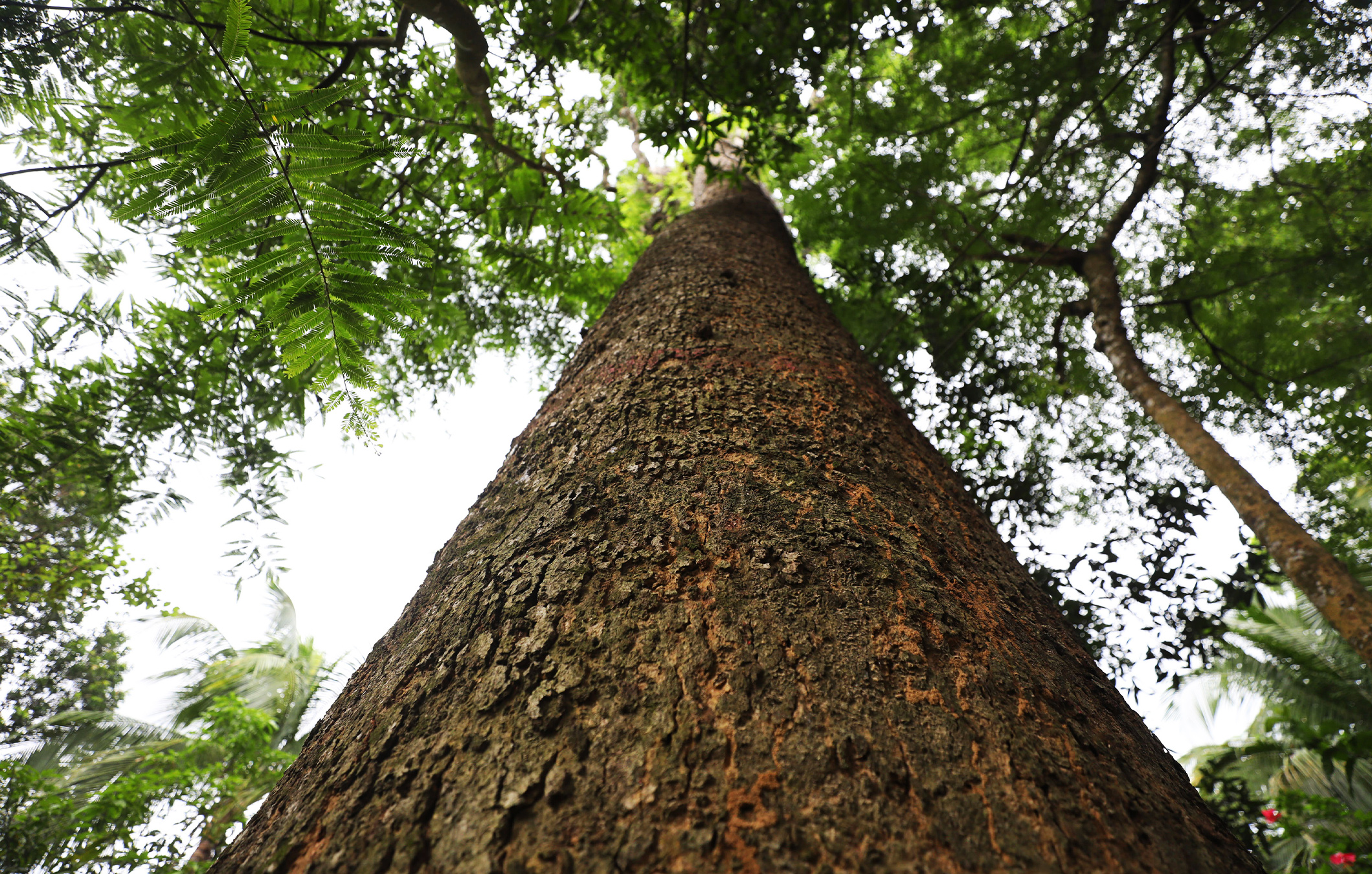
- Conservation of the endangered boilam tree (Anisoptera scaphula) — Bangladesh’s tallest tree species — has reached a milestone after a 34-year-old man planted saplings across all the districts of the country.
- A Bangladeshi forestry professor’s dedicated work offers fresh hope for science-based conservation of the rare species.
- With no established conservation approach in Southeast Asia, where the species is also endangered, the Bangladeshi model could serve as a replicable solution.
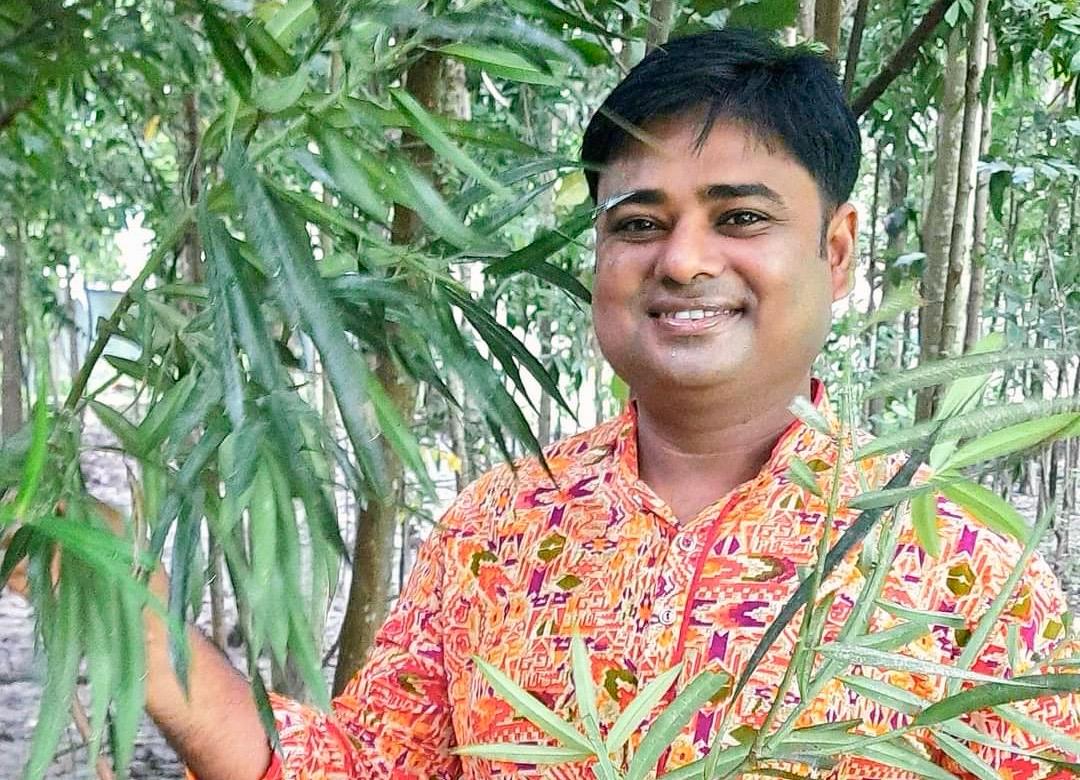
On Jan. 23, 2026, Mahbubul Islam Polash, a 34-year-old man from Bangladesh’s northern district of Sirajganj, traveled to Teknaf area in the southeastern coastal district of Cox’s Bazar, around 600 kilometers (373 miles) south of his hometown. Here, he planted a sapling of Anisoptera scaphula, a dipterocarp tree commonly known as boilam in Bangladesh.
That day marked the 64th planting of the endangered tree species, completing the plantation campaign in all the districts of the country. The campaign was launched on June 5, 2024, coinciding with World Environment Day, in the northwestern Rajshahi district.
When Polash learned that the towering tree species was on the verge of extinction and birds like kites and vultures were losing nesting habitats, he pinned his focus on planting boilams.
“Even if it was just one species, I wanted to spread it countrywide,” Polash tells Mongabay.
In 2019, he says, he planned to collect its seeds or saplings from the Chittagong Hill Tracts (CHT) and distribute them across the country. But his initial attempts to germinate boilam seeds failed.
Undeterred he continued to try and, in 2023, he succeeded in the germination of 74 seeds from the 2,000 sourced from mother trees in the hilly Bandarban and Khagrachhari districts. The saplings were nurtured on a piece of land adjacent to Polash’s home in Sirajganj for a year until they reached a height of about 30-45 centimeters (12-18 inches).
Finally, the boilam saplings were planted in 64 districts of Bangladesh. Polash spent 597 days and self-financed around 246,000 takas (about $2,000) to complete this remarkable campaign.
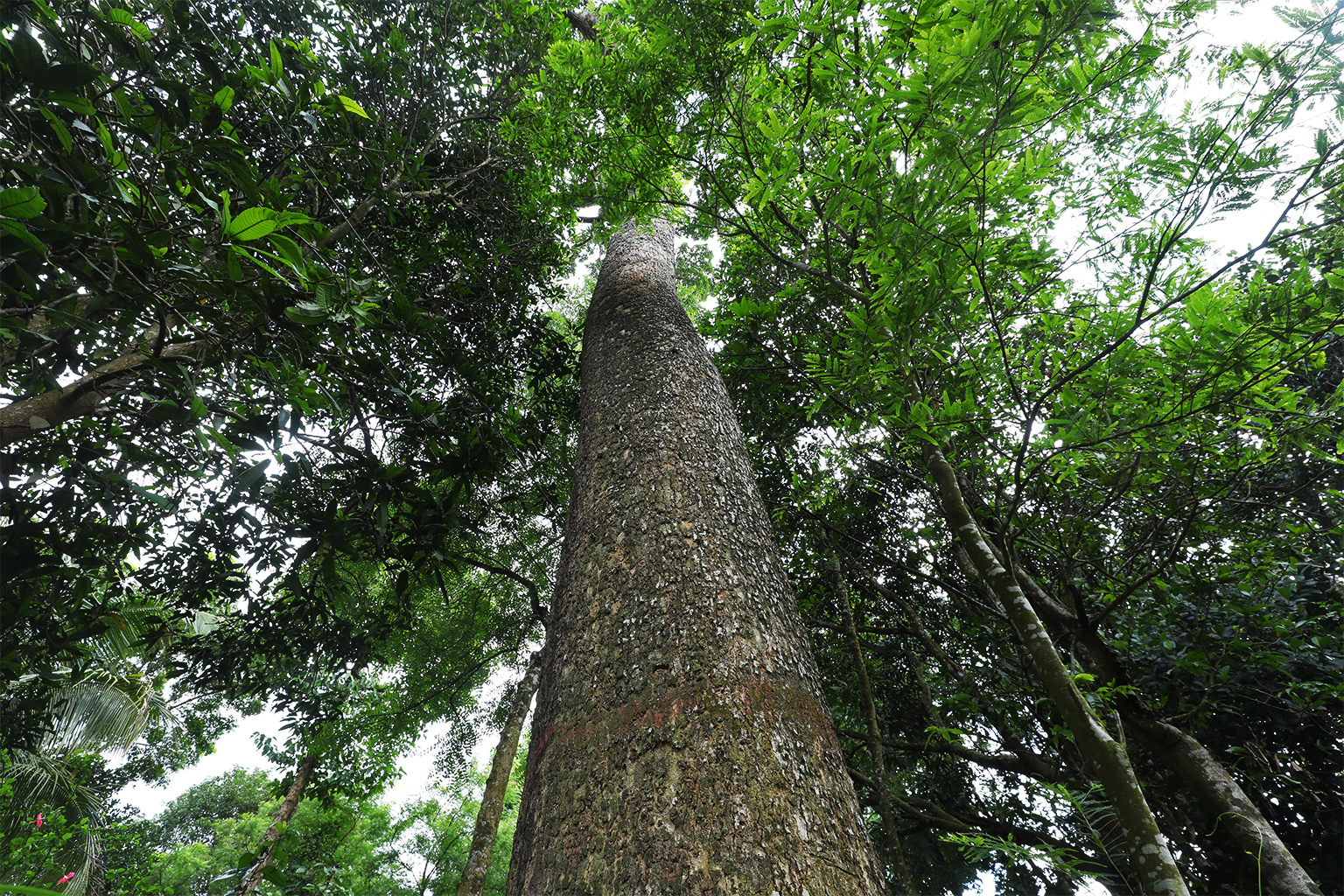
A. scaphula is a large perennial tree species, reaching heights between 30-45 meters (98-148 feet). It grows in semi-evergreen and evergreen forests on undulating land and the lower parts of valleys and can tolerate high humidities.
This particular dipterocarp species is considered a flagship tree in Bangladesh as it hosts large birds for nesting and many orchid species. Besides, its timber is hard, rigid and durable.
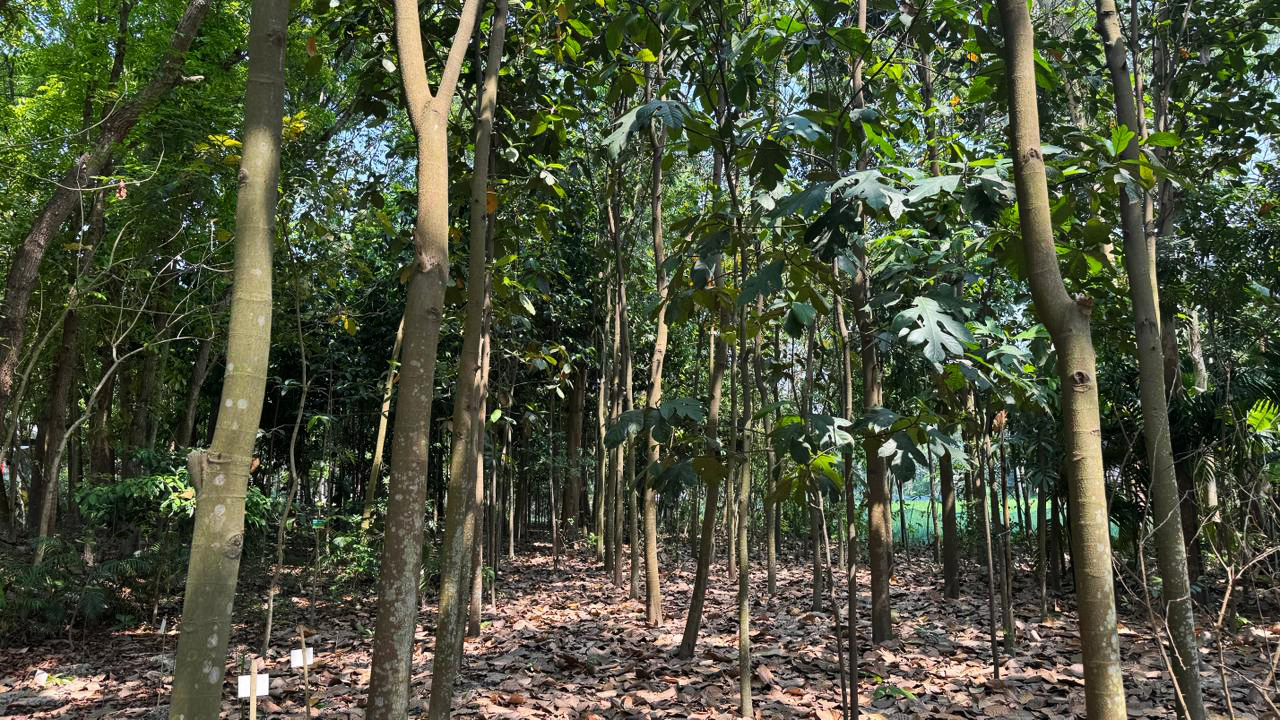
Citing deforestation and over-exploitation for timber as major threats, the Bangladesh National Herbarium (BNH), a research organization and museum under the Ministry of Environment, Forest and Climate Change, declared A. scaphula as one of the 446 threatened plants in the country.
BNH’s principal scientific officer, Sarder Nasir Uddin, says that the conservation of the endangered boilam is important on ethical grounds, as every species has the right to survive.
“Moreover, boilam plays a vital role in shaping the hilly forests. Also, it has high timber value,” he adds.
Vital contributions by botanists
Boilam typically occurs in small patches in the forested areas of the hilly Chattogram district, the CHT and Cox’s Bazar.
However, Polash says he has found evidence that boilam could grow in the plains as well.
Applying local knowledge, he has chosen the plantation sites where jackfruit trees — highly sensitive to salinity and waterlogging — survive.
Back in 1994, a couple of years after Polash’s birth, a professor at the Institute of Forestry and Environmental Sciences (IFES) under Chittagong University, M. Kamaluddin, warned his students that Boilam would go extinct.
Eventually, Kamaluddin collected boilam seeds from Chattogram’s Hazarikhil area (now a wildlife sanctuary), germinated them and planted saplings in the institute’s premises, planning for the species’ last resort to survive in the country.
“He was the one who first took initiatives for conserving the boilam and two other species,” says Md Aktar Hossain, a professor at the same institute, who accompanied Kamaluddin through the whole process.
Kamaluddin died in an accident in China in 2005. Three of the boilam trees he planted at IFES campus have survived, and one of them fruits once a year.
In 2011, after completion of higher degrees at a foreign university, Aktar resumed the conservation of boilam that Kamaluddin pioneered. He conducted a nationwide survey to identify where the trees still existed. Eventually he found one flowering tree in Khalilpara of Ukhiya subdistrict, Cox’s Bazar.
In response to his call, the then forest officer of the area, Abdur Rahman, sent him a sack of boilam seeds. Aktar carefully experimented with different propagation methods with these seeds. He also focused on raising saplings.
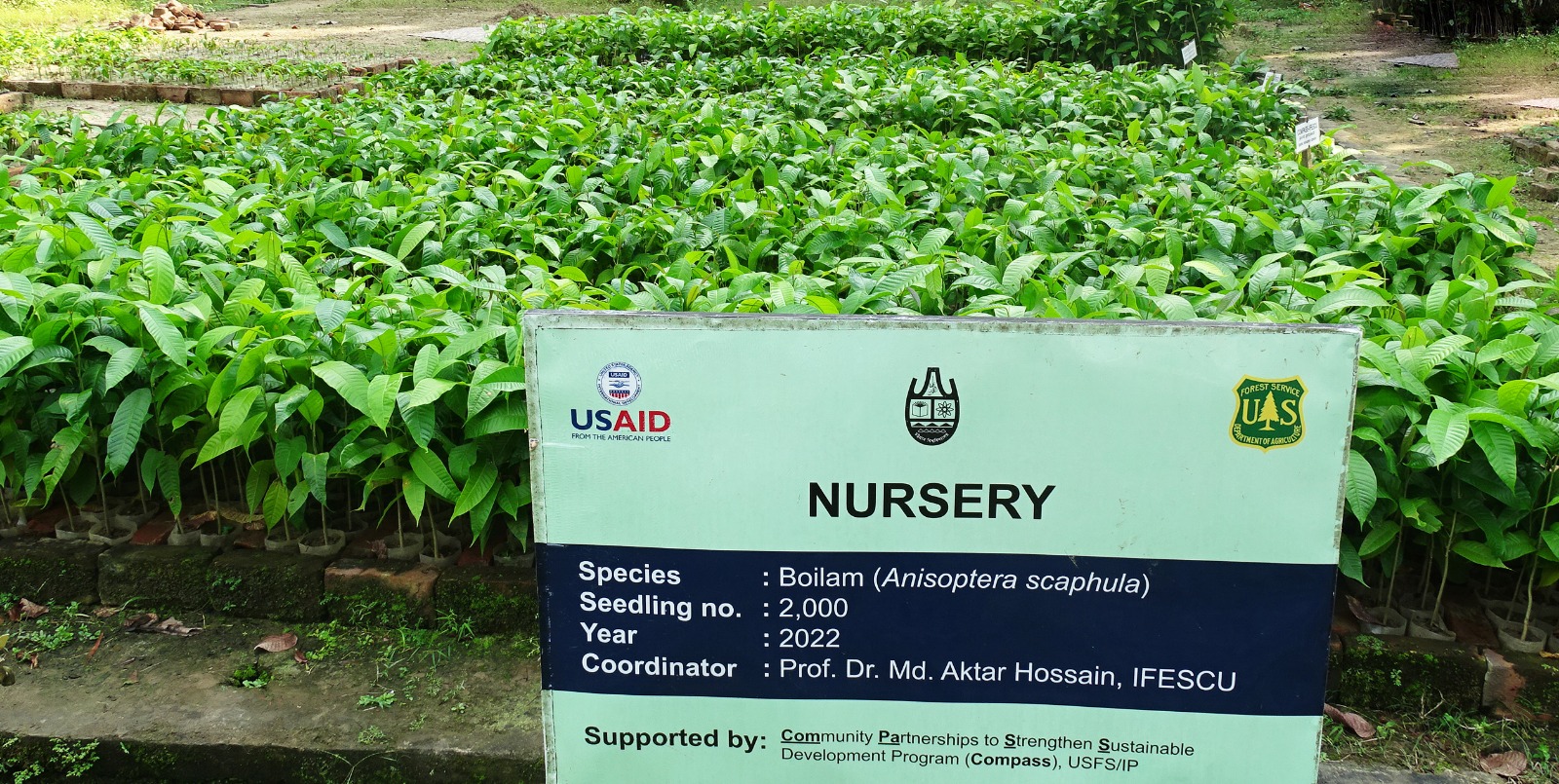
Over time, he produced several thousand boilam saplings at the IFES nursery, which is named after Kamaluddin.
He personally distributed the saplings across Sylhet, Moulvibazar, Habiganj, Cumilla, the CHT and Cox’s Bazar, the areas with sandy loam and hilly-terrain soils that suit boilam’s growth.
Bangladesh’s Forest Department, the U.S. Department of Agriculture Forest Service, Arannayk Foundation (a reforestation NGO based in Dhaka) and some of Aktar’s friends supported his conservation campaign, whether in the form of funding the germplasm, distribution or planting.
Aktar appreciates Polash from Sirajganj, saying, “He is continuing the work I started.”
“You can aim to distribute and plant it across the plains and the hills,” he says, “but in reality, it won’t grow everywhere.”
The science of germination
Learning about Polash’s experience in getting 74 saplings from trying to germinate 2,000 seeds, Aktar says that it had happened because the boilam seeds have very low viability.
After being grounded, the seeds must be sowed within two to three days. After seven days, the seeds no longer germinate, he says.
A 2024 study, co-authored by Aktar, finds one germination method — soaking the seeds in water for 12 hours followed by 12 hours of air drying — shows the highest success rate (84.2%) and fastest germination.
Aktar suggests this specific technique for sowing the two-winged boilam seeds: “The wings should be removed before sowing inversely, with the wing side facing downward and the tip facing upward.”
According to him, the roots, which emerge from the wing side, will grow upward into the air before bending down into the soil, while the shoot from the tip will twist before emerging if a seed is sown incorrectly.
“When a seed is planted correctly, the root grows directly downwards and the shoot upwards. This will allow the saplings to grow straight without stress,” Aktar says.
His separate study, published in 2014, observed the highest germination percentage in dewinged boilam seeds sown in inverted orientation in a half-buried position.
The replicable Bangladeshi model
According to the IUCN, the global authority for biodiversity conservation, A. scaphula is native to Bangladesh, Laos, Peninsular Malaysia, Myanmar and Thailand, where it’s known by different names.
Warning that the current population of the tree is decreasing, the IUCN assessed it as an endangered species in 2017. Although the status of the species is concerning, there is a poor show of its conservation in the Southeast Asian countries.
“I don’t think there has been any conservation action taken towards this threatened species [in Southeast Asia],” biodiversity consultant Leng Guan Saw, a former division director at the Forest Research Institute Malaysia (FRIM), tells Mongabay in an email.
As a light at the end of the tunnel, initiatives by some Bangladeshi tree lovers could be considered a replicable model.
Can Bangladesh be considered a primary source of A. scaphula? Aktar replies, “I would say yes.”
According to him, some mature boilam trees in Bangladesh are now producing seeds.
Earlier, the ‘exclusive’ seeds were sourced from a particular hilly region, but now, the Chittagong University campus alone has around 2,000 Boilam trees, both mature and juvenile.
“So, we now have the potential to distribute this species globally,” Aktar says.
Banner image: Of the 500 timber species growing in Bangladesh, boilam is one of the tallest. Image by Mohammad Minhaj Uddin.
Planters stranded amid degraded forests as Bangladesh agarwood scheme falters
Citations:
Hoque Subah, A., Hossain, M. A., Chowdhury, M. I. H., Cynthia, S. A., & Rakib, M. H. (2024). Effects of pre-sowing treatments on seed germination and seedling growth attributes of the endangered (Anisoptera scaphula Roxb.) species. Journal of Agriculture Sustainability and Environment, 3(2), 36–50. doi:10.56556/jase.v3i2.945
Hossain, M., Ferdous, J., Rahman, M., Azad, M. A., Azad, K., Aini, N., Shukor, A. B., Hossain, M., Ab Shukor, N., Ferdous, J., Azad, M., & Rahman, B. (2014). Towards the propagation of a critically endangered tree species Anisoptera scaphula. Dendrobiology, 71, 137–148. doi:10.12657/denbio.071.014
Feedback: Use this form to send a message to the author of this post. If you want to post a public comment, you can do that at the bottom of the page.
