

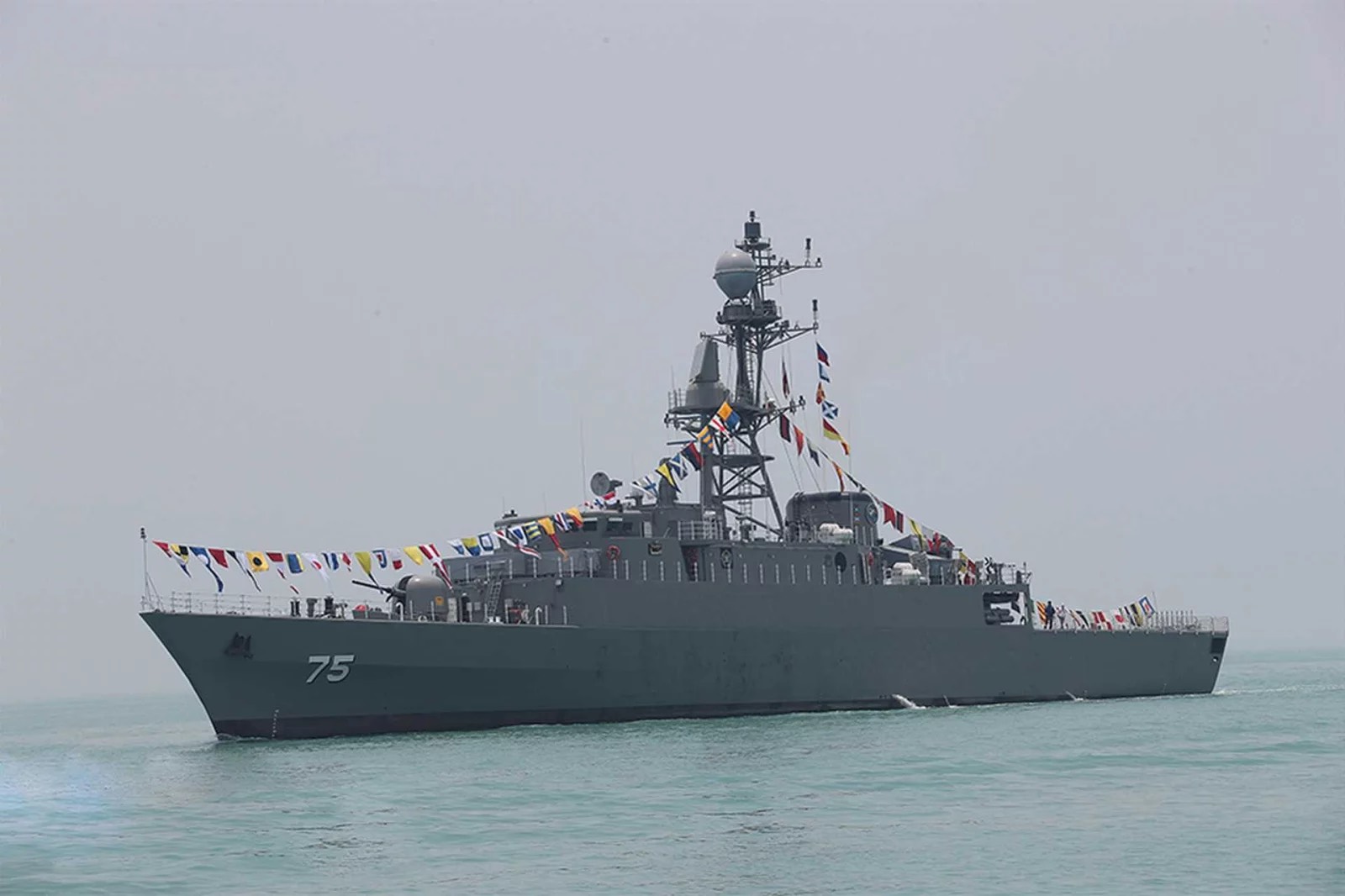
- At least 90 bodies were recovered from the wreckage of the IRIS Dena, an Iranian warship that was torpedoed by a U.S. submarine on March 4.
- The Sri Lanka Navy has spotted oil patches and life rafts during the rescue mission but no oil spill reported so far.
- Maritime experts say Sri Lanka will have an opportunity to raise a claim for environmental damage following the sinking of the frigate.
- If the Indian Ocean island intends to seek damages, the government may have to claim environmental damages through an international tribunal, considering the frigate was sunk under conditions of war.
GALLE, Sri Lanka — On March 4, an Iranian Navy frigate IRIS Dena sank some 40-50 nautical miles off the southern coast of Galle, an important maritime route in Sri Lanka. According to the Sri Lanka Navy, at least 180 personnel were initially on board the ship and it was returning from the International Fleet Review 2026, a maritime exercise held in Visakhapatnam, India, when it sent out a distress signal.
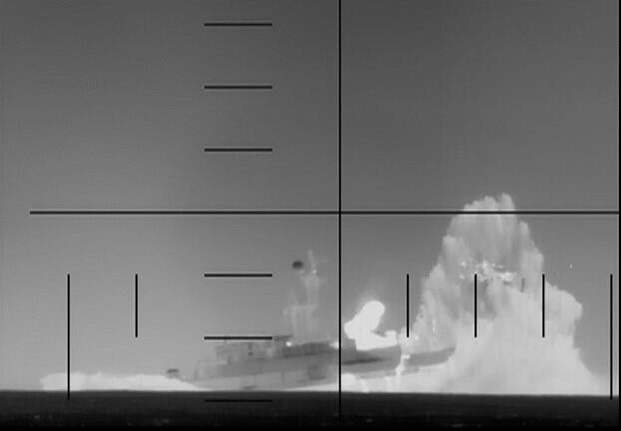
Following the incident, U.S. Defense Secretary Pete Hegseth confirmed that a U.S. submarine sank the Iranian warship in international waters, describing it as the first such sinking of an enemy ship by a U.S. submarine since World War II.
For Sri Lanka, a strategic location at the confluence of important maritime routes, it is both a politically and environmentally distressing moment. Speaking to media in Colombo, Buddhika Sampath, spokesman for the Sri Lanka Navy, said search and rescue troops were deployed as soon as the Maritime Rescue Coordination Centre received the distress call. “We didn’t see a ship except for some oil patches and life rafts,” Sampath told local journalists at a media briefing. “The Navy rescued 32 individuals aboard the ship, but by the time we reached the frigate, several bodies were floating near the vessel,” he said.
No oil spill yet
Speaking to Mongabay, Sampath confirmed that an oil spill has not been detected yet. A total of 90 bodies recovered from the wreckage have been sent to the nearest main hospital, the Galle National Hospital.
However, environmental groups and experts express concern over the possibility of environmental impacts to Sri Lanka following the warship’s sinking.
At present, Sri Lanka’s Marine Environment Protection Authority (MEPA) and Department of Coast Conservation and Coastal Resource Management are keeping a close watch, monitoring the situation to establish any oil spill. “We will expedite rapid response efforts according to the contingency plan if an oil spill has been confirmed,” Samantha Gunasekara, MEPA’s chairman, told Mongabay.
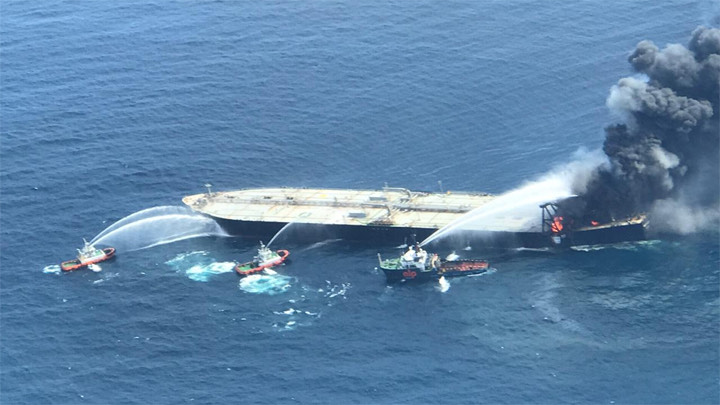
Sri Lanka has previous examples to go by. The wreckages of MT New Diamond in September 2020 and MV X-Press Pearl in May 2021, two ships that caught fire off the western coast of Sri Lanka, offer the Indian Ocean island some lessons as to why the country should consider mounting a claim for compensation.
“Officials have to examine the particular area and see what sort of precautionary and preventive measures need to be taken if there are any losses or damage to the marine environment,” said Dan Malika Gunasekara, a Sri Lankan authority in maritime law, shipping and international trade.
Referring to the publicly available information, the legal expert said the vessel has sunk as a consequence of the attack. “In this case, examinations should be done to determine whether the bunkers are intact or whether the bunker oil has begun to leak. So far, we do not know the condition of the sunken frigate. If there is any kind of leak, we should urgently take measures to prevent such a leak. In the event of an oil slick that has reached the surface, we need to employ buoys to absorb this oil to another vessel and transport it to the land area so that it would not spread to other parts of the marine environment,” he told Mongabay.
Responsibility to assist
Sri Lanka is a signatory to the 1979 International Convention on Maritime Search and Rescue, known as the SAR Convention, and accordingly, states have an obligation to assist persons in distress at sea regardless of their nationality, status or circumstances in which they are found.
Explaining the legalities, in the event of any kind of threat to the marine environment, the Sri Lankan state has the right to interfere, intervene and take necessary precautions, Gunasekara said.
“The incident has occurred some 40 nautical miles away from the coast, falling within Sri Lanka’s exclusive economic zone (EEZ). We do have the power and authority to control and minimize marine pollution as it falls within Sri Lanka’s pollution buffer zone. Since this happened under conditions of war and conflict, it is possible to consider the incident as a breach of our own marine environment legislation,” the legal expert added.
After several years of litigation, in 2025, the Sri Lankan Supreme Court ordered $1 billion in compensation from the owners and local agents of MV X-Press Pearl. “Since the U.S. has willfully attacked the Iranian vessel, any outcome or environmental damage should be borne by those who willfully caused harm,” noted Ravindranath Dabare, a senior legal practitioner and a director of the Centre for Environmental Justice and the main litigator of the MV X-Press Pearl case.
Dabare said authorities may have to wait for a day or two to determine how Sri Lankan waters have been affected by the sinking of the frigate.
“The government’s stance regarding claiming compensation for any environmental damage remains unclear. But we can make a claim if our environment has been polluted and our territorial limits are affected. Since this is a war situation, the government will have to assess repercussions prior to pushing a compensation claim against the U.S. But from an environmental perspective, there is an opportunity to claim for environmental damage because the environment cannot be purposely damaged by anybody, any country or entity,” Dabare told Mongabay.
Seeking damages
Speaking to Mongabay, Ali Sabry, a senior lawyer and former foreign affairs minister, said the Sri Lankan government has handled the situation well as far as search and rescue missions were concerned. “It was a good response. We have to ensure the safety and innocent passage of any vessel and its crew since we are a party to the United Nations Law of the Sea Convention UNCLOS),” he added.
“But the alarming reality is that the war is at our doorstep. We need to insist on our right to have a peaceful Indian Ocean. This is sad because in 1971, the then-Prime Minister Sirimavo Bandaranaike proposed at the United Nations General Assembly to declare the Indian Ocean and the air space above as a Zone of Peace. Our resolution was adopted unanimously by the United Nations. What happened on March 4 is a direct violation of that. We don’t want war and conflicts in the Indian Ocean and our backyard. We need to stress on our right to a peaceful maritime zone without upsetting our relationship with the U.S.,” he told Mongabay
As for a claim of compensation for environmental damage, Sabry said the government should carefully study the possibility. “The government should look at the parties responsible for causing such damage and claim insurance and other damages, and these claims should be processed separately,” he added.
Gunasekara, however, noted that unlike MV X-Press Pearl or New MT Diamond vessels, IRIS Dena is a warship. “When claiming damages and compensation, we may need to convey it diplomatically to that respective country. The owners of the ship may say that they are not responsible, as they were attacked. Then we can address our concerns to the country that attacked the vessel. But if none of them are going to compensate, and in case if this accounts to a world war, then we will have to claim compensation at an international tribunal. This incident may call for using such mechanisms where we may be able to apply for compensation for damage and losses occurred to Sri Lanka,” he said.
Banner Image: Commissioned in 2021, IRIS Dena was part of the Iranian Navy’s Southern Fleet. Image courtesy of Iranian Ministry of Defence.
