

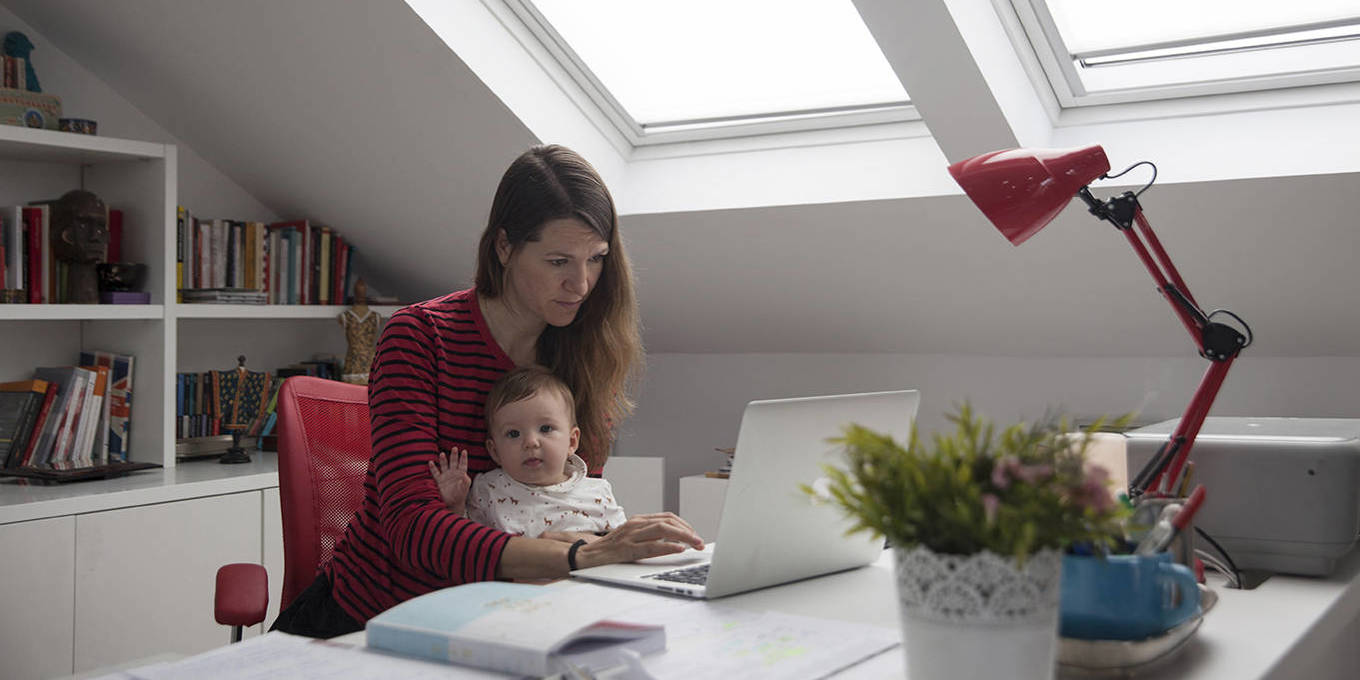
A new study across 38 countries found that among adults aged 20-45 who work from home at least one day per week, actual births since 2023 and planned family size are higher. This implies that an increase in remote work would boost fertility much more effectively than expensive pronatalist policies.
LONDON – Across much of the world, fertility rates are sliding to historic lows. In many high-income economies, women now have 1.5-1.8 children on average, well below the replacement rate of 2.1. At the same time, millions of white-collar workers have traded daily commutes for home offices. These two shifts – the “baby bust” and the remote-work revolution – are usually discussed separately. But in a new working paper, my co-authors and I suggest that the ability to work from home is quietly pushing up birth rates.