

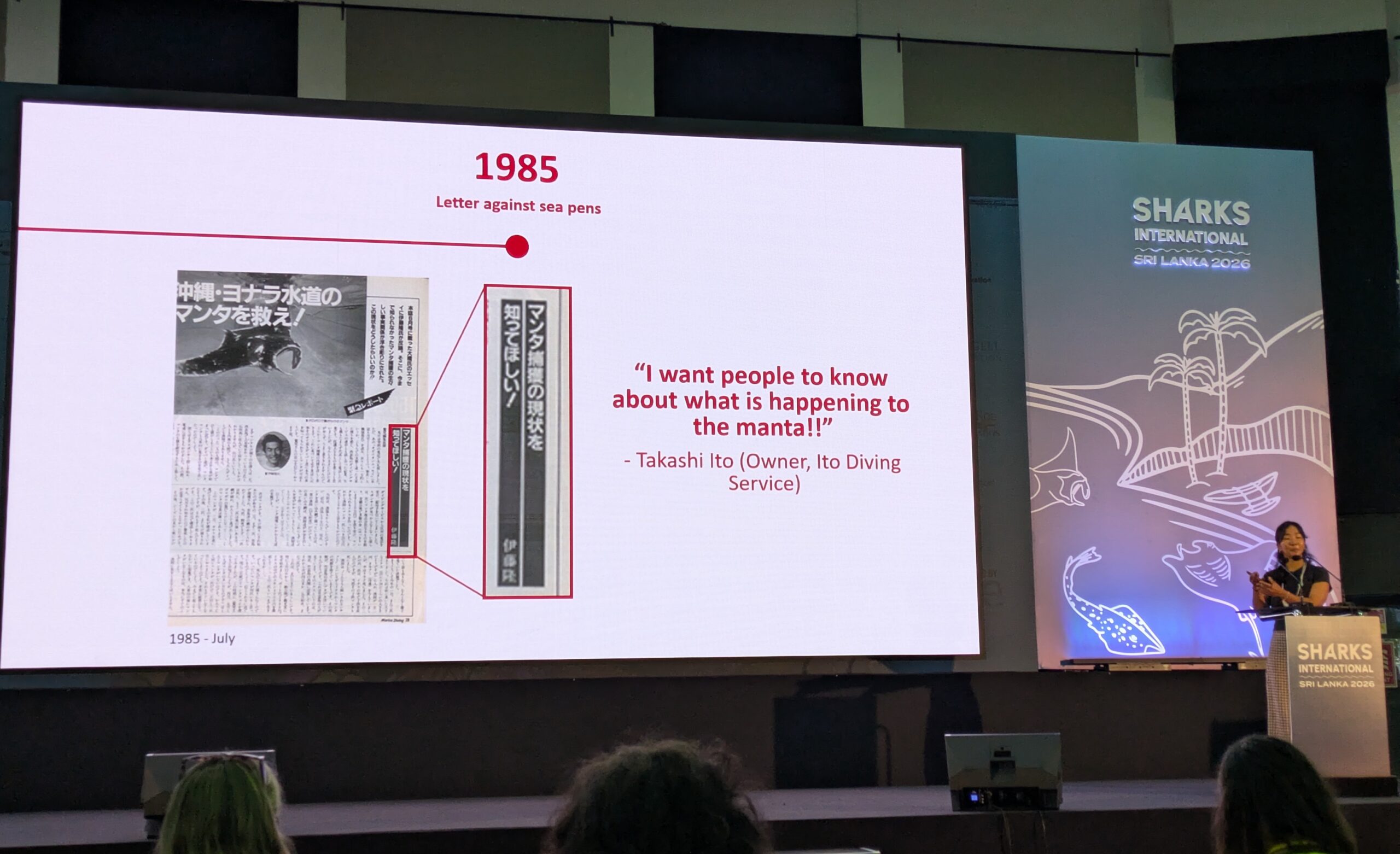
- Hundreds of researchers and conservationists met in Colombo from May 4-8 for Sharks International, held once every four years.
- Major topics at the conference included the trade in shark and ray meat, reducing shark bycatch, and the use of new technologies in conservation.
- Participants also highlighted innovative programs that encourage community-based conservation, and grappled with the contentious topic of closing fisheries to aid recovery of threatened species.
COLOMBO — More than 800 researchers and conservationists gathered in Colombo, Sri Lanka’s capital, from May 4-8 for Sharks International, the world’s largest shark conference.
Presenters shared research and insights on the global trade in sharks, the plight of rays, and a range of conservation measures, including rewilding initiatives, improving marine protected area effectiveness, and the bolstering of monitoring and enforcement systems to protect threatened species.
Overfishing has halved shark and ray populations since 1970. Today, more than a third of species are threatened with extinction.
Meat trade comes into focus
Scientists from around the world debuted new research on the trade in shark and ray meat, a major driver of fishing pressure.
For years, the meat trade flew under the radar as attention centered on fins, pound for pound the most valuable part of the shark. But overall, the meat trade is actually worth more, valued at $2.6 billion from 2012-2019, versus $1.5 billion for the fin trade, according to a 2021 WWF report.
Researchers from Dalhousie University in Canada shared preliminary findings from a big-data project aimed at understanding which species of sharks and rays, collectively known as elasmobranchs, are being landed and where they are traded.
These dynamics have largely eluded researchers, as the commodity codes governing the trade allow shipments to be labeled merely as “shark” or “ray.” Moreover, only 29% of shark and ray landing data that countries share with the Food and Agriculture Organization of the United Nations is reported to species level, according to the researchers.
The Dalhousie project, “Uncovering the Global Shark Meat Trade,” plans to publish species-level estimates for landings and trade flows by country in an upcoming paper, now under peer review.
Among the more surprising findings: the U.S. is a major ray exporter , South Korea is the largest elasmobranch importer on the strength of its appetite for skates, a type of ray , and India, Indonesia and Mexico are the largest apparent consumers of elasmobranch meat.
The paper will also indicate which countries are underreporting landings, according to project leader Aaron MacNeil.
“More than 50% of the underreporting of species that happens to FAO happens just with five countries … Nigeria, Japan, Indonesia, China and Argentina,” MacNeil said during a talk at the conference.
Researchers have also been interviewing fishers, traders, vendors and consumers around the world to map shark and ray meat supply chains and better understand consumption patterns.
New studies from Indonesia, India and Sri Lanka — among the top participating and presenting nations at this year’s conference — found that while the low price of elasmobranch meat is a factor, taste, culture, accessibility and habit are also significant drivers of consumption.
Read more: Revealed: Brazilian state buys endangered angelsharks for school lunches
Rays catch the spotlight
A commonly cited figure from Dalhousie research is that around 100 million sharks are killed a year.
But MacNeil’s team estimates that nearly twice as many rays — 191 million — are killed annually, in work that has yet to be peer reviewed.
While 33% of sharks are threatened with extinction, that figure rises to 36% for rays in general, and 69% for reef-associated rays. Yet far fewer rays are listed for protection by CITES, the global wildlife trade regulator.
“Rays in every metric, essentially, are more in trouble than sharks,” Rima Jabado, chair of the Shark Specialist Group at the IUCN, the global wildlife conservation authority, said in a talk.
Yet, “they’re not usually considered in national legislation or regional legislation frameworks. Most NGOs don’t even note them as priority species in conservation plans,” she added.
Countries like Bangladesh, Myanmar, Thailand, Vietnam, Indonesia and the Philippines are actually landing more rays than sharks, MacNeil’s team found.
Some tropical rays are traded for their skin, used to make goods like wallets, belts, purses and phone cases, as well as luxury interior finishings.
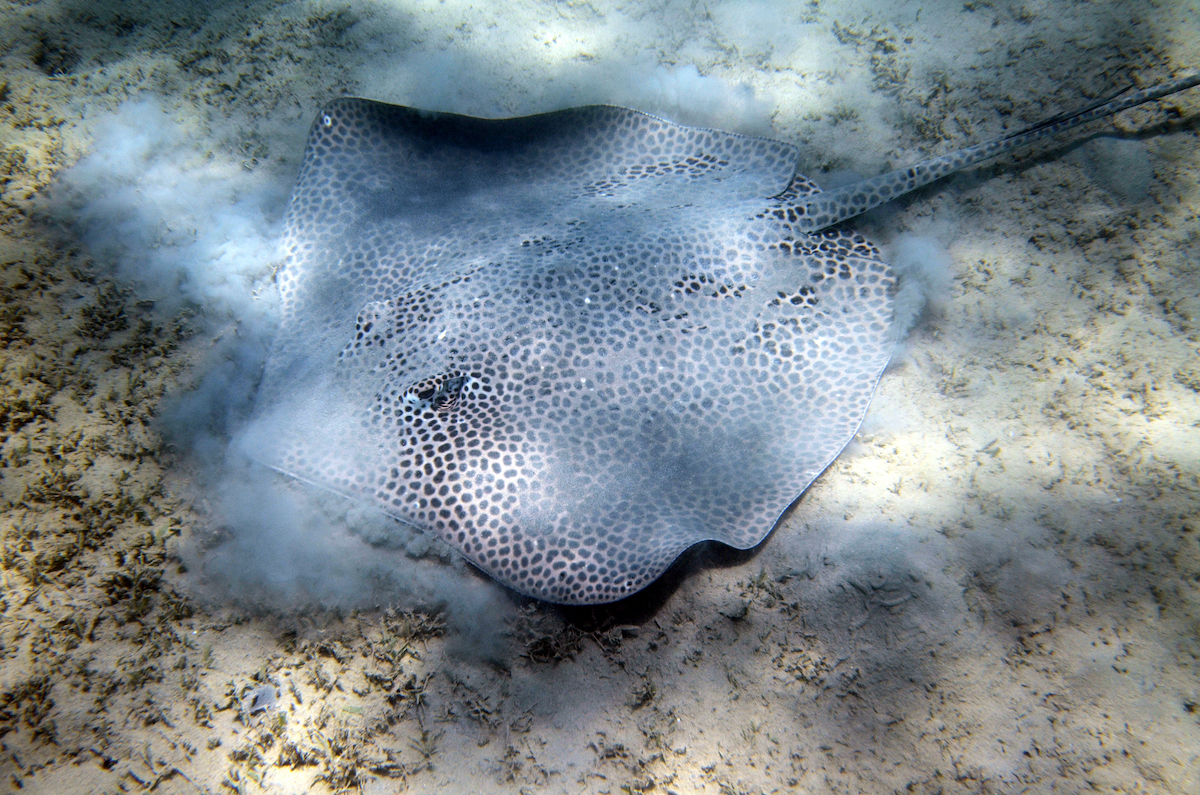
Sometimes what’s sold as shark is actually ray. WWF marine expert Muhammad Wiralaga Dwi Gustianto found that in the wake of COVID-19, restaurants in Indonesia offering shark fin soup started using fins from critically endangered rhino rays, without labeling it as such.
Rays also tend to be less studied than sharks. Only 40% of the 226 endangered or critically endangered ray species appeared on abstracts associated with the Sharks International conference, according to an analysis presented at the conference by research scientist Andrew Temple of the King Abdullah University of Science and Technology’s Reef Ecology Lab in Saudi Arabia.
“I think people, sadly, don’t really care as much about rays, unless they’re the big charismatic species,” Chris Mull, a marine ecologist at Dalhousie University, told Mongabay. “But there’s a huge diversity and fishing pressure and also extinction risk of a lot of these coastal species of rays.”
Saving sharks
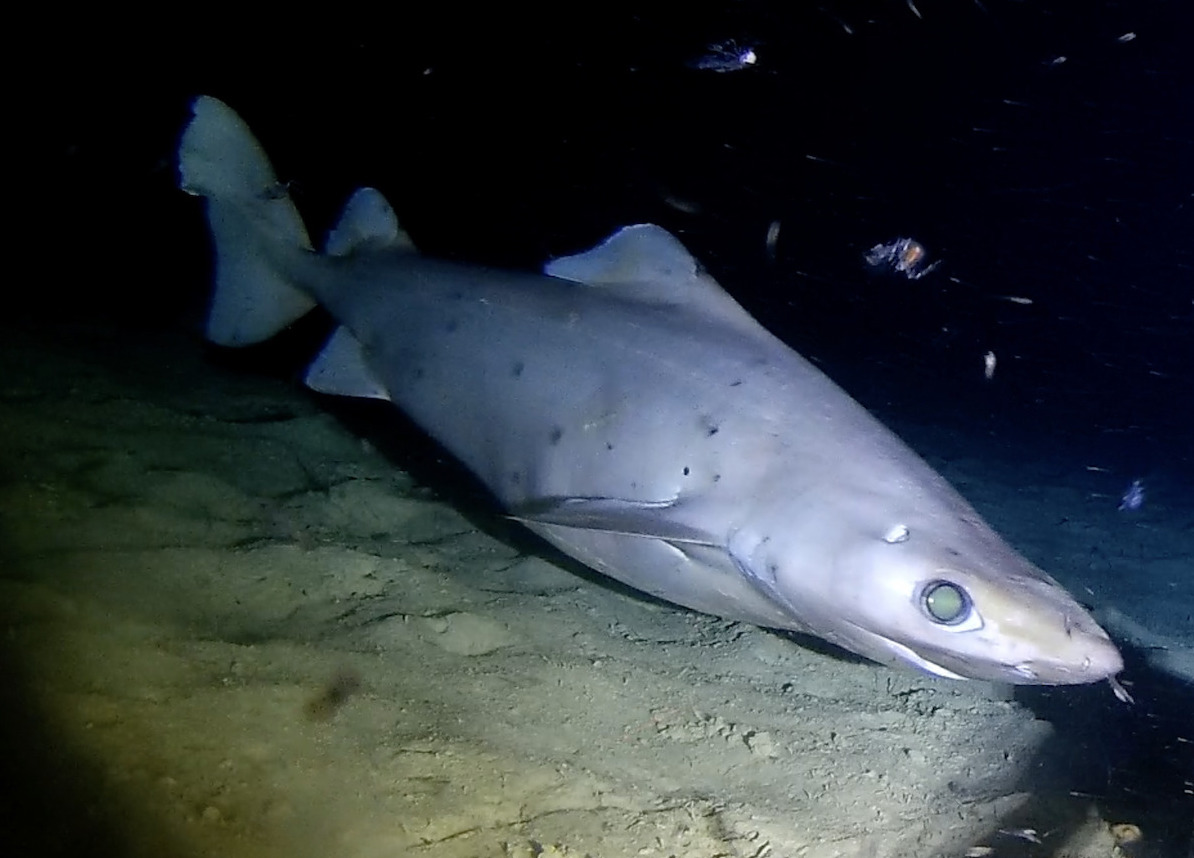
Researchers at the conference shared the latest technologies being deployed to aid conservation, from electrical deterrents used to reduce shark bycatch to eDNA monitoring, satellite tagging and baited underwater remote video, or BRUV, surveillance.
Diana Catarino, a researcher at the University of the Azores in Portugal, is using BRUVs to study deepwater chondrichthyans, a class that includes chimaeras, or “ghost sharks,” as well as elasmobranchs. Deep-sea species have become a priority after some were added last year to Appendix II of CITES, the global convention that mandates sustainable trade in threatened species. Deepwater sharks are increasingly hunted for their liver oil, used to make cosmetics, vaccines and health supplements, but researchers still know relatively little about them.
While customs agents can now use portable DNA monitoring tools to identify what species a fin comes from, similar tools are not yet available for liver oil-based products, which tend to be highly processed and thus lacking in identifiable DNA.
“We need to understand our deepwater sharks from the functional biology, ecology side of things, all the way through to the trade monitoring end,” Madeline Green, a researcher at the University of Tasmania in Australia, who is developing such tools, said in a talk.
ReShark, a first-of-its-kind shark rewilding program, has released 71 captive-bred Indo-Pacific leopard shark (Stegostoma tigrinum) pups in Indonesia’s Raja Ampat archipelago and eight around Thailand’s Phuket Island. Fiji will be the next site, ReShark executive director Mark Erdmann told Mongabay.
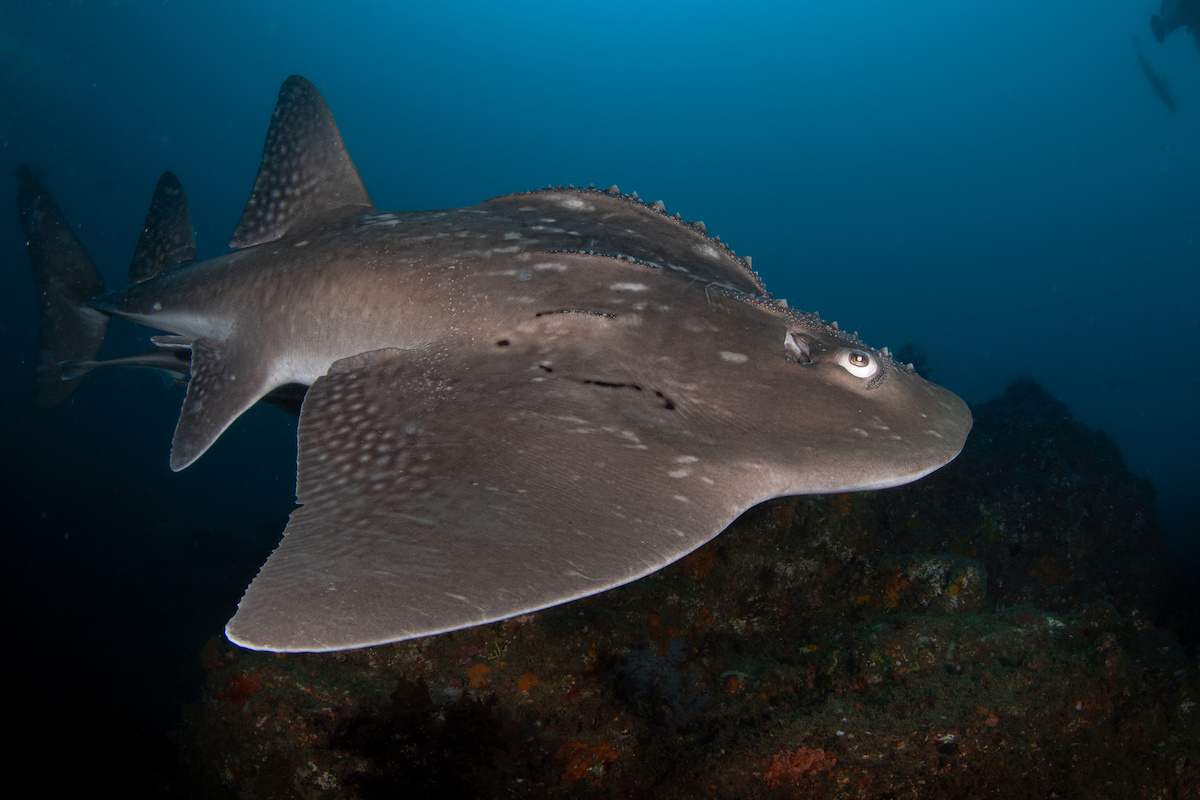
Another group, Shark Ray 360, will release its first captive-bred bowmouth guitarfish (Rhina ancylostoma) in Taiwan in June, said Riley Pollom, assistant director for conservation and science at the Singapore Oceanarium, who is involved with the program. The species, whose thorny ridges are used to make amulets, has declined by 80% in the past 45 years.
The bowmouth guitarfish is “the most evolutionarily distinct endangered jawed vertebrate,” Pollom said in a talk. “Losing it would be equivalent to losing 88 million years of evolutionary heritage.”
Shark Ray 360 is also looking at other species, including whiprays and guitarfish, for potential rewilding. ReShark is designing a program for the short-tailed nurse shark (Pseudoginglymostoma brevicaudatum).
“This idea of shark reintroduction, shark rewilding, it’s not a panacea,” Erdmann told Mongabay. “It’s not something which is going to save all the sharks and rays on Earth by any means, but we feel that the time is now to start doing this.”
Others are working on incentive-based programs to get communities to protect sharks, or at least to stop exploiting them.
Indonesian NGO Kebersamaan Untuk Lautan is piloting a vessel buyback program on Lombok Island, home to some 61 licensed longliners targeting sharks. The group purchased two boats there earlier this year for 300 million rupiah each, about $17,000. The owners are now using the money to set up land-based businesses, according to KUL founder and co-director Hollie Booth. If the government wanted, it could scale up the mechanism, she said.
“I think if we’re in the business of saving sharks, then we’re ultimately in the business of behavioral and social change,” Booth said during a panel discussion.
Rafid Shidqi, a Ph.D. student at Duke University in the U.S., has spent eight years working with thresher shark fishers in Indonesia’s Alor Island. Immersing himself in their lives equipped him to design and get buy-in for livelihood programs for locals to transition away from shark fishing, which he says has reduced thresher catches among participants by 91%.
“There is a real need to mitigate and manage shark fisheries,” he said in a keynote talk. “But what I’ve also learned is that it needs to be balanced with measures that protect the needs of communities.”
‘Difficult decisions’
Despite these efforts, elasmobranchs remain among the most threatened vertebrates on Earth.
The vast majority of critical shark, ray and chimaera habitats, known as ISRAs, don’t overlap with government-sanctioned marine protected areas, or MPAs, according to Adriana Gonzalez-Pestana, who is involved in mapping these habitats for the IUCN. In Asia, only 5.4% of ISRAs and MPAs match up, she told Mongabay, citing upcoming research.
“There’s a huge mismatch between ISRAs and MPAs,” said Spanish marine biologist Marta Palacios, who is also involved in the mapping effort. “So we are standing on a very bad place for sharks and rays.”
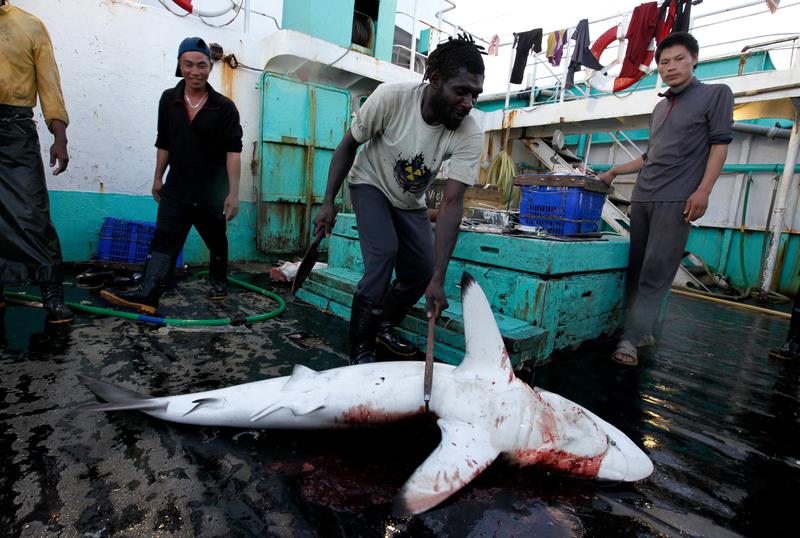
In international waters, shark fishing remains scantly regulated. Oftentimes, sharks are labeled as “bycatch” in industrial-scale fisheries where they are actually among the most valuable species, according to Iris Ziegler, head of fisheries policies and ocean advocacy at Deutsche Stiftung Meeresschutz, a conservation group.
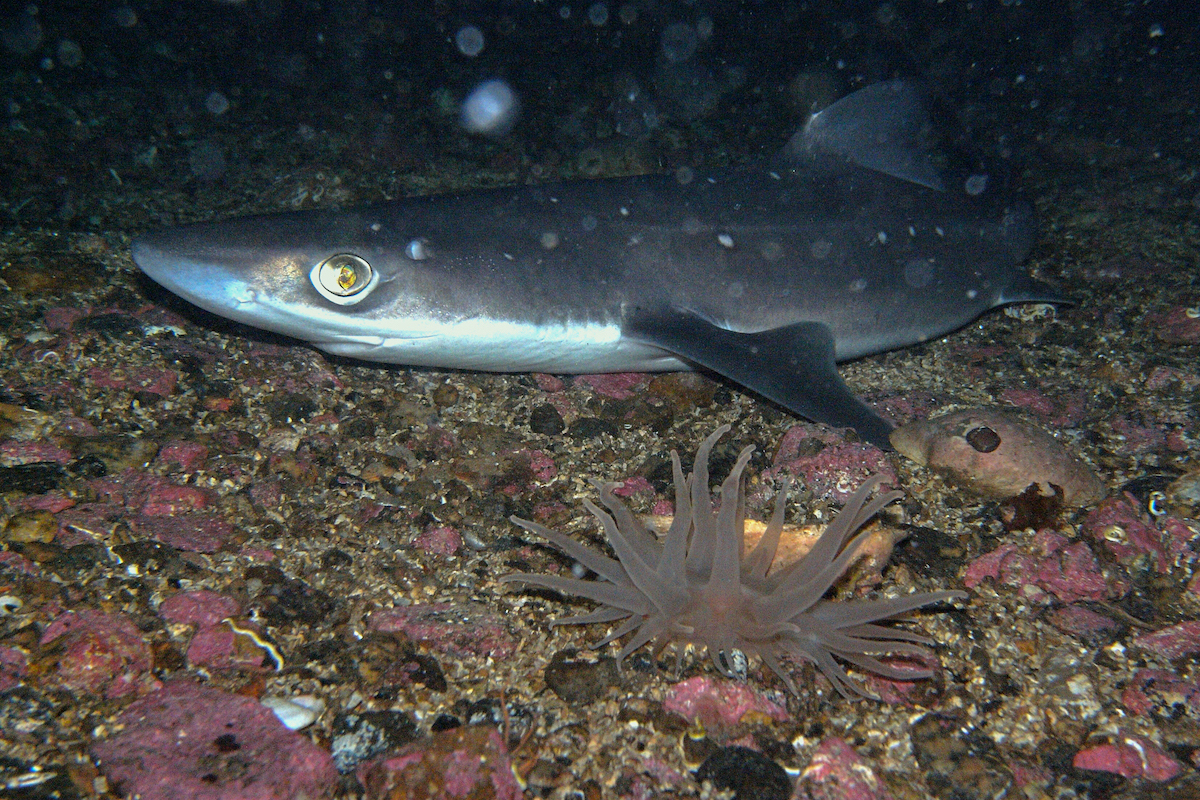
The key barrier to protecting them is often not a lack of science, but of political will, said Sophy McCully Phillips, lead adviser to the U.K. government on elasmobranchs. As an example, she pointed to the spiny dogfish (Squalus acanthias), a threatened shark eaten in the U.K. for more than 100 years in fish and chips.
Scientists began warning about the spiny dogfish in the 1960s, with decades of reliable landing data showing a precipitous decline. But the advice was not followed, and by the time policymakers acted, it was too late. Political constraints meant that scientific advice was not translated into policy.
“Despite being our most data-rich stock, due to this broken pipeline, this stock still collapsed,” McCully Phillips said during the closing plenary panel.
Daniel Fernando, co-founder and director of Sri Lankan nonprofit Blue Resources Trust, called for a shift in how people perceive sharks and rays. Fernando also said that in many cases, fisheries must be closed in order to give the species a chance to recover — before they die out.
“Difficult decisions will have to be taken,” he said. “We are not in the situation where we were 30 or 40 years ago where there were still opportunities for sustainable fisheries for a lot of them. We are at a state where fisheries for many of these species must be shut down in order to give them the opportunity to recover.”
Hollie Booth said she agreed that some fisheries should probably be retired, but that it must be implemented through fair transition plans, because banning them outright may ultimately fail if local communities are not on board.
“For me, I think the more productive question is, what works for which species, in which fisheries, in which contexts?” she said. “And the answer is going to be kind of a mosaic of solutions with multiple mitigation pathways rather than a single policy.”
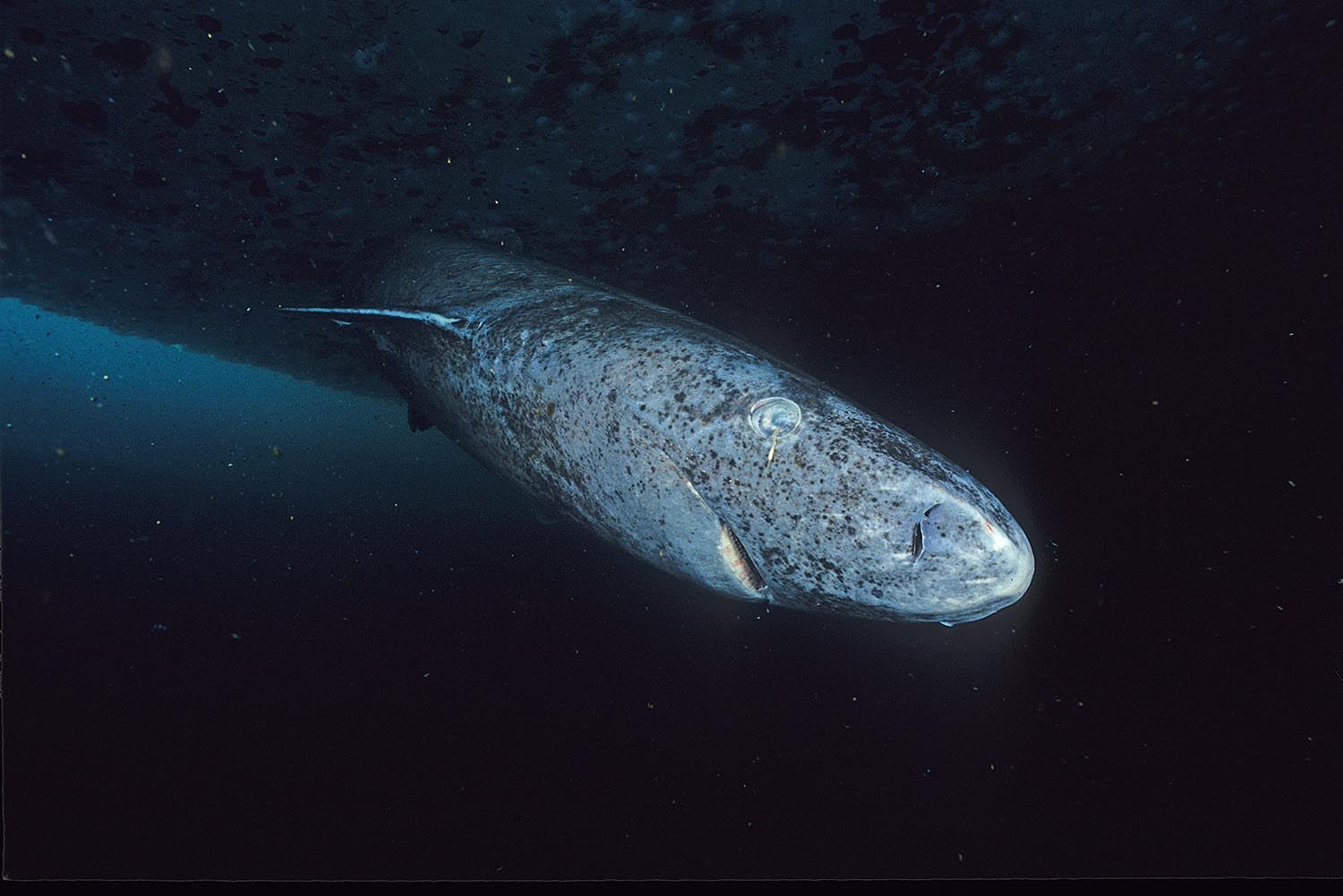
Banner image: Greenland shark (Somniosus microcephalus) taken at the floe edge of the Admiralty Inlet, Nunavut. Image by Hemming1952 – Own work via Wikimedia. CC BY-SA 4.0.
FEEDBACK: Use this form to send a message to the author of this post. If you want to post a public comment, you can do that at the bottom of the page.
It’s electric: Scientists develop cheap way to keep sharks off fishing hooks
Citations:
Dulvy, N. K., Pacoureau, N., Matsushiba, J. H., Yan, H. F., VanderWright, W. J., Rigby, C. L., … Simpfendorfer, C. A. (2024). Ecological erosion and expanding extinction risk of sharks and rays. Science, 386(6726). doi:10.1126/science.adn1477
Worm, B., Orofino, S., Burns, E. S., D’Costa, N. G., Manir Feitosa, L., Palomares, M. L., … Bradley, D. (2024). Global shark fishing mortality still rising despite widespread regulatory change. Science, 383(6679), 225-230. doi:10.1126/science.adf8984
