

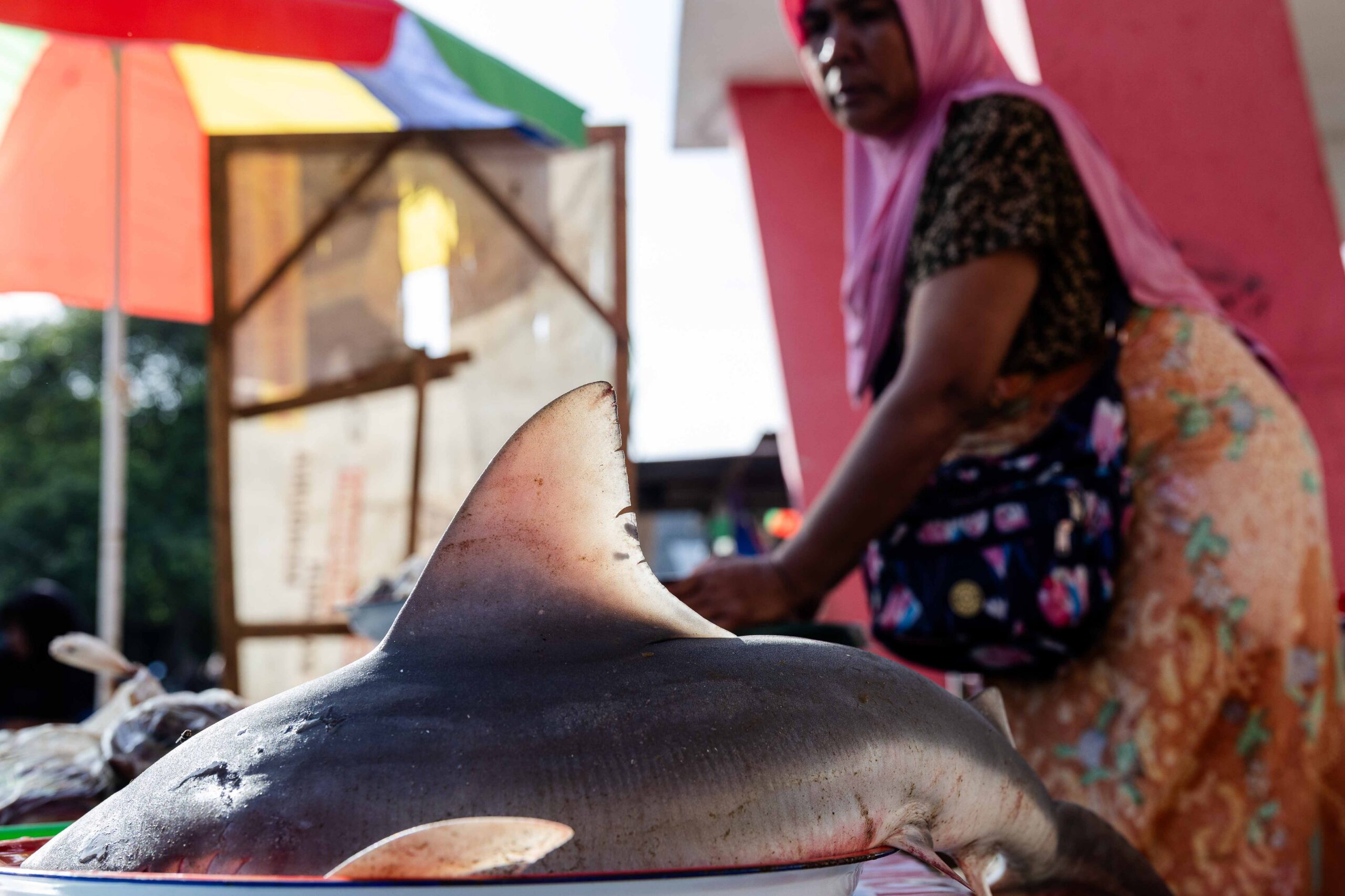
- Shark meat has quietly surpassed shark fins in international trade volume and value. In East Lombok it sells for as little as 29 cents a skewer.
- Photojournalist Garry Lotulung documented the shark trade at Lombok’s Tanjung Luar fish market and nearby Rumbuk village, an important shark meat processing center.
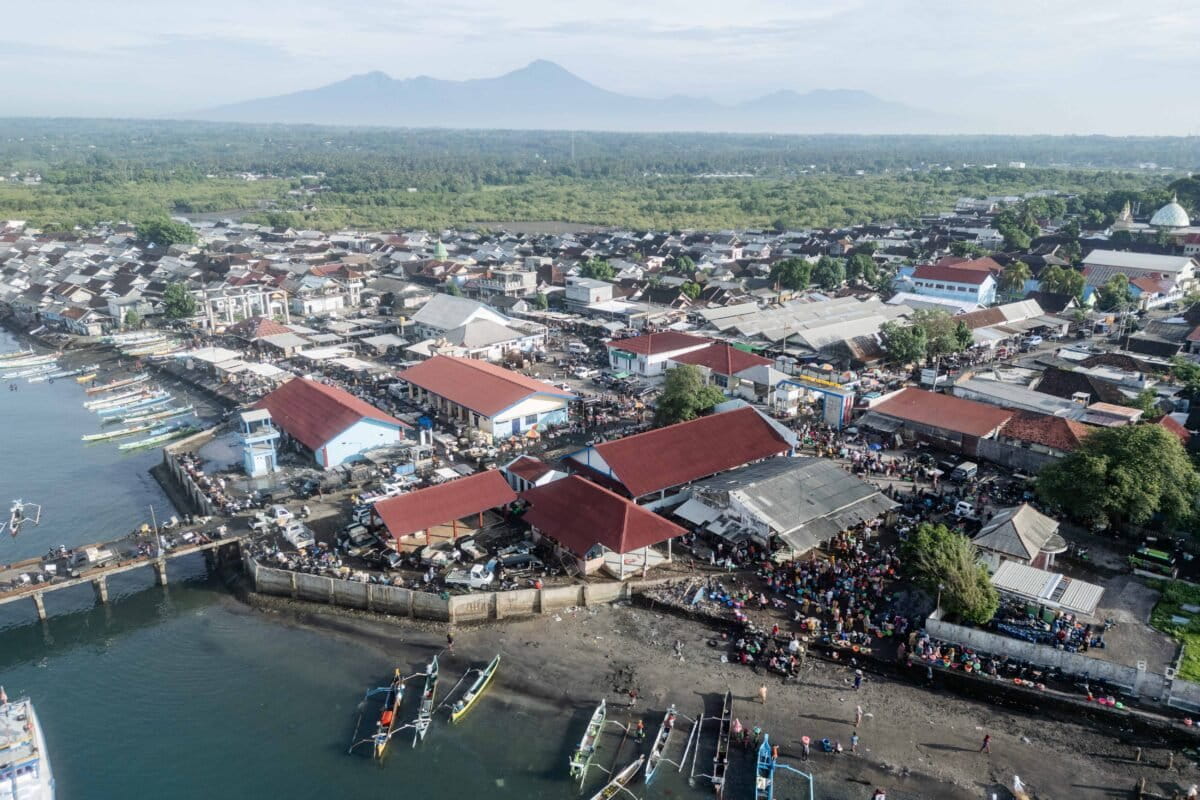
EAST LOMBOK, Indonesia — Indonesia consistently ranks as the top shark-catching nation in the world. The fish market in Tanjung Luar village on the island of Lombok is often called the country’s biggest for sharks.
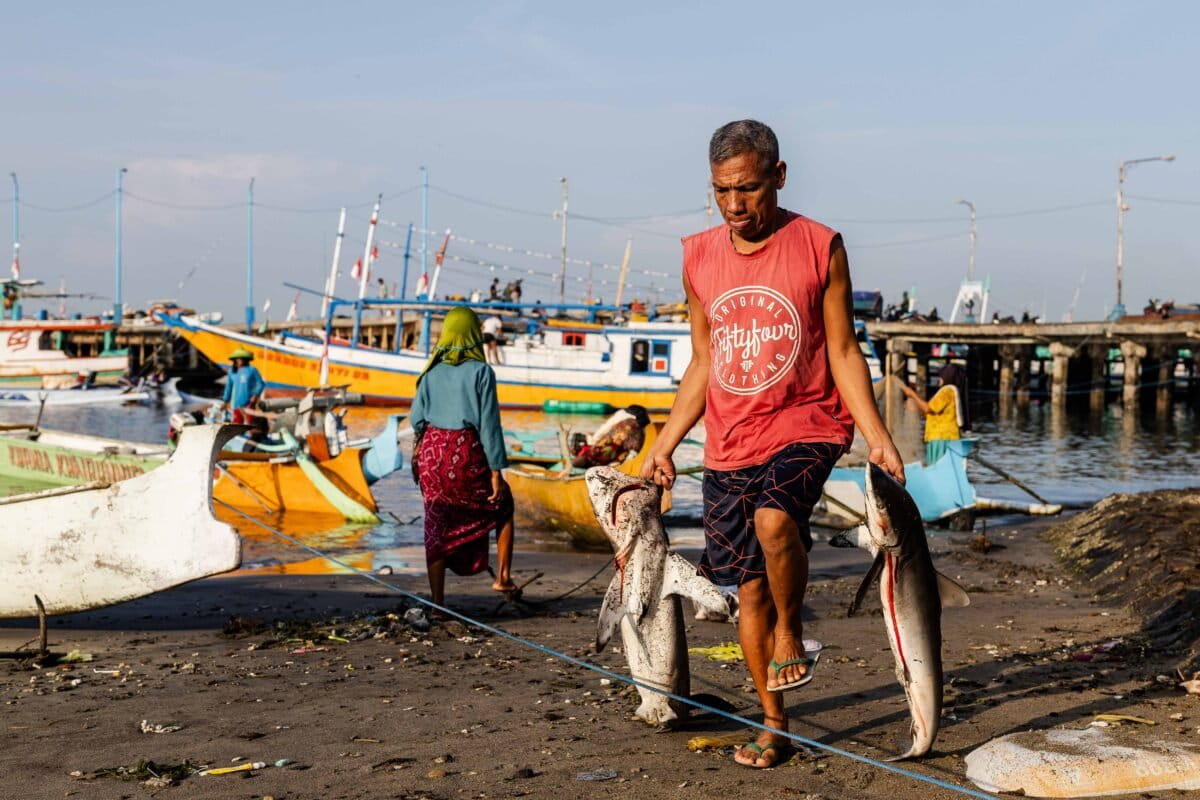
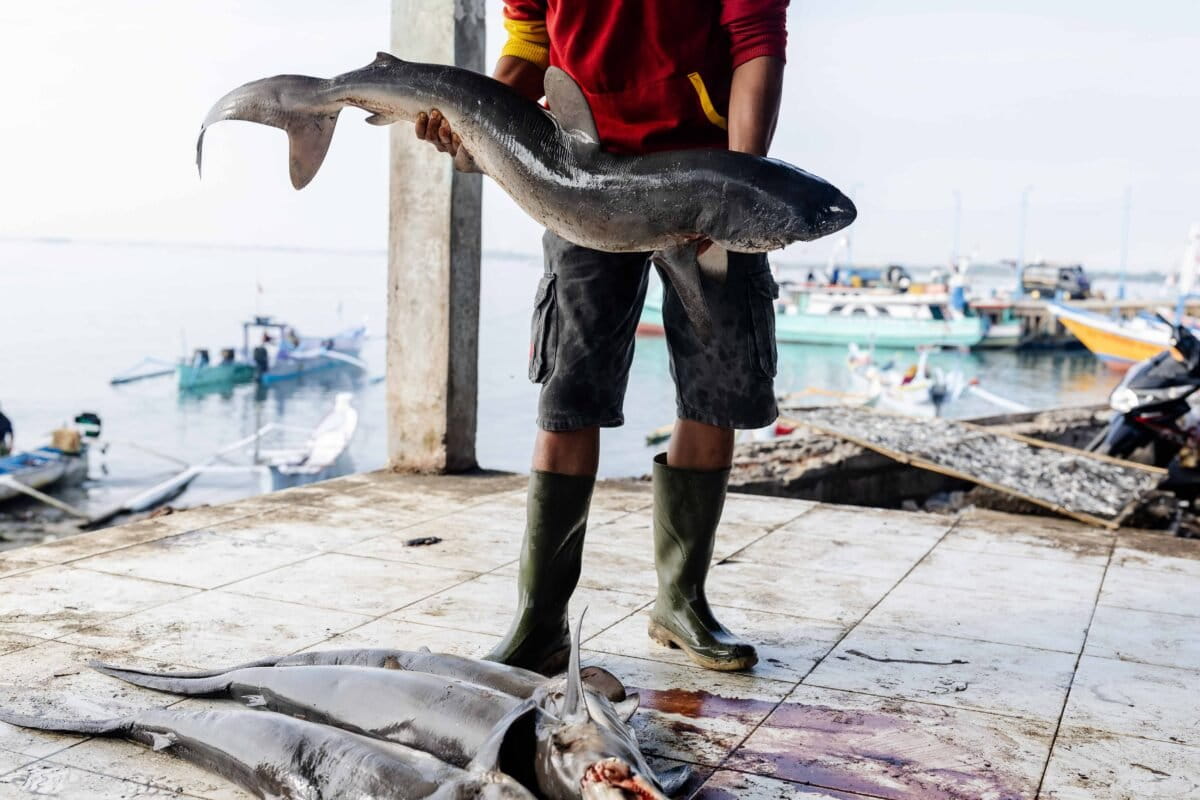
It was bustling when Mongabay visited one morning in February last year. Vendors with plastic buckets greeted fishing boats from nearby islands, welcoming fresh catches. At the pier, fishers carried a shark from their boat to the auction site and placed it among others on the floor, ready for bids.
“This has been a job passed down from the previous generation to our generation,” fisher Safruddin told Mongabay while unloading his catch. “This has become a daily livelihood for the people here to make a living, and the market price is still promising.”
Lombok’s shark trade first gained prominence in the 1990s, locals say. Today, the animals sell at auction for 600,000-1 million rupiah each (about $35-$58). The sharks here are supplied by longline vessels that deliberately target them, which is generally legal in Indonesia, and by gillnet fishers who take them as bycatch.
Globally, shark and ray populations have declined steadily due to overfishing, combined with the animals’ slow growth and reproduction rates.
In Indonesia, fishers are free to hunt most sharks, though protections exist for some threatened species, such as whale sharks (Rhincodon typus), sawfish (family Pristidae) and manta rays (genus Mobula).
When it comes to whale sharks, the rules coincide with Tanjung Luar fishers’ long-standing belief that the enormous fish bring good luck and should not be hunted, according to a shark fin collector at the market named Suparman, who told Mongabay he’s been in the business since 1995. “Fishermen do not dare to catch them at all,” he said.

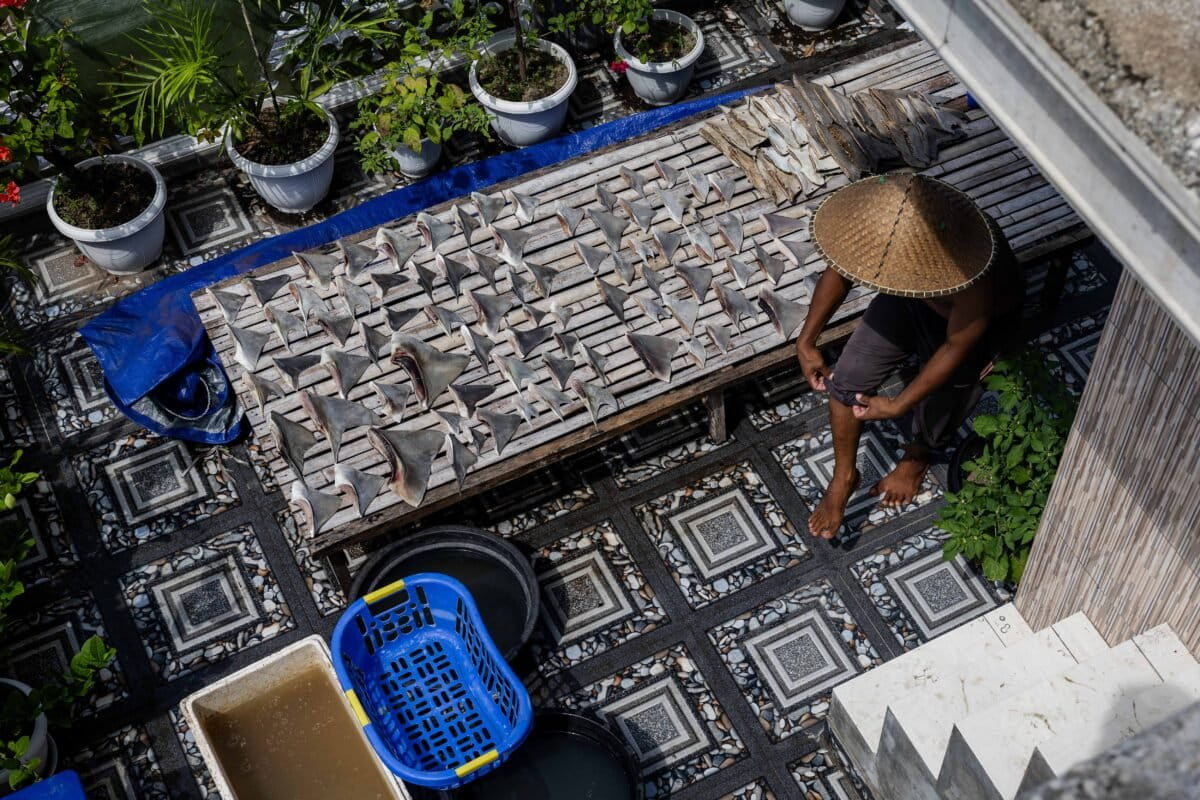
Indonesia is also a major exporter of shark products, not just fins but also meat, liver oil and skin.
Indonesia’s trade with China represents the world’s fifth-largest bilateral trade flow for the meat of the blue shark (Prionace glauca), the world’s most commonly traded species, according to a 2022 report from U.S.-based marine conservation NGO Oceana.
But researchers have identified major discrepancies between Indonesia’s reported shark landings and declared exports, and between its reported exports and the import figures reported by its trade partners. This points to illegal trade, unsystematic data collection — and high levels of domestic consumption, according to a 2021 study.
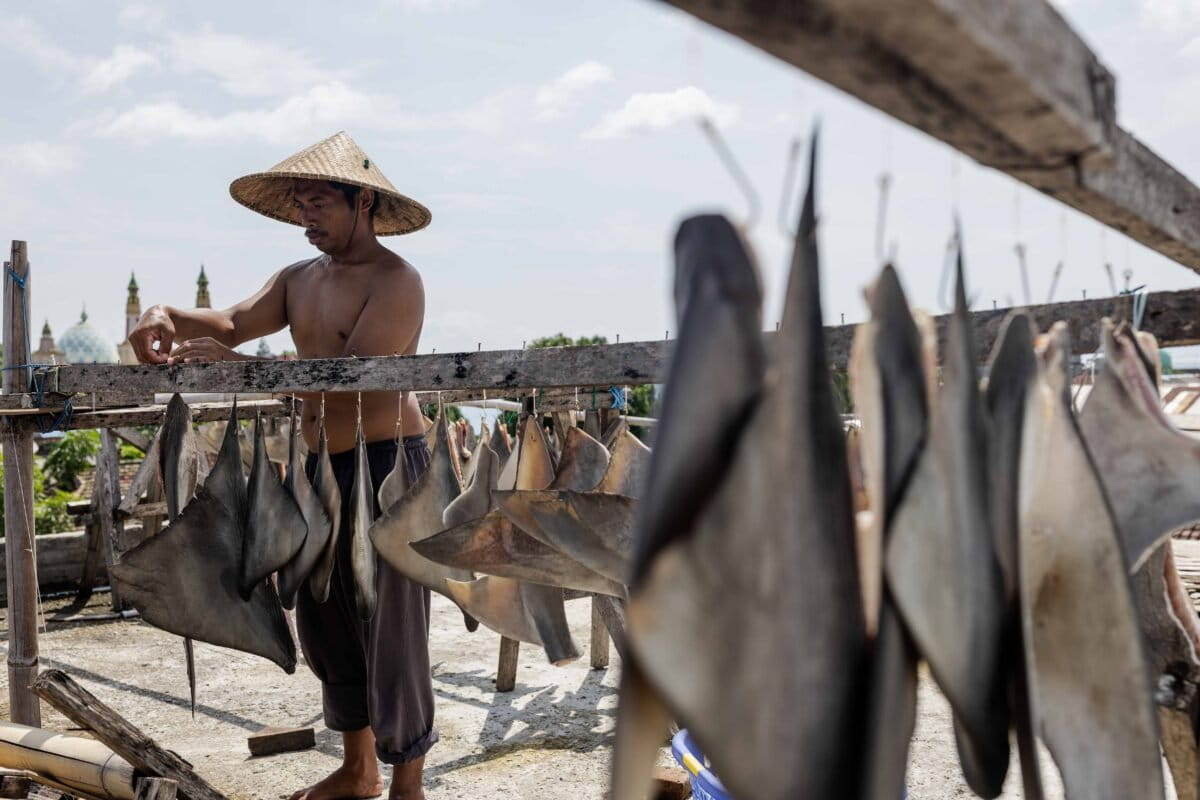
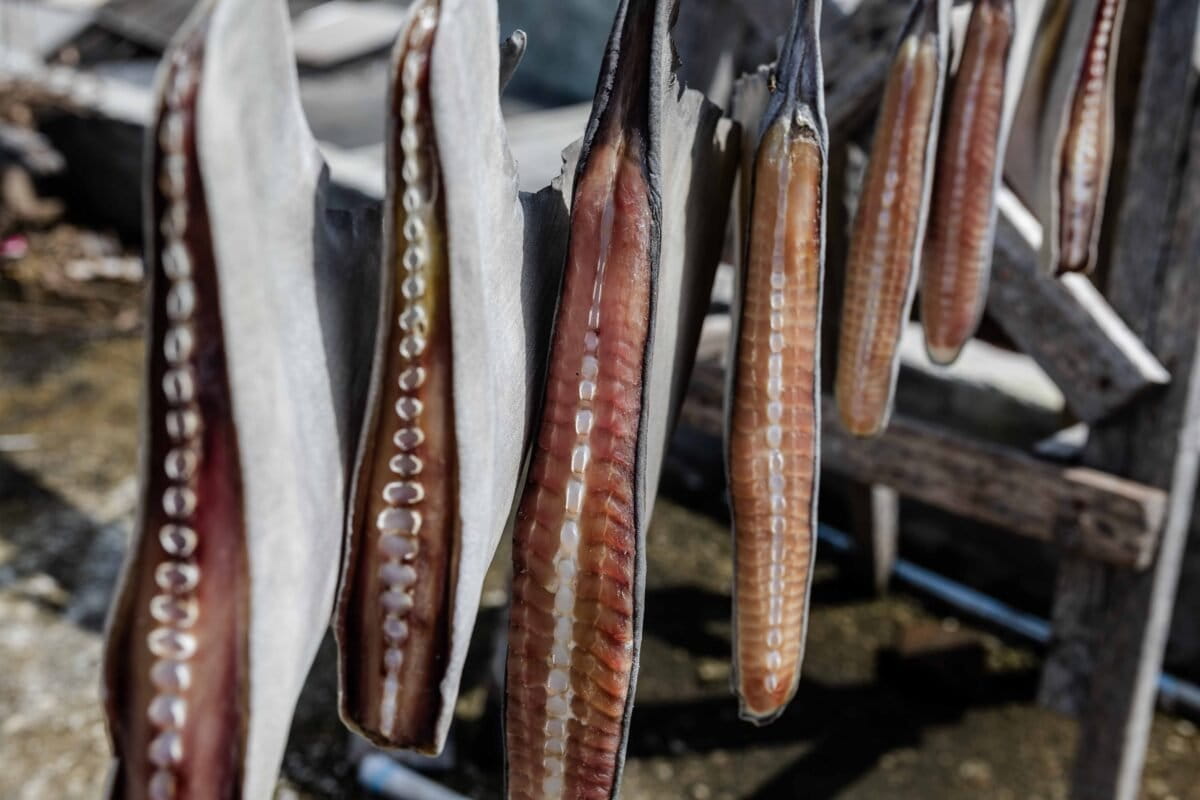
Indeed, much of the shark meat landed at Tanjung Luar is consumed right here in East Lombok. First, it passes through Rumbuk village, some 20 kilometers (12 miles) inland.
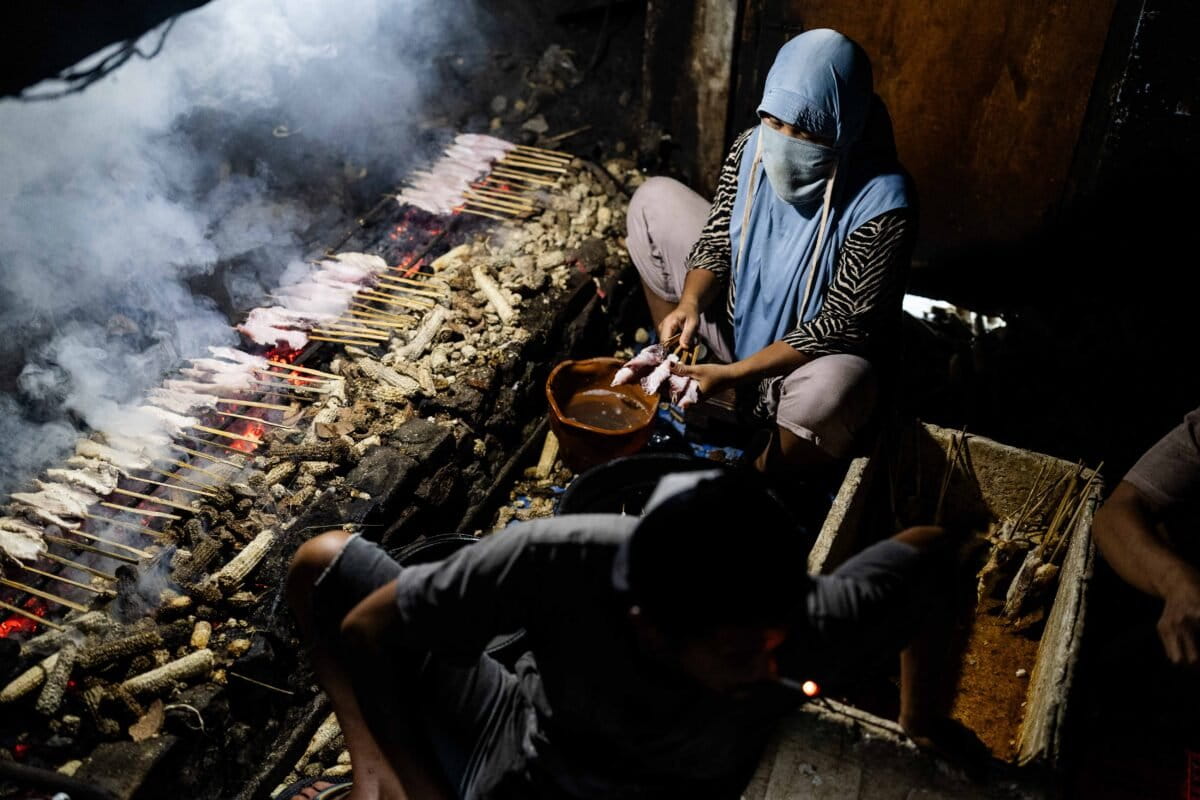
In Rumbuk, shark meat is processed into products such as shredded fish (abon), jerky and crackers. The industry also produces meatballs, fish cakes (otak-otak) and smoked meat for local consumers.
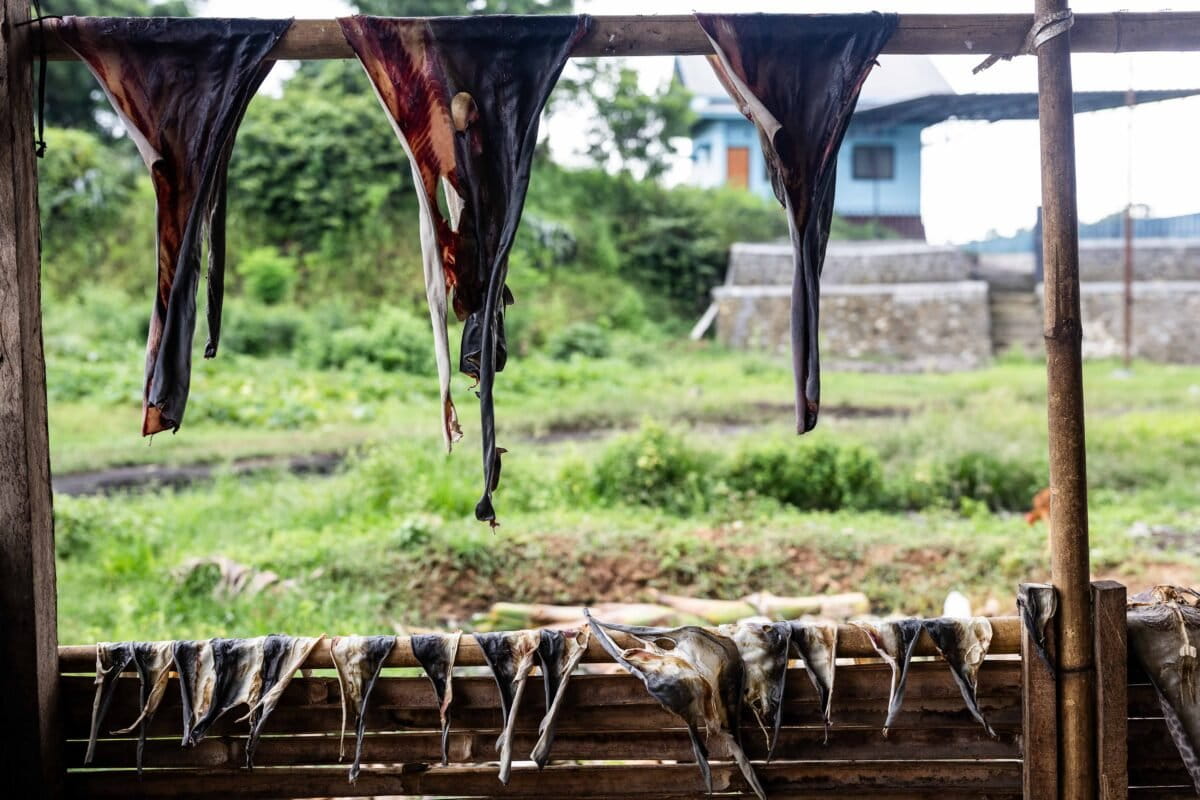

The global shark trade initially rose in prominence on the back of the shark fin trade, with shark fin soup considered a luxury dish in China. But over the past two or three decades, international trade in shark meat has grown tremendously.
While fins remain by far the most valuable part of the shark, today the shark meat trade has surpassed the fin trade in both volume and total value, according to a 2021 WWF report, which placed the value of all shark and ray meat traded globally from 2012-2019 at $2.6 billion.
Shark meat made headlines in Indonesia in September 2025, when 16 students at a school in Ketapang district on the island of Borneo got food poisoning from the national free school meals program , it turned out they had been served shark meat.
It’s unclear how prevalent shark is in the Indonesian meal program, which was established last year by President Prabowo Subianto. Other countries are known to include shark meat in school meals, especially Brazil, where the practice has drawn scrutiny because shark meat tends to contain high concentrations of heavy metals, which can harm human health, especially children.
In the wake of the Ketapang food poisoning incident, Nanik S. Deyang, deputy head of Indonesia’s National Nutrition Agency, was paraphrased in the press as saying that “shark is common in Ketapang but rare and expensive elsewhere.”
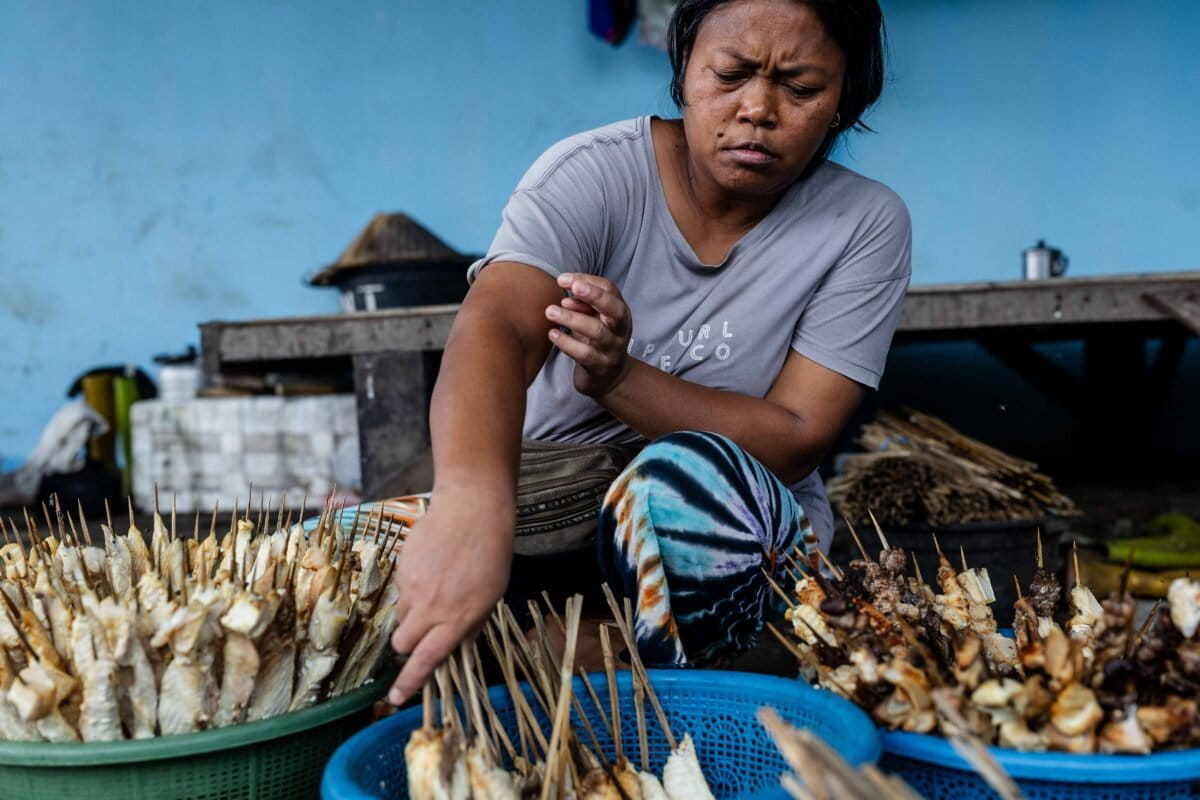
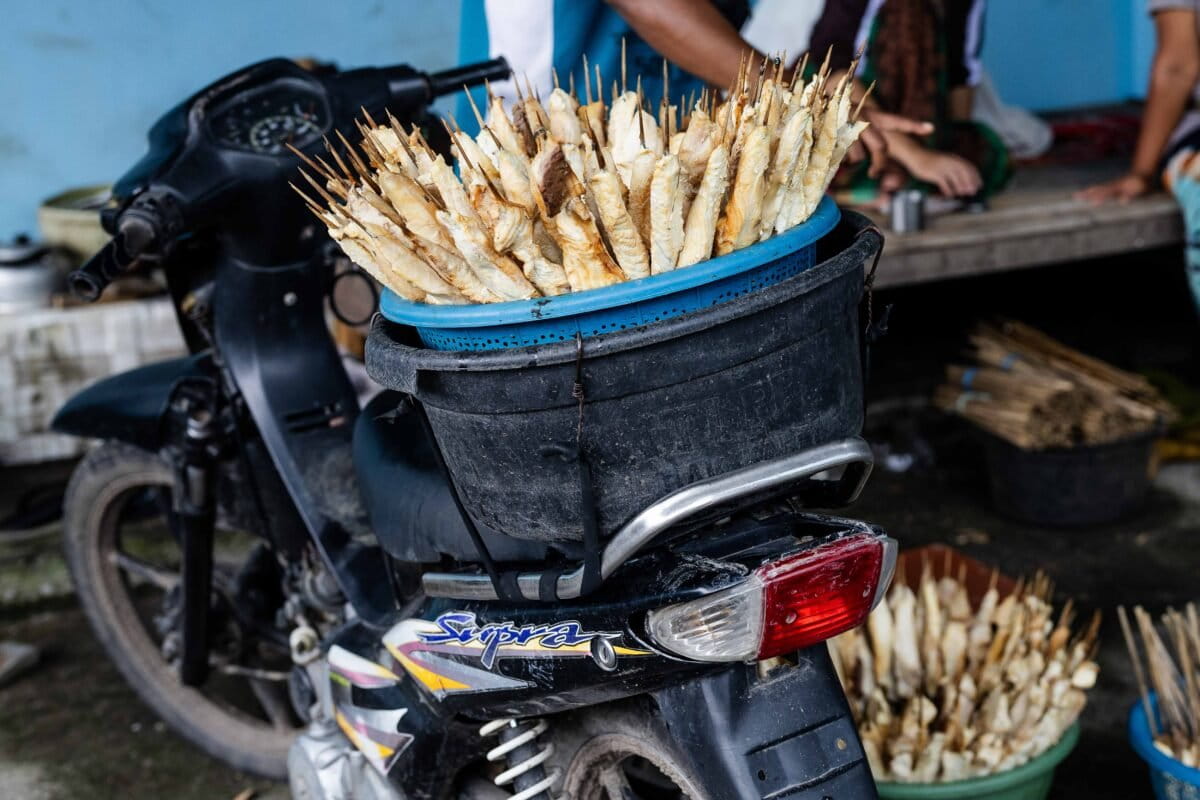
Nanik was apparently unfamiliar with Rumbuk, where large amounts of shark meat are processed into smoked meat and satay to be sold in traditional markets around eastern Lombok.
Shark meat in Rumbuk costs between 25,000 and 40,000 rupiah per kilogram ($1.46-2.33 per kilo, or $0.66-$1.06 per pound). A skewer of shark satay costs 5,000 rupiah (29 U.S. cents) — an affordable source of protein that has become a local staple.
Banner image: A freshly caught shark displayed for sale in Tanjung Luar market. Image by Garry Lotulung for Mongabay.
