

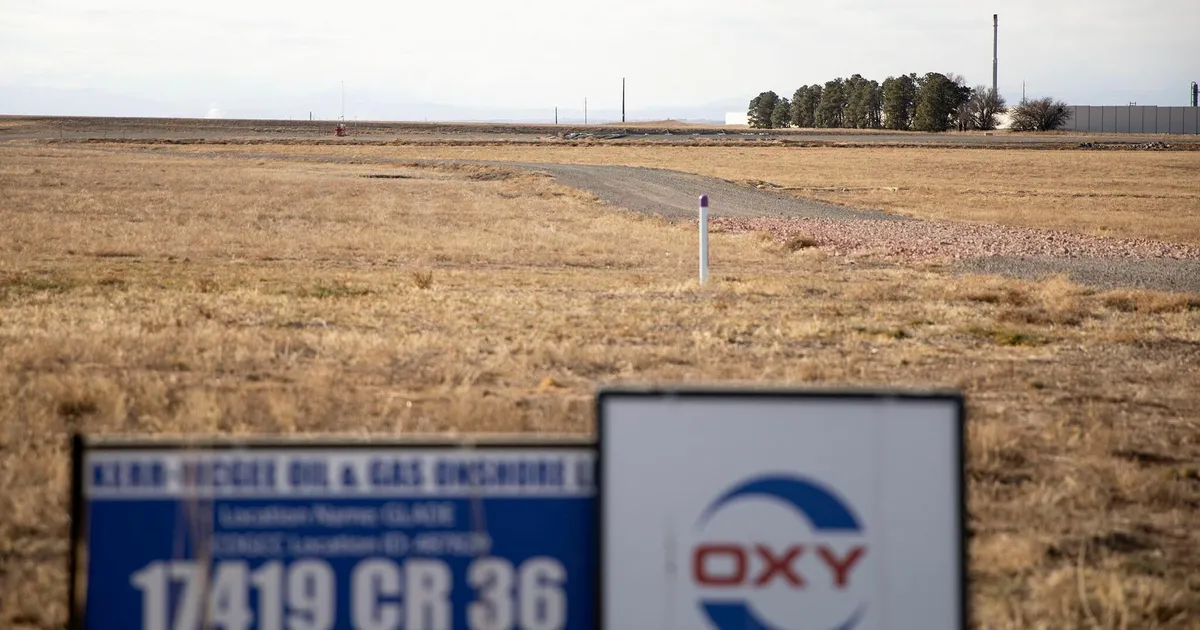
Reaching those depths is difficult but not impossible. During the Cold War, Soviet geologists spent almost 20 years digging the Kola Superdeep Borehole more than 12 kilometers, or 7.5 miles, deep to study the Earth’s crust, setting the record for the world’s deepest hole. In Colorado, a 22,000-foot-deep oil and gas well in Moffat County holds the statewide record, according to a spokesperson for the state Energy and Carbon Management Commission.
Pressure and heat at those depths wreak havoc on mechanical equipment. With the GLADE project, Oxy set out to prove it could overcome those challenges by working faster and more cost-effectively than past superdeep drilling efforts.
The company itself hasn’t released any results, but state records show it dug one of its two wells in 18 days. Horne, the Stanford geothermal expert, said that pace would put Oxy in league with Fervo, a leading geothermal startup that drilled a nearly 16,000-foot-deep geothermal well in southwest Utah in 16 days last year. “That’s pretty impressive,” Horne said.
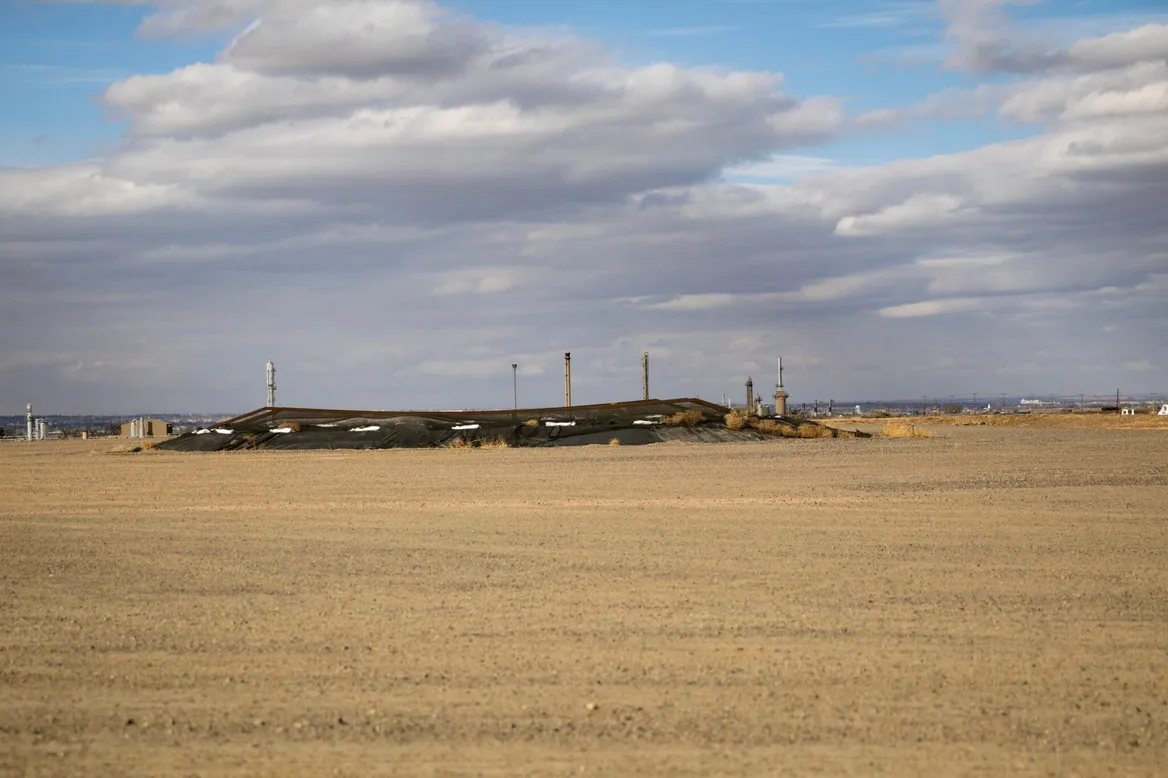
Other experts have characterized the effort as a success. Amanda Kolker, the manager of the geothermal laboratory program at the National Lab of the Rockies in Golden, said the GLADE project proved it’s possible to dig deep into sedimentary basins, large-scale depressions more commonly explored for oil and gas resources. The Denver-Julesburg Basin is one of many sedimentary basins in the western U.S.
“This achievement could unlock new geographies for geothermal technology deployment in the United States,” Kolker said.
A possible foundation for Colorado’s first geothermal power plant
One question is whether Oxy has plans beyond research for its geothermal boreholes. By completing the GLADE project, the company may have taken one of the most difficult steps toward building Colorado’s first geothermal power plant.
Multiple studies show that Colorado has ample underground heat to support a power plant, but no commercial enterprise has built one so far. In central Colorado, a pair of entrepreneurs has spent decades trying to build a geothermal power plant near Buena Vista. Their attempts, however, repeatedly ran into pushback from local residents worried about noise and disturbing the area’s famous natural hot springs. In August 2025, the state land board threw cold water on the idea by declining to renew a key land lease for a potential power plant site.
The Weld County site is rural and surrounded by oil and gas sites, far from hot springs or towns opposed to industrial development. Such a facility would also align with goals outlined by Gov. Jared Polis. Since taking office, the governor has created new geothermal subsidies and streamlined the permitting process for future geothermal projects, including power plants.
It’s unclear whether the company has any intention of building a power plant, but federal scientists advising the project have at least considered the possibility. A 20-page analysis published by the National Lab of the Rockies in 2024 estimates the GLADE project could produce 2.2 megawatts of electricity, enough to power a small community or industrial site.
In 2024, before drilling began, the company also sent a notice to residents, explaining it planned to link the bottom of the wells and circulate water to measure thermal energy. Depending on those results, the document notes, the company hoped to “design a small test plant to generate electricity.”
Brice, the Oxy spokesperson, said the document refers to a “test plant rather than a power plant,” but didn’t explain the difference. She also declined to answer whether Oxy has already built an experimental power plant at the site or plans to in the near future. “No decisions have been made,” Brice said.
If Oxy pursues a power plant, it could hint at a new investment opportunity for Colorado’s oil and gas industry, said Michael Rigby, an energy transition facilitator with the Colorado Energy and Carbon Management Commission. He suspects that oil and gas firms are waiting for a signal — evidence that the same supply chains and workers behind fossil fuels could pivot to geothermal projects.
“There are synergies between oil and gas and geothermal,” Rigby said. “As we see more things happen, I think we will see more merging in that space.”
A correction was made on March 5, 2026: This story originally misstated Roland Horne’s first name as Ronald.