

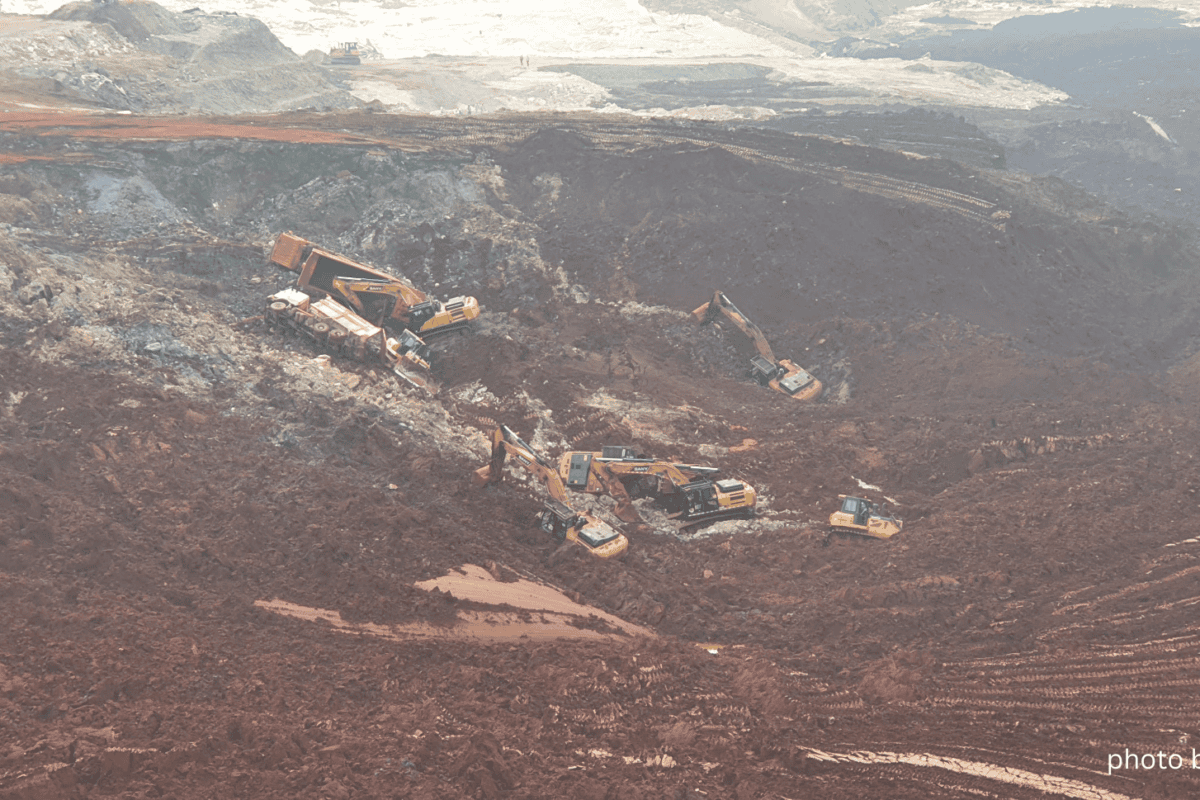
- A deadly 2026 landslide in Indonesia’s Morowali nickel hub highlights risks in “dry stack” waste systems, which can still liquefy under poor conditions.
- Indonesia’s booming nickel industry generates massive volumes of toxic waste, with dry stack or “filtered” tailings promoted as safer than the typical wet sludge, but often poorly implemented.
- Experts cite design flaws, weak oversight, and challenging local conditions, including rainfall and seism activity, as key factors behind repeated failures.
- Watchdogs are calling for a halt to new tailings facilities and stronger safeguards, warning of ongoing risks to workers, communities and ecosystems.
JAKARTA — In February 2026, videos circulating on social media showed a mass of mining waste rushing downslope like thick mud, engulfing excavators and bulldozers within seconds as operators scrambled to escape.
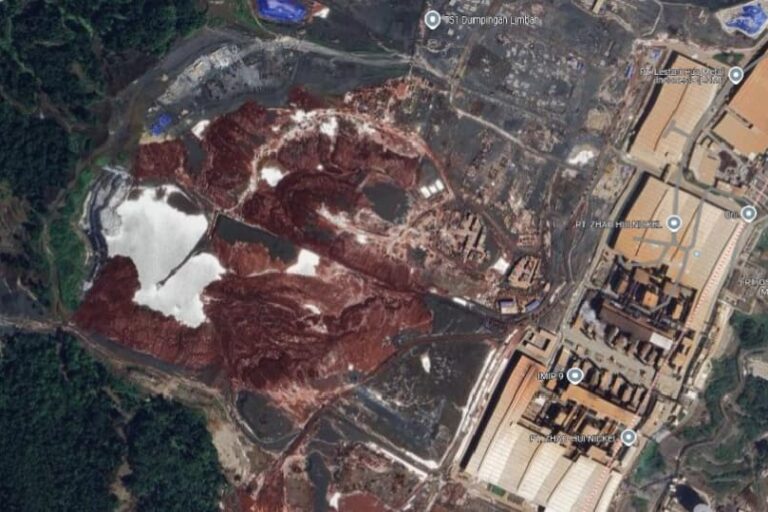
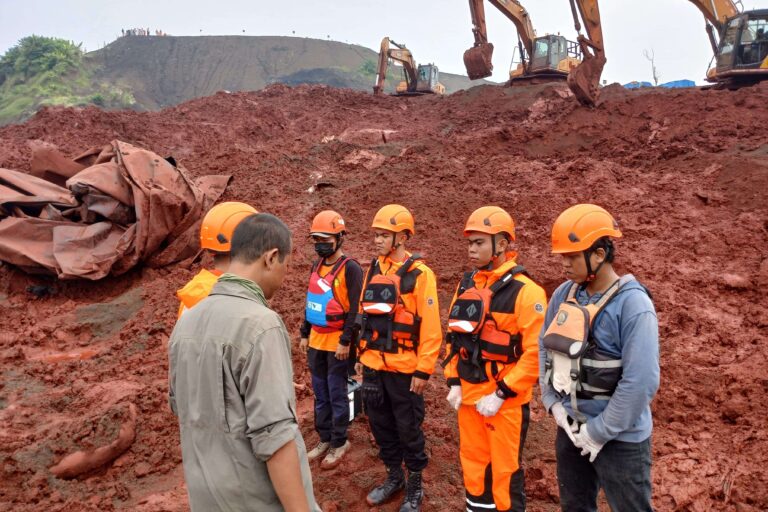
That landslide of mining waste, or tailings as it’s known in the industry, occurred on Feb. 18 at a storage area in Morowali industrial area in Indonesia’s Central Sulawesi province, a key hub of the country’s nickel industry. The facility was operated by PT QMB, a tenant of the Indonesia Morowali Industrial Park (IMIP), and the incident left an excavator operator dead.
Steven Emerman, a hydrogeologist and mining waste expert who reviewed the videos, concluded that they showed the phenomenon of liquefaction — a failure in which partially dried mining waste suddenly behaves like a liquid.
“The video clearly shows liquefaction of a filtered tailings stack,” he told Mongabay.
Filtered, or “dry stack” tailings are widely promoted as a safer alternative for storing mining waste than the wet sludge held behind conventional tailings dams. The material is filtered to remove its water content and stacked on land as a damp, soil-like mass.
But a new report by U.S.-based environmental NGO Earthworks that Emerman contributed to raises concerns about how the technology is being applied in Indonesia. It says some facilities are being built “taller and contain more waste than they can safely hold,” and cites problems with design, drainage and quality control.
These risks are compounded by the rapid expansion of Indonesia’s nickel industry, raising concerns about the risk of further failures, including incidents like the February 2026 landslide.
“Tragically, in the time that it has taken to complete and publish this research, tailings facilities have failed at the Indonesia Morowali Industrial Park, and workers have lost their lives,” said Ellen Moore, Earthworks’ mining program director.
Toxic challenges
Indonesia is the world’s biggest producer of nickel, and its output has surged in recent years, driven by global demand for electric vehicle batteries. The country’s annual nickel production rose from 130,000 metric tons in 2015 to 2.2 million metric tons in 2024, taking the country’s share of global supply from 5.7% to 59.5% in just a decade.
Much of that growth has come thanks to the process of high-pressure acid leaching (HPAL) to extract nickel from low-grade ore by using high pressure, heat and sulfuric acid.
But HPAL generates vast amounts of waste. For every ton of nickel produced, about 133 tons of tailings are left behind — material that’s often highly acidic, potentially toxic, and difficult to manage.
Richard Labiro, director of the Indonesian NGO Yayasan Tanah Merdeka, described the scale of the problem as overwhelming.
“The risks created by the huge and growing amount of toxic waste are borne by workers, local communities and the environment,” he said, adding that over 40 workers have died in workplace accidents at one industrial park since 2015. He did not identify which industrial park.
To manage this waste, operators have increasingly turned to filtered tailings facilities. In theory, removing the water from the tailings reduces the risk of catastrophic dam collapse.
However, the resulting dry stack isn’t actually dry. It remains damp and must be carefully managed to stay stable.
Emerman said water content in Indonesian tailings can reach up to 35%, far higher than the roughly 15% typical of filtered tailings elsewhere.
Maintaining the right balance is critical: too much water and the material can lose strength , too little and it cannot be compacted properly.
Emerman said this imbalance likely contributed to the February 2026 collapse.
“[T]his liquefaction probably results from lack of quality control on the water content of the tailings, inadequate compaction of the filtered tailings stack, and inadequate drainage infrastructure within the filtered tailings stack,” he said.
He added the technology itself isn’t inherently flawed. When properly designed and managed, filtered tailings can reduce the likelihood of failure, and global data suggest relatively few reported failures. Out of the 74 filtered tailings storage facilities listed in the Global Tailings Portal, only one facility, at the Pinos Altos mine in Mexico, has been reported as unstable, Emerman said.
He cited a 2020 book by mining risk experts Franco Oboni and Cesar Oboni, who wrote that dewatered tailings can lower failure probability “towards the bottom of the historical range,” provided the system is properly implemented.
However, Emerman said the perception of safety can create complacency. The challenge, he said, is that filtered tailings remain a relatively new approach, with limited guidance on how to apply them under complex conditions.
Several failures have been reported in recent years. In December 2024, a filtered tailings stack collapsed at the Turmalina gold mine in Brazil, burying part of the site and prompting the evacuation of 134 people.
But that failure differed from the Indonesian case. At Turmalina, the material moved as a solid mass rather than liquefying, suggesting it had been properly compacted.
“If the filtered tailings have been properly compacted, they could still fail by solid slumping, but they should not undergo liquefaction,” Emerman said.
‘Dry’ but unstable
Indonesia presents particularly difficult conditions for this type of waste management.
High rainfall can re-saturate tailings and erode storage piles.
The country is also seismically active: at least 435 shallow earthquakes were recorded in Central Sulawesi — where many nickel processing hubs are located — between 1961 and 2019.
Much of this activity is associated with the Matano Fault system, an active network of six segments capable of generating earthquakes with magnitudes ranging from about 6.6 to 7.2.
A study by Hasanuddin University suggests that none of these segments has yet released its maximum estimated seismic energy, indicating the potential for larger events over long timescales.
In areas with soft geological structures, including regions around tectonic lakes, such shallow earthquakes can amplify ground shaking and increase the risk of damage to infrastructure. Steep terrain and weak volcanic soils can further undermine stability.
At the same time, the report points to problems with how facilities are being built and managed, including inconsistent compaction, incomplete drainage systems, and limited monitoring.
These factors, combined with weak regulation and enforcement, have made implementation of filtered tailings challenging in Indonesia.
“My thesis is that this combination of HPAL and filtered tailings is a disruptive technology, and that has been and is leading to even more catastrophic failure. It’s a disruptive technology that is not working,” Emerman said, referring to its current implementation in Indonesia.
He added, however, that the issue lies in how the technology is applied, rather than the concept itself.
A series of failures
The February 2026 incident wasn’t an isolated case.
At least two landslides were reported at tailings facilities in the Morowali industrial park in March 2025. One of them, on March 22, killed three workers.
The operator, QMB, attributed the incidents to extreme rainfall, describing them as a “once-in-50-years” event beyond human control.
Emerman rejected that explanation.
“That actually doesn’t make any sense,” he said. “Heavy rainfall can never be the cause of failure of an engineering facility that’s supposed to be designed to withstand the expected rainfall.”
He said such facilities should be designed to withstand severe weather. He also noted that a “50-year” storm, often cited in engineering, has about a 2% chance of occurring in any given year and is not particularly rare.
For infrastructure where failure can result in loss of life, he said, much higher safety standards are needed.
In the case of filtered tailings storage facilities, they should be designed for a 10,000-year rainfall event, or one with a very low annual probability, Emerman said.
“The failure is a failure of design,” he said.
Emerman also noted that the industrial park later received an environmental award from the Indonesian government.
Disaster risks beyond Sulawesi
Concerns are not limited to Morowali.
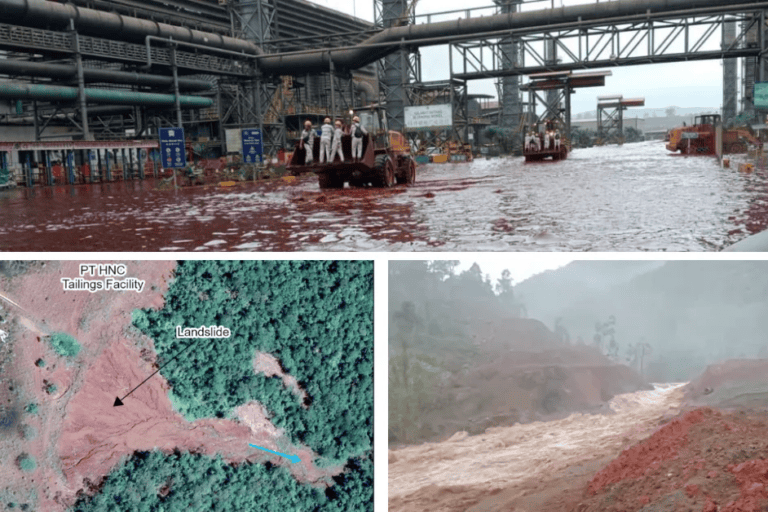
The Earthworks report highlights similar risks at other major nickel hubs in Indonesia, including IWIP at Weda Bay on Halmahera Island and the Harita Nickel complex on Obi Island, both in North Maluku province.
Analysis cited in the report suggests that some facilities are larger and store more waste than comparable operations in other parts of the world with similar rainfall, raising questions about whether the technology is being applied beyond tested limits.
A 2022 technical review by consulting firm SRK of a tailings facility at the Harita site warned of “uncontrolled risk” of failure, citing a lack of quality control, incomplete drainage systems, and insufficient monitoring.
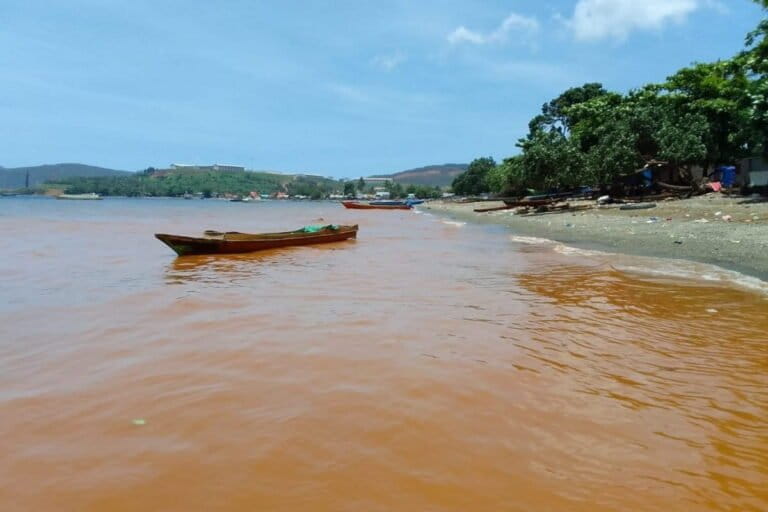
Despite these concerns, the facility has continued to expand, according to the Earthworks report. In the event of a collapse, the report warns, tailings could flow into nearby waterways and reach the Molucca Sea, threatening workers and residents of the coastal village of Kawasi.
Signs of contamination
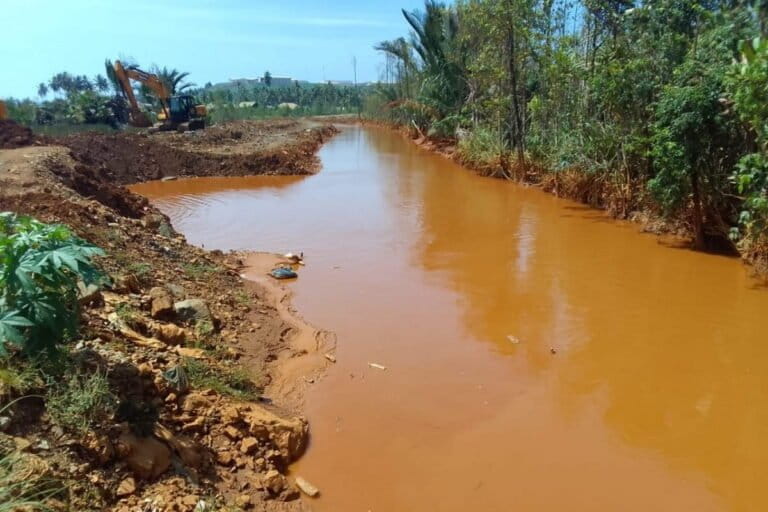
Even without major failures, there are concerns about ongoing pollution.
In 2022, The Guardian reported that drinking water in Kawasi contained elevated levels of hexavalent chromium, or chromium-6, a toxic and carcinogenic chemical that came to public attention thanks to the work of U.S. activist Erin Brockovich. Exposure to chromium-6 has been linked to liver and kidney damage, respiratory illness, skin problems, and increased cancer risk.
Local groups say health impacts are already visible on Obi.
“The most common illness on Obi Island now is respiratory problem, especially for children and babies, with 1,500 cases now,” said Astuti N. Kilwouw, who heads the North Maluku chapter of Walhi, Indonesia’s biggest environmental NGO.
Earlier reporting by the Organized Crime and Corruption Reporting Project (OCCRP) and partners found that the Harita Group had been aware for years of contamination linked to its operations.
The findings underscore concerns about long-term health risks in communities near nickel processing sites.
Limited responses from industry
Mongabay contacted several major nickel operators, including IMIP, IWIP and Harita Nickel, but didn’t receive any substantive responses by the time of publication. Company representatives said they were still coordinating internally or awaiting management approval.
In response to the Earthworks report, several manufacturers of electric vehicles acknowledged risks in Indonesia’s nickel supply chain but said they don’t source nickel directly from producers there. Companies including BMW, Mercedes-Benz and Volvo said they rely on third-party suppliers to meet environmental and human rights standards and conduct due diligence to monitor compliance.
Chinese battery material producer Zhejiang Huayou Cobalt, a major investor in the IMIP, IWIP and Harita Nickel industrial estates, said it follows international standards and has systems in place to manage tailings safely, including layered compaction, drainage controls and environmental monitoring.
Many of the other companies named in the report didn’t respond to requests for comment.
Calls for reform
Earthworks is calling for a moratorium on adding new waste to filtered tailings facilities and on approving the construction of new facilities until stronger safeguards are in place.
“To ensure the safety of mineworkers and local communities, we need a hard pause on production,” Moore said. “No new waste should go into these mine waste facilities until companies and the government can guarantee the safety of communities and the environment.”
The group also called for independent safety audits and stronger regulations aligned with international standards.
Emerman said operators should proceed more cautiously, expanding facilities incrementally while improving design and monitoring.
Earthworks also urged global buyers, including automakers, to conduct stricter due diligence to ensure their supply chains aren’t linked to environmental harm or human rights abuses.
Without significant changes, the risks will continue, said Jan Morrill, an international mining campaigner at Earthworks.
“We believe that there needs to be significant and urgent changes made to ensure that these catastrophes and harms that we are seeing do not continue in the future,” she said, “and that communities and ecosystems don’t pay the price of the green energy expansion and the nickel buildout.”
Banner image: Heavy machinery is buried by a landslide at a mine waste storage facility at Indonesia Morowali Industrial Park, February 2026. Photo by a worker at IMIP.
FEEDBACK: Use this form to send a message to the author of this post. If you want to post a public comment, you can do that at the bottom of the page.
