

- In recent decades, the Amazon Rainforest has repeatedly and increasingly been struck by devastating drought along with record heat due to climate change. Add to this record wildfires, rapid deforestation and land conversion for agriculture.
- Numerous field studies and modeling have found that these extreme changes are pushing the Amazon toward a tipping point and collapse of the biome — an ecological disaster that would release large amounts of carbon into the atmosphere.
- But one research team, in a recently published study, offered up some hope: They found that little-studied low water table wetland Amazon forests — constituting up to 36% of Amazon trees — have stood up well to, and even thrived, during major droughts, with an increase in aboveground biomass.
- Those findings, the research team says, put the inevitability of an Amazon tipping point and collapse in some doubt, with the possibility that low water table forests could serve as a refugia for biodiversity. They also urge that these areas become a priority for protection and conservation as a hedge against future climate change.
Reports on the health and vitality of the Amazon — often dubbed as Earth’s lungs — have been grim for years. Record drought has stressed large swaths of the world’s largest rainforest. Major Amazon River tributaries, including the Rio Negro and Madeira River, hit their lowest levels in more than a century of measurement in 2024. And experts warn that deforestation and wildfires are tipping parts of the biome from carbon sink to source.
Yet in Manaus, a city at the heart of the Brazilian Amazon, forest ecologist Flávia Costa is upbeat as she highlights what appears to be a previously underappreciated underlying Amazon reality: Her research finds that the region’s vast wetlands, or shallow water table areas, have proven to be stubbornly drought resistant through years of intensifying climate change.
In fact, her long-term research reveals that palm species and other wetland trees are not just surviving drought seasons, they’re maintaining their health and even adding biomass. That could mean these areas could serve as valuable refugia, as other parts of Amazonia degrade.
Significantly, these shallow water table areas compose 36% of Amazonia and have been a crucial part of the evolving rainforest ecosystem for millions of years. Sturdy, resilient palms account for one in five tree species across the Amazon, which includes parts of nine nations, and of which Brazil occupies 60%.
These forested wetlands and Costa’s research represent one bright spot in the Amazon’s otherwise gloomy projected trajectory for the 21st century — forecasts built on decades of field studies and modeling that document the combined impacts of rising temperatures, deepening drought, rapid deforestation, forest fragmentation and wildfires, leading to a potential tipping point and biome collapse with massive carbon releases to the atmosphere.
Underscoring these forecasts is a new study in PNAS that documents additional worrisome facts: Satellite modeling concluded that consecutive, record-breaking Amazon droughts in 2023-24 had a broad, degrading impact on forest moisture and biomass dynamics , less than half of the areas impacted in those years are expected to recover to predrought conditions of greater carbon soil content and canopy height, the study concludes.
Shallow water table resilience
Costa’s research aims to offer a glimmer of hope. She is a lead author on a long-term study published in February in the Journal of Ecology titled “Palms and trees resist extreme drought in Amazon forests with shallow water tables.”
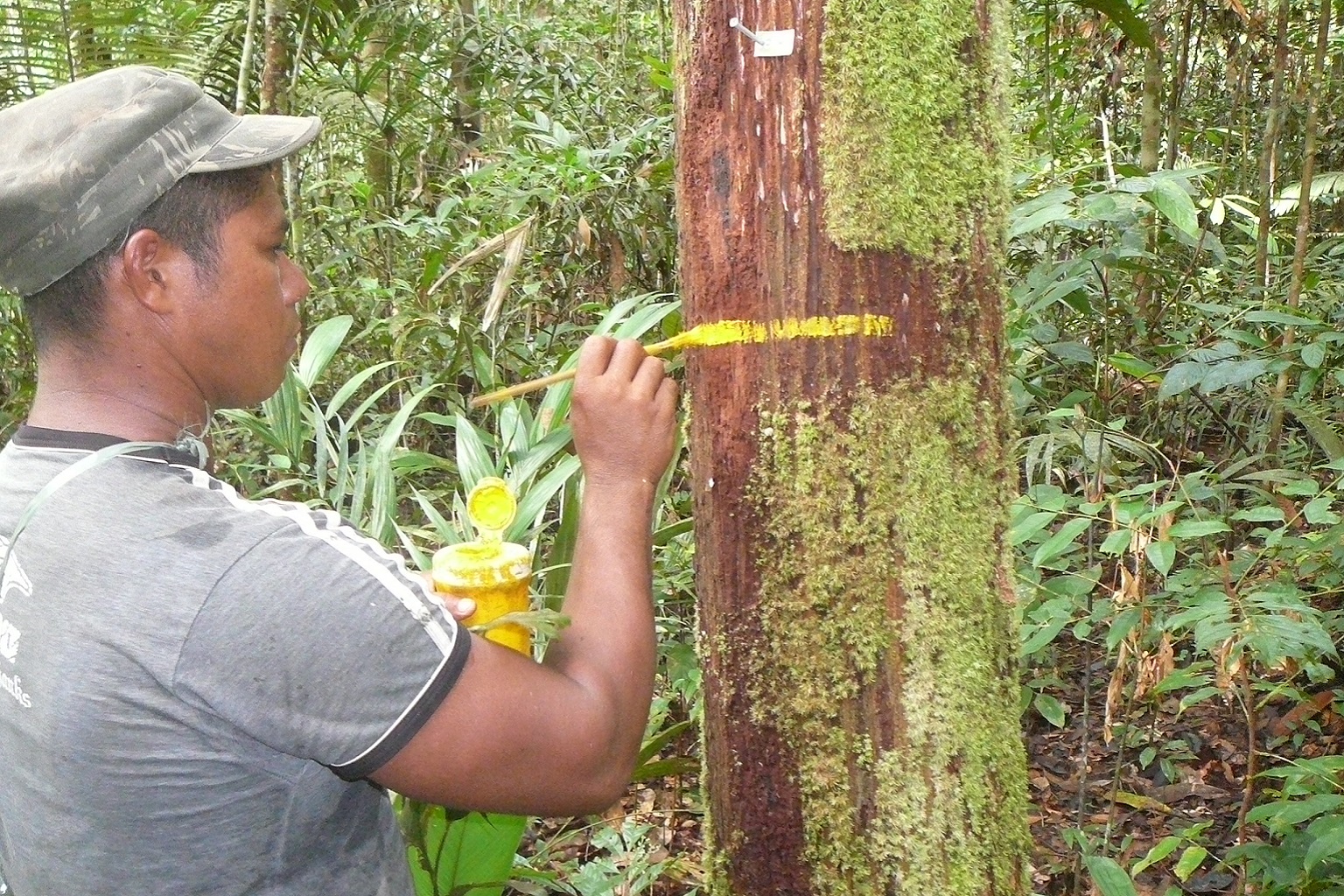
Starting in 2009, Costa, at the National Institute of Amazonian Research in Manaus, along with a team of ecologists, evaluated the drought response of palms and other tree species in a large 600-kilometer (373-mile) transect in central-southern Brazil — a landscape mostly made up of shallow water table forests.
Studies in these types of lowland forests are rare, says Costa, who adds that research into Amazon drought response usually focuses on upland forests with deep water tables, areas that tend to be more susceptible to drought conditions.
The new study notes that its findings of drought resistance “are consistent with the hypothesis that local hydrology and interactions with climate strongly constrain forest drought effects.” In this case, belowground water in wetland ecosystems compensates for the lack of rain from above.
Whether or not this drought resistance will persist as climate change escalates and other parts of the forest are degraded or lost to deforestation is beyond the scope of Costa’s study.
Revising the Amazon tipping point narrative?
“Our research goes against the belief that the Amazon is collapsing,” Costa tells Mongabay. “And this is big because someone needs to say that things are more patchy [than generally believed] and there are possibilities of a positive outcome. Because then, if there are such possibilities, you can go and protect these specific areas.”
She emphasizes that “this research is important because it changes a general [pessimistic] perception and can allow for some directed-management action.”
Carlos Nobre, an Earth system scientist with the Institute of Advanced Studies at Brazil’s University of São Paulo, reviewed Costa’s findings for Mongabay. The leader of the Amazon 4.0 Project, Nobre has studied the impact of the Amazon Rainforest on Earth systems since 1983. In an email response, he says he agrees Costa’s paper “seems very important.”
But Nobre also qualifies this assessment, saying, “I would not agree that low water table forests would [help] avoid the Amazon collapse, due to the increase and severity of droughts,” which have already pushed the biome “very close to the tipping point.”
He explains further: “In the past, there were severe droughts every two decades. Now, we have had four severe droughts in two decades: 2005, 2010, 2015-16 and 2023-24. For instance, the worst drought was 2023-24, and it may be the case that even the low water tables were very dry.”
A direction for protection
For her part, Costa, whose paper cites research led by Nobre among its scores of references, confirmed that her field studies are ongoing and that preliminary findings continue to illustrate drought resiliency since 2016.
And while her team’s new study acknowledges the dire impact of drought across the Amazon on forests and biodiversity, Costa maintains that palms and other trees in shallow water table forests — given their resilience as stable carbon sinks and their potential as refugia for Amazon biodiversity — are important and should receive more protections.
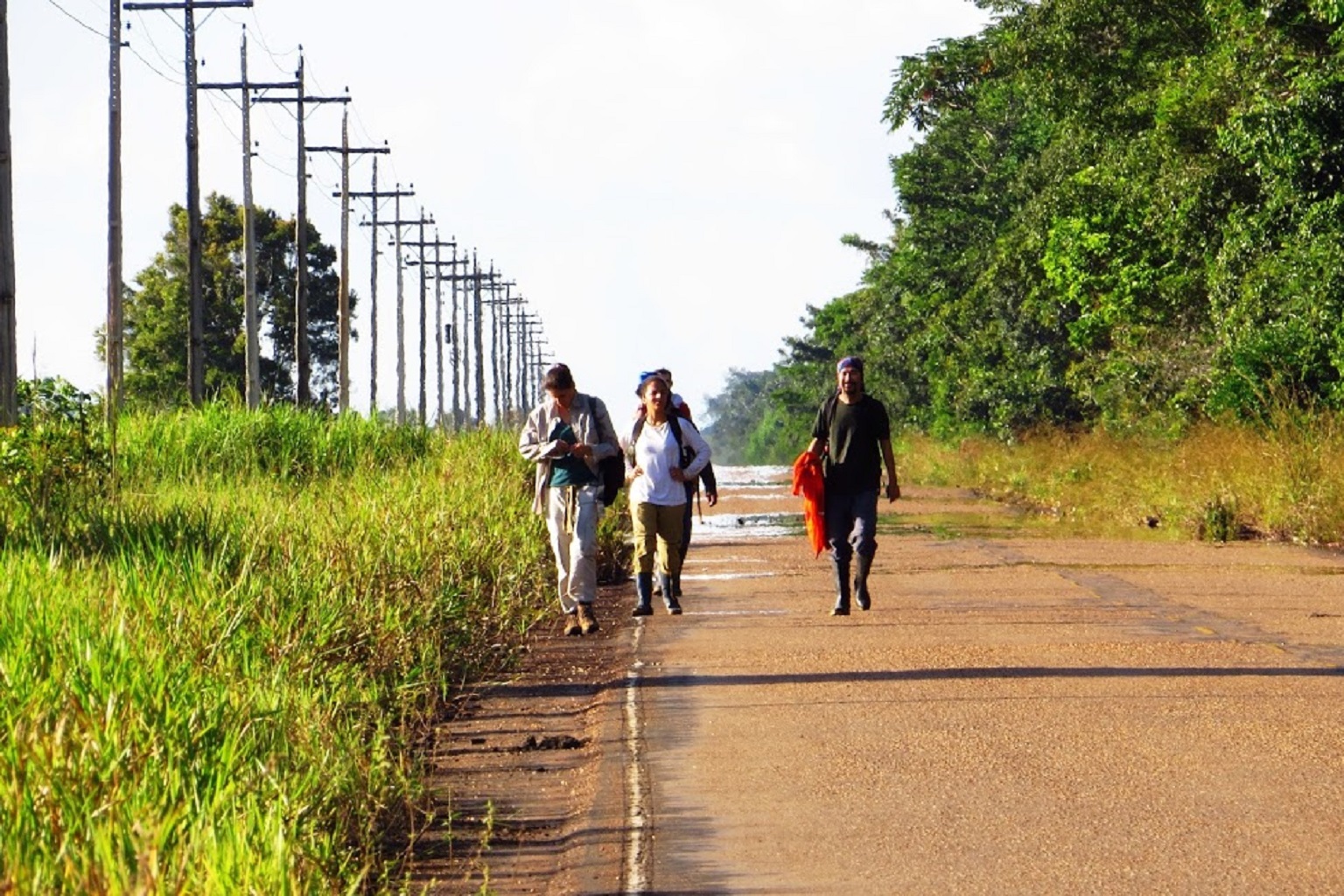
Her research team arrived at its surprising findings partly by taking advantage of a “unique permanent plot initiative” made accessible by the BR-319, a Brazilian highway connecting Manaus with Porto Velho, lined by largely pristine rainforest. That access enabled regular field monitoring of 25 forest plots each covering 1 hectare (2.5 acres). Similar shallow water table forests are often inaccessible to long-term study, Costa notes.
The researchers gathered data in a time frame that included intense droughts in 2010 and 2015-16. The study goal was to fill gaps in understanding regarding forest dynamics in shallow water table areas and to underscore the importance of palm species prevalent in the structure of tropical forests.
The team found that during the exceptionally hot and dry El Niño drought of 2015, for example, palm and wetland tree mortality rates did not see increased mortality. Instead, local hydrological conditions and soil fertility appeared to contribute to “an increase in tree above-ground biomass stock from 2010 to 2015,” and there was even increased recruitment or growth rates of new seedlings.
“Our study reveals the complex interplay between climatological droughts and belowground water access on forest dynamics,” the authors wrote. “Our results indicate the crucial need to incorporate the interaction between precipitation and belowground properties for a more realistic estimation of local hydrological conditions on environmental impact evaluations and models to forecast drought effects in the Amazon.”
Field observations, not modeling
Enrique Ortiz, a senior program manager with the Andes Amazon Fund and a tropical ecologist broadly familiar with the Peruvian Amazon, tells Mongabay that he found the study’s methods persuasive.
“The beauty of this research is that it is based on fieldwork, actual measurements in the field, and not modeling,” Ortiz says. “Also, it is long term and spans large areas so the scientists have a good handle on what’s actually happened over time. This is important when you’re talking about areas that cover more than a third of the Amazon.”
To that end, both the study and Costa emphasize the importance of incorporating neglected forest types, such as those growing in shallow water table areas, into both the modeling of Amazon climate responses and into public decisions about conservation priorities.
Ortiz sees the findings as especially encouraging, given the utility of palm trees for fruit, fibers and building materials. He notes that where there is successful recruitment, local people can pursue selective palm harvests outside of protected areas, secure in the knowledge that new palms will quickly grow back, even during droughts.
Costa pushes back against modeling that forecasts a dire Amazon tipping point, arguing that, “Our research sets a counterpoint to all those catastrophic predictions that forests will collapse. Our evidence shows that there are regions that seem capable of retaining their structure, their function, and are not so susceptible to collapse as has been predicted.”
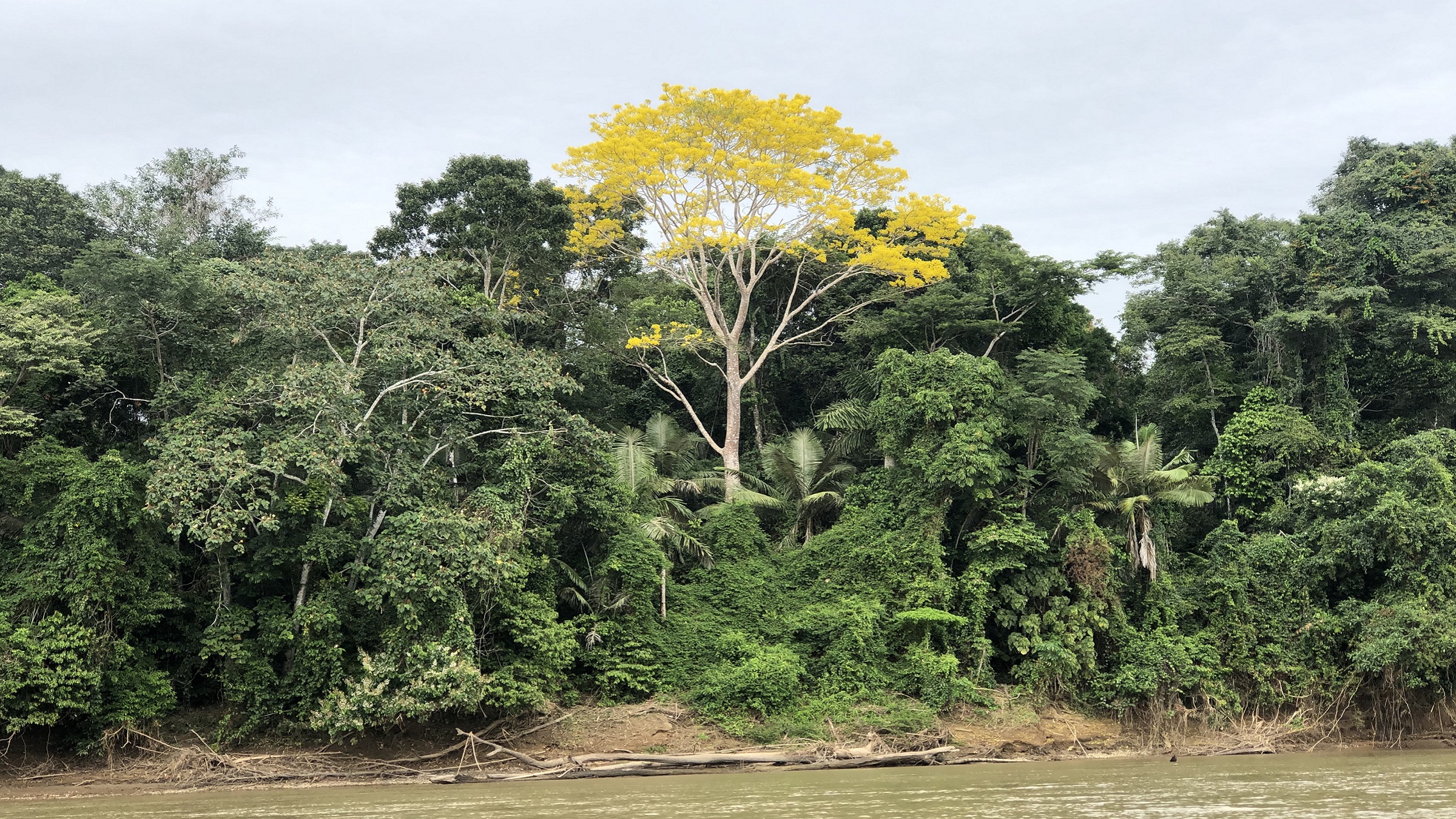
Banner image: Palm trees, which make up 20% of the trees in the Amazon, grow mixed among various tree and grass species in the southern Peruvian Amazon lowlands of Manu National Park. Image by Justin Catanoso.
Justin Catanoso, a regular contributor to Mongabay, is a professor of journalism at Wake Forest University in North Carolina.
Citations:
Bai, H, Liu, X, et al. Unprecedented Amazonian rainforests damage during the 2023–2024 droughts. PNAS. 123 (13) e2514066123. doi:10.1073/pnas.2514066123
Sousa TR, Schietti J, Coelho de Souza F, et al. Palms and trees resist extreme drought in Amazon forests with shallow water tables. J Ecol. 2020 ,108: 2070–2082. doi:10.1111/1365-2745.13377
Nobre, C. A., Sampaio, G., Borma, L. S., Castilla-Rubio, J. C., Silva, J. S., & Cardoso, M. (2016). Land-use and climate change risks in the Amazon and the need of a novel sustainable development paradigm. Proceedings of the National Academy of Sciences of the United States of America, 113(39), 10759–10768. 10.1073/pnas.1605516113
FEEDBACK: Use this form to send a message to the author of this post. If you want to post a public comment, you can do that at the bottom of the page.
