

- In May, José Manuel Bolieiro, president of the Portuguese-administered Azores region, will be honored at the international Peter Benchley Ocean Awards, known as the “Oscars for the Ocean.”
- Bolieiro played a key role in the recent expansion of the archipelago’s existing ocean protections with the establishment of the Azores Marine Protected Areas Network, now the largest MPA network in the North Atlantic.
- He spoke to Mongabay about the importance of ensuring adequate funding and enforcement for the new MPA network, his hope that Portugal can be a global reference for ocean conservation, and how growing up in the Azores fostered his deep love of the sea.
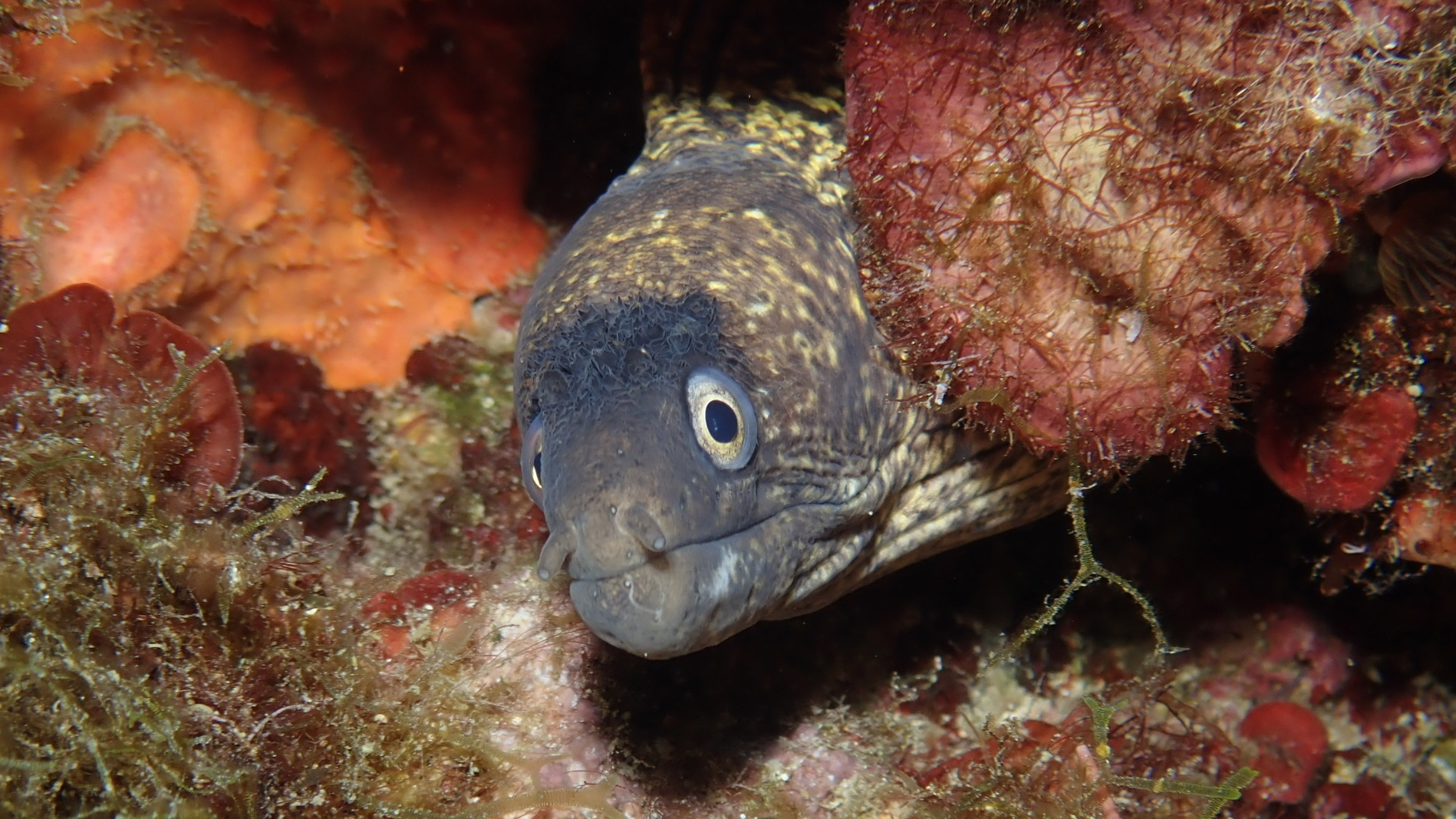
José Manuel Bolieiro says he’s been an environmentalist for as long as he can remember. He recalls captivating encounters with marine life as a teenager while diving in the North Atlantic waters of his native São Miguel, one of the nine islands that make up the Portuguese-administered Azores archipelago. The gaze of the moray eel remains etched in his memory: “It’s impressive because it watches us vigilantly, without aggression,” he tells Mongabay.
Bolieiro’s early interactions with the ocean proved formative. A member of the Social Democratic Party, Bolieiro is a former mayor of Ponta Delgada, the largest city in the Azores, and has served as president of the regional government of the Azores since 2020, championing the establishment of a remarkable network of marine protected areas (MPAs) in the biodiverse waters around the archipelago. The region is home to numerous species of dolphins and whales, sharks and turtles, and rich in corals, hydrothermal vent ecosystems and seamounts.
The previous government of the Azores, which is run as an autonomous region of Portugal, had set a goal of protecting 15% of the archipelago’s waters. But Bolieiro dreamed bigger: He sought marine protection covering 30% by 2030.
In 2024, the regional parliament approved legislation for the new Azores Marine Protected Areas Network, and it came into force on Jan. 1 of this year. At 287,000 square kilometers (110,800 square miles) — more than three times the land area of Portugal — it’s now the largest MPA network in the North Atlantic Ocean. Conservationists lauded the new law. But just two weeks later, it faced a major challenge.
On Jan. 15, the regional parliament scheduled a debate on a proposal by the opposition party, supported by the fishing industry, that sought to open the fully protected areas within the network to tuna fishing with pole and line — a traditional method considered to have lower impact on ecosystems and fish stocks than other fishing methods.
Some conservationists and biologists criticized the proposal, arguing that it threatened the credibility of the Azores and Portugal on the international stage since the accepted definition of a fully protected area dictates no extractive activity of any kind.
Bolieiro, living up to his reputation as a negotiator, tells Mongabay that he immediately began talking to all parties. Bolieiro’s intervention helped ensure the proposal that reached parliament was different. It prohibited all extractive activity in “fully” protected areas — deemed to have great vulnerability and ecological importance — and authorized pole-and-line tuna fishing only in “highly” protected areas, which are considered less sensitive but still in need of habitat and species management. The Azores parliament ultimately voted in favor of the revised proposal.
Bolieiro says monitoring, enforcement and resolving points of conflict with the fishing sector will be among the next challenges for the network of marine protected areas, along with securing sufficient resources to support implementation of the new law.
In May, Bolieiro will receive one of the international Peter Benchley Ocean Awards in California, considered the “Oscars for the Ocean,” in the Excellence in National Leadership category, for his decisive role in ocean conservation and the sustainable management of marine resources. Benchley was a U.S. writer and activist best known for his 1974 novel “Jaws,” which inspired Steven Spielberg’s film of the same name.
Mongabay spoke with Bolieiro about his relationship to the ocean and his approach navigating multiple interests to negotiate such an ambitious agreement. The following interview has been translated from Portuguese and edited for length and clarity.
Mongabay: You studied law. When and how did your interest in ocean conservation arise?
José Manuel Bolieiro: I am an environmentalist by nature and, therefore, I have always been very concerned with ecological issues.
When I was young, I used to go fishing and make underwater observations. As a young man, aged 14, 15, 16, on an island like São Miguel, where I was born, I used to go freediving. Later, I took a course in scuba diving with a tank, but only to shallow depths. I have no experience below 15 meters [about 50 feet]. Unfortunately, I don’t do it anymore! I don’t have time.
Later, of course, I followed issues related to [nature] protection, with the United Nations’ Sustainable Development Goals. Obviously, being in government and having taken on governmental functions, I wanted to follow what I believe to be the most solid path in public and private action: leadership by example.
Mongabay: What do you remember about the feeling of being underwater?
José Manuel Bolieiro: Well, first, the beauty. Second, the state of mind guided by the maximum tranquility of silence and the almost astonishment of life passing before our eyes and feeling the depth, pressure and underwater movement of the waters, fauna and flora throughout our entire body. It has a profound impact on our senses and our spirit because it is a domain that is outside the turbulence of everyday life.
Mongabay: Is there a particular experience you had that you can share with readers?
José Manuel Bolieiro: What I remember most often is the fixed observation of some fishes.
The moray eel is impressive because it watches us vigilantly, without aggression. But it is ready to react if attacked. So, it is a very interesting species to observe.
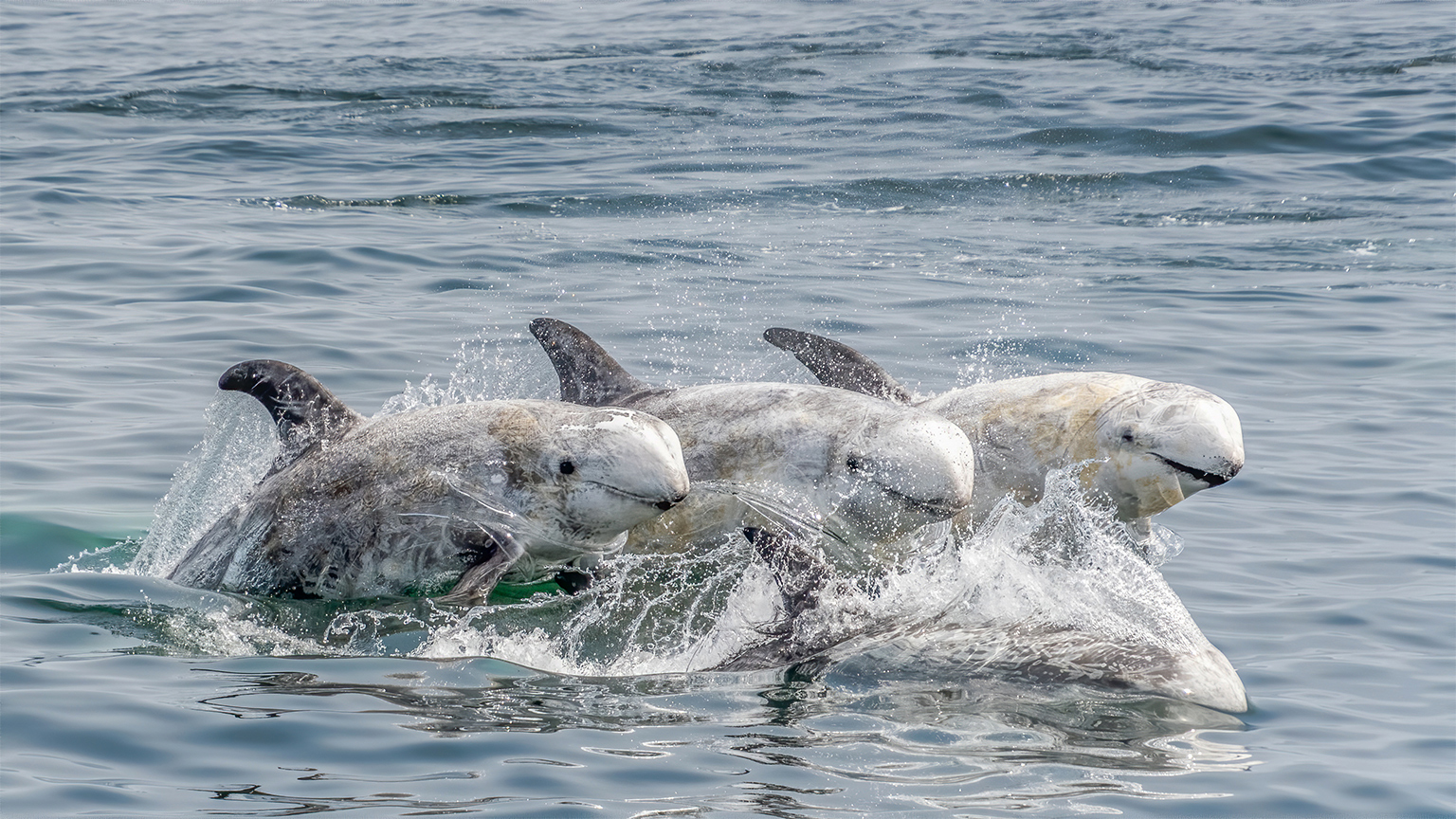
I’ve never dived with sharks. I’ve dived with dolphins, but wild dolphins swim at tremendous speed and then dive so quickly that we hardly get to interact with them up close. But it’s interesting, when we’re underwater, to see and feel the vibration of their communication. Very gently, the water vibrates.
Mongabay: Did you already have concerns about ocean conservation while you were mayor of Ponta Delgada?
José Manuel Bolieiro: Yes, I even organized major coastal cleanup operations to combat pollution in partnership with the scouts and [conducted] interventions with polluters to dissuade them, whether they were acting out of negligence or abuse.
We also tried to engage young people and schoolchildren in civic cleanup activities to prevent them from becoming polluters in the future. I have always been sensitive to this issue.
Mongabay: Tell us a bit about the history of the Azores Marine Protected Areas Network. When did the idea come about?
José Manuel Bolieiro: I am not someone who wants to take credit that is not entirely mine.
The Azores have always had a special sensitivity to environmental sustainability throughout their history, both before the Democratic Revolution and after the establishment of Portuguese democracy and the political autonomy of the Azores.
Five percent of the Azores’ exclusive economic zone was already protected marine areas [in 2012]. My government’s decision, together with the conversations I had with Tiago Pitta e Cunha [executive director of the Oceano Azul Foundation] and the [Lisbon-based] Oceano Azul Foundation, led to my conviction: Why do little when we can do everything?
I wanted to invest in political action based on scientific knowledge. So, let’s let the science tell us what needs protecting, how to protect it and the extent of that protection, and then start a political and legislative process to confirm it.
I had one difficulty: Politics. The Azores government did not have an absolute majority in parliament.
I informed my own partners in this project, namely the Oceano Azul Foundation and Blue Azores [a collaboration between the Azores government, Oceano Azul Foundation and the U.S.-based Waitt Institute]: We have to work to convince all stakeholders, whether those in the extractive economy or those in the value-added and observation economy. We have to involve the different operators involved in the use of the sea, but also the region’s variable parliamentary geometry, which is often more populist than strategic.
I always had to govern the Azores under the threat that the government would not last more than six months. And so, all of this generates a certain instability and a demand for dialogue and democratic patience.
Mongabay: What was your greatest contribution to the creation of this network of marine areas?
José Manuel Bolieiro: My belief in the cause and my determination to achieve the goal. Then there was the process: I developed a method that valued dialogue and consultation with sea users and scientists and, to a certain extent, with society, focusing even more on young people.
And there was another: democratic patience, seeking to involve political parties to give [the MPA network] a certain consistency and international credibility.
Mongabay: Was the political game the biggest difficulty?
José Manuel Bolieiro: It was perhaps not the biggest. The biggest still remains with those who make their living from the extractive economy, i.e., fishers and shipowners.
[We need to] create effective management and enforcement plans. We need to develop a system that allows for compensation for any loss of income during a transition period. Because there will be losses. And [develop] a process for restructuring the fishing sector and the use of the sea itself.
It is one thing to write a well-crafted thesis on paper, but then in practice it can be undermined by misconduct of the sea users.
Mongabay: So the participatory process was one of the keys?
José Manuel Bolieiro: Exactly, and it will continue to be. The process of dialogue and participation is ongoing. In the creation plan, it was. In the management plan, it is, and in the enforcement plan, it always will be.
Mongabay: In March 2025, just a few months after the law establishing the MPA network was passed, the Azorean Socialist Party proposed opening the fully protected areas within the network to tuna fishing. How did you view this proposal?
José Manuel Bolieiro: It was shocking. I immediately took action to dissuade the Socialist Party from proceeding with that proposal on those terms.
Mongabay: You are known as a conciliatory politician and negotiator. Did you realize right away that you would have to work on a strategy?
José Manuel Bolieiro: Without a doubt. I am not intellectually arrogant, nor do I believe that politics is about “I can, I want, and I command,” but rather about coordination. This comes naturally to me. And I know that it is always possible to find positive contributions from other authors and co-authors of the political decision.
Mongabay: Mathematically, it was possible that the Azores parliament would reject the Azorean Socialist Party’s proposal, right? But you didn’t want to take that risk?
José Manuel Bolieiro: It was a risk, I wasn’t sure if it would be rejected. But my goal was really to [maintain] international credibility, because the largest political force in the opposition may … take power again in the future. If I had given up on this process of dialogue, what would have happened to the international public image?
Mongabay: Was the ultimate agreement acceptable, in your opinion?
José Manuel Bolieiro: As for the legislative outcome itself, it is not my preference. I think [the law passed in 2024] was better drafted. I always weigh up the two sides: What is worse? And what is better?
It would have been worse to have a solution that gave the international community the impression that [the Azores] were inconsistent and that tomorrow they could change everything. So while it did not remain as it was initially, it does not undermine the essence of the process and, in the meantime, it has [achieved] an image of consistency in the decision taken. I prefer this option.
Mongabay: Is this agreement already looking ahead to future negotiations to approve future regulations?
José Manuel Bolieiro: Exactly. All management plans for the future, the introduction of the system for compensating proven income losses and then the monitoring mechanisms.
And then also with the future intervention of national policies, because obviously this commitment belongs to the country. The Azores were pioneers and, as they account for 56% of Portuguese waters, they gave the rest of the country a great advantage with the creation of this pioneering network covering 30% of the Azores’ waters. This has already resulted in 19% of Portuguese waters being protected.
Mongabay: What challenges do you expect to face now with the MPA network?
José Manuel Bolieiro: It is the implementation of the management of marine protected areas, associated with enforcement. The other intermediate challenges are [establishing] the credibility of a system for restructuring the fisheries sector and generating confidence in a compensation system for duly demonstrated income losses. We already have the commitment of the Environmental Fund that will provide this support [10 million euros, or about $11.5 million, over three years] and international sponsors to finance research.
Mongabay: How will it be possible to monitor such a vast area?
José Manuel Bolieiro: We will also have to change the paradigm a little. We need to have the admissibility of evidence that goes beyond [just catching violators in the act].
This includes satellite images, equipment technologically associated with drones and the Portuguese Navy. All of this must be worked on to create a legal framework for identifying violations and punishing offenders.
And then, of course, the vessels and ships themselves must have equipment for verifying and scrutinizing their activity and routes.
Mongabay: What is the current situation? Some GPS devices have already been distributed to some fishers, but coverage is not yet complete.
José Manuel Bolieiro: No, no. And we have to see if they comply. I am very focused on the ethical-retributive view. I know that we first have to provide training on values and principles, so that people are sensitive to compliance. But I also know that many think it is clever not to comply with the rules. Therefore, we really need enforcement and punishment for crime. All of this has to be built, and it is being built.
And this does not depend on the Azores government alone. It depends on the country, but also on the common policies of the European Union and even the United Nations regarding legislation that can ensure the reliability of evidence from satellite images, for example, or other means, so that they are admissible in national and international courts.
Mongabay: Which entities will be responsible for this oversight?
José Manuel Bolieiro: We need the collaboration of the Portuguese Navy and the Maritime Authority, which we already have but which we need to strengthen, both in terms of quantity and technological quality.
Mongabay: So, at this point, you don’t feel you have all the necessary resources?
José Manuel Bolieiro: No, this process has to be done over time, right? And we are ahead of schedule in defining the [protected] areas, which was supposed to start in 2030. We are in 2026 and it is already done. We are even ahead of other regions in this process.
Mongabay: What is your perception of illegal fishing in the Azores?
José Manuel Bolieiro: I think that much of it may no longer exist, but there is still quite a lot. And it must be combatted. We cannot have people who are insensitive to the intergenerational responsibility we have for natural resources.
Mongabay: What about deep-sea mining and oil and gas exploration in the Azores? Is this a threat?
José Manuel Bolieiro: We are very calm about this, because we were also pioneers in the political and legislative decision-making, with the publication of a moratorium [prohibiting until 2050] any deep-sea exploration — mineral, metal or nonmetal — without scientific data. So we have that covered too.
Mongabay: The Azores have already reached 30% of marine areas protected, while the rest of the country has not yet done so. Do you feel an increased responsibility?
José Manuel Bolieiro: It is not an increased responsibility, it is a relief of conscience. I have set an example and I hope to inspire the country, not only in achieving a goal but also in anticipating its achievement.
I would also like to praise and acknowledge the University of the Azores and the Okeanos Institute [a marine science research unit at the university]. To a depth of 1,000 meters [about 3,300 ft], it was our university and our scientists and researchers who achieved the largest and most significant mapping of the North Atlantic.
Mongabay: You recently won one of the Peter Benchley Ocean Awards. What is the significance of the award to you?
José Manuel Bolieiro: First, there is global thinking and local action that gains international recognition. That is important to me. Second, the importance of valuing the Azores and Portugal for being a good reference and a good example.
I receive [the award] personally, but obviously it is a collective achievement and, above all, it is the added value it brings to the Azores and Portugal. It is an award that touches me deeply on a personal and emotional level.
Banner image: A Mediterranean moray (Muraena helena). Image ©gianfrs via iNaturalist (CC BY-NC-ND 4.0).
Azores dodges proposal to overturn no-fishing zones in its giant new MPA network
Feedback: Use this form to send a message to the editor of this post. If you want to post a public comment, you can do that at the bottom of the page.
