

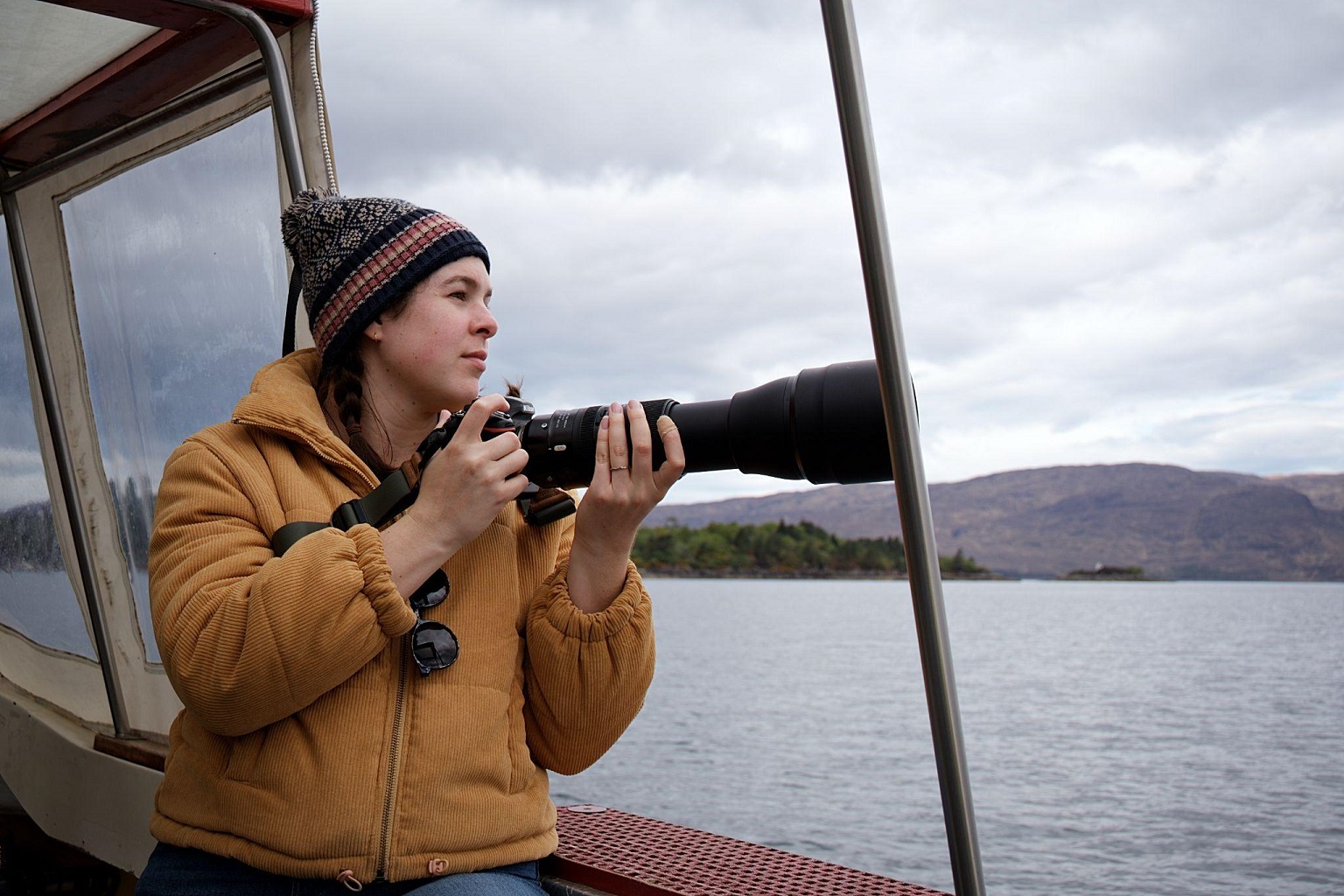
Jessie Panazzolo was given a stuffed gorilla when she was 3, and from then on, she always wanted to be a conservationist. But a reasonable career track of being gainfully employed or on a livable wage almost doesn’t exist in the sector, she explains to me this week on the Mongabay Newscast. She details the dwindling career prospects, the grueling conditions conservationists must endure, and the mental toll they’re taking on themselves.
Following Jeremy Hance’s reporting on the mental health crisis afflicting conservationists, I contacted Panazzolo to gain more insight into her journey in the conservation sector and how she came to lead a community of like-minded professionals who had heartbreaking stories about pursuing their passions.
Panazzolo has been fired for being sick, twice. And had trees thrown at her by orangutans. But these are far from the only struggles she and other conservationists have faced.
“I’ve been chased by tigers or have orangutans rip trees out of the ground and chucked in my direction. But all of these are seen as like not normal risks that you’d put in risk assessments.”
She founded The Lonely Conservationists and Earth Carer Care to provide resources to conservationists of all walks of life and to offer workshops to conservation NGOs on improving working conditions and caring for their employees.
“I wanted to make sure that there was light shed on a range of struggles faced in the conservation industry and give more weight to the need to start to address these. And ever since then, I’ve been running workshops for NGOs and for teams … to help their teams to look after themselves and each other and build resilience.”
Given the global state of the world — from wars and rising authoritarianism, to the degradation of biodiversity and human living conditions — many conservationists have had to shift their goalposts, she says.
“A lot of us believed ‘We can fix this. We can turn the world back into this thriving utopia of biodiversity.’ But the way things have got and the way that the stats are now, it’s like we just kind of want to make the world be livable and kind of comfortable,” Panazzolo says. “I don’t think many of us are still working towards that utopia that felt possible back in the day. And there’s a lot of, I guess, depression or eco grief that comes from that.”
Panazzolo describes how slowing down and appreciating her local park during her lunch break shifted her, allowing her to regain a sense of hope and community: “In a way, I feel less alone in the pursuit of caring for the world.” She explains that she wishes people in Earth-care professions would take more opportunities to slow down and take this in.
“I could see that there was already all these people in my local area that cared about nature. There was already these people that were like out there and caring about the plants and caring about the birds and the frogs. And almost like the way that we’re taught in conservation to just rush and try to do everything ourselves means that we’re not being those people that are out there appreciating nature.”
While some NGOs have responded positively to her recent efforts to encourage better care for employees, Panazzolo notes that some still will not engage with her. As a result, she says she’s skeptical she can support herself full-time by running these workshops at this stage of her career.
“I’ll probably never be able to do this as a full-time replacement of my job … because conservation organizations ultimately benefit from exploiting conservationists or benefit from the systems that make it so challenging for conservationists to get into … a permanent role or to have lasting projects that are not just short-term contracts.”
Mike DiGirolamo is the host & producer for the Mongabay Newscast based in Sydney. Find him on LinkedIn and Bluesky.
Banner image: Jessie Panazzolo. Image courtesy of Jessie Panazzolo.
Notice: Transcripts are machine and human generated and lightly edited for accuracy. They may contain errors.
Jessie Panazzolo: I just would like to let everybody know that you are doing enough. Just by being the change you want to see is enough. And I feel like if you continued the rest of your life doing the same things you are doing now, engaging in meaningful relationships with the people around you, if you are recycling or if you are teaching your kids, or if you are reading up about birds, or you are taking time to sit at a lake, I think it would matter. If all people did was the small things that connected ourselves to each other, or slowed ourselves down, or connected ourselves back to nature, if every single person on the planet just did less but more meaningful things, the world would be this incredible place. So sometimes it is not about doing more. You are enough as you are, and maybe do less, but just do more meaningful, smaller action.
Mike DiGirolamo: Welcome to the Mongabay Newscast. I am your host, Mike DiGirolamo, bringing you weekly conversations with experts, authors, scientists, and activists working on the front lines of conservation, shining a light on some of the most pressing issues facing our planet, and holding people in power to account. This podcast is edited on Gadigal Land. Today on the newscast we speak with Jessie Panazzolo, founder of the Lonely Conservationists and Earth Carer Care, online communities dedicated to highlighting the struggles conservation professionals face and providing them with resources and tools to navigate them. Panazzolo joins me today to talk about the struggles conservationists face and the ones that inspired her to start the blog that eventually became the Lonely Conservationists. We talk about the conditions early-career professionals face, sometimes doing unpaid work for a decade just to have the chance at a job, being fired for being sick, being chased by tigers, and the pressure all of these challenges place on relationships. Panazzolo provides workshops to conservation NGOs to help improve care for their employees. Some of them embrace her work, while others do not engage with her at all. Panazzolo highlights that the sector ultimately benefits from exploiting employees, and this type of thinking, she says, needs to change. She also advocates that conservation professionals, and anyone involved in a career that cares for the planet, take time to connect with nature, engage with their community, and ultimately prioritize taking care of themselves so they can sustain the effort needed to advocate for the environment. Degrading working conditions and government austerity are not the fault of conservation professionals, she emphasizes, and having self-compassion about this is an overlooked need. Jessie Panazzolo, welcome to the Mongabay Newscast. It is great to have you with us.
Jessie: Thanks for having me.
Mike: So the first thing I want to mention upfront in this conversation is that I think it is worth acknowledging that being a conservationist is hard. It is a really hard job. And in my opinion, it is extremely a bit unfair that we put it to conservationists to shoulder the burden of protecting our world’s ecosystems when really it is the job of everybody, and governments, and multinational corporations doing things with ethics, which quite a lot of them do not do. So it feels like we are asking conservationists a lot. And that is what we are here to talk about today. Do you have any thoughts to add to that?
Jessie: One thing that I have come across is that in all Indigenous languages, as far as I know, across the world, there is no word for conservation, because caring for Country is embedded in everyone’s normal ways of being and doing. It feels, I do not know where we have strayed from that, but exactly as you say, it feels unfair to have such an integral part of, I do not know, managing the world that we collectively live on, that benefits everybody, fall onto a specific group of people. So it feels like for thousands of years it was a shared responsibility, and it was not a word because it was not something extra that needed to be named. It just was something that we all did. So it feels like getting back to a world where conservation and caring for Country is a shared responsibility feels like a really important direction to move into.
Mike: Yeah. And what you have just said has been echoed by other guests on this podcast. I have interviewed Kiliii Yüyan, Tyson Yunkaporta, and both of them also said that in Aboriginal communities as well as Indigenous communities globally, there really is not a word for conservation. It is an implied shared responsibility, and I very much feel that sentiment as well. So you started a blog called the Lonely Conservationists, or the Lonely Conservationist, because you were, and I am quoting you directly, “frustrated that your career, or rather your lack of career, was encompassed by so much more sadness and angst than you originally anticipated.”
Jessie: Correct.
Mike: Yeah. So this is a kind of personal question, but I think it is really important to ask. Can you describe the sadness and the anger that you felt, and what that came from, what you encountered as an early-career conservationist?
Jessie: I think there are many layers to the anger. So I came to conservation very early. I was handed a stuffed toy gorilla when I was like three years old, and I had a bit of a Tarzan moment of, this gorilla has the same facial structures as me, and hands and nose, and my digits are the same, and all this kind of stuff. And so it gave me this curiosity of wanting to learn everything about primates. And at five years old I was asking my mom how I could save the orangutans because I had learned that when I have a mess, I have to clean it up, but a lot of adults around the world were not doing the same thing. I had learned about oil palm plantations, I had learned about the bushmeat trade, and so I have been on this, I have had the weight of knowing what is happening with the world be with me from being a very young child. And I think there is an anger that comes into it of not being able to enjoy childhood, or not being able to have any memorable part of my life that was unburdened from this notion that I had responsibility to care for these parts of the world that were not being looked after by the adults that I saw, and this notion that I had to grow up really fast so I could be one of those adults that could care and have that agency and that ability to be able to do something. There is also the anger of exactly what you were talking about before, it being unfair that there is only a certain amount of people who are tasked with cleaning up all these messes in the world, but everybody is contributing to it. The unfairness that it is a lot of billionaires and corporations and governments and people in power making decisions, and a lot of individuals who are beating themselves up when they have, like, a vegan diet or they are wearing secondhand clothes or not producing a lot of waste. It has been put on the individuals to do whatever they can to contribute to a better world, when by far a lot of the damage that has been happening is happening to a greater extent because of large corporations and individuals with power. So I just feel like there are a whole lot of layers. But the reason why I created Lonely Conservationists is because I had been passionate from such a young age, and I had done everything in my power moving up through my career, going to an agricultural horticultural school, doing biodiversity and conservation as my undergrad, doing ecology and environmental sciences in honours, and I had blinkers on. Everything that I was doing in my life was to get towards being a conservationist, and to find myself at age 24 or 26 not being able to get a job that paid the bills, being really exploited by every job that I got, I did not understand how anyone was supposed to survive in this industry when it was just so frustrating and so challenging. But because of the perfectionism that is required and such high standards to get into the industry, I could not see from my perspective anybody else struggling. So I thought I was the loneliest conservationist. And that is the ethos behind it being called the Lonely Conservationists.
Mike: At the risk of bringing up past pain and trauma for you, and I hope this does not do that, can you, just to give our audience an understanding of what it was like, can you describe that early-career exploitation? What were some of the conditions that you had to work under?
Jessie: Yeah, I think there are different layers where, if I was doing remote work, there were a lot of cultural challenges. Or there were times where I had been chased by tigers or had orangutans rip trees out of the ground and chuck them in my direction. But all of these are seen as not normal risks that you would put in risk assessments. They are fantastical things that people give you credit for surviving, rather than taking seriously as life-threatening situations. There are also a lot of times where conservation organizations are grassroots, family-owned businesses. So I have been stuck in remote parts of Australia and the world where there is no, like, HR I can turn to because it is a family-owned business. If all the management are part of the family, if there is some abuse or exploitation or something going on, you cannot really go any higher. You have to leave the job. There have been times where I have been fired for being sick and not been able to show up to work. That has happened on two occasions, where I have been reprimanded for being sick and asking for help for other people to take my shift, or not being able to come to work and providing advance notice that I was not feeling well and not able to come to work. So from small social things of just the culture of the organization to the overall expectation in the industry of having to volunteer, to work for free, for over 10 years before getting a paid job that may not even be full time, that is so discriminatory against all the people that need to support their family, pay their rent. It is pretty elitist to be able to survive that much free work. I have even paid to work, which is crazy in a lot of other industries. I paid to be a research assistant in Madagascar for six months. And yeah, there are just so many layers of the things that are expected of you in the conservation industry that are not normal in many other industries. My go-to example is, if I worked in construction, I would never be expected to lay bricks for 10 years for free before I got paid to build a house.
Mike: This seems, and I think you might have discussed this with Jeremy Hance in his reporting, this seems like it creates conditions where wealthy or privileged people are pretty much the only ones that can make a funnel into this type of career track, because they have the resources to volunteer, they have the resources to stick that out, whereas people who may come from more working-class backgrounds do not have the luxury of that, and they cannot survive.
Jessie: Yeah, that is definitely true. I lived at home for a long time, so instead of paying rent, I was able to divert the money that I would have put towards that to traveling and getting experience overseas. When I first moved to Melbourne in 2018, my partner was picking up the brunt of our rent payments, and if it was not for the support of my family and my partner, there is just no way I would have been able to get as far into the industry as I could have. And for me, getting to that breaking point of asking people, is anybody else experiencing this alongside me, is because it was getting to a point where my partner was starting to go, you have dedicated your entire life to this. If you reach 30 and you do not have a job that can cover the rent, there is something wrong and you may need to consider retraining. You may need to consider an alternative career path because it was putting a lot of pressure on our finances and relationship for me to stick to this path of passion that was not doing its job in sustaining us as a family.
Mike: And so you started the blog first, I believe. Can you walk me through the genesis of that? How did that eventually form into what it is today?
Jessie: Yeah, I told my story thinking I was going to give up on my career because I thought that would be like putting my name on all sorts of blacklists. But it turned out to have the opposite effect because other people saw my story and it opened up this avenue for conversation where other people started submitting their stories alongside mine. And very soon I got hundreds of stories from individuals all over the world working in conservation who experienced similar struggles to me, and even people experiencing struggles that I have never experienced. So it was this pivotal moment where a lot of people started turning to me and they were like, okay, you have identified this big problem, now what? Even Jeremy Hance was saying that he tried to write about the plight of conservationists before this, but it was really hard to get people to attach their names to talking about the struggles in conservation, because at the time it just felt like you could not have a job if you talked about the realities of the struggles that you are facing. So I suddenly had all these people come and basically say, you have identified this problem, what are you going to do about it? So I started getting in contact with researchers who were working in capacity building in conservation, trying to see if other people had identified these struggles, and identifying any avenues of research or anybody who had thought of this before. And then I realized there was a pretty wide gap in this niche, where people had explored the mental health impacts of eco-grief and habitat destruction, but for people working in the industry there had not really been much done in that space. So it was like I had identified this very important niche that needed filling. So from having all the stories submitted to me and having conversations with my community, I realized that there was a need for resources for all conservationists, for how to conserve themselves and help each other. So I published a book in lockdown called How to Conserve Conservationists, and I also wanted to be somebody that valued the people in my community who are undervalued. So I published an anthology of stories called The Secret Life of Conservationists, basically polishing some of the blogs that were submitted to get them able to be published in this way, because I wanted a kind of written record to show the realities of the conservation industry. Because when I first came to this point of loneliness, I did not know anybody else was struggling. So I really wanted to make sure that people firstly understood that they were not alone if they felt this way, and the resources that were available to them and how they could start to look after themselves and each other. Then after a while, I started to be asked to be a spokesperson, to speak on behalf of conservationist care. Eventually, actually alongside the blogs, sorry, alongside the books, I created a podcast with my partner who is in it. So I wanted to start to have conversations about what it looks like for conservationists to talk about their plight with people who are outside of the industry. So the first podcast was talking about the chapters that I had in the book, the struggles of maintaining relationships or imposter syndrome, failure, burnout, all this kind of stuff. And then we did a second season, things that I had not experienced in the conservation industry to the same extent as other people, whether it is working with conservation dogs and having nonhuman colleagues, or racism, or having a chronic illness or a disability. And I wanted to make sure that there was light shed on a range of struggles faced in the conservation industry and give more weight to the need to start to address these. And ever since then, I have been running workshops for NGOs and for teams who work within park rangers or conservation or wildlife care, trying to help their teams to look after themselves and each other and build resilience.
Mike: I do have a question for you regarding the workshops that you provide to NGOs, because I think it might be possible that when you come to these workshops, there is some critique here for the NGO and the way that they have conducted their workplace. How have some of these NGOs responded to you?
Jessie: It has been a spectrum. So in times where there is a CEO that really believes in what I am doing, but all of the volunteer group, for instance, they reject care, they think that it is really important for them to be giving relentless care to the environment, and it says something about them being lacking or being not as good if they receive care for themselves. So I have had, in the early days, some people in the organization literally ring and call every single person in the volunteer group, personally inviting them to come as a favour. And so there was a real reluctance to engage in care in the beginning. But then after a while, there was one where nobody really wanted to come, but then after we ran the workshop, I had people bursting out into song and saying we should have had this conversation years ago, because we can have practical conversations about what is not working well, what could we do better, and it is not just about being woo and sitting with feelings, which I guess some people have a hard time engaging with. But I guess what you are speaking to is the reason why I will probably never be able to do this as a full-time replacement of my job, is because conservation organizations ultimately benefit from exploiting conservationists, or benefit from the systems that make it so challenging for conservationists to get into a permanent role, or to have lasting projects that are not just short-term contracts. So I feel like that tension means that the people and the organizations who really get it, and they care about their volunteers or their staff, they will bring me on board. But there will be a large market of conservation organizations who will never engage with me and these workshops because it does not align with either their values or their vision to progress their venture, NGO, business.
Mike: That sounds like a really difficult situation, Jessie. There is an analogy I was thinking of as you were speaking, and it is often used a lot in psychology and therapy. If you are in an airline emergency and the oxygen masks drop, you need to put your oxygen mask on first before administering the oxygen mask to your children or whoever you are sitting next to. And I feel like that analogy could be applied here to conservationists. If you are not taking care of yourself, how can you take care of, or do the work of, being a conservationist? And I guess I am a bit disconcerted that NGOs seemingly do not understand that, based on what you are telling me, or at least some of them do not. And one would think that if you have a long-term mindset, you might be more invested in that. So I guess, in your conversation with the NGOs that are not totally on board with you, how have they responded if you have put it to them about the long-term benefit of this?
Jessie: I think the reality is that because this is something I just do on the side, it is not my full-time job, it is not something I am doing all the time, it means that I am not having conversations with people who are not going to be engaging with this, for instance. So I will usually give a workshop or a talk or presentation. Somebody in that talk will recommend me to talk to their group, and I follow the whims of the people who do want to engage, because I think in the beginning, when I was grappling with Lonely Conservationists and what it could become, I was overwhelmed with the potential of battling an industry that is causing all of these problems. And I feel like in the end, the people who see the value of long-term thinking, the value of care, the value of advocating for people, the value of long-term sustainability for employees and volunteers and not just the sustainability of their project, these people will invest in it and engage with it, and the people who do not, eventually they are going to burn out, right? Because the problems that they are facing are like competition with each other. Like when I worked in Indonesia, there were like three or four orangutan organizations all competing for resources, competing for funding. If they pooled their resources, pooled their funding, they could potentially have a way bigger impact for orangutans. So I feel like if there is a way of conservation organizations, groups, NGOs, that are collaborative, advocating for each other, sharing resources, talking about what went wrong, helping each other out, eventually the ones that are on this endless cycle of burning out, losing staff, almost, I need to trust that if there is value in the work that I am doing, slowly but surely this will become the model that survives.
Mike: That is a great point to bring up, that if there are like three competing organizations in the same sector, but they seemingly have the same mission, which is to protect orangutans, it would make much more sense for them to work together than to compete for resources just because they want to be the organization to get the project. That is very good insight to hear. That might relate to my next question, which is that conservation today is not the same as it was many years ago, or even 10 years ago. There are different challenges now, and I would love to hear from your perspective, or from the perspective of people that you know that sort of were your mentors, how has the field changed, and what are some of the main challenges that you are dealing with now that did not exist 10 years, 20 years, 30 years ago?
Jessie: I think it depends how far we want to look back, but obviously, in the time where Charles Darwin and Alfred Russel Wallace and John Gould, for instance, were around, nobody was really a conservationist. All these people were practicing medicine and going on voyages with a different job. Naturalism was a vocation. Over time, a vocation turned into a career path, but it feels like the resources were not necessarily allocated to give it the gravitas of other different careers. It still has that essence of vocation, especially because it is a passion project for a lot of people. Back when I was starting, there was no consideration of conservationists as people, and now I can go to a conference and there is a lot of social science. There is a lot of, how are we engaging with people? Maybe I might not be the only person talking about wellbeing or caring for other people in the industry. So in many regards, I am very relieved and impressed with the trajectory of the industry. I feel like it is getting towards being people-centric as people realize the old colonial ways of doing things, of getting people out of nature and expecting that is how we quote unquote save it, is not necessarily the best way to manage nature anymore. Nature is best managed by people, by giving people livable wages, by giving them access and connection to their ancestral lands. There is so much more value and understanding being placed on how people are interacting with their environments rather than trying to segregate people from their environment. So in a lot of ways, the knowledge and the culture surrounding conservation is progressing really positively. And when I first started, maybe I would be at a couple of conferences, like three a year, but now I have had the privilege of speaking to six different organizations just this year. It just feels like more and more people are caring about this. And I feel like there is a lot to say about the state of the world and maybe apathy, letting people, there are a lot of ways in which people are getting apathetic about the impact of their individual actions, considering that there are so many things that are going wrong and going backwards on a global scale, like wars and government decisions, big corporations making the wrong decisions. But I feel like people are getting smarter and acknowledging that it is not on them to have to do everything ourselves. And the focus back on how do we nurture community, I think is really important. So I do not know if you were expecting me to say something positive, but I feel like I just need to acknowledge the positive changes that have happened just in my lifetime in the industry.
Mike: No, that is really interesting to note. I suppose then maybe I will throw this at you because it is the elephant in the room, for lack of a better phrase. There is a notable rise in austerity, I think, in governments and authoritarianism. I think we can fairly say that. How are conservationists dealing with that? That seems like it would be a pretty big hurdle.
Jessie: There was a time last year where, especially in America, a lot of park rangers were losing their jobs, a lot of people in the industry just completely having their jobs obliterated. I have left the conservation industry because I could not afford to sustain myself in a role. There is a whole government department here in Victoria that has just gone under due to budget cuts, and it just feels like it is getting harder and harder for my community because of government decisions, funding allocations, priorities, to sustain themselves in conservation roles. And now it has transitioned to people doing other things and prioritizing conservation within their lives rather than having the expectation that we can find a conservation role that can sustain ourselves. So I feel like the problem with my community is that a lot of people internalize government decisions as their own personal failings, because I guess that is what has been put on them by everybody. I created this thing called a failure wall, and it is where people can post about the things that did not go well and normalize that there are things in our life that, yeah, may not work out, we might make mistakes, our failures are very normal, it is how we learn. But what came to light from people talking about their failures is there are a lot of times where there is no government funding or there are no jobs, and people have worked so hard and they are dedicated so much of their life to this that they see it as a personal failing that they are not able to establish themselves in a career, when really all of these factors are out of their control. So I think it is really challenging when, due to the way the world is, we cannot control it, and we are at the mercy of these decisions. It just devastates me that people could think for a second that they are not getting careers because they did not try hard enough, or they are not good enough, or some kind of personal failing. It is just not true.
Mike: Yeah, that is really heartbreaking to hear, that someone would think that is a personal failing of their own, and I can empathize with it. So I would like to talk about how have you seen people turn the corner, or at least find a way to continue forward with a sense that things could still work out?
Jessie: So the thing that I forgot before about what Lonely Conservationists has evolved into, a few years ago I created a secondary blog called Conservationist Care to help people care for themselves as conservationists. That is separate to all the stories that people were telling about the things that are really hard. And since moving into a climate action role, I have transitioned that into, I have changed the language to be Earth Care because I feel like there are more people than just conservationists that need care as well. So there is climate activists or environmental lawyers or teachers or parents who may not resonate with the term conservationist that do need care as well. And I feel like in exploring avenues for care, it is challenging because the world has got to a stage where I think when I started out in conservation, a lot of us believed we can fix this, we can turn the world back into this thriving utopia of biodiversity. But the way things have got, and the way that the stats are now, it is like we just want to make the world be livable and comfortable. I do not think many of us are still working towards that utopia that felt possible back in the day. And there is a lot of depression or eco-grief that comes from that, and to be just working our butts off to get to a semi-livable planet instead of something that feels really amazing. So what I have realized in really reflecting on how we can care for ourselves is that I think a lot of conservation has been about rushing to, because a species is going extinct, protect the habitat from natural disasters. It is always the next thing after the next thing, and never slowing for reflection or celebration. It just felt so rushed. But there was a time in the midst of all of this grief I was feeling that every day at lunchtime, I would go out to my local park without headphones on and just tap back into nature and kind of take the time to enjoy the nature that I am so privileged to live around every day. And I was touching the textures of the tree bark and listening to the frogs and the birds and really walking slowly, really slowing down. And then I started to notice there were other people in the park alongside me that were also listening to the birds and also appreciating nature, and they had their favorite spots that they liked to sit and watch. And in these times people would ask me, oh, there is no water in the billabong, but I can hear frogs. Where? Why do you reckon that is? And I would engage in all these conversations, and it hit me that the more we be the people we want to see in the world, it is easier to regain that hope. By just slowing down, I could see that there were already all these people in my local area that cared about nature. There were already these people that were out there caring about the plants and caring about the birds and the frogs. And almost the way that we are taught in conservation to just rush and try to do everything ourselves means that we are not being those people that are out there appreciating nature and what we have. So it has been this interesting transition to start from Lonely Conservationists and have everything be really challenging and fighting, and by slowing down, taking the time to care for myself, care for the people in my community, and have us kind of transition from this place of anger into this place of love. It is corny, but I feel like it has made things feel a bit more hopeful because it is like we have the trees and the plants and the animals that we are so privileged to have now. Maybe it is more about embracing them while we have them, rather than burning ourselves out to try and get this utopia future that may never come.
Mike: Yeah, there is a lot there to think about and unpack, and I wish we had more time to do it. I can definitely empathize with taking time out to just go into nature and actually appreciate it and be able to enjoy it without being an environmental journalist for a while. I had no idea how much grief I had over the potential loss of what we currently have. It hit me really hard. I wanted to raise a quote from Jiddu Krishnamurti, who said, “It is no measure of health to be well adjusted to a profoundly sick society.” And this is something that I think is at the core of a lot of conservation issues. What you were talking about, you are in the park, and people who enjoy it. And I feel like a lot of these people, they have fallen in love, at least, with nature. But a lot of us are constrained by the infrastructure of daily life where we cannot really stop and enjoy things. We are quote unquote well adjusted, right, to a society that has put us on this railroad. And so I guess I do not know how to fix that. I am looking at that and I am looking at what people have to do just to get by in their day-to-day lives, let alone think about caring for nature, and I have no idea how to fix that for them. So Jessie, do you have any thoughts about this?
Jessie: In 2023, I quit my job because I was so burnt out. I was so filled with eco-grief. I could not understand how everyone was just in meetings or walking the dog or doing normal things. I was like, the world is dying and we are acting as if it is not a problem, there is not a crisis at all. In COVID, we all mobilized to, we were like, yeah, it is a crisis, let us do something. And now it is like there is a climate crisis and everybody is watching TV and just living their normal lives. And I think I felt the intensity and the gravity of that. So I decided that I was going to go to a remote island in Fiji and just spend a month connecting back to nature and remembering why I am here and why I am doing this, and why I love wildlife and why I love, I do not know, the natural world. And I wanted to go on this journey of healing myself. And so when I was there, and that is a very privileged thing to do, I acknowledge, but when I was there, it was actually hermit crabs that brought me back into, I do not know, a position of hope. It is just that there was such a diversity of different crabs on that beach and they all had different shells, and it felt like there were crabs that adapted to land, ones that adapted to the shore, ones that adapted to the sea. And then people started sending me these articles and podcasts about how the most common evolutionary form is the crab form and how everything keeps evolving back into crabs. And there was something about it that just made me remember the reciprocity of nature and how the old colonial mindset of conservation is that we do everything to work and give, we are always trying to save everything, protect everything, we are just burning ourselves out fighting for nature. But in reality, everything in natural cycles is reciprocal, or at least most things operating in an ecosystem, they work collaboratively within the system. So I realized that I had not been engaging in that reciprocity. I was not letting nature restore me back, or I was not letting communities give to me back, and I was detaching myself from the system. So I feel like even though I knew that I am not separate from nature, it is something that society sucks you into, where it is like you are separate and you go to work and you do all these things. So I have really held onto that since, remembering the reciprocal nature of systems and the reciprocal nature of how we are supposed to be in relation with nature, in relation with communities, and trying to become nourished by my relationships and the connections, and be nourished by the shade or the wind or the water or the environment. And I feel like by stepping out of a linear system where we care or we give or we take, bringing ourselves back into relation with Country or back into these systems where we do take sometimes and we receive care, and then we give when we can, then it is more cyclical and you are part of something bigger. I feel like the way our individualistic society works takes us out of that, right? By trying to put ourselves back into that collective again, I feel like there is hope for us in the future.
Mike: Jessie, for anyone listening who might work in conservation or conservation-adjacent, environmental lawyers or maybe even people who work in the health sector, what is some advice you would have for them that you want them to take heed of?
Jessie: I think that everybody always worries in this industry, or if you are an earth carer, a lot of people worry they are not doing enough. So I just would like to let everybody know that you are doing enough. Just by being the change you want to see is enough. And I feel like if you continued the rest of your life doing the same things you are doing now, engaging in meaningful relationships with the people around you, if you are recycling or if you are teaching your kids, or if you are reading up about birds or you are taking time to sit at a lake, I think if all people did was the small things that connected ourselves to each other or slowed ourselves down or connected ourselves back to nature, if every single person on the planet just did less but more meaningful things, the world would be this incredible place. So sometimes it is not about doing more. You are enough as you are, and maybe do less, but just do more meaningful smaller action.
Mike: For anyone that would like to work with you, Jessie, or perhaps have you speak at their organization, how can they get in touch with you?
Jessie: lonelyconservationists.com. You can get in touch with me there. You can see all the stories. If you feel alone, you can find the failure wall, all the resources we talked about today. And on Instagram at Lonely Conservationists as well, if you want to hang out with the community.
Mike: I will put links in the show notes to those. Jessie Panazzolo, thank you so much for joining me today. It has been a pleasure speaking with you.
Jessie: Thanks for having me.
Mike: If you want to read Jeremy Hance’s reporting on this topic or find links to the Lonely Conservationists and Earth Care, you can find links in the show notes. As always, if you are enjoying the Mongabay Newscast or any of our podcast content and you want to help us out, please do spread the word about the show by telling a friend and leaving a review. Word of mouth really helps us expand our reach. But as I mentioned earlier, you can also support us by becoming a monthly sponsor at our Patreon page at patreon.com slash mongabay. We are a nonprofit news outlet, so even when you pledge a dollar per month, it makes a big difference and it helps us offset production costs. So if you are a fan of our audio reports from Nature’s Frontline, go to patreon.com/mongabay to learn more and support the Mongabay Newscast. You can also read our news and inspiration from Nature’s Frontline at mongabay.com, or you can follow us on social media. Find Mongabay on LinkedIn at Mongabay News, and on Instagram, Threads, Bluesky, Mastodon, Facebook, and TikTok, where our handle is @Mongabay, or on YouTube at Mongabay TV. Thank you as always for listening.