

- Last month saw a series of new policy developments for sharks in Brazil.
- Brazil’s biggest hospital complex said it would strike shark meat from a planned 2026 procurement, though the boneless fish could still be served at some of its institutes.
- The environment agency issued a host of new rules, including a ban on shark fins detached from the carcass, drawing ire from industry groups.
- A court ruled that federal procurements of shark meat for public institutions must meet new species labeling and traceability requirements.
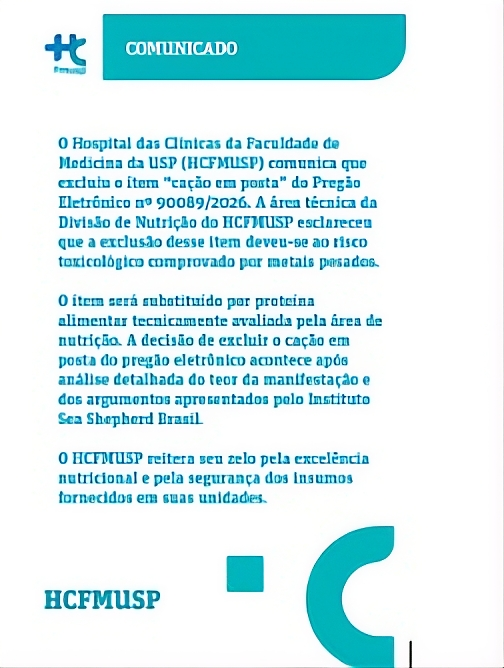
The University of São Paulo Medical School Hospital said it would cancel a plan to buy more than 17 metric tons of shark meat as part of a 2026 procurement, citing concerns over heavy metals.
HCFMUSP is the largest public hospital complex in Latin America. It consists of at least eight institutes in São Paulo, Brazil’s largest city, including a world-renowned heart center serving hundreds of thousands of patients annually.
Brazil is the world’s top consumer of shark meat. A 2025 investigation by Mongabay found that government purchases are a significant driver of Brazil’s shark meat consumption, with the low-priced meat served in thousands of hospitals, schools and prisons in the South American nation of 213 million people.
HCFMUSP issued tenders and named suppliers for at least 135 metric tons of shark meat from 2008-20, the Mongabay investigation found.
After it learned HCFMUSP had issued another shark meat tender in February 2026, the NGO Sea Shepherd Brasil wrote a letter to hospital administrators asking them to rethink their plans. The letter argued that sharks are widely threatened and that their meat tends to contain high levels of heavy metals such as mercury and arsenic, posing a risk to human health.
In late March, HCFMUSP announced it would remove shark meat from the 2026 procurement, citing “a proven toxicological risk associated with heavy metals” and the advocacy from Sea Shepherd.
“HCFMUSP reaffirms its commitment to nutritional excellence and the safety of the supplies provided at its facilities,” it wrote on social media.
Stricter rules for federal shark meat procurements
The move by HCFMUSP is one of a series of recent developments affecting the shark trade in Brazil, which consumes about 40,000 metric tons of shark meat a year. About half of that is imported, mostly from Spanish and Taiwanese fleets operating in international waters.
On March 19, Brazil’s 11th Federal Court of Curitiba ruled that federal procurements of shark meat must meet new requirements for species labeling, traceability and contaminant testing, in a lawsuit brought by Sea Shepherd Brasil.
However, the court stopped short of granting the NGO’s request to prohibit all government shark meat procurements, not just at the federal but also at the state and municipal levels.
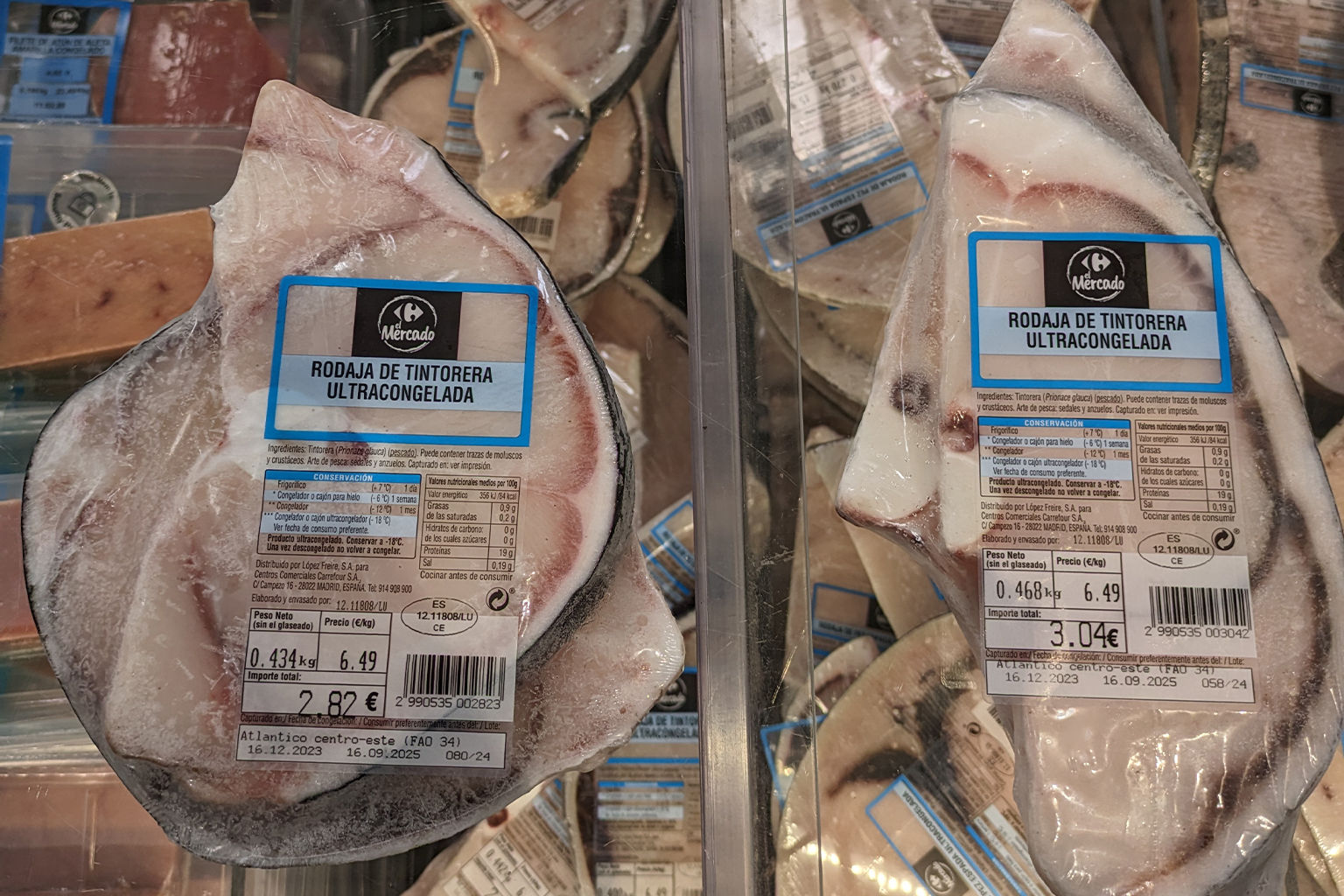
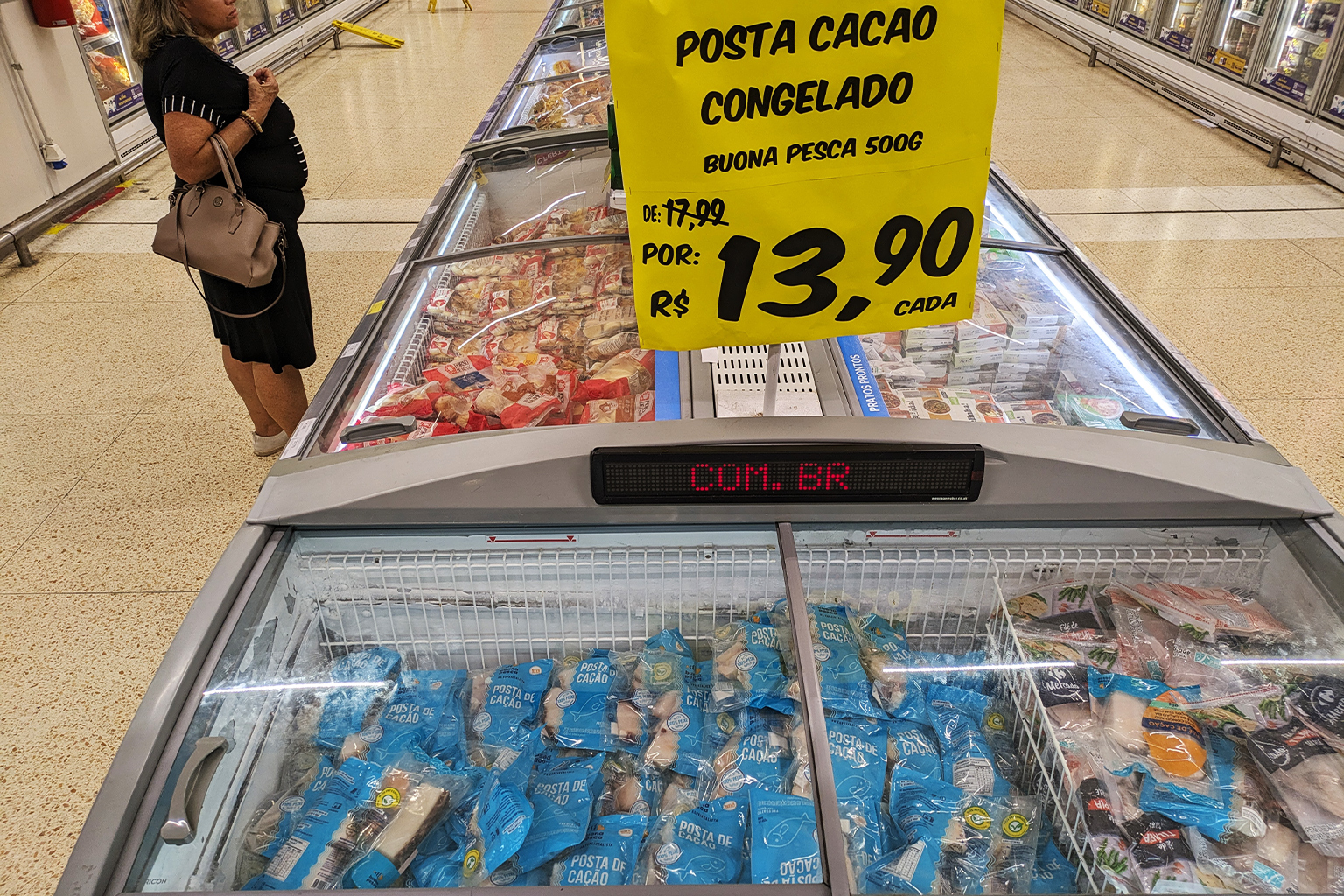
Shark meat in Brazil is typically sold under the generic name cação, rather than as tubarão, the Portuguese word for “shark.” Surveys show most Brazilians who eat cação don’t know what kind of fish it is.
Federal Deputy Nilto Tatto, who has authored a bill that would ban federal shark meat procurements, told Mongabay the ruling was “a major victory for marine conservation and public health, as it puts a stop to the commercial fraud that allows the sale of meat from endangered sharks and rays under the generic name cação.”
São Paulo and Rio de Janeiro states are each considering bills that would require species labeling for cação products, as is already the case in Paraná state. Another Rio de Janeiro bill would ban shark meat procurements in the state.
New shark fishing rules
On March 26, Brazil’s Ministry of Environment and Climate Change announced new fishing and international trade rules for blue sharks (Prionace glauca), the world’s most commonly traded species. It said the move aims to strengthen oversight of the species after it was added to Appendix II of CITES, a treaty restricting trade in threatened species, in 2022.
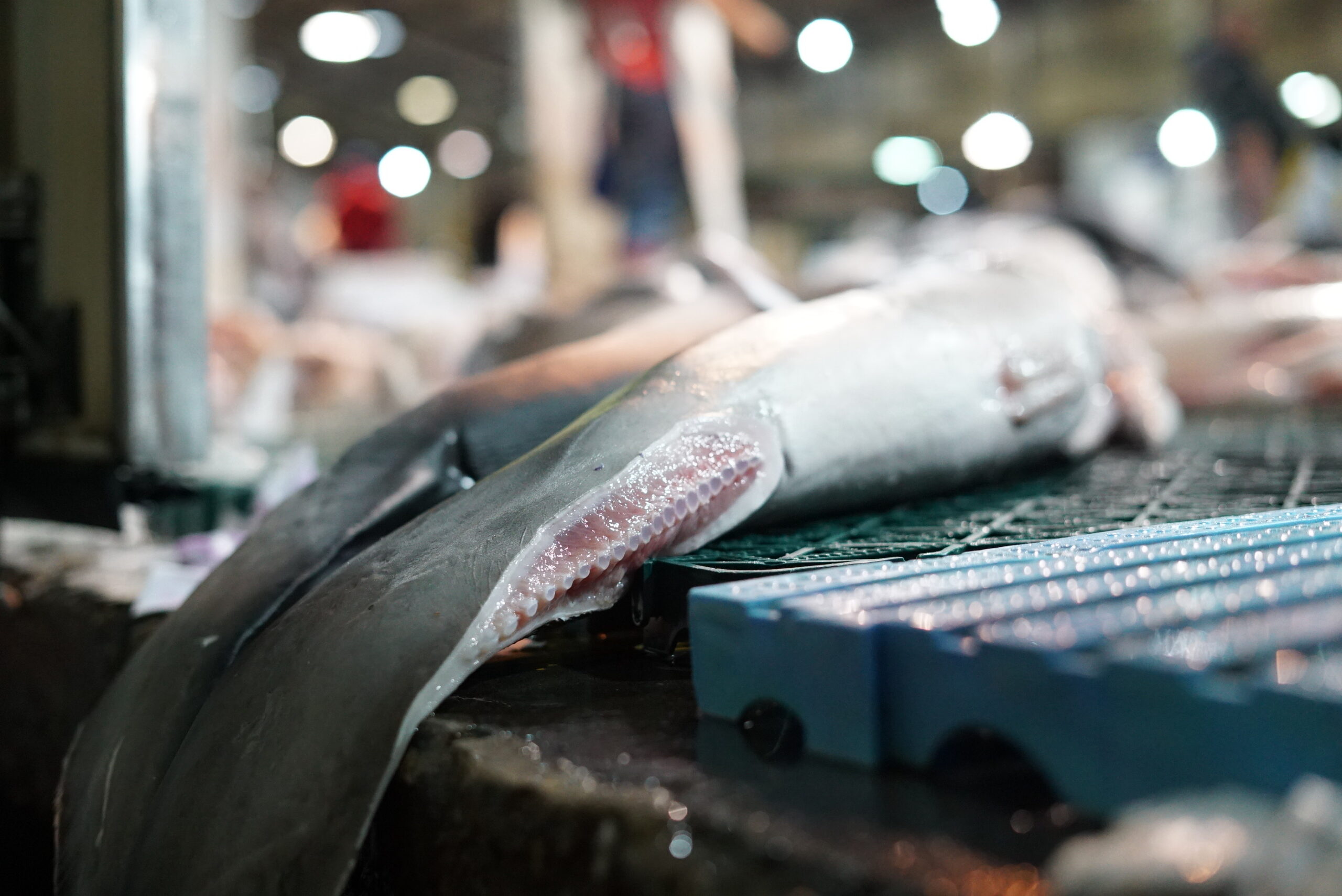
Under the new rules, surface longline boats can’t use wire leaders, a type of gear used to catch sharks , blue sharks can’t be deliberately targeted for export and must not exceed 20% of a vessel’s catch by weight , females and individuals weighing less than 45 kilograms (99 pounds) must be released at sea , and fins can only be exported attached to the body, among other restrictions.
The rules were laid out in a directive from IBAMA, a regulatory and enforcement arm of the ministry.
Industry groups panned the agency’s decree, accusing IBAMA of overstepping its authority.
“It’s encroaching on areas that are legally reserved for others and acting on a whim, driven by ideological whimsy,” Cadu Villaça, head of the National Fisheries and Aquaculture Collective, told Mongabay by phone, adding that the group was consulting with lawyers to map out next steps.
“How are you going to export 3% of the animal’s weight when you have to ship 100% of the animal’s weight?” he added, referring to the rule that fins must be exported attached the carcass. “That makes the whole thing unfeasible. It’s obvious.”
Shipowners union SINDIPI expressed its “deepest repudiation and indignation” at the directive in a press release.
Industry groups argue fishing currently poses no significant threat to blue sharks, which give birth to more pups at a time than many other shark species, but some conservationists point to warning signs and argue for a precautionary approach. The IUCN lists the species as near threatened globally.
Sea Shepherd Brasil praised the new directive, calling it the result of years of pressure by academia and civil society.
“Brazil is a country that for years was at the opposite end of shark protection,” Nathalie Gil, director of Sea Shepherd Brasil, said in a statement.
“However, the country has just taken a meaningful (yet still incomplete) step toward greater protection for sharks.”
Plenty of new orders for shark meat
Mongabay’s 2025 investigation identified 1,012 shark meat tenders with named suppliers that Brazilian public institutions issued since 2004. They span 542 municipalities in 10 of Brazil’s 26 states.
In early March, Mongabay identified 54 new tenders issued since July 2025, the month the investigation was published, spanning 48 cities and towns in 14 states.
The four largest of the new tenders are all by municipal education departments. Serra, a city in Espírito Santo state, wants to buy 80 metric tons of cação for public schools , Camaçari, in Bahia state, is also seeking 80 metric tons , São Gonçalo, in Rio de Janeiro state, wants 69.8 metric tons , and Salvador, another Bahia city, is seeking 60 metric tons.
That equates to more than 20,000 whole blue sharks, assuming an average weight of 27 kg (60 lbs) and half the carcass being good for steaks, fillets and cubes.
Shark on the hospital menu
The February 2026 tender from which HCFMUSP pledged to remove the 17 metric tons of shark meat will procure food for two of its institutes: the Central Institute, known as ICHC, and the Heart Institute, known as InCor.
But HCFMUSP has previously procured shark meat for other institutes in the complex, documents show.
A 2023 tender published as part of Mongabay’s previous investigation showed that HCFMUSP had enlisted food services company LBGS to supply meals, including weekly shark steaks, to three other HCFMUSP facilities: the Children’s Institute, known as ICR, the Orthopedics and Traumatology Institute, or IOT, and the Psychiatry Institute, or IPQ.
The HCFMUSP communications team did not respond to questions Mongabay sent via email asking whether the decision to remove cação from the 2026 tender represents a policy to discontinue shark meat in its hospitals altogether, or if it’s limited to a single procurement process. Instead they directed Mongabay to a social media post announcing the decision.
A member of LBGS’s purchasing department told Mongabay by phone that HCFMUSP had not contacted the company regarding any recent decision related to shark meat.
While ICHC and InCor still prepare meals in-house and procure raw ingredients through government tenders, other institutes within the hospital complex have fully outsourced their catering to third parties, the LBGS worker said.
The person said LBGS is still serving shark meat at HCFMUSP and defended it as an appropriate hospital food because shark, as a cartilaginous fish, lacks bones a patient could choke on. The only thing that would change the company’s use of shark meat, they said, was “if the government issued a communication” requiring it.
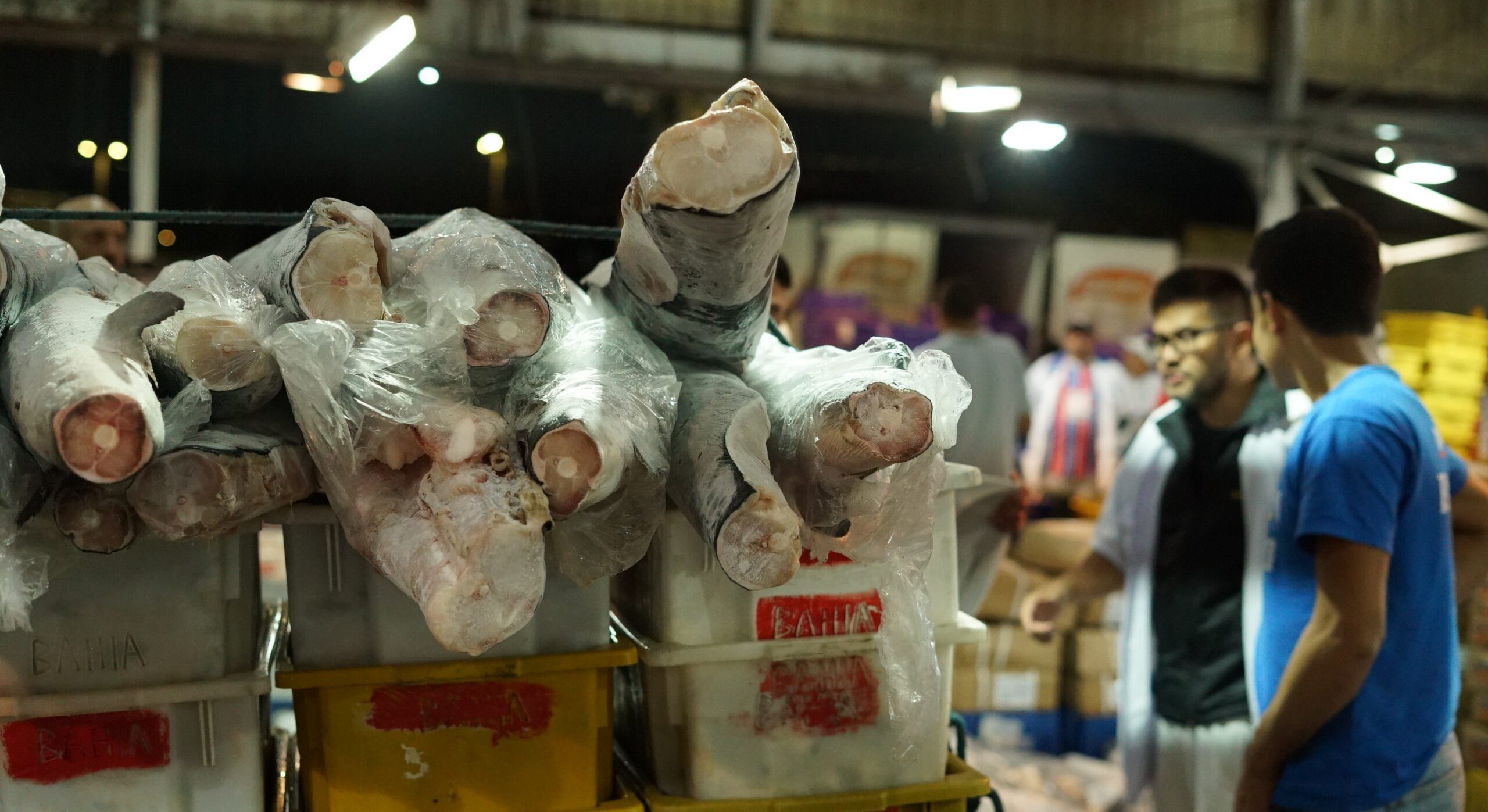
Banner image: Shark carcasses at the CEAGSP food warehouse in São Paulo. Image by Philip Jacobson/Mongabay.
