

Is balcony solar safe?
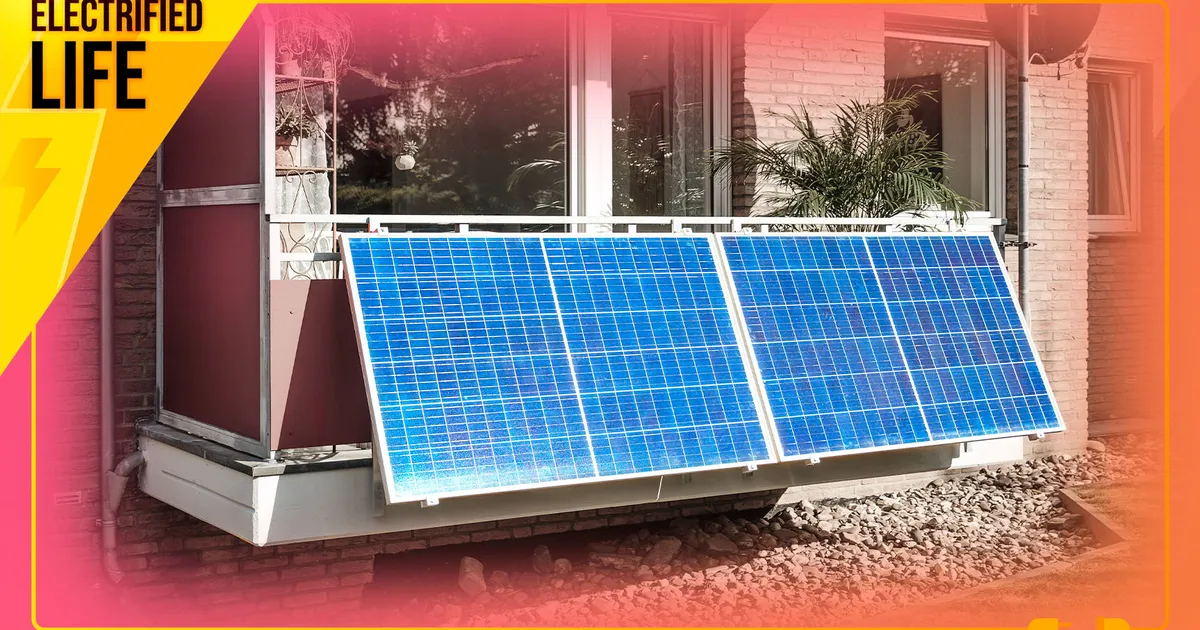
Balcony solar produces electricity and sends it directly into the home’s circuitry at a wall outlet. Rooftop solar, by contrast, pours power into a home’s electrical panel.
If the solar panels provide too much power, and circuit breakers don’t trip, the wires in the wall could overheat, creating a fire risk, said Ken Boyce, vice president of engineering at safety science company UL Solutions. If a person were to touch the plug prongs either while the panels are illuminated and partially plugged into an outlet or in the fraction of a second after the plug is disconnected but still energized, the individual could get shocked or electrocuted.
But these hazards can be tamed with technical fixes. For example, a special plug could be designed with a built-in circuit breaker and no exposed conductive parts.
In their plug-in solar bills, states are legislating that manufacturers adhere to rigorous standards to protect consumers. Utah’s law, for example, requires that systems are certified safe for consumers by UL Solutions or another nationally recognized testing laboratory, and that they meet the standards of the National Electric Code.
The National Electric Code doesn’t specifically address plug-in solar, leaving the tech in a legal gray area on that requirement. And as of publication, no manufacturer has had a complete balcony-solar product certified as safe.
But that could soon change. After Utah’s law passed, UL created a new safety standard for plug-in solar, UL 3700, and launched a certification program in January. The company is now working with manufacturers to get their systems certified. Boyce anticipates the first certification in “weeks to months rather than years.”
So, if you’re itching to get plug-in solar but concerned about safety, sit tight: A vetted product should hit the market soon.
And, bigger picture, take solace in the evidence from across the Atlantic.
Germany has seen balcony solar grow from roughly 40,000 systems in 2017 to as many as 4 million in 2025. Sebastian Müller, chair of the German Balcony Solar Association, said last year that the country had yet to see any safety issues beyond a few cases of individuals attempting to hook up unsuitable hardware, like a car battery, to the devices.
Can I use my plug-in solar in a blackout?
Not without a battery. For the safety of utility lineworkers, a blackout will trigger the inverter to stop putting out AC power. But if you plug the solar panels into a battery instead of an inverter that feeds your home, then you can pull the stored electrons when you need them.
That peace of mind isn’t cheap, though. For example, while EcoFlow’s inverter retails for $299, a 1.92-kilowatt-hour EcoFlow inverter-battery combo costs $1,199.
Are people quietly installing these systems anyway?
Indeed they are. Bright Saver estimates more than 1,000 plug-in solar systems have been installed in California alone.
Bentham Paulos, senior research associate for the Clean Energy States Alliance, recently installed a system at his home in Berkeley, California, for just $0.66 per watt. (He has a rooftop array, and his utility’s rules allow him to add up to 1,000 watts without another interconnection agreement.) To prepare, Paulos, who also authored a plug-in solar policy report released in January, spent many hours studying amps, volts, and wiring configurations on YouTube to assure himself that he could safely put plug-in solar on his garage.
What’s in store for balcony solar?
The market for balcony solar could rapidly transform in the U.S. over the next year, as states green-light the tech and manufacturers roll out compliant products.
“I think a lot of companies are waiting for the regulatory landscape to be clear,” Paulos said. Once a handful of states explicitly allow balcony solar, he anticipates that manufacturers will show “a lot of innovation to make this a really super easy and safe consumer product.”