

- At just 12 years old, Syazwan Luftan Riady started a grassroots nonprofit of young people in East Java province focused on environmental protection.
- Now a second-year student at a prominent university in Indonesia, Luftan is also the protagonist of a children’s book and has received recognition from a U.S. organization for his campaigning work.
- The United Nations Environment Programme notes that Indonesia generates 3.2 million metric tons of plastic waste every year, the second most in the world after China.
- Indonesia’s president, Prabowo Subianto, announced in February a “war on waste” and is overseeing construction of 33 new electricity generation projects fueled by household waste. The president has also called for a volunteer army of schoolchildren to help clean up the country’s beaches and rivers.
JEMBER, Indonesia — Syazwan Luftan Riady traces his environmental campaigning to school holidays spent at his grandmother’s riverside home in a rural part of Indonesia’s East Java province.
“Throw that trash in the river, the basket’s full!” Luftan said, mimicking the levity with which his grandmother, like millions of others on the world’s most populous island, handled household waste in the absence of government services.
While still a schoolboy in Jember, East Java, Luftan learned from his parents and developed his interest in the environment further after joining Sekolah Alam Raya.
At just 12 years old, Luftan went on to co-found an organization of his own, Wiskomunalian, a grassroots association of youngsters working on achievable measures to effect environmental change.
“It was about making friends aware about the environment, especially the issue of waste,” said Luftan, now in his second year of an undergraduate degree at Brawijaya University in Malang, a four-hour drive from Jember.
Child star
A goal of Luftan and his colleagues is that “every child must be supported with adequate knowledge and experience grounded in their local realities,” Wiskomunalian wrote last year.
But converting that vision into cleaner rivers and streets is a tall order, amid population growth and limited fiscal space with which to build waste treatment facilities.
The United Nations Environment Programme records Indonesia as generating around 3.2 million metric tons of plastic waste every year, making it the world’s second-largest plastic polluter, after China. Waste audits show major consumer groups rank consistently among the country’s top polluters.
“We’d pile up the garbage, then it would be sent to the nearest collection point and from there to the landfill,” Luftan said, describing a typical day working with his friends by the riverbank.
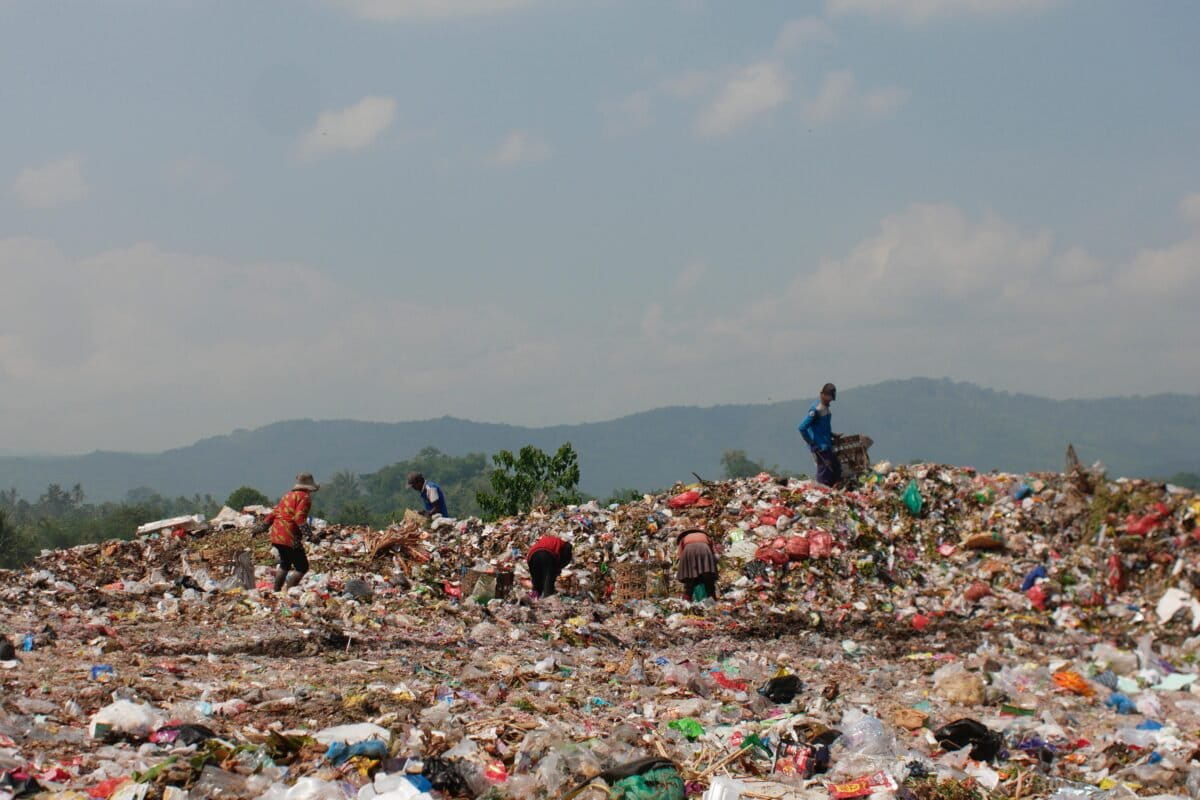
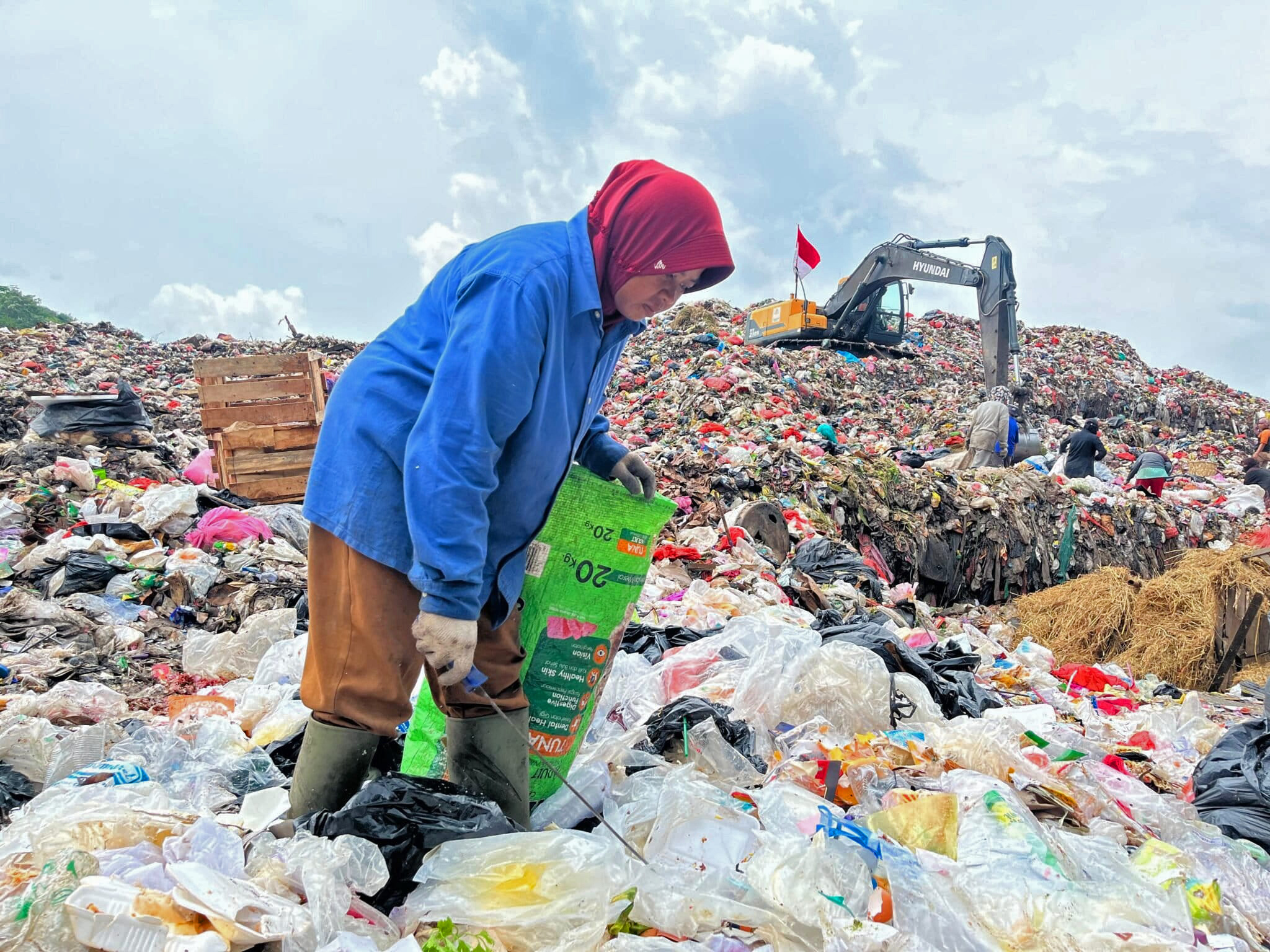
Much of the waste collected from 17 constituencies in Jember district arrives at the Pakusari landfill in trucks, where excavators teeter above a pile of garbage rising to 35 meters (115 feet) at its peak, higher than a 10-story building.
Luftan and Wiskomunalian volunteers have often visited the site — one of hundreds of district landfills across Indonesia — to speak with public workers and informal collectors who help process Jember’s waste.
They found that waste is routinely mixed, even where separate bin collections exist, and that perishable waste and plastic trash are often combined before reaching the site.
“If you look at several locations, Jember already has separate trash bins for organic and nonorganic waste,” Luftan said. “But when it reaches the landfill, the waste is mixed together — so we thought: it’s pointless to separate it.”
That has contributed to a landfill site already far beyond capacity, yet still taking in almost 200 metric tons of garbage every day. Local media often spotlight the risk of tragedy at the landfill, where informal collectors are trapped by dangerous working conditions and low incomes.
In March, a landslide at Indonesia’s largest massif of rubbish, the 80-million-metric-ton Bantargebang site outside the capital, Jakarta, killed seven workers and injured a further six people. On April 20, the previous head of the municipal agency responsible for waste management in the capital was charged under the country’s 2008 environment law.
Indonesia did not enact a waste management law until 2008, and previous governments have pledged to tackle the problem while struggling to build the systems and infrastructure needed to process waste effectively.
In November, the Indonesian Ulema Council (MUI), the top Islamic clerical body in the world’s largest Muslim-majority country, published a fatwa prohibiting dumping of waste in rivers, lakes and the sea. The mayor of Malang, where Lutfan attends university, asked imams to publicize the edict during Friday prayers, attended weekly by Muslim men across Indonesia.
Civil society researchers point to modest shifts in how Indonesia has addressed a national waste problem, which is driven by rising incomes, population growth, and the spread of single-use plastics.
However, the record on waste disposal over the last decade appears set for a more forceful approach.
“We can’t wait any longer. Uncontrolled land-based waste ends up in rivers and oceans. We must break this chain from the source,” Hanif Faisol Nurofiq, the environment minister at the time, said in a statement in February. “Our goal is to transform this emergency into a management system that transforms waste into a resource.”
Trash talk
President Prabowo Subianto has made sanitation a priority this year by declaring a “war on waste” and setting a 2029 target to overhaul garbage disposal across the archipelago.
The administration is pursuing tougher oversight of waste management at landfills, while pushing plans for 33 waste-to-energy projects at an estimated cost of 91 trillion rupiah ($5.3 billion) through state holding company PT Daya Energi Bersih Nusantara, known as Denera.
Prabowo’s policy shift comes as Indonesia struggles with a fragmented system in which more than 500 district and city governments, with vastly different population densities, are responsible for handling waste collection.
Last year, the World Bank launched a $350 million program aimed partly at making waste management a mandatory local public service with minimum standards.
Experts say the government’s 2029 timetable is ambitious, warning waste-to-energy schemes can face financing, pollution and feedstock risks.
Meanwhile, immediate interventions can bring short-term complications. In Bali, a recent ban on organic waste at a major landfill sparked increased river dumping and burning of household waste.
The president has also invoked the possibility of mobilizing a small volunteer army of schoolchildren to pick litter on Saturdays — similar to an initiative built in Jember by a precocious youngster almost a decade ago.
“This is our beach, this is our backyard.” Prabowo said in February. “Let’s clean it together , what’s the problem with that?”
Waste talent
Luftan has tried to mold solutions to this complex problem ever since observing the litter floating past his grandmother’s house in Jember a decade ago.
In 2021, Luftan, then aged 14, was named a Young Changemaker by Ashoka, an international organization founded by Bill Drayton, who launched emissions trading while at the U.S. Environment Protection Agency under President Jimmy Carter in the late 1970s.
Luftan was also recognized as a Young Leader for Climate by Teens Go Green, an organization founded in Jakarta in 2007.
His story working with other young children in villages in Jember became the subject of “Luftan and Monster,” an illustrated children’s book about a child saving his community from a toxic antagonist marauding through the landscape.
Experts note Indonesia has historically addressed waste at the margins, mainly through cleanup drives on beaches, by rivers and around city spaces. Wiskomunalian volunteers have gone beyond, combing riverbanks and rice fields to collect discarded plastic and other household waste.
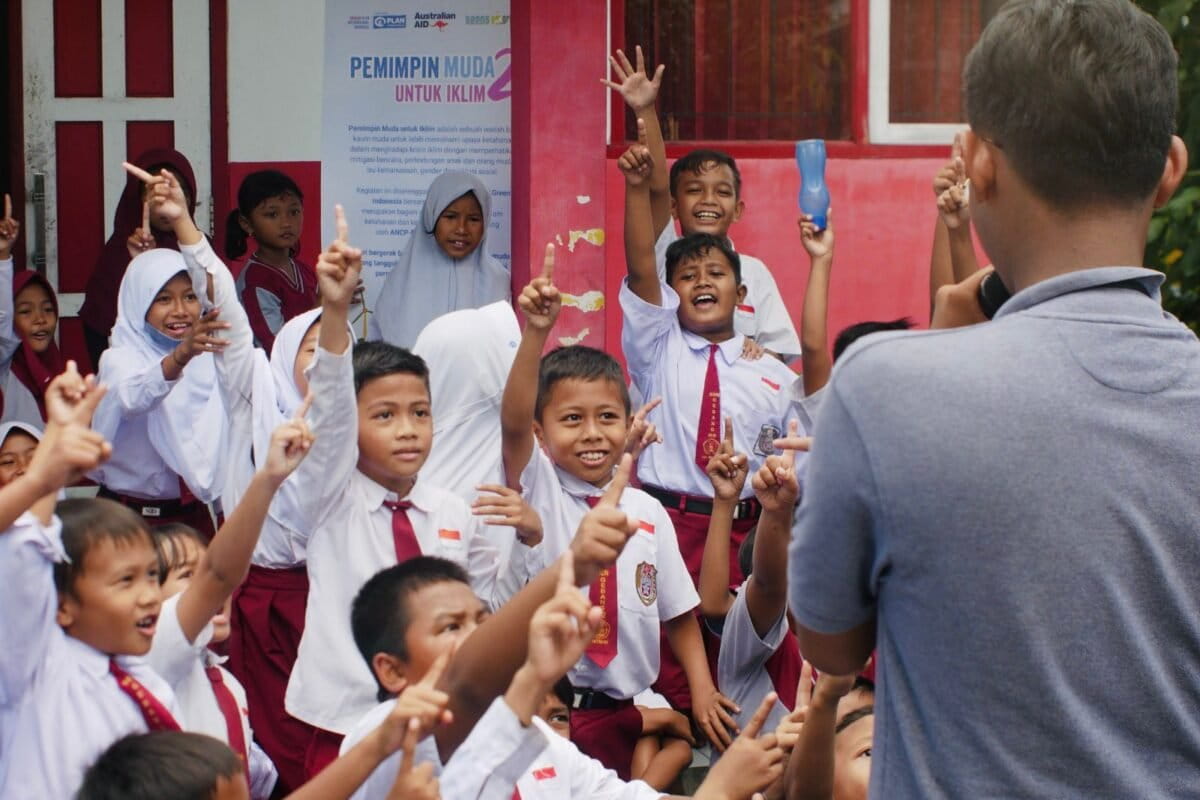
Luftan has launched environmental campaigns in schools, including engaging primary school kids with playful methods like contests to see who can sort waste the quickest. For many nonprofits, schools extend reach far beyond the classroom when children carry messages home to families and communities.
“This is important because the waste problem isn’t just about urban esthetics, but also about the health of the river ecosystem and quality of life,” said Putri Lisya Anggraini, founder of Ecosociopreneur, an incubator for entrepreneurs with a focus on environment and community.
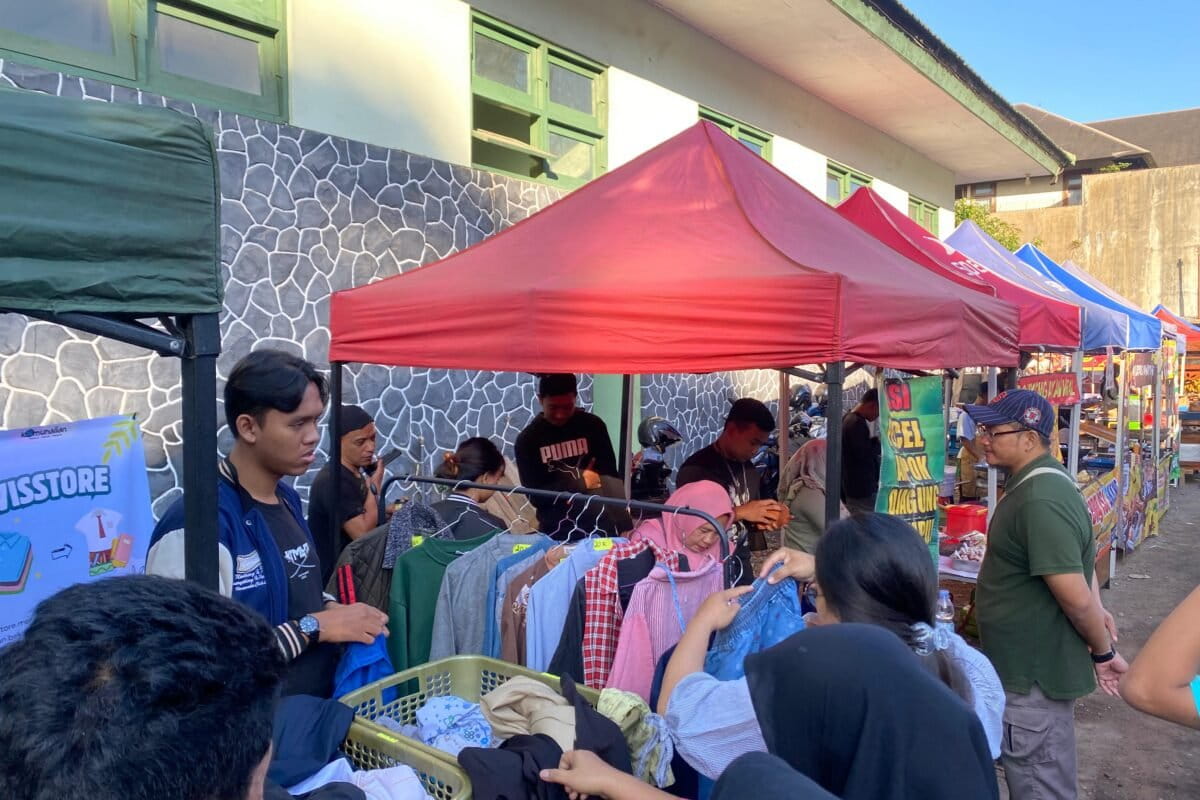
Wiskomunalian also runs Wisstore, a flea market that raises funds by collecting and reselling vintage clothing with attention to affordability.
“Wisstore exists to reduce textile waste — 20% of global water pollution is caused by the textile industry,” Luftan said.
When Luftan was in sixth grade, he saw children his age throwing trash in the river. He went on to become the co-founder of a nonprofit while in junior high school. This arm of the organization is today still staffed by children of the same age group — young people doing their best to build healthier communities while raising money for future work.
“As of today, Wisstore has raised nearly 20 million [rupiah],” Luftan said, which is almost $1,200. “The proceeds will be used for environmental causes.”
This story was first published here and here in Indonesian on Feb. 15 and March 3, 2026.
Additional reporting by Eko Widianto.
