

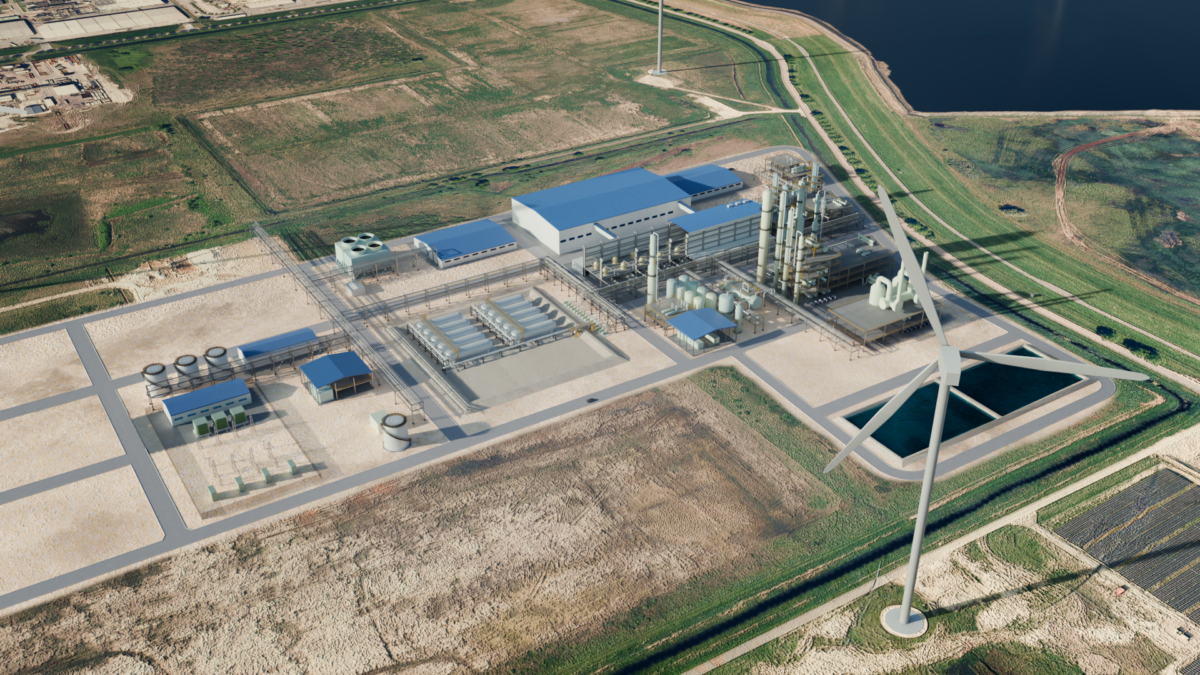
The Ministry of Economic Affairs and Climate of the Netherlands has identified a planned polysilicon factory in the country as of strategic importance under the Net Zero Industry Act.
The Dutch Ministry of Economic Affairs and Climate has named a planned renewable-powered polysilicon facility in the Netherlands as a strategic project under the Net Zero Industry Act (NZIA).
Under development by Dutch startup Resilicon, it is envisaged the planned facility will produce high-purity polysilicon for solar supply chains.
Last October, Resilicon said the basic engineering phase of the plant, to be built within the Groningen Sea Ports area of northeastern Netherlands, was underway after the project secured a technology provider and engineering, procurement and construction contractor.
At the time, the company said the project was being backed by over €14 million ($16.3 million) in funding with contributions from the Dutch Ministry of Economic Affairs. The ministry has now said the project supports the NZIA’s objective of scaling up Europe’s net-zero technologies, strengthening supply chains and creating high-quality jobs.
Resilicon CEO Remco Rijn commented that the ministry’s latest recognition is of major significance. “It confirms and strengthens our ambition to build sustainable and reliable polysilicon production in Europe, support more resilient European supply chains, and create attractive jobs and development opportunities,” Rijn added.
Resilicon says a key driver of the project is addressing the challenges associated with more than 85% of global polysilicon production being concentrated in China today. The company adds that its planned facility is designed “to be one of the most energy-efficient polysilicon plants in the world and to help build stronger, more resilient European value chains.” It also says it will process green raw materials as much as possible, such as metallurgical silicon and hydrogen, alongside auxiliary materials steam, water and nitrogen.
Resilicon has estimated that European demand for polysilicon, the foundational component of solar cells, is projected to rise between 80,000 to 120,000 MT by the end of the decade. Last October, the company said around €900 million will be required for the plant, adding that it has several parties exploring investment opportunities.
This content is protected by copyright and may not be reused. If you want to cooperate with us and would like to reuse some of our content, please contact: editors@pv-magazine.com.