

UL Solutions launched an initial testing protocol in January, which a panel of experts will refine in the coming months, according to Bernadette Del Chiaro, senior vice president for California of the nonprofit Environmental Working Group and former executive director of trade group California Solar and Storage Association.
There’s a real hunger for plug-in solar, said Cora Stryker, co-founder of Bright Saver. Momentum for these devices is growing faster than she expected.
Some zealous legislators announced bills out of the blue, Stryker noted. A few chambers even saw multiple lawmakers introduce plug-in solar bills independently of each other.
Missouri state Rep. Mark Matthiesen, a Republican, sponsored a DIY solar bill in December. Electricity rates are climbing fast in his state , families who get a system could save $30 to $40 per month and break even in as little as 25 months, he said.
“Then, everything beyond that is money back in your pocket,” said Matthiesen, who got rooftop solar panels in 2024. “If people can buy something to invest in themselves, to save them money down the road, then we as a government just need to let people do that.”
Matthiesen heard about plug-in systems last year from fellow legislators when they met up at the site formerly known as the National Renewable Energy Laboratory in Golden, Colorado. As for South Carolina state Rep. Mike Burns, another Republican who recently introduced a balcony solar bill, it was a passionate constituent who tipped him off.
A few proposals, including those in Missouri, Washington state, and Wyoming, have stalled. Some utilities have opposed legislation for permissionless systems, saying there are safety risks, including from energy being fed back to the grid and potentially overwhelming its capacity.
Advocates, however, say that this argument ignores the physics of electricity. Because these are modest systems, which proposals generally cap at a size of 1,200 watts (that’s up to a sixth the size of the typical rooftop array), a home’s appliances will quickly gobble up the power they produce, according to Del Chiaro. Very little, if any, energy will flow back onto the distribution grid.
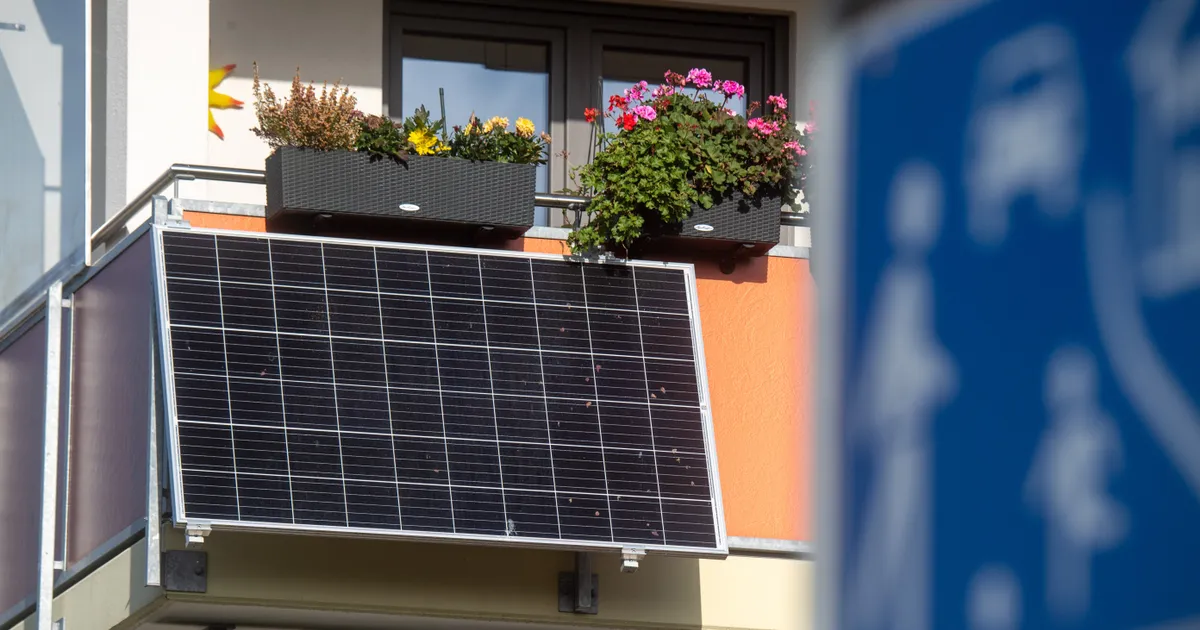
Balcony solar bills in New Hampshire, Vermont, New Jersey, and Illinois look on track to pass, according to Stryker. A proposal in California — a potentially massive market as the state with the second-highest electricity prices and largest state economy in the nation — is in committee. Stryker anticipates that still more lawmakers will announce legislation for the up-and-coming tech this year.
For Phillips, balcony solar is more than a means to save money , it’s a step toward a healthier future. She’s a third-generation native of the Bronx, an area disproportionately burdened by noxious pollutants.
“I was actually hospitalized with an asthma attack last year,” Phillips said. “For me, anything that we can do to green our power grid, to reduce pollution, is a matter of justice — especially for people who live where I live.”
Phillips has been talking to friends and family about her mini power plant. “Everybody wants one,” she said. States simply need to pass their portable solar bills to open the floodgates, Phillips noted.
“I can’t wait to see solar panels peeking out of everyone’s balcony.”
A correction was made on Feb. 26, 2026: This story originally misstated that Lauren Phillips is a renter. She has a co-op apartment. An update was also made on Feb. 26 to include legislation in Georgia, increasing the number of states from 27 to 28.