

Support CleanTechnica’s work through a Substack subscription or on Stripe.
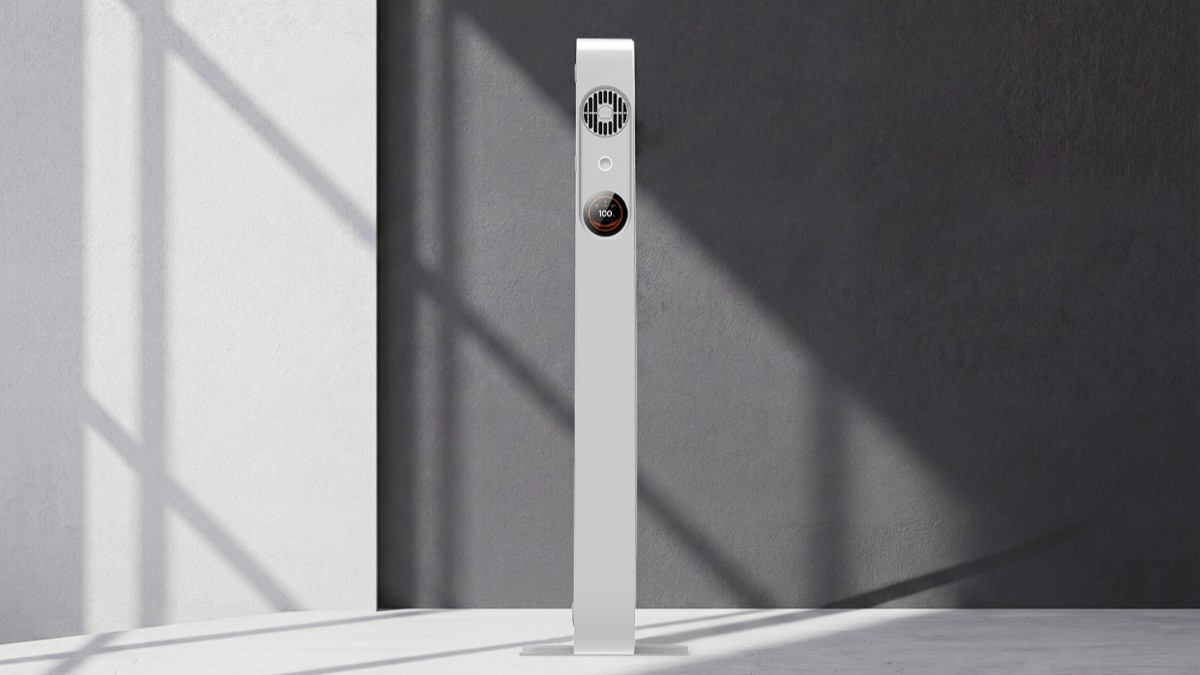
CleanTechnica recently received information from a reliable source tied to Jackery that they would be launching the sleek, new Fridgeguard battery in the coming months. The new product indicates a shift in focus for the company to add backup battery power within the home, with a design that combines form with function.
Jackery has a history of offering portable batteries and solar panels. Their batteries added capability over time to become modular and include home BESS features. However, the style was more rugged, boxy, and utilitarian. It’s a better fit for a campsite or garage than to showcase in a high-end kitchen.
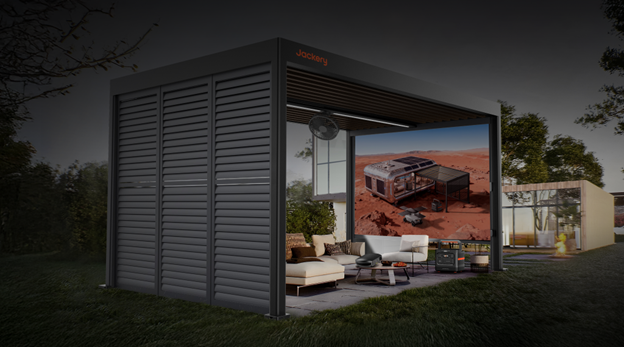
Jackery now seems to be evolving to a greater focus on design that better fits different customer needs. Jackery previously released solar shingles that emulate clay tiles, allowing solar to fit seamlessly into home exterior designs. At CES this year, they debuted their Solar Gazebo that would look attractive in a backyard without many people even realizing that it was generating power.
With Fridgeguard, Jackery is taking its focus on design into home living spaces. According to the information provided, it claims to offer the “world’s slimmest and most eco-friendly appliance backup solution.” The new design can stand upright, mount to a wall, or sit flat horizontally. The minimalist aesthetic has been compared to the design of MagSafe-style power banks. Those power banks mount unobtrusively to the back of a phone, and I could see this product placed similarly up against a refrigerator. The design could be featured in a more tech-forward, contemporary home. However, I could also see it discretely integrated into more traditional décor.
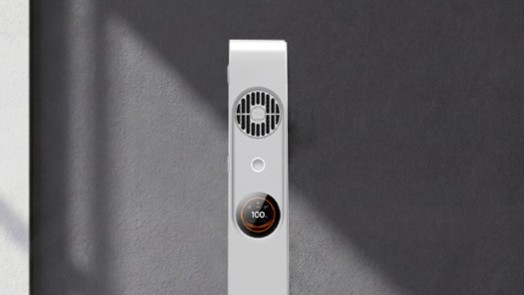
On the front of the supplied image is a round display, which appears to be showing state of charge with a few other icons. Above the display is what looks like a power button and what might be either a cooling fan or a speaker. We will have to wait to find out more.
Information indicates that the system offers “intelligent energy management.” Although, details are a bit scarce on exactly how advanced and connected the system is. Instantaneous switchover capabilities ensure uninterrupted power, while offering protection against the surges that often happen during grid outages.
Beyond refrigerators, and related wine coolers and chest freezers, the battery would also be a good fit for aquariums and potentially even home medical devices with the right certifications. Anywhere that uninterrupted power is essential in the home, I could see it offering an appealing design. I could also see the slim design working well in other environments where people would want reliable, stable power, such as offices, 3D printer racks, or high-end home theater systems.
Beyond the design, the information we received shows that attention was also paid to materials. The case is said to be paint-free, VOC-free, and fully recyclable. Colors come from pigments mixed into the materials and what they call “alternative finishing techniques,” rather than surface coatings. Having the color throughout the material means that it will not scratch or peel off and that it will not need to be removed for recycling. However, Jackery says that its case has no discoloration or chemical degradation over time. Traditional, uncoated injection-molded plastic parts tend to turn yellow and get brittle as they age. It will be interesting to see more details on Jackery’s material approach.
Expanding Battery Storage Potential With Design
Here at CleanTechnica, we are big fans of battery storage across its various applications. Utility scale, distribution, whole home, point of use, and portable batteries offer a wide range of customer benefits and help enable greater renewable energy utilization. With coordination between the different batteries and the grid, the benefits can become even more powerful. In addition, with extreme weather events intensifying and becoming more frequent, backup batteries provide a welcome level of resilience.
Having tested out a refrigerator backup battery storage system from Bluetti, Zach came away impressed. He called it one of “the coolest looking things in my kitchen.” From what we have seen so far from Jackery, competition for that title is on the way.
However, while getting a chance to peek at the Fridgeguard prior to its launch is exciting, we still have unanswered questions:
- Is it integrated with smart home systems? Coordinated with solar and other battery storage?
- Can it load shift the refrigerator energy consumption for daily use? That could make the battery potentially pay for itself over time for solar users or people with TOU-based utility billing.
- Beyond running the refrigerator, how much capacity is available to run other appliances in the kitchen?
- Speaking of capacity, how much battery capacity does it have? We still don’t have data yet. We also do not have dimensions. However, if it can lay flat, presumably on the top of a refrigerator, it would likely be no taller than a standard refrigerator is wide. It will be interesting to see how much battery capacity can placed inside the slim case.
Even if it only provides backup power, as someone who came back from vacation once to a refrigerator full of ruined food, I know that has value. While it may not replace the benefits of whole home battery storage, it could extend total storage capacity with added backup power in one of the applications where it is needed most.
It can also provide battery storage to people who live in apartments and may not be able to integrate whole home battery storage or have a place to run a backup generator. In addition, if point of use storage could help apartment dwellers load shift, we could also access the associated financial benefits.
Beyond making battery storage accessible to different types of homes, smart design makes it aesthetically acceptable and even appealing to many style-conscious consumers. While some early adopters may not be concerned with aesthetics, to reach large scale, products need to be designed to fit the needs and tastes of a range of customers.
Which gets to one of the most important parts of the information released so far: Fridgeguard is rumored to cost half as much as competing systems and offer a 16-year lifespan. If that is the case, particularly in our affordability-focused current economy, these design-focused point of use batteries could appeal to a lot of customers.
We look forward to learning more about the Jackery Fridgeguard closer to its official launch.
Sign up for CleanTechnica’s Weekly Substack for Zach and Scott’s in-depth analyses and high level summaries, sign up for our daily newsletter, and follow us on Google News!
Have a tip for CleanTechnica? Want to advertise? Want to suggest a guest for our CleanTech Talk podcast? Contact us here.
Sign up for our daily newsletter for 15 new cleantech stories a day. Or sign up for our weekly one on top stories of the week if daily is too frequent.
CleanTechnica uses affiliate links. See our policy here.
CleanTechnica’s Comment Policy