

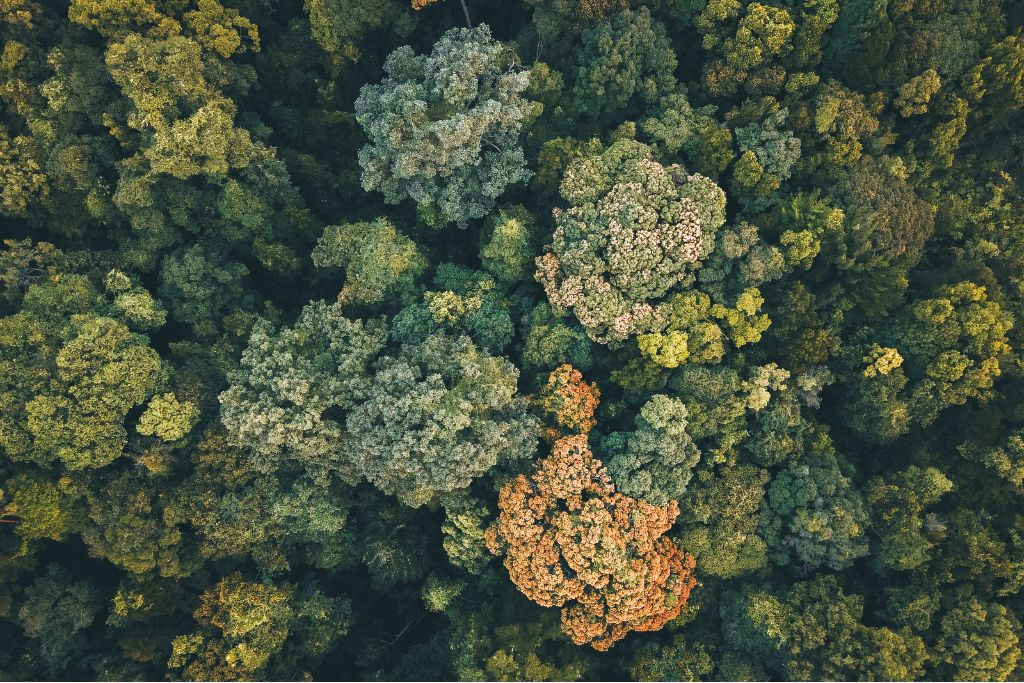
“Countries and private investors must reckon with the fact that failing to invest in nature harms us all,” writes Erik Berglöf, Chief Economist at the Asian Infrastructure Investment Bank.
—
By Erik Berglöf
Humanity’s existence is deeply dependent on a robust and healthy natural world. We depend on nature – and the biodiversity it facilitates – for our food, energy, water, resources, medicine, employment and leisure. Despite this, nature’s vital social, health, and economic contributions have been overlooked for centuries. Now, thanks to advances in science and data collection, extraordinary possibilities open to identify and track the impact of – and importantly finance – interventions to restore nature.
As the consequences of climate change and ecological decline become increasingly apparent, people are waking up to the role that nature plays in supporting human life. Whether it is soil degradation threatening global food security or deforestation disrupting rainfall cycles leading to droughts, the impacts are varied and severe. Yet, we are continuing to inflict damage.
The United Nations Environment Programme (UNEP) recently found that for every US$1 invested in protecting nature, $30 is spent destroying it. The UN agency also found that we face an uphill struggle to meet climate and biodiversity targets, estimating that investment in nature-based solutions must increase two and a half times to $571 billion annually by the end of this decade.
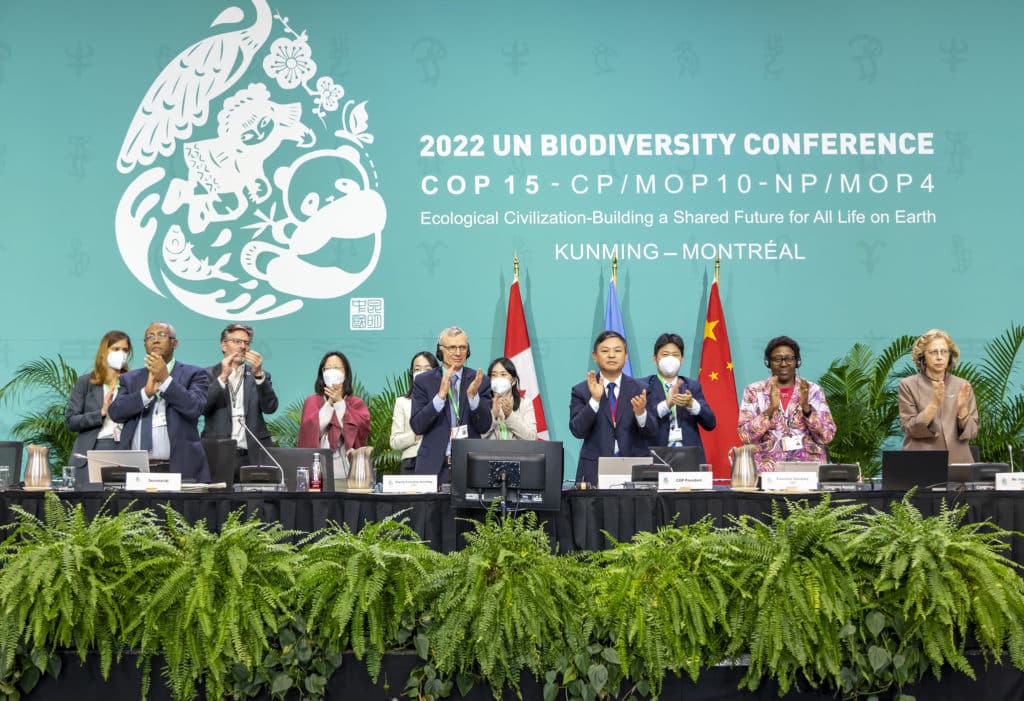
It will take the scale and power of both the public and private sectors to meet financing targets, as acknowledged in the Kunming-Montreal Global Biodiversity Framework, adopted by 196 nations in 2022. Signatories committed to increasing public and private financial resources by at least $200 billion annually for nature-related investments.
For too long, the financial architecture for nature-related investment has been fragmented, small-scale, and poorly matched to the systemic challenge of maintaining nature’s resilience. But the emergence of new technology, backed by new financial structures can change this.
Thanks to isotope measurement, we can now trace drops of water across landscapes and continents. Improved satellite imagery and remote sensing allow us to estimate with great precision the health of a particular forest, including how biodiverse it is. These and other improvements enhance governance and broaden the scope of financial contracts we can write.
New techniques like isotope tracing and remote sensing will facilitate the use of other financial instruments as well. For example, two underutilized financial tools – guarantees and biodiversity credits – have been shown to boost the viability of nature investments. Guarantees – when a loan or debt is underwritten by a third party – can improve credit quality, allowing investors to enter early with reduced exposure, while biodiversity credits can generate performance-based revenues that are measurable, thereby unlocking finance. With better data, provided by technology such as remote sensing, these tools become much more useful.
These solutions are the building blocks that will enable us to scale nature finance at the rate required. But they need to be brought together into a cohesive contract arrangement that attracts private capital and aligns public ambition with market expertise. The Asian Infrastructure Investment Bank (AIIB), the Paulson Institute, and the European Bank of Reconstruction and Development have identified Public-Private Partnerships for Nature (PPPNs) as the vehicle to achieve this.
Like traditional Public Private Partnerships, PPPNs provide long-term contracts, risk sharing, and standardized structures, but applied to forests, wetlands, grasslands, and coral reefs, instead of traditional infrastructure such as roads and transport facilities. PPPNs can also be embedded within climate finance platforms to ensure integrated nature and climate solutions in development and fiscal strategies.
Momentum is building around this concept, evidenced by the likes of Terrasos’ Habitat Banking Model. Terrasos, an environmental services company, has set up 13 habitat banks across Colombia that together protect over 7,000 hectares across five ecosystems. The firm aggregates private capital, acquires and manages land, and oversees restoration activities. The public sector acts as a regulator and verifier, with the private sector providing financing, restoration, and management services. This snapshot provides a blueprint for how public and private sectors can work together to restore nature and its benefits, such as carbon sequestration and biodiversity.
With their unique position at the intersection of public ambition and private capital, multilateral development banks can play a key role in facilitating these partnerships. AIIB is doing so through its Nature Finance Accelerator Programme, which provides on-lending facilities to partner banks that are leaders in green finance, thereby expanding these banks’ nature financing capacity to deliver impact at scale.
For governments, the motivation to increase nature investment is not just about the benefits they can unlock, but also about the penalties they can avoid. Recent studies show that nature degradation has led to higher sovereign borrowing costs, especially in lower income countries in Africa and Asia, where borrowing costs can be up to three times higher than average.
Countries and private investors must reckon with the fact that failing to invest in nature harms us all. We have the science, data and financial instruments needed to rejuvenate our natural world , we must now commit to scaling nature investment.
This story is funded by readers like you
Our non-profit newsroom provides climate coverage free of charge and advertising. Your one-off or monthly donations play a crucial role in supporting our operations, expanding our reach, and maintaining our editorial independence.
About EO | Mission Statement | Impact & Reach | Write for us
The post We Are Losing the Battle to Invest in Nature. Public-Private Partnerships Can Change This appeared first on Earth.Org.