

Founder’s Briefs: An occasional series where Mongabay founder Rhett Ayers Butler shares analysis, perspectives and story summaries.
After this piece was published, we were informed that Aaron Longton had passed away.
On the docks of Port Orford, a small fishing town on the southern coast of the U.S. state of Oregon, Aaron Longton runs a modest seafood business out of a garage converted into a processing room.
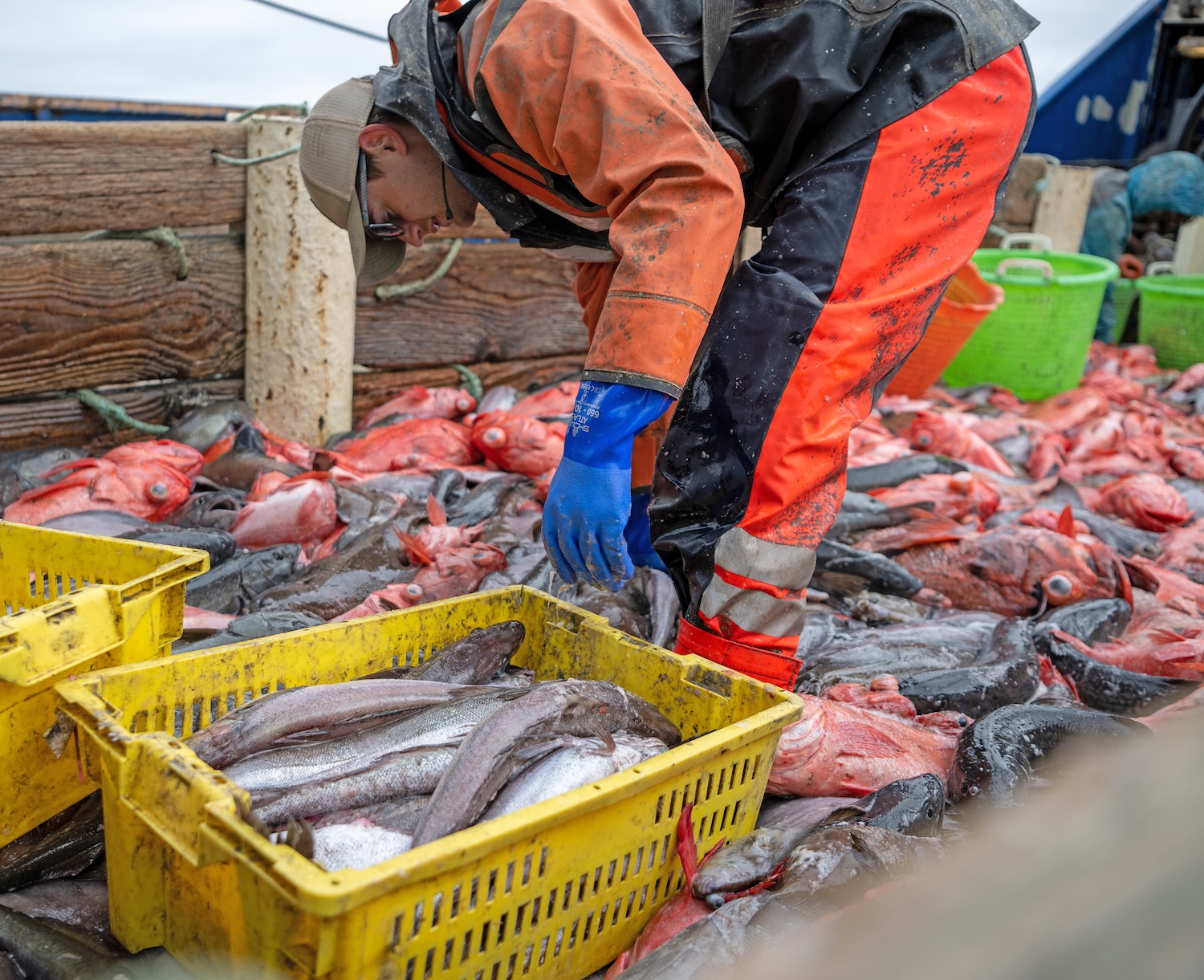
On a recent morning, he lifted a redbanded rockfish from a sink full of ice water and passed it to Brian Morrissey, who works beside a cutting table turning the fish into tidy fillets. That day’s catch included hundreds of kilograms of rockfish (Sebastes babcocki) and lingcod (Ophiodon elongatus). Two decades ago, such abundance would have been difficult to imagine, reports contributor Jules Struck for Mongabay.
The West Coast groundfish fishery, which spans more than 90 species living along the Pacific seabed from Washington state to California, once teetered near collapse. By 2000, federal authorities declared the industry a disaster. Stocks had been depleted by years of heavy fishing. Regulators responded with severe restrictions. Large sections of ocean were closed to trawling, quotas were slashed, and Congress funded a buyout that removed dozens of vessels from the fleet. Many fishers left the industry.
Those who remained entered a very different system. The Magnuson-Stevens Fishery Conservation and Management Act required catch limits tied closely to scientific advice. A catch-share program introduced in 2010 allocated individual quotas to permit holders, allowing them to harvest fish throughout the year instead of racing one another at the start of the season. Monitoring also became far stricter. Trawlers were required to carry observers who documented each haul.
The measures were contentious. Many fishers feared the new rules would make their businesses unviable. Yet the biological results have been striking. In October 2025, officials announced that yelloweye rockfish (Sebastes ruberrimus), the final species previously classified as overfished, had recovered to “healthy” levels. Some scientists had once expected the rebound to take decades longer.
Today, most of the waters once closed to trawling have reopened. Advances in gear design are also reducing ecological harm. Modified nets, sensors and lighting systems help avoid unwanted catch, while semi-pelagic trawls keep heavy equipment off the seafloor.
Economic gains have not followed at the same pace. Monitoring systems, insurance and fuel costs weigh heavily on fishers, and demand for several species remains modest. The industry now faces a familiar question.
Conservation has restored the resource. The challenge ahead is making the fishery prosper without repeating the mistakes that nearly erased it.
Read the full story by Jules Struck here.
Banner image: A federal fisheries observer sorts fish and collects data to inform fisheries management aboard the Cassandra Anne, an Oregon-based groundfish trawler, in 2023. Image by Chris Peterson/Action Works Photography/Oregon Sea Grant via Flickr (CC BY-NC-SA 2.0).