

The organizers of a campaign against shark finning in the European Union have filed a formal complaint against the EU Commission, accusing it of mishandling their case and missing deadlines.
The European Citizens’ Initiative (ECI) is an EU tool that allow citizens to participate in policy-making. The ECI known as “Stop Finning – Stop the Trade” calls for legislative action by the European Commission to completely ban the shark fin trade in the EU.
“The Commission made concrete commitments in July 2023 — including launching an impact assessment by year-end — and then simply stopped communicating,” Katharina Loupal, an organizer of the initiative, told Mongabay via email.
In 2023, the EU banned shark finning for all EU- flagged vessels and all vessels in EU waters. However, loose shark fins can still be legally traded — imported, exported or transited — in European countries.
Worldwide, shark populations have plummeted since the 1970s and they continue to be among the most threatened species on the planet.
Shark fins are in high demand in China and other Asian markets, often passing through transit hubs first. Despite international protections for several species, illegal trade is rife, often involving organized crime. However, there is also a thriving legal trade in shark fins.
The EU is a major fin exporter and transit hub, with Spanish and Portuguese fleets most commonly fishing for sharks in international waters. According to a 2022 International Foundation for Animal Welfare report, 45% of shark fin-related products imported into Hong Kong, Singapore and Taiwan in 2020 originated from EU member states.
In 2022, the ECI collected more than 1.1 million signatures from EU residents, meeting the 1 million threshold necessary to trigger legislative action.
A July 2023 letter from the European Commission stated that that it would “launch, by the end of 2023, an impact assessment on the environmental, social and economic consequences of applying the ‘fins naturally attached’ policy to the placement on the market of sharks in the EU.”
Loupal said the impact assessment was initiated but the follow-up process has been slow and unclear. She added that the EU Commission failed to adhere to the EU Charter of Fundamental Rights and the ECI regulation, which requires the body to “act within a reasonable timeframe and to keep organizers transparently informed.”
Once a complaint with the European Ombudsman, the EU’s accountability mechanism, has been accepted, the body assesses whether an EU institution has acted unlawfully and can open a formal inquiry.
A European Commission spokesperson told Mongabay via email that the impact assessment is expected to be finalized by the end of 2026. She said the commission is committed to “improving statistics on shark trade, stepping up the enforcement of EU traceability measures and engaging with international partners.“
Mongabay has reported on a similar situation in Brazil where the environment ministry has banned export of shark fins detached from the carcass , however, industry groups indicated they would challenge the new rule._
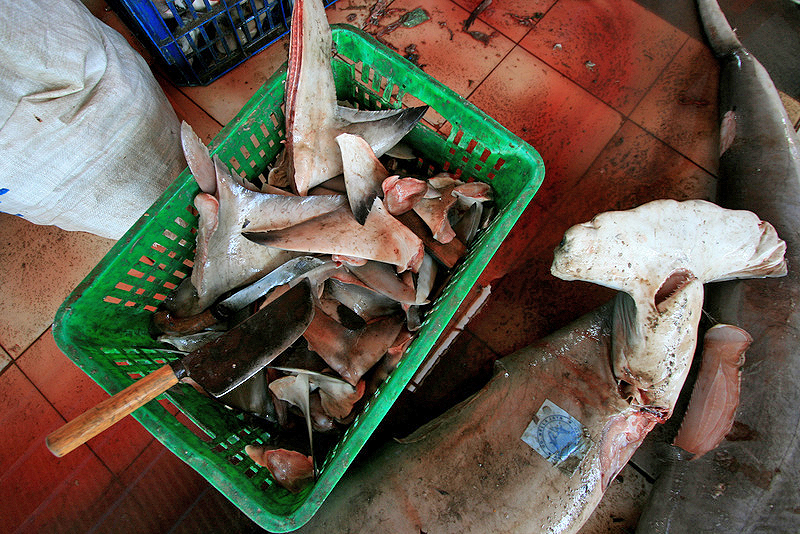
Banner image: Shark fins and a dead hammerhead shark. Image courtesy of Earth League International (ELI).