

Vermont’s first neighborhood-scale geothermal project is expected to break ground this summer as part of an affordable housing development, providing what developers hope is a blueprint for cost-effective, all-electric new construction in the Green Mountain State and beyond.
“We are decarbonizing and providing the natural energy of the earth to heat and cool our buildings,” said Amy Demetrowitz, chief operating officer of Champlain Housing Trust, one of the nonprofit developers behind the project. “The model is as awesome and as simple as that.”
Across the country, states with ambitious climate goals are looking for ways to cut emissions by weaning their buildings off natural gas and oil heat. Geothermal loops have emerged as a promising solution. These systems use emissions-free electric heat pumps to transfer thermal energy into and out of the earth, and deliver it to multiple households — not unlike pipes carrying water to homes across a neighborhood.
In 2024, utility Eversource launched a geothermal network in Framingham, Massachusetts, that includes some 140 retrofitted buildings , an expansion that will double the network’s size is in development. Work is underway in New Haven, Connecticut, on a geothermal system that will serve the city’s historic train station as well as about 1,000 units of public housing planned nearby.
The Vermont project is smaller , it will heat and cool 36 units at the Riggs Meadow development in the northern town of Hinesburg. An additional eight units and an on-site childcare center will have air-source heat pumps.
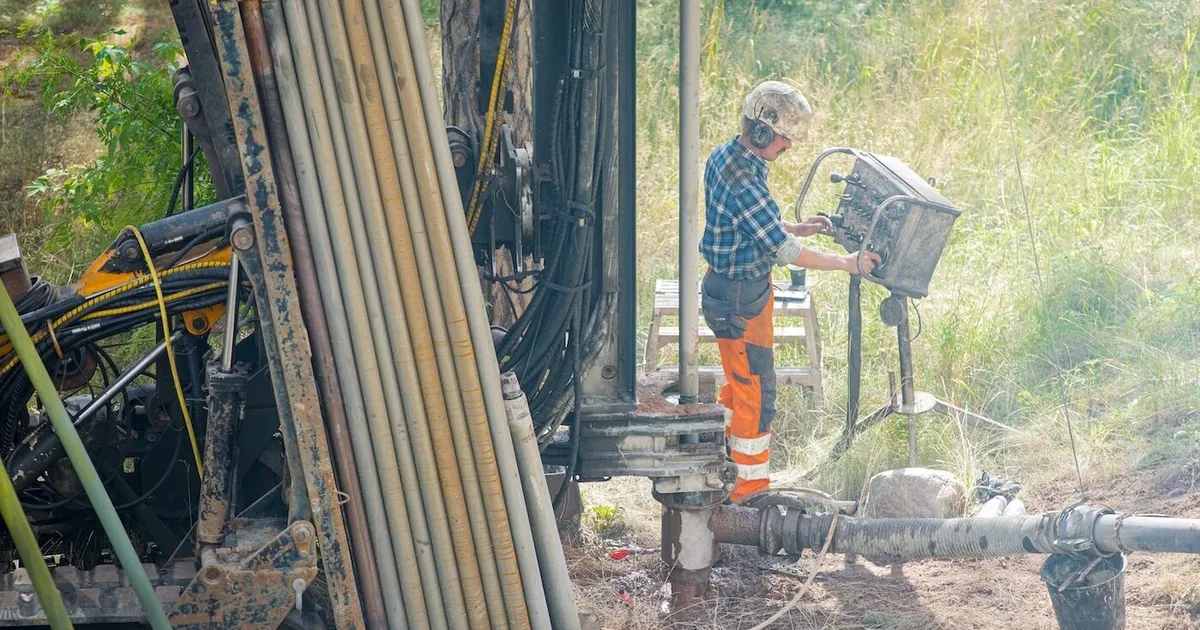
The geothermal project will have 12 to 16 boreholes drilled as far as 400 feet into the ground, where the temperature is a steady 45 to 50 degrees Fahrenheit year-round. In the cold weather, liquid pumped down these narrow wells will pick up heat from the earth and deliver it to the buildings above. In hot weather, the process will be reversed, with the system cooling the buildings by transferring heat back into the ground.
Champlain Housing Trust and Evernorth — another affordable housing developer partnering on the project — will foot the bill for the interior equipment, while utility Vermont Gas Systems will pay for and own the in-ground infrastructure, covering an estimated $275,000 in up-front costs that could be hard for a nonprofit like the trust to manage. Champlain Housing Trust, which covers utilities for tenants, will pay Vermont Gas a monthly “geothermal access fee” of $25 to $35 per unit to offset this spending.
“It’s not going to be wildly profitable for us, but it’s going to be a valuable learning experience as we figure out how we’re going to grow this over time,” said Neale Lunderville, president and CEO of Vermont Gas.
The plan took root in 2022 when Jan Blomstrann, former chair and CEO of Hinesburg-based renewable energy firm NRG Systems, donated 46 acres of land to Champlain Housing Trust for affordable housing development, specifying that she wanted the project to use renewable energy. The organization was already working toward decarbonizing its developments, so the request was a natural fit, Demetrowitz said.
At the time, Vermont Gas was considering ways to expand its offerings and keep its business strong as the future of natural gas becomes more uncertain in the face of climate regulations and shifting consumer demand. Currently, Vermont households rely heavily on fossil fuels to stay warm, but the state has a mandate to reduce greenhouse gas emissions by 80% by 2050 from 1990 levels. Decarbonizing home heating is a major element of the state climate plan.
With all that in mind, the utility in 2022 launched a program to sell or lease air-source heat pumps to customers. Geothermal seemed like an obvious next step, building on the company’s existing strengths, including managing long-term investments and installing and managing underground infrastructure.
“We’re really good at providing thermal energy services,” said Morgan Hood, director of product management for Vermont Gas. “There’s a lot of commonality with geothermal.”