

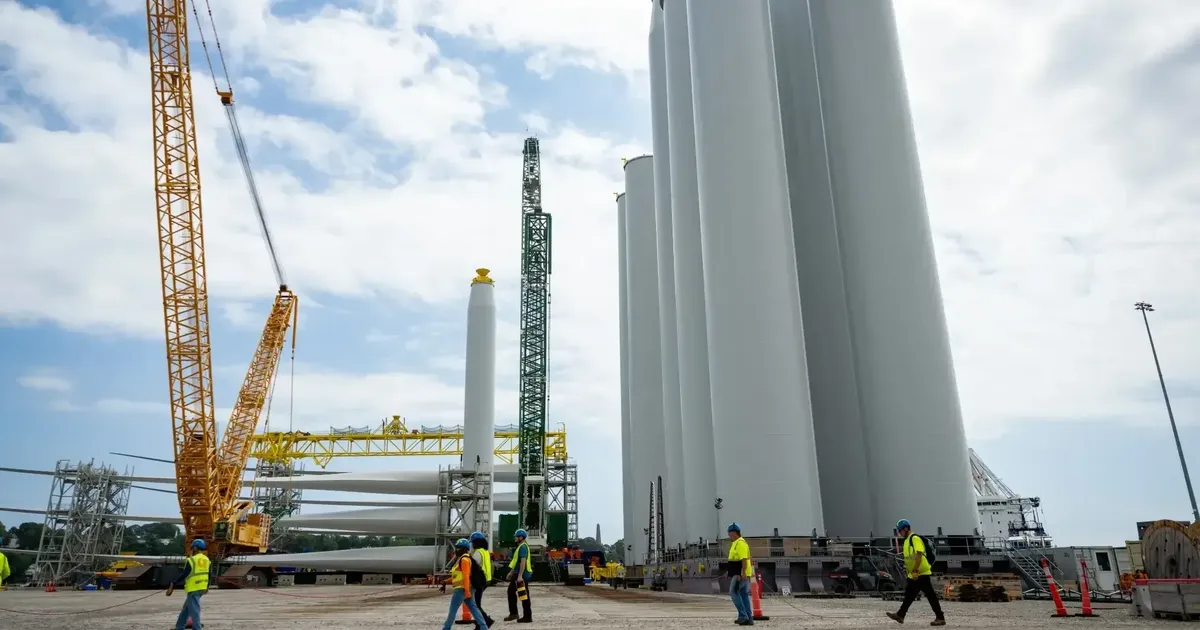
After taking a beating for the first year of the Trump administration, the beleaguered wind energy industry may finally see a glimmer of hope.
President Donald Trump and Interior Department chief Doug Burgum have spent months in an all-out assault against the technology, and in particular against offshore wind projects in federal waters. They have frozen all new leases, repealed clean energy tax credits, and even paid off an oil company to not build a planned wind project. The most dramatic move came in December, when Burgum paused work on five under-construction wind farms on “national security” grounds.
The developers of these five projects — two off the Massachusetts coastline, two south of Long Island, and one off the coast of Virginia — sued over the stop-work orders, and a series of federal judges soon issued injunctions against the Interior Department’s interventions.
Burgum had vowed to fight back, but last week, the department quietly let the final deadline for appealing the courts’ decisions lapse. The move means construction of the nation’s first five major wind farms along the eastern seaboard can continue absent a change in the case. When complete, the wind farms will generate enough electricity to power well over 2 million homes.
The lack of appeals likely represents a recognition that the government couldn’t stop the five projects from moving forward, said Tony Irish, who served as an Interior Department lawyer for decades before leaving in 2025.
“If the actual reason behind the stop-work orders was legitimately founded in national security, I would be very surprised by the lack of appeal,” he said. “So I think the lack of appeal is telling in that regard.”
Developers of the five major wind projects haven’t wasted time, with several of the projects already producing power. Revolution Wind, a project from Danish company Ørsted, delivered its first electricity to the New England grid in mid-March. Coastal Virginia Offshore Wind, a project from the Virginia utility Dominion, is about 70 percent complete and also delivered its first electricity last month. The farthest-along project, Vineyard Wind, produced a massive amount of electricity earlier this year during Winter Storm Fern when other power resources were offline.
The lack of appeals could be good news for future wind projects as well. A bipartisan group of senators has been debating a long-delayed “permitting reform” bill for months. The bill would speed up environmental review for critical energy projects, make it easier to build interstate transmission lines, and protect clean energy permits from federal interventions like those of the Trump administration. (It would also likely afford the same protections to oil and gas projects such as the Keystone XL pipeline, which President Joe Biden scrapped after taking office in 2021.)